Campbell Global Acquires High-Quality Timberland Asset in Louisiana
Written by Emily J. Thompson, Senior Investment Analyst
Updated: 3 days ago
0mins
Should l Buy JPM?
Source: Newsfilter
- Acquisition Scale: Campbell Global has completed the acquisition of Sandpiper Forest in Louisiana, encompassing approximately 29,760 acres (about 12,043 hectares) of commercial timberland, which expands its footprint in the U.S. South and underscores its commitment to sustainable forest management.
- Ecological Protection Measures: The property is 100% certified to Sustainable Forestry Initiative (SFI) standards and includes about 5,703 acres (approximately 2,308 hectares) of streamside management zones and 202 miles of protected streams, supporting diverse wildlife habitats and ensuring ecological balance and biodiversity.
- Economic Impact: Future operations are expected to provide living-wage employment opportunities for local residents in rural communities and support local mill operations, promoting regional economic development while exploring alternative revenue sources to enhance community economic resilience.
- Long-Term Value Creation: Campbell Global's operational experience in Louisiana positions it to manage Sandpiper Forest to the highest operational and sustainability standards, optimizing timber yield, habitat protection, and long-term asset value, thereby ensuring long-term benefits for investors.
Trade with 70% Backtested Accuracy
Stop guessing "Should I Buy JPM?" and start using high-conviction signals backed by rigorous historical data.
Sign up today to access powerful investing tools and make smarter, data-driven decisions.
Analyst Views on JPM
Wall Street analysts forecast JPM stock price to rise
19 Analyst Rating
11 Buy
7 Hold
1 Sell
Moderate Buy
Current: 313.230

Low
260.00
Averages
341.38
High
400.00
Current: 313.230
Low
260.00
Averages
341.38
High
400.00
About JPM
JPMorgan Chase & Co. is a financial holding company. The Company is engaged in investment banking, financial services for consumers and small businesses, commercial banking, financial transaction processing and asset management. The Company operates through three segments: Consumer & Community Banking (CCB), Commercial & Investment Bank (CIB), and Asset & Wealth Management (AWM). Its CCB segment offers products and services to consumers and small businesses through bank branches, ATMs, digital and telephone banking. Its CIB segment consists of banking and payments and markets and securities services, and offers a suite of investment banking, lending, payments, market-making, financing, custody and securities products and services to a global base of corporate and institutional clients. AWM segment offers investment and wealth management solutions. It offers multi-asset investment management solutions, retirement products and services, brokerage, custody, estate planning, and others.
About the author

Emily J. Thompson
Emily J. Thompson, a Chartered Financial Analyst (CFA) with 12 years in investment research, graduated with honors from the Wharton School. Specializing in industrial and technology stocks, she provides in-depth analysis for Intellectia’s earnings and market brief reports.
Canada to Host Proposed Multilateral Defence Bank for Geopolitical Risks

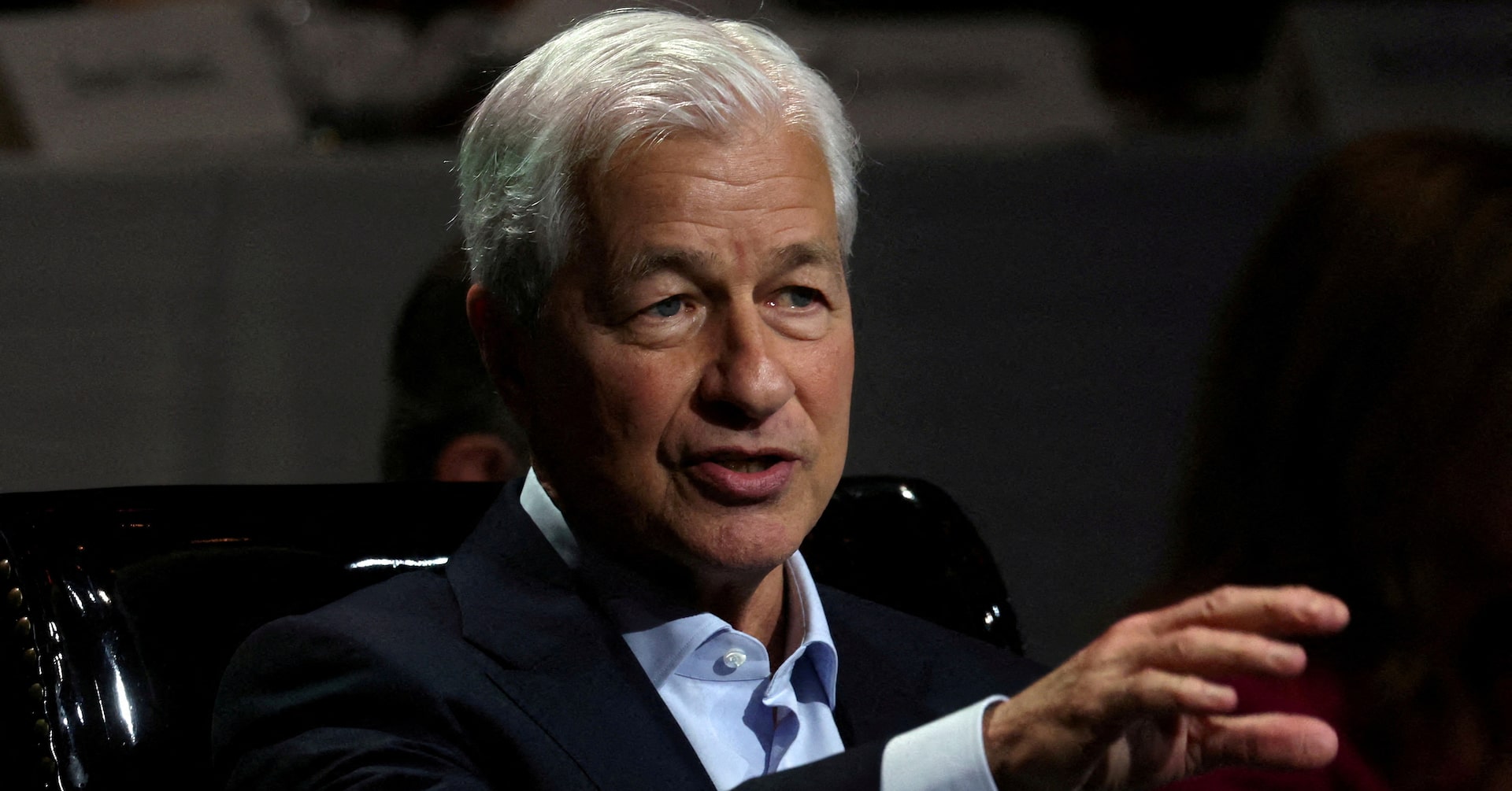
- Establishment of Multilateral Bank: Canada's finance ministry announced plans to establish a multilateral defence bank aimed at funding nations facing geopolitical risks, with an expected raise of £100 billion (approximately $135 billion) for defense projects, significantly enhancing the defense capabilities of participating countries.
- Headquarters and Support: Participating countries unanimously agreed that Canada will serve as the host country for the bank's future headquarters, underscoring its pivotal role in international defense financing cooperation and further solidifying ties with allies.
- High-Level Support and Challenges: Canadian Prime Minister Mark Carney has publicly backed the initiative, although Britain and Germany have distanced themselves, highlighting the complexities and challenges of international collaboration in defense financing.
- Banking Partnerships: The DSRB is collaborating with several prominent banks, including JPMorgan, Deutsche Bank, and the Royal Bank of Canada, to ensure its successful launch and secure the necessary financial backing.
See More

Analysis of Cardinal Health's Quarterly Results

- Overreaction in Market: Cardinal Health's stock fell 4.9% following Thursday's earnings report, which analysts believe was an overreaction; based on the company's long track record of double-digit earnings-per-share growth, investors should consider buying on Friday.
- Clear Strategic Direction: Despite the $184 million goodwill impairment charge mentioned in the report causing some noise, CEO Jason Hollar reaffirmed that the strategy for this business line remains unchanged, demonstrating the company's confidence in future growth.
- Attractive Valuation: Cardinal's shares are currently trading at approximately 16.5 times next year's earnings estimates, down from about 20 times in early March, indicating a potential opportunity for investors as the market reassesses its valuation.
- Analyst Consensus Optimistic: Several Wall Street analysts believe the market overreacted, with Jefferies and Leerink Partners stating that the investment thesis for Cardinal remains intact, and in a market where healthcare stocks are out of favor, Cardinal is viewed as a quality asset worth investing in.
See More
Analysis of Private Credit Risks and Bank Exposures
- Current State of Private Credit: The private credit industry has emerged amid regulatory pressures, and while large banks still hold a significant position in the lending market, their exposure to private credit is generally below 5%, indicating a cautious approach by banks in this sector.
- Bank Exposure Data: Recent figures show that JPMorgan Chase, Bank of America, Wells Fargo, and Citigroup have non-bank financial loans totaling $160 billion, $180 billion, $193 billion, and $118 billion respectively, with loans to private equity firms accounting for less than 1%, reflecting banks' risk control measures.
- Software Industry Risks: JPMorgan's research indicates that about 20% of BDC portfolios are exposed to the software sector, and given the volatility of software stocks, this could lead to potential losses in private credit, thereby affecting the credit quality of banks.
- Bank Lending Strategies: Despite the pressures on private credit, bank management teams express optimism about their credit quality, emphasizing that high-yield loans typically have senior repayment rights and provide additional protection in the event of defaults, indicating a conservative risk management strategy by banks.
See More

Buffett Steps Down, Abel Takes Helm in New Era

- Leadership Transition: For the first time at the 2026 annual meeting, Buffett will not be the central figure, as Abel takes over as CEO, marking a new era for Berkshire Hathaway, with investors eager to see how operations and capital allocation will evolve under his leadership.
- Earnings Decline: In Q4 2025, Berkshire's operating earnings fell nearly 30%, primarily due to a 54% drop in insurance underwriting profits, indicating significant challenges that could impact shareholder confidence and stock performance moving forward.
- Stock Buybacks: Berkshire resumed stock buybacks for the first time since 2024, repurchasing approximately $226 million worth of shares, while Abel personally invested $15 million of his after-tax salary into the company, reflecting strong confidence in its intrinsic value.
- Portfolio Management: Abel is already reassessing the roughly $300 billion equity portfolio, planning a more centralized management approach, which raises investor questions about how he will optimize investment strategies in the post-Buffett era.
See More

Trump Administration Pushes for Navigation Freedom in Strait of Hormuz

- International Coalition Initiative: The Trump administration is seeking to establish the Maritime Freedom Construct (MFC) to restore navigation freedom in the Strait of Hormuz, aiming to coordinate diplomatic and military efforts to resume commercial shipping and ensure global energy supply stability.
- Energy Market Impact: The Strait of Hormuz is a critical transit point for 20% of global oil and LNG supplies, and the reduced traffic has severely disrupted energy supplies; if the Strait remains closed, oil prices could exceed $150 by mid-May, potentially impacting the global economy.
- Company Financial Outlook: ConocoPhillips reported adjusted earnings of $1.89 per share for Q1, surpassing expectations, and if oil averages $80 this year, it could generate over $25 billion in cash flow, significantly higher than the previous $60 estimate, showcasing strong performance in the current market.
- Future Projections: While U.S. efforts may restore shipping flows through the Strait by the end of June, oil prices are expected to remain elevated, likely exceeding $100 in Q2, providing a solid investment opportunity for oil companies, which may further engage in stock buybacks to reward investors.
See More

Teradyne Shares Surge 15% Following Strong Q1 Earnings Report

- Significant Revenue Growth: Teradyne reported an impressive 87% year-over-year revenue increase in Q1, reaching $1.28 billion; despite disappointing guidance for Q2 leading to a temporary stock dip, the subsequent recovery indicates market confidence in its long-term growth potential.
- AI Business Dominance: CEO Gregory Smith highlighted that AI now accounts for nearly 70% of revenue, up from 60% in Q4 2025, showcasing the robust demand in the AI sector and Teradyne's competitive edge in automated test equipment for complex chips.
- Market Reaction Analysis: The Q2 revenue guidance of $1.15 billion to $1.25 billion implies a sequential decline from Q1, despite a year-over-year growth of 76% to 92%, prompting the market to price in a potential inflection point in revenue trajectory, reflecting investor uncertainty about future demand.
- Analyst Support: Analysts from Goldman Sachs and JPMorgan raised Teradyne's price targets to $350 and $400 respectively, maintaining a bullish outlook despite short-term challenges, which may bolster investor confidence moving forward.
See More
Canada to Host Proposed Multilateral Defence Bank for Geopolitical Risks
- Establishment of Multilateral Bank: Canada's finance ministry announced plans to establish a multilateral defence bank aimed at funding nations facing geopolitical risks, with an expected raise of £100 billion (approximately $135 billion) for defense projects, significantly enhancing the defense capabilities of participating countries.
- Headquarters and Support: Participating countries unanimously agreed that Canada will serve as the host country for the bank's future headquarters, underscoring its pivotal role in international defense financing cooperation and further solidifying ties with allies.
- High-Level Support and Challenges: Canadian Prime Minister Mark Carney has publicly backed the initiative, although Britain and Germany have distanced themselves, highlighting the complexities and challenges of international collaboration in defense financing.
- Banking Partnerships: The DSRB is collaborating with several prominent banks, including JPMorgan, Deutsche Bank, and the Royal Bank of Canada, to ensure its successful launch and secure the necessary financial backing.
See More
Analysis of Cardinal Health's Quarterly Results
- Overreaction in Market: Cardinal Health's stock fell 4.9% following Thursday's earnings report, which analysts believe was an overreaction; based on the company's long track record of double-digit earnings-per-share growth, investors should consider buying on Friday.
- Clear Strategic Direction: Despite the $184 million goodwill impairment charge mentioned in the report causing some noise, CEO Jason Hollar reaffirmed that the strategy for this business line remains unchanged, demonstrating the company's confidence in future growth.
- Attractive Valuation: Cardinal's shares are currently trading at approximately 16.5 times next year's earnings estimates, down from about 20 times in early March, indicating a potential opportunity for investors as the market reassesses its valuation.
- Analyst Consensus Optimistic: Several Wall Street analysts believe the market overreacted, with Jefferies and Leerink Partners stating that the investment thesis for Cardinal remains intact, and in a market where healthcare stocks are out of favor, Cardinal is viewed as a quality asset worth investing in.
See More
Analysis of Private Credit Risks and Bank Exposures
- Current State of Private Credit: The private credit industry has emerged amid regulatory pressures, and while large banks still hold a significant position in the lending market, their exposure to private credit is generally below 5%, indicating a cautious approach by banks in this sector.
- Bank Exposure Data: Recent figures show that JPMorgan Chase, Bank of America, Wells Fargo, and Citigroup have non-bank financial loans totaling $160 billion, $180 billion, $193 billion, and $118 billion respectively, with loans to private equity firms accounting for less than 1%, reflecting banks' risk control measures.
- Software Industry Risks: JPMorgan's research indicates that about 20% of BDC portfolios are exposed to the software sector, and given the volatility of software stocks, this could lead to potential losses in private credit, thereby affecting the credit quality of banks.
- Bank Lending Strategies: Despite the pressures on private credit, bank management teams express optimism about their credit quality, emphasizing that high-yield loans typically have senior repayment rights and provide additional protection in the event of defaults, indicating a conservative risk management strategy by banks.
See More
Buffett Steps Down, Abel Takes Helm in New Era
- Leadership Transition: For the first time at the 2026 annual meeting, Buffett will not be the central figure, as Abel takes over as CEO, marking a new era for Berkshire Hathaway, with investors eager to see how operations and capital allocation will evolve under his leadership.
- Earnings Decline: In Q4 2025, Berkshire's operating earnings fell nearly 30%, primarily due to a 54% drop in insurance underwriting profits, indicating significant challenges that could impact shareholder confidence and stock performance moving forward.
- Stock Buybacks: Berkshire resumed stock buybacks for the first time since 2024, repurchasing approximately $226 million worth of shares, while Abel personally invested $15 million of his after-tax salary into the company, reflecting strong confidence in its intrinsic value.
- Portfolio Management: Abel is already reassessing the roughly $300 billion equity portfolio, planning a more centralized management approach, which raises investor questions about how he will optimize investment strategies in the post-Buffett era.
See More
Trump Administration Pushes for Navigation Freedom in Strait of Hormuz
- International Coalition Initiative: The Trump administration is seeking to establish the Maritime Freedom Construct (MFC) to restore navigation freedom in the Strait of Hormuz, aiming to coordinate diplomatic and military efforts to resume commercial shipping and ensure global energy supply stability.
- Energy Market Impact: The Strait of Hormuz is a critical transit point for 20% of global oil and LNG supplies, and the reduced traffic has severely disrupted energy supplies; if the Strait remains closed, oil prices could exceed $150 by mid-May, potentially impacting the global economy.
- Company Financial Outlook: ConocoPhillips reported adjusted earnings of $1.89 per share for Q1, surpassing expectations, and if oil averages $80 this year, it could generate over $25 billion in cash flow, significantly higher than the previous $60 estimate, showcasing strong performance in the current market.
- Future Projections: While U.S. efforts may restore shipping flows through the Strait by the end of June, oil prices are expected to remain elevated, likely exceeding $100 in Q2, providing a solid investment opportunity for oil companies, which may further engage in stock buybacks to reward investors.
See More
Teradyne Shares Surge 15% Following Strong Q1 Earnings Report
- Significant Revenue Growth: Teradyne reported an impressive 87% year-over-year revenue increase in Q1, reaching $1.28 billion; despite disappointing guidance for Q2 leading to a temporary stock dip, the subsequent recovery indicates market confidence in its long-term growth potential.
- AI Business Dominance: CEO Gregory Smith highlighted that AI now accounts for nearly 70% of revenue, up from 60% in Q4 2025, showcasing the robust demand in the AI sector and Teradyne's competitive edge in automated test equipment for complex chips.
- Market Reaction Analysis: The Q2 revenue guidance of $1.15 billion to $1.25 billion implies a sequential decline from Q1, despite a year-over-year growth of 76% to 92%, prompting the market to price in a potential inflection point in revenue trajectory, reflecting investor uncertainty about future demand.
- Analyst Support: Analysts from Goldman Sachs and JPMorgan raised Teradyne's price targets to $350 and $400 respectively, maintaining a bullish outlook despite short-term challenges, which may bolster investor confidence moving forward.
See More