Investigation into Investor Claims Against Willis Towers Watson
Written by Emily J. Thompson, Senior Investment Analyst
Updated: 1 hour ago
0mins
Should l Buy WTW?
Source: Globenewswire
- Financial Performance Disclosure: Willis Towers Watson reported Q1 2026 revenue of $2.41 billion with only 3% organic growth, while operating margin declined by 80 basis points year-over-year, indicating a deterioration in profitability.
- Slowing Business Growth: In the Health, Wealth & Career segment, organic revenue declined as clients deferred discretionary work due to geopolitical uncertainty in the Middle East, reflecting weakened market demand.
- Risk & Broking Segment Performance: This segment experienced only 2% organic revenue growth, suggesting challenges in a key area that may impact future competitiveness in the market.
- Investor Loss Investigation: Following poor financial results, Willis Towers Watson's stock price sharply declined, prompting Johnson Fistel to investigate whether the company complied with federal securities laws to assist affected investors in seeking compensation.
Trade with 70% Backtested Accuracy
Stop guessing "Should I Buy WTW?" and start using high-conviction signals backed by rigorous historical data.
Sign up today to access powerful investing tools and make smarter, data-driven decisions.
Analyst Views on WTW
Wall Street analysts forecast WTW stock price to rise
15 Analyst Rating
10 Buy
4 Hold
1 Sell
Moderate Buy
Current: 256.200

Low
318.00
Averages
365.00
High
400.00
Current: 256.200
Low
318.00
Averages
365.00
High
400.00
About WTW
Willis Towers Watson Public Limited Company is a global advisory, brokering and solutions company that provides data-driven, insight-led solutions in the areas of people, risk and capital. The Company’s segments include Health, Wealth & Career (HWC) and Risk & Broking (R&B). The HWC segment provides an array of advice, brokering, solutions and technology for employee benefit plans, institutional investors, compensation and career programs, and the employee experience overall. R&B segment provides a range of risk advice, insurance brokerage and consulting services to clients globally, ranging from small businesses to multinational corporations. The segment comprises two primary businesses: its corporate risk and brokering and our insurance consulting and technology businesses. It also specializes in private equity secondaries investing, delivering innovative portfolio construction, risk management, and client solutions. It serves more than 140 countries and markets.
About the author

Emily J. Thompson
Emily J. Thompson, a Chartered Financial Analyst (CFA) with 12 years in investment research, graduated with honors from the Wharton School. Specializing in industrial and technology stocks, she provides in-depth analysis for Intellectia’s earnings and market brief reports.

Willis Towers Watson Q1 2026 Earnings Call Insights

- Performance Growth Analysis: Willis Towers Watson achieved 3% organic growth in Q1 2026 with an adjusted operating margin of 22.3% and adjusted diluted earnings per share of $3.72, although revenue was at the low end of expectations, reflecting challenges in the global market environment.
- Market Environment Impact: Disruptions in the Middle East led some clients to postpone advisory projects, resulting in a more challenging market environment that impacted new business growth, particularly in the Risk & Broking segment.
- Technology-Driven Efficiency: The company's AI-enabled tools, such as Rewards AI, have over 2,500 client users, while Call Note Assist has summarized over 1.6 million calls, achieving a 33% reduction in post-call wrap-up time, thereby enhancing sales efficiency.
- Future Outlook Adjustment: The CFO indicated that Willis Towers Watson is expanding its career guidance range to low to mid-single-digit growth while narrowing the full-year growth outlook for Risk & Broking to mid-single digits, reflecting caution amid market uncertainties.
See More

WTW SHARES FALL 11.1% FOLLOWING SLOWER Q1 ORGANIC REVENUE GROWTH
Market Performance: Shares of WTWD have decreased by 1.1% after the first quarter.
Revenue Growth: The growth of organic revenue has slowed down significantly.
See More

Investigation into Investor Claims Against Willis Towers Watson
- Financial Performance Disclosure: Willis Towers Watson reported Q1 2026 revenue of $2.41 billion with only 3% organic growth, while operating margin declined by 80 basis points year-over-year, indicating a deterioration in profitability.
- Slowing Business Growth: In the Health, Wealth & Career segment, organic revenue declined as clients deferred discretionary work due to geopolitical uncertainty in the Middle East, reflecting weakened market demand.
- Risk & Broking Segment Performance: This segment experienced only 2% organic revenue growth, suggesting challenges in a key area that may impact future competitiveness in the market.
- Investor Loss Investigation: Following poor financial results, Willis Towers Watson's stock price sharply declined, prompting Johnson Fistel to investigate whether the company complied with federal securities laws to assist affected investors in seeking compensation.
See More

Latest Wall Street Rating Updates

- Apple's Positive Outlook: Bank of America reiterates a buy rating on Apple, forecasting that iPhone revenues will exceed expectations in 2026 due to record upgraders and strong gross margins despite commodity pressures, indicating sustained competitiveness in the smartphone market.
- Roblox Demand Slowdown: Bank of America downgrades Roblox to neutral, citing a significant decline in platform demand; while acknowledging its ability to compress development costs, the uncertainty around the timeline for demand recovery may impact its market performance.
- CoreWeave Growth Potential: Citi reiterates CoreWeave as a buy, raising its price target from $126 to $155, estimating a quarterly growth of 35-40% in AI infrastructure, showcasing strong performance across a diversified customer base.
- Hershey's Positive Outlook: TD Cowen upgrades Hershey to buy, expressing confidence that the company will raise its 2026 guidance and return to volume growth in 2027, reflecting strong recovery potential in the confectionery market.
See More

U.S. Stocks Surge, Led by Tech Gains


- Tech Stock Rally: Alphabet reported Q1 revenue of $94.57 billion, exceeding the consensus of $91.57 billion, leading to a more than 9% stock increase, which not only boosted the overall market but also set new highs, indicating strong recovery potential in the tech sector.
- Chipmakers Surge: Qualcomm's Q2 adjusted revenue of $10.60 billion surpassed expectations of $10.56 billion, resulting in a stock surge of over 15%, which not only enhanced its market position but also lifted the entire semiconductor sector.
- Positive Economic Data: U.S. initial jobless claims fell to 189,000, a 57-year low, reflecting a robust labor market that further bolstered investor confidence in economic recovery, contributing to the stock market's rise.
- Oil Price Decline Supports Stocks: WTI crude oil prices fell by more than 1%, lowering inflation expectations and bond yields, which provided support for the stock market, with the 10-year T-note yield dropping to 4.38%, creating a favorable financing environment for equities.
See More
U.S. Stocks Rise, Nasdaq Hits All-Time High

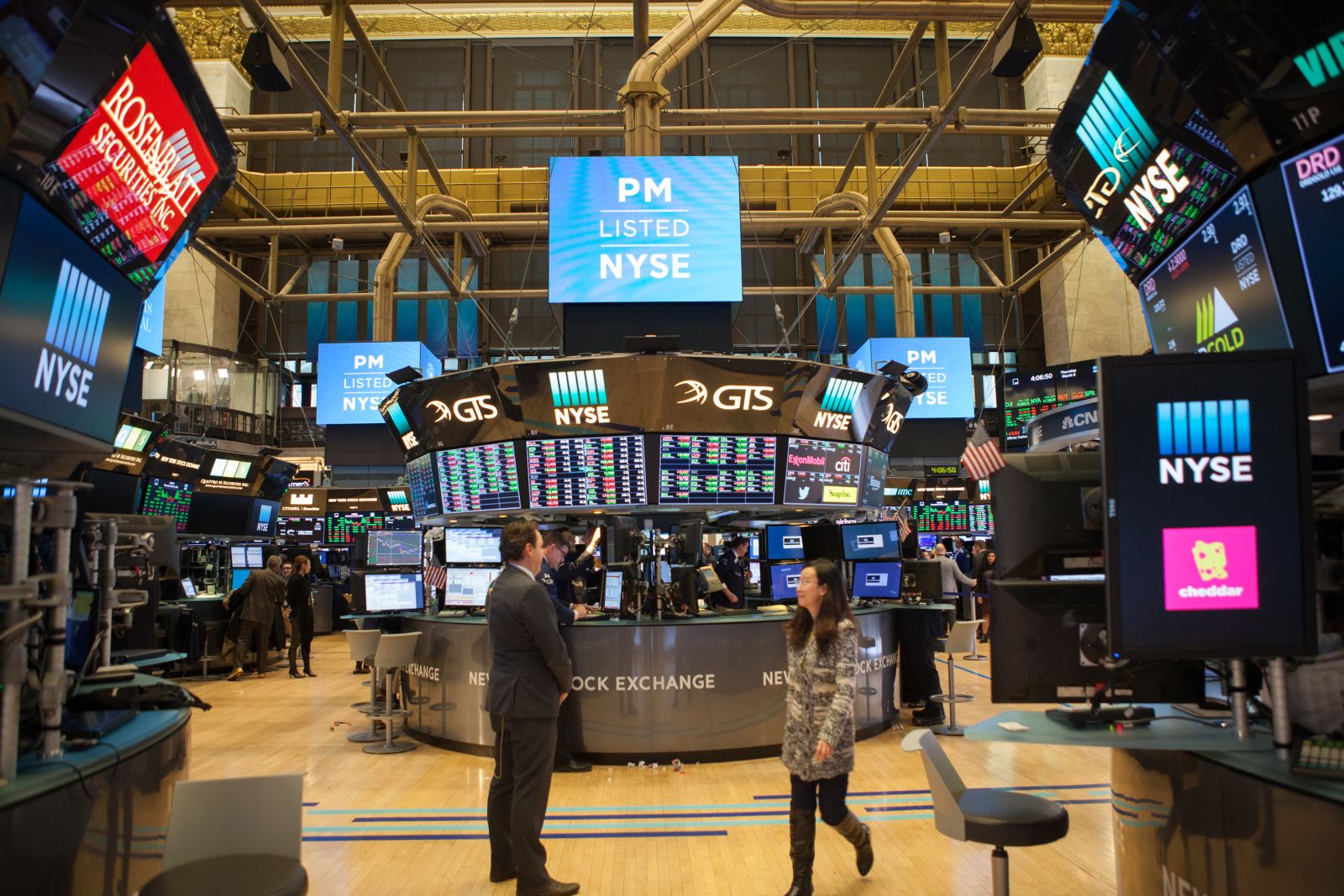
- Nasdaq Milestone: The Nasdaq 100 Index reached an all-time high, buoyed by better-than-expected earnings from Alphabet and Qualcomm, with Alphabet reporting Q1 revenue of $94.57 billion, surpassing the consensus of $91.57 billion, thus driving overall market gains.
- Strong Labor Market: U.S. initial jobless claims fell to 189,000, a 57-year low, indicating a robust labor market that exceeded expectations of 212,000, further bolstering market confidence in economic recovery.
- Declining Inflation Expectations: WTI crude oil prices dropped over 1%, leading to lower inflation expectations and bond yields, with the 10-year T-note yield down 4 basis points to 4.39%, providing support for the stock market.
- Global Economic Impact: The blockade of the Strait of Hormuz due to escalating tensions with Iran could exacerbate the global energy crisis, with Goldman Sachs estimating a reduction of nearly 500 million barrels from global crude stockpiles, potentially reaching a billion barrels by June, affecting market supply-demand dynamics.
See More
Willis Towers Watson Q1 2026 Earnings Call Insights
- Performance Growth Analysis: Willis Towers Watson achieved 3% organic growth in Q1 2026 with an adjusted operating margin of 22.3% and adjusted diluted earnings per share of $3.72, although revenue was at the low end of expectations, reflecting challenges in the global market environment.
- Market Environment Impact: Disruptions in the Middle East led some clients to postpone advisory projects, resulting in a more challenging market environment that impacted new business growth, particularly in the Risk & Broking segment.
- Technology-Driven Efficiency: The company's AI-enabled tools, such as Rewards AI, have over 2,500 client users, while Call Note Assist has summarized over 1.6 million calls, achieving a 33% reduction in post-call wrap-up time, thereby enhancing sales efficiency.
- Future Outlook Adjustment: The CFO indicated that Willis Towers Watson is expanding its career guidance range to low to mid-single-digit growth while narrowing the full-year growth outlook for Risk & Broking to mid-single digits, reflecting caution amid market uncertainties.
See More
WTW SHARES FALL 11.1% FOLLOWING SLOWER Q1 ORGANIC REVENUE GROWTH
Market Performance: Shares of WTWD have decreased by 1.1% after the first quarter.
Revenue Growth: The growth of organic revenue has slowed down significantly.
See More
Investigation into Investor Claims Against Willis Towers Watson
- Financial Performance Disclosure: Willis Towers Watson reported Q1 2026 revenue of $2.41 billion with only 3% organic growth, while operating margin declined by 80 basis points year-over-year, indicating a deterioration in profitability.
- Slowing Business Growth: In the Health, Wealth & Career segment, organic revenue declined as clients deferred discretionary work due to geopolitical uncertainty in the Middle East, reflecting weakened market demand.
- Risk & Broking Segment Performance: This segment experienced only 2% organic revenue growth, suggesting challenges in a key area that may impact future competitiveness in the market.
- Investor Loss Investigation: Following poor financial results, Willis Towers Watson's stock price sharply declined, prompting Johnson Fistel to investigate whether the company complied with federal securities laws to assist affected investors in seeking compensation.
See More
Latest Wall Street Rating Updates
- Apple's Positive Outlook: Bank of America reiterates a buy rating on Apple, forecasting that iPhone revenues will exceed expectations in 2026 due to record upgraders and strong gross margins despite commodity pressures, indicating sustained competitiveness in the smartphone market.
- Roblox Demand Slowdown: Bank of America downgrades Roblox to neutral, citing a significant decline in platform demand; while acknowledging its ability to compress development costs, the uncertainty around the timeline for demand recovery may impact its market performance.
- CoreWeave Growth Potential: Citi reiterates CoreWeave as a buy, raising its price target from $126 to $155, estimating a quarterly growth of 35-40% in AI infrastructure, showcasing strong performance across a diversified customer base.
- Hershey's Positive Outlook: TD Cowen upgrades Hershey to buy, expressing confidence that the company will raise its 2026 guidance and return to volume growth in 2027, reflecting strong recovery potential in the confectionery market.
See More
U.S. Stocks Surge, Led by Tech Gains
- Tech Stock Rally: Alphabet reported Q1 revenue of $94.57 billion, exceeding the consensus of $91.57 billion, leading to a more than 9% stock increase, which not only boosted the overall market but also set new highs, indicating strong recovery potential in the tech sector.
- Chipmakers Surge: Qualcomm's Q2 adjusted revenue of $10.60 billion surpassed expectations of $10.56 billion, resulting in a stock surge of over 15%, which not only enhanced its market position but also lifted the entire semiconductor sector.
- Positive Economic Data: U.S. initial jobless claims fell to 189,000, a 57-year low, reflecting a robust labor market that further bolstered investor confidence in economic recovery, contributing to the stock market's rise.
- Oil Price Decline Supports Stocks: WTI crude oil prices fell by more than 1%, lowering inflation expectations and bond yields, which provided support for the stock market, with the 10-year T-note yield dropping to 4.38%, creating a favorable financing environment for equities.
See More
U.S. Stocks Rise, Nasdaq Hits All-Time High
- Nasdaq Milestone: The Nasdaq 100 Index reached an all-time high, buoyed by better-than-expected earnings from Alphabet and Qualcomm, with Alphabet reporting Q1 revenue of $94.57 billion, surpassing the consensus of $91.57 billion, thus driving overall market gains.
- Strong Labor Market: U.S. initial jobless claims fell to 189,000, a 57-year low, indicating a robust labor market that exceeded expectations of 212,000, further bolstering market confidence in economic recovery.
- Declining Inflation Expectations: WTI crude oil prices dropped over 1%, leading to lower inflation expectations and bond yields, with the 10-year T-note yield down 4 basis points to 4.39%, providing support for the stock market.
- Global Economic Impact: The blockade of the Strait of Hormuz due to escalating tensions with Iran could exacerbate the global energy crisis, with Goldman Sachs estimating a reduction of nearly 500 million barrels from global crude stockpiles, potentially reaching a billion barrels by June, affecting market supply-demand dynamics.
See More