Autonomous Vehicles Set to Expand Ride-Hailing Market
Written by Emily J. Thompson, Senior Investment Analyst
Updated: 1 hour ago
0mins
Should l Buy UBER?
Source: NASDAQ.COM
- Market Expansion Potential: Uber believes that autonomous vehicles (AVs) will lower ride costs by increasing the number of available vehicles, thereby attracting more users and expanding the overall ride-hailing market rather than merely redistributing existing riders.
- Data-Driven Growth: In cities like Austin and Atlanta, Uber's AV network has significantly increased ride frequency, with data showing that these areas have experienced faster trip growth than other markets, while the number of human drivers and their earnings have also increased year-over-year, indicating overall market expansion.
- Strategic Technology Partnerships: Uber's strategy of partnering with multiple autonomous technology companies instead of developing its own self-driving platform allows it to focus on aggregating demand and efficiently matching supply, maintaining its central role in one of the world's largest mobility marketplaces.
- Future Outlook: Although AV rides currently account for only 0.1% of global ride-hailing trips, as technology matures and costs decrease, Uber is poised to capture a significant share of the future multi-trillion-dollar market, further solidifying its market leadership position.
Trade with 70% Backtested Accuracy
Stop guessing "Should I Buy UBER?" and start using high-conviction signals backed by rigorous historical data.
Sign up today to access powerful investing tools and make smarter, data-driven decisions.
Analyst Views on UBER
Wall Street analysts forecast UBER stock price to rise
32 Analyst Rating
28 Buy
3 Hold
1 Sell
Strong Buy
Current: 75.340

Low
72.00
Averages
107.10
High
150.00
Current: 75.340
Low
72.00
Averages
107.10
High
150.00
About UBER
Uber Technologies, Inc. operates a technology platform that uses network and technology to power movement from point A to point B. It develops and operates technology applications supporting a variety of offerings on its platform (platform(s)). Its segments include Mobility, Delivery and Freight. Mobility products connect consumers with drivers who provide rides in a variety of vehicles, such as cars, auto rickshaws, motorbikes, minibuses, or taxis. Delivery offerings allow consumers to search for and discover local restaurants, order a meal, and either pick-up at the restaurant or have the meal delivered. In certain markets, the Delivery segment provides offerings for grocery, alcohol, and convenience store delivery as well as select other goods. The Freight segment connects carriers with shippers on its platform, and gives carriers upfront, pricing and the ability to book a shipment. The Freight segment also includes transportation management and other logistics service offerings.
About the author

Emily J. Thompson
Emily J. Thompson, a Chartered Financial Analyst (CFA) with 12 years in investment research, graduated with honors from the Wharton School. Specializing in industrial and technology stocks, she provides in-depth analysis for Intellectia’s earnings and market brief reports.

Autonomous Vehicles Set to Expand Ride-Hailing Market

- Market Expansion Potential: Uber believes that autonomous vehicles (AVs) will lower ride costs by increasing the number of available vehicles, thereby attracting more users and expanding the overall ride-hailing market rather than merely redistributing existing riders.
- Data-Driven Growth: In cities like Austin and Atlanta, Uber's AV network has significantly increased ride frequency, with data showing that these areas have experienced faster trip growth than other markets, while the number of human drivers and their earnings have also increased year-over-year, indicating overall market expansion.
- Strategic Technology Partnerships: Uber's strategy of partnering with multiple autonomous technology companies instead of developing its own self-driving platform allows it to focus on aggregating demand and efficiently matching supply, maintaining its central role in one of the world's largest mobility marketplaces.
- Future Outlook: Although AV rides currently account for only 0.1% of global ride-hailing trips, as technology matures and costs decrease, Uber is poised to capture a significant share of the future multi-trillion-dollar market, further solidifying its market leadership position.
See More

Uber Sees Autonomous Vehicles Expanding Ride-Hailing Market
- Market Expansion Potential: Uber believes that autonomous vehicles will increase the number of available vehicles, thereby lowering ride costs and improving ETAs, which is expected to expand the overall market size rather than merely redistributing existing riders.
- Early Data Support: In cities like Austin and Atlanta, Uber's autonomous vehicles have significantly boosted ride growth, with both the number of human drivers and their hourly earnings increasing year-over-year, indicating overall market expansion rather than replacement.
- Price Sensitivity: Uber points out that transportation demand is highly sensitive to price and convenience, and the lower costs of autonomous rides could unlock new travel demands, such as daily commuting and short-distance errands, potentially driving a multitrillion-dollar market opportunity.
- Platform Advantage: With its vast mobility marketplace and efficient matching systems, Uber is well-positioned to remain the central platform connecting riders with vehicles as autonomous technology matures, even though AV rides currently account for only 0.1% of the global rideshare market.
See More

Israeli Conflict Impacts Market Dynamics


- Dow Jones Decline: The Dow Jones Industrial Average is set to record its fourth consecutive weekly decline, marking the first such streak since 2023, reflecting investor concerns about market outlook amid escalating conflict between Israel and Iran.
- Gold and Copper Volatility: Gold is on track for its worst week since 2020, while copper has fallen to its lowest level of the year, a trend typically viewed as a sign of cooling economic growth that could undermine investor confidence and consumer spending.
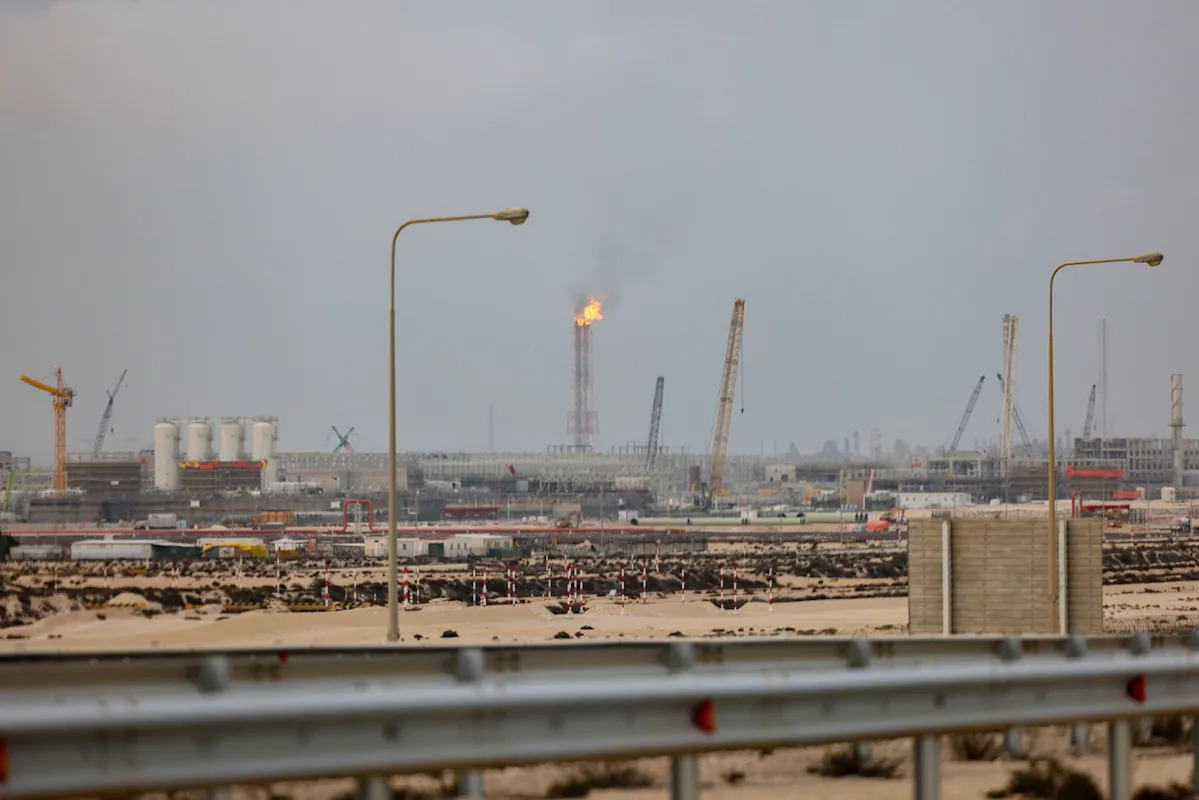
- Supply Chain Crisis Intensifies: The U.S.-Iran war threatens global helium supplies, with a Qatar facility halting production due to drone strikes, potentially increasing costs in semiconductor manufacturing and further straining the tech industry's supply chain.
- Meta's Strategic Shift: Meta has decided to keep the Horizon Worlds platform operational in response to user feedback, despite its user base being significantly smaller than competitors like Roblox, a decision that may impact Meta's long-term strategy in the virtual reality market.
See More
Key Wall Street Rating Updates on Friday


- Nvidia Rating Reaffirmed: Wolfe maintains Nvidia as an outperform, stating that with the stock priced at just 13x their bull case EPS, it is too cheap to ignore, potentially attracting more investor interest.
- Arm Upgrade: HSBC upgrades Arm from reduce to buy, highlighting its strong positioning in the AI sector, suggesting that its transition to a major AI server CPU player presents a significant undervaluation opportunity for investors.
- Apple App Store Revenue Slowdown: Morgan Stanley reiterates Apple as overweight, noting that App Store revenue growth decelerated to 6% YoY in Q1 2023, falling short of the expected 8%, indicating market caution regarding Apple's future growth prospects.
- Oneok Upgrade: Jefferies upgrades Oneok from hold to buy, citing tangible upside potential in the current market environment, particularly as geopolitical tensions in the Middle East raise crude oil price risks.
See More

Uber Partners with Rivian in $1.25 Billion Robotaxi Deal

- Partnership Details: Uber has inked a deal with Rivian to purchase 50,000 R2 autonomous taxis over the next five years, with an initial investment of up to $1.25 billion aimed at enhancing both companies' competitive edge through achieving autonomous performance milestones.
- Data Collection Advantage: Rivian will leverage Uber's investment and vehicle deployment to gather substantial real-world driving data, which is expected to accelerate the development of its self-driving technology, significantly enhancing its market position and technical capabilities.
- AI Investment Confidence: Uber's investment not only acknowledges Rivian's heavy investments in artificial intelligence but also signals growing market confidence in the imminent adoption of fully autonomous vehicles, anticipated to become a reality in the coming years.
- Diverse Collaboration Strategy: The agreement with Rivian is not exclusive, as Uber has also formed similar partnerships with other EV manufacturers like Lucid Group, demonstrating its diversified approach in the electric vehicle market and strategic flexibility in responding to competition.
See More

Uber Partners with Rivian in $1.25 Billion Robotaxi Deal
- Strategic Partnership: Uber has signed a $1.25 billion deal with EV maker Rivian to aggressively expand its robotaxi capabilities, indicating strong confidence in Rivian's AI ambitions and positioning Uber for a significant role in the future robotaxi market.
- Massive Market Potential: Experts estimate that the global opportunity in the robotaxi market could reach between $5 trillion and $10 trillion, making the collaboration between Uber and Rivian not just a technological alliance but a strategic move for future market competition.
- Data-Driven Autonomous Tech: Rivian will invest over $1 billion to meet self-driving milestones and assist up to 50,000 Rivian vehicles on the road to gather data, which will accelerate the advancement of its self-driving models and strengthen its competitive edge in the autonomous driving sector.
- Investment Return Risks: Despite the substantial investment from Uber, the agreement stipulates that the purchase volume will depend on Rivian achieving specific milestones, and Uber could ultimately take delivery of anywhere from zero to 50,000 vehicles, introducing uncertainty for investors.
See More
Autonomous Vehicles Set to Expand Ride-Hailing Market
- Market Expansion Potential: Uber believes that autonomous vehicles (AVs) will lower ride costs by increasing the number of available vehicles, thereby attracting more users and expanding the overall ride-hailing market rather than merely redistributing existing riders.
- Data-Driven Growth: In cities like Austin and Atlanta, Uber's AV network has significantly increased ride frequency, with data showing that these areas have experienced faster trip growth than other markets, while the number of human drivers and their earnings have also increased year-over-year, indicating overall market expansion.
- Strategic Technology Partnerships: Uber's strategy of partnering with multiple autonomous technology companies instead of developing its own self-driving platform allows it to focus on aggregating demand and efficiently matching supply, maintaining its central role in one of the world's largest mobility marketplaces.
- Future Outlook: Although AV rides currently account for only 0.1% of global ride-hailing trips, as technology matures and costs decrease, Uber is poised to capture a significant share of the future multi-trillion-dollar market, further solidifying its market leadership position.
See More
Uber Sees Autonomous Vehicles Expanding Ride-Hailing Market
- Market Expansion Potential: Uber believes that autonomous vehicles will increase the number of available vehicles, thereby lowering ride costs and improving ETAs, which is expected to expand the overall market size rather than merely redistributing existing riders.
- Early Data Support: In cities like Austin and Atlanta, Uber's autonomous vehicles have significantly boosted ride growth, with both the number of human drivers and their hourly earnings increasing year-over-year, indicating overall market expansion rather than replacement.
- Price Sensitivity: Uber points out that transportation demand is highly sensitive to price and convenience, and the lower costs of autonomous rides could unlock new travel demands, such as daily commuting and short-distance errands, potentially driving a multitrillion-dollar market opportunity.
- Platform Advantage: With its vast mobility marketplace and efficient matching systems, Uber is well-positioned to remain the central platform connecting riders with vehicles as autonomous technology matures, even though AV rides currently account for only 0.1% of the global rideshare market.
See More
Israeli Conflict Impacts Market Dynamics
- Dow Jones Decline: The Dow Jones Industrial Average is set to record its fourth consecutive weekly decline, marking the first such streak since 2023, reflecting investor concerns about market outlook amid escalating conflict between Israel and Iran.
- Gold and Copper Volatility: Gold is on track for its worst week since 2020, while copper has fallen to its lowest level of the year, a trend typically viewed as a sign of cooling economic growth that could undermine investor confidence and consumer spending.
- Supply Chain Crisis Intensifies: The U.S.-Iran war threatens global helium supplies, with a Qatar facility halting production due to drone strikes, potentially increasing costs in semiconductor manufacturing and further straining the tech industry's supply chain.
- Meta's Strategic Shift: Meta has decided to keep the Horizon Worlds platform operational in response to user feedback, despite its user base being significantly smaller than competitors like Roblox, a decision that may impact Meta's long-term strategy in the virtual reality market.
See More
Key Wall Street Rating Updates on Friday
- Nvidia Rating Reaffirmed: Wolfe maintains Nvidia as an outperform, stating that with the stock priced at just 13x their bull case EPS, it is too cheap to ignore, potentially attracting more investor interest.
- Arm Upgrade: HSBC upgrades Arm from reduce to buy, highlighting its strong positioning in the AI sector, suggesting that its transition to a major AI server CPU player presents a significant undervaluation opportunity for investors.
- Apple App Store Revenue Slowdown: Morgan Stanley reiterates Apple as overweight, noting that App Store revenue growth decelerated to 6% YoY in Q1 2023, falling short of the expected 8%, indicating market caution regarding Apple's future growth prospects.
- Oneok Upgrade: Jefferies upgrades Oneok from hold to buy, citing tangible upside potential in the current market environment, particularly as geopolitical tensions in the Middle East raise crude oil price risks.
See More
Uber Partners with Rivian in $1.25 Billion Robotaxi Deal
- Partnership Details: Uber has inked a deal with Rivian to purchase 50,000 R2 autonomous taxis over the next five years, with an initial investment of up to $1.25 billion aimed at enhancing both companies' competitive edge through achieving autonomous performance milestones.
- Data Collection Advantage: Rivian will leverage Uber's investment and vehicle deployment to gather substantial real-world driving data, which is expected to accelerate the development of its self-driving technology, significantly enhancing its market position and technical capabilities.
- AI Investment Confidence: Uber's investment not only acknowledges Rivian's heavy investments in artificial intelligence but also signals growing market confidence in the imminent adoption of fully autonomous vehicles, anticipated to become a reality in the coming years.
- Diverse Collaboration Strategy: The agreement with Rivian is not exclusive, as Uber has also formed similar partnerships with other EV manufacturers like Lucid Group, demonstrating its diversified approach in the electric vehicle market and strategic flexibility in responding to competition.
See More
Uber Partners with Rivian in $1.25 Billion Robotaxi Deal
- Strategic Partnership: Uber has signed a $1.25 billion deal with EV maker Rivian to aggressively expand its robotaxi capabilities, indicating strong confidence in Rivian's AI ambitions and positioning Uber for a significant role in the future robotaxi market.
- Massive Market Potential: Experts estimate that the global opportunity in the robotaxi market could reach between $5 trillion and $10 trillion, making the collaboration between Uber and Rivian not just a technological alliance but a strategic move for future market competition.
- Data-Driven Autonomous Tech: Rivian will invest over $1 billion to meet self-driving milestones and assist up to 50,000 Rivian vehicles on the road to gather data, which will accelerate the advancement of its self-driving models and strengthen its competitive edge in the autonomous driving sector.
- Investment Return Risks: Despite the substantial investment from Uber, the agreement stipulates that the purchase volume will depend on Rivian achieving specific milestones, and Uber could ultimately take delivery of anywhere from zero to 50,000 vehicles, introducing uncertainty for investors.
See More