Analysis of Companies Trading Near 52-Week Highs
Written by Emily J. Thompson, Senior Investment Analyst
Updated: Apr 10 2026
0mins


Source: Yahoo Finance
- Ryder's Underperformance: Despite a one-month return of 9.6%, Ryder's annual revenue growth of only 3.7% over the past two years falls short of industrial sector standards, indicating limitations in rapid growth, while flat earnings per share put it at a disadvantage compared to peers.
- Viasat's Growth Struggles: With an 18.2% one-month return, Viasat has seen its earnings per share decline by 2.6% annually due to new share issuances over the past five years, and its cash-burning tendencies raise concerns about sustainable shareholder value generation, reflecting failures in its growth strategies.
- California Resources' Strong Performance: California Resources boasts a one-month return of 7.1% and an impressive annual revenue growth of 16.9% over the past five years, indicating a significant increase in market share during this cycle, complemented by a gross margin of 57.1% and a free cash flow margin of 14.3%, providing various options for capital deployment.
- Market Trend Analysis: While current market attention on these stocks is rising, short-term trends do not always guarantee long-term success, prompting investors to carefully assess fundamentals to avoid losses from chasing short-term fluctuations.
Trade with 70% Backtested Accuracy
Stop guessing "Should I Buy VSAT?" and start using high-conviction signals backed by rigorous historical data.
Sign up today to access powerful investing tools and make smarter, data-driven decisions.
Analyst Views on VSAT
Wall Street analysts forecast VSAT stock price to fall
6 Analyst Rating
4 Buy
2 Hold
0 Sell
Moderate Buy
Current: 65.910

Low
36.00
Averages
43.80
High
52.00
Current: 65.910
Low
36.00
Averages
43.80
High
52.00
About VSAT
Viasat, Inc. is a global communications company. Its segments include communication services and defense and advanced technologies. The communication services segment provides a wide range of broadband and narrowband communications solutions across government and commercial mobility markets, as well as for residential and enterprise fixed broadband customers. In addition, this segment includes the development and sale of a wide array of advanced satellite and wireless products and terminals that support or enable the provision of fixed and mobile broadband and narrowband services. The defense and advanced technologies segment develops and offers a diverse array of vertically integrated solutions to government and commercial customers, leveraging its core technical competencies in encryption, cybersecurity, tactical gateways, modems and waveforms. Its services are designed to provide customers with the capacity density, market access, speed, bandwidth and responsiveness they need.
About the author

Emily J. Thompson
Emily J. Thompson, a Chartered Financial Analyst (CFA) with 12 years in investment research, graduated with honors from the Wharton School. Specializing in industrial and technology stocks, she provides in-depth analysis for Intellectia’s earnings and market brief reports.

Viasat Stock Surpasses Analyst Target Price

- Stock Performance: Viasat Inc's shares recently traded above the average analyst 12-month target price of $60.57, currently at $65.91, indicating market optimism regarding its future performance.
- Analyst Reaction: When a stock reaches an analyst's target price, they typically either downgrade or adjust the target higher, reflecting changes in market confidence regarding the company's fundamentals.
- Target Price Distribution: Among analysts covered by Zacks, Viasat's average target price is $60.57 with a standard deviation of $17.319, indicating significant variance in analysts' outlooks for the stock's future performance.
- Investor Signal: The rise in Viasat's stock price provides investors with a strong signal to reassess the company, prompting them to consider whether the current valuation has peaked or if there is potential for further upside.
See More

AVUV ETF 52-Week Price Fluctuation Analysis

- Price Range Analysis: The AVUV ETF has a 52-week low of $82.205 and a high of $120.46, with the latest trade at $119.16, indicating stability near its high point, which may attract investor interest in its price movements.
- Technical Analysis Tool: Comparing the latest share price to the 200-day moving average can provide valuable insights for investors, helping to assess market trends and potential buy or sell opportunities.
- ETF Trading Mechanism: Exchange-traded funds (ETFs) trade like stocks, where investors are buying and selling 'units' that can be created or destroyed based on investor demand, impacting the fund's liquidity and market performance.
- Inflows and Outflows Monitoring: Weekly monitoring of changes in shares outstanding for ETFs helps identify those experiencing significant inflows or outflows, where inflows necessitate purchasing underlying assets, while outflows may lead to selling, thus affecting individual stock performance.
See More

Surge in Options Trading Volume for NVIDIA and Viasat


- NVIDIA Options Volume: NVIDIA's options trading volume reached 2.4 million contracts, representing approximately 237.4 million shares, exceeding 158% of its average daily trading volume over the past month, indicating strong market interest in its future performance.
- High-Frequency Contracts: Notably, the $212.50 strike call option expiring on April 29, 2026, saw 211,249 contracts traded today, equating to about 21.1 million shares, reflecting investor expectations for a price increase in NVIDIA.
- Viasat Options Activity: Viasat's options trading volume stood at 23,077 contracts, representing approximately 2.3 million shares, or about 149% of its average daily trading volume over the past month, showcasing active market interest in its stock.
- Put Option Trading: The $40 strike put option expiring on September 18, 2026, recorded a trading volume of 7,601 contracts, approximately 760,100 shares, indicating investor concerns regarding potential price declines for Viasat.
See More

FCC Rejects Expansion of Satellite Spectrum Access


- FCC Decision Impacts Market: The FCC's rejection of requests from satellite operators, including AST SpaceMobile, to expand access to the 1.5 GHz and 2 GHz bands confirms existing control, limiting AST's expansion plans and potentially diminishing its competitive edge in the market.
- Stock Price Decline: AST SpaceMobile's shares have dropped 8% this week, closing at $78.75 on Thursday, reflecting cautious investor sentiment in response to the FCC ruling, particularly as competition with SpaceX and Amazon intensifies.
- Satellite Launch Progress: Despite FCC restrictions, AST SpaceMobile continues to advance its next-generation satellites, with BlueBird-8 through BlueBird-10 expected to be ready for shipment within 30 days, demonstrating the company's ongoing commitment to technological development.
- Mixed Investor Sentiment: While retail sentiment for ASTS remains bullish, concerns about the stock price persist, with users on social media expressing disappointment over the lack of a clear launch schedule, which could impact future investment decisions.
See More
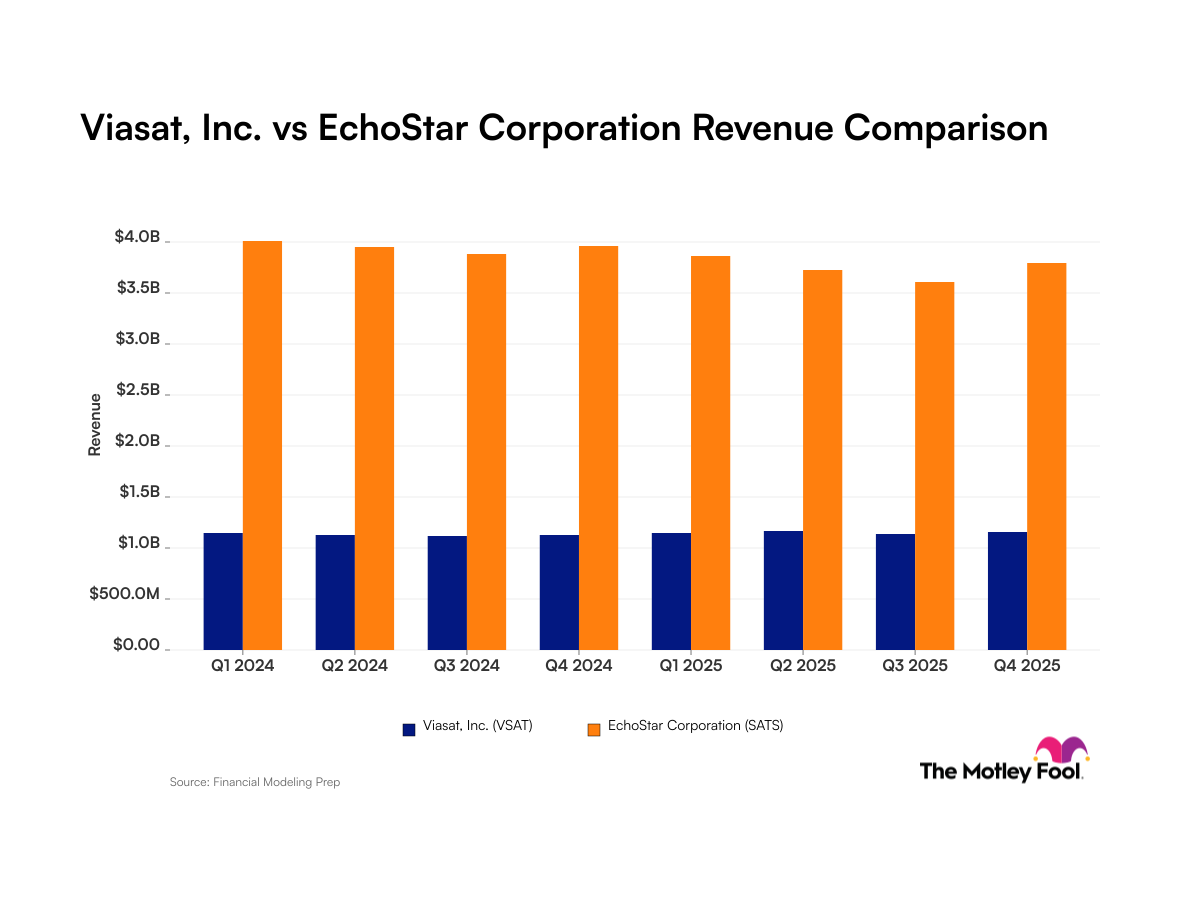
Financial Performance Analysis of Viasat and EchoStar

- Viasat Revenue Stability: Viasat reported $1.2 billion in revenue for Q4 2025, with a net income margin of approximately 2%, indicating its competitive strength in global fixed broadband services and commercial in-flight entertainment networking despite modest profitability.
- EchoStar Revenue Decline: EchoStar's revenue for Q4 2025 was $4.0 billion, but it faced a -21% EBIT margin primarily due to a channel carriage dispute, highlighting significant challenges in its broadcasting sector operations.
- Intensifying Industry Competition: While Viasat's annual revenue has increased by nearly 6% and EchoStar's has declined by about 12%, both companies have seen their stocks rise significantly, with Viasat up 76% and EchoStar soaring 604% over the past three years, reflecting strong market demand for satellite connectivity.
- Future Threats: SpaceX's satellite broadband services pose a competitive threat to both Viasat and EchoStar, as both companies have requested the FCC to reject Starlink upgrades, indicating increasing competitive pressures within the industry.
See More

Viasat vs EchoStar: Financial Performance Comparison
- Revenue Stability Comparison: Over the last eight quarters, Viasat has maintained stable quarterly revenues, while EchoStar has experienced a steady decline, indicating Viasat's advantage in long-term revenue stability despite EchoStar's significantly higher overall revenue.
- Profitability Discrepancy: As of December 31, 2025, Viasat reported a net income margin of approximately 2%, while EchoStar faced a -21% EBIT margin, suggesting Viasat's superior profitability, which may attract more conservative investors.
- Competitive Threat: With SpaceX planning to launch additional satellites, both Viasat and EchoStar face potential competitive threats, as they have requested the FCC to reject Starlink upgrades to prevent interference with their own equipment, highlighting increasing market competition.
- Stock Performance Divergence: Despite Viasat's annual revenue growth of nearly 6% and EchoStar's decline of about 12%, Viasat's stock has risen 76% over the past three years, while EchoStar's soared by 604%, reflecting differing investment attractiveness in the market.
See More
Viasat Stock Surpasses Analyst Target Price
- Stock Performance: Viasat Inc's shares recently traded above the average analyst 12-month target price of $60.57, currently at $65.91, indicating market optimism regarding its future performance.
- Analyst Reaction: When a stock reaches an analyst's target price, they typically either downgrade or adjust the target higher, reflecting changes in market confidence regarding the company's fundamentals.
- Target Price Distribution: Among analysts covered by Zacks, Viasat's average target price is $60.57 with a standard deviation of $17.319, indicating significant variance in analysts' outlooks for the stock's future performance.
- Investor Signal: The rise in Viasat's stock price provides investors with a strong signal to reassess the company, prompting them to consider whether the current valuation has peaked or if there is potential for further upside.
See More
AVUV ETF 52-Week Price Fluctuation Analysis
- Price Range Analysis: The AVUV ETF has a 52-week low of $82.205 and a high of $120.46, with the latest trade at $119.16, indicating stability near its high point, which may attract investor interest in its price movements.
- Technical Analysis Tool: Comparing the latest share price to the 200-day moving average can provide valuable insights for investors, helping to assess market trends and potential buy or sell opportunities.
- ETF Trading Mechanism: Exchange-traded funds (ETFs) trade like stocks, where investors are buying and selling 'units' that can be created or destroyed based on investor demand, impacting the fund's liquidity and market performance.
- Inflows and Outflows Monitoring: Weekly monitoring of changes in shares outstanding for ETFs helps identify those experiencing significant inflows or outflows, where inflows necessitate purchasing underlying assets, while outflows may lead to selling, thus affecting individual stock performance.
See More
Surge in Options Trading Volume for NVIDIA and Viasat
- NVIDIA Options Volume: NVIDIA's options trading volume reached 2.4 million contracts, representing approximately 237.4 million shares, exceeding 158% of its average daily trading volume over the past month, indicating strong market interest in its future performance.
- High-Frequency Contracts: Notably, the $212.50 strike call option expiring on April 29, 2026, saw 211,249 contracts traded today, equating to about 21.1 million shares, reflecting investor expectations for a price increase in NVIDIA.
- Viasat Options Activity: Viasat's options trading volume stood at 23,077 contracts, representing approximately 2.3 million shares, or about 149% of its average daily trading volume over the past month, showcasing active market interest in its stock.
- Put Option Trading: The $40 strike put option expiring on September 18, 2026, recorded a trading volume of 7,601 contracts, approximately 760,100 shares, indicating investor concerns regarding potential price declines for Viasat.
See More
FCC Rejects Expansion of Satellite Spectrum Access
- FCC Decision Impacts Market: The FCC's rejection of requests from satellite operators, including AST SpaceMobile, to expand access to the 1.5 GHz and 2 GHz bands confirms existing control, limiting AST's expansion plans and potentially diminishing its competitive edge in the market.
- Stock Price Decline: AST SpaceMobile's shares have dropped 8% this week, closing at $78.75 on Thursday, reflecting cautious investor sentiment in response to the FCC ruling, particularly as competition with SpaceX and Amazon intensifies.
- Satellite Launch Progress: Despite FCC restrictions, AST SpaceMobile continues to advance its next-generation satellites, with BlueBird-8 through BlueBird-10 expected to be ready for shipment within 30 days, demonstrating the company's ongoing commitment to technological development.
- Mixed Investor Sentiment: While retail sentiment for ASTS remains bullish, concerns about the stock price persist, with users on social media expressing disappointment over the lack of a clear launch schedule, which could impact future investment decisions.
See More
Financial Performance Analysis of Viasat and EchoStar
- Viasat Revenue Stability: Viasat reported $1.2 billion in revenue for Q4 2025, with a net income margin of approximately 2%, indicating its competitive strength in global fixed broadband services and commercial in-flight entertainment networking despite modest profitability.
- EchoStar Revenue Decline: EchoStar's revenue for Q4 2025 was $4.0 billion, but it faced a -21% EBIT margin primarily due to a channel carriage dispute, highlighting significant challenges in its broadcasting sector operations.
- Intensifying Industry Competition: While Viasat's annual revenue has increased by nearly 6% and EchoStar's has declined by about 12%, both companies have seen their stocks rise significantly, with Viasat up 76% and EchoStar soaring 604% over the past three years, reflecting strong market demand for satellite connectivity.
- Future Threats: SpaceX's satellite broadband services pose a competitive threat to both Viasat and EchoStar, as both companies have requested the FCC to reject Starlink upgrades, indicating increasing competitive pressures within the industry.
See More
Viasat vs EchoStar: Financial Performance Comparison
- Revenue Stability Comparison: Over the last eight quarters, Viasat has maintained stable quarterly revenues, while EchoStar has experienced a steady decline, indicating Viasat's advantage in long-term revenue stability despite EchoStar's significantly higher overall revenue.
- Profitability Discrepancy: As of December 31, 2025, Viasat reported a net income margin of approximately 2%, while EchoStar faced a -21% EBIT margin, suggesting Viasat's superior profitability, which may attract more conservative investors.
- Competitive Threat: With SpaceX planning to launch additional satellites, both Viasat and EchoStar face potential competitive threats, as they have requested the FCC to reject Starlink upgrades to prevent interference with their own equipment, highlighting increasing market competition.
- Stock Performance Divergence: Despite Viasat's annual revenue growth of nearly 6% and EchoStar's decline of about 12%, Viasat's stock has risen 76% over the past three years, while EchoStar's soared by 604%, reflecting differing investment attractiveness in the market.
See More