AI Supercycle Shift Benefits Broadcom and Others
Written by Emily J. Thompson, Senior Investment Analyst
Updated: 1 hour ago
0mins

Should l Buy AVGO?
Source: Fool
- AI Infrastructure Boom: With the surge in demand for computing power to train large language models, Broadcom (market cap $1.5 trillion) leads in Ethernet switches and data center networking components, driving a 6.21% stock price increase and highlighting its critical role in the AI supercycle.
- ASIC Technology Advantage: Broadcom's leadership in application-specific integrated circuit (ASIC) technology enables it to design custom chips for clients, particularly in the inference market, where such designs maximize data throughput and reduce energy consumption, further solidifying its market position.
- Alphabet's Cost Advantage: Alphabet's collaboration with Broadcom to develop tensor processing units (TPUs) has resulted in a 44% total cost of ownership advantage in AI workloads compared to competitors relying on Nvidia GPUs, showcasing its optimized hardware and software capabilities that enhance market competitiveness.
- Growing Data Center Networking Demand: Arista Networks (market cap $159 billion) leverages its Extensible Operating System (EOS) software platform alongside Broadcom's networking components to meet the increasing demand for AI chip clusters, which is expected to drive further expansion of its customer base and revenue growth.
Trade with 70% Backtested Accuracy
Stop guessing "Should I Buy AVGO?" and start using high-conviction signals backed by rigorous historical data.
Sign up today to access powerful investing tools and make smarter, data-driven decisions.
Analyst Views on AVGO
Wall Street analysts forecast AVGO stock price to rise
30 Analyst Rating
29 Buy
1 Hold
0 Sell
Strong Buy
Current: 314.430

Low
370.00
Averages
457.75
High
525.00
Current: 314.430
Low
370.00
Averages
457.75
High
525.00
About AVGO
Broadcom Inc. is a global technology firm that designs, develops, and supplies a range of semiconductors, enterprise software and security solutions. The Company operates through two segments: semiconductor solutions and infrastructure software. Its semiconductor solutions segment includes all of its product lines and intellectual property (IP) licensing. It provides a variety of radio frequency semiconductor devices, wireless connectivity solutions, custom touch controllers, and inductive charging solutions for mobile applications. Its infrastructure software segment includes its private and hybrid cloud, application development and delivery, software-defined edge, application networking and security, mainframe, distributed and cybersecurity solutions, and its FC SAN business. It provides a portfolio of software solutions that enable customers to plan, develop, automate, manage and secure applications across mainframe, distributed, mobile and cloud platforms.
About the author

Emily J. Thompson
Emily J. Thompson, a Chartered Financial Analyst (CFA) with 12 years in investment research, graduated with honors from the Wharton School. Specializing in industrial and technology stocks, she provides in-depth analysis for Intellectia’s earnings and market brief reports.

Broadcom Projects Over $100 Billion Revenue by 2027

- Significant Revenue Growth: Broadcom reported a 29% year-over-year revenue increase last quarter, reaching $19.3 billion, with management projecting a 47% year-over-year growth to $22 billion in the second quarter, highlighting strong demand and market potential in the AI sector.
- Optimistic 2027 Outlook: CEO Hock Tan revealed that Broadcom expects to generate over $100 billion in revenue by 2027, a target primarily driven by customer demand for AI chips and the company's robust capabilities in custom chips and networking equipment.
- Customer Demand Drivers: Broadcom's revenue outlook is bolstered by close collaborations with key clients like Google and OpenAI, who are accelerating investments in AI infrastructure, particularly with Google's next-generation Ironwood chip and OpenAI's custom chip plans.
- Supply Chain Advantages: Broadcom has secured leading-edge wafers and high-bandwidth memory, ensuring it can meet customer demands through 2028, thereby mitigating risks associated with chip production bottlenecks and enhancing the company's competitive position in the market.
See More

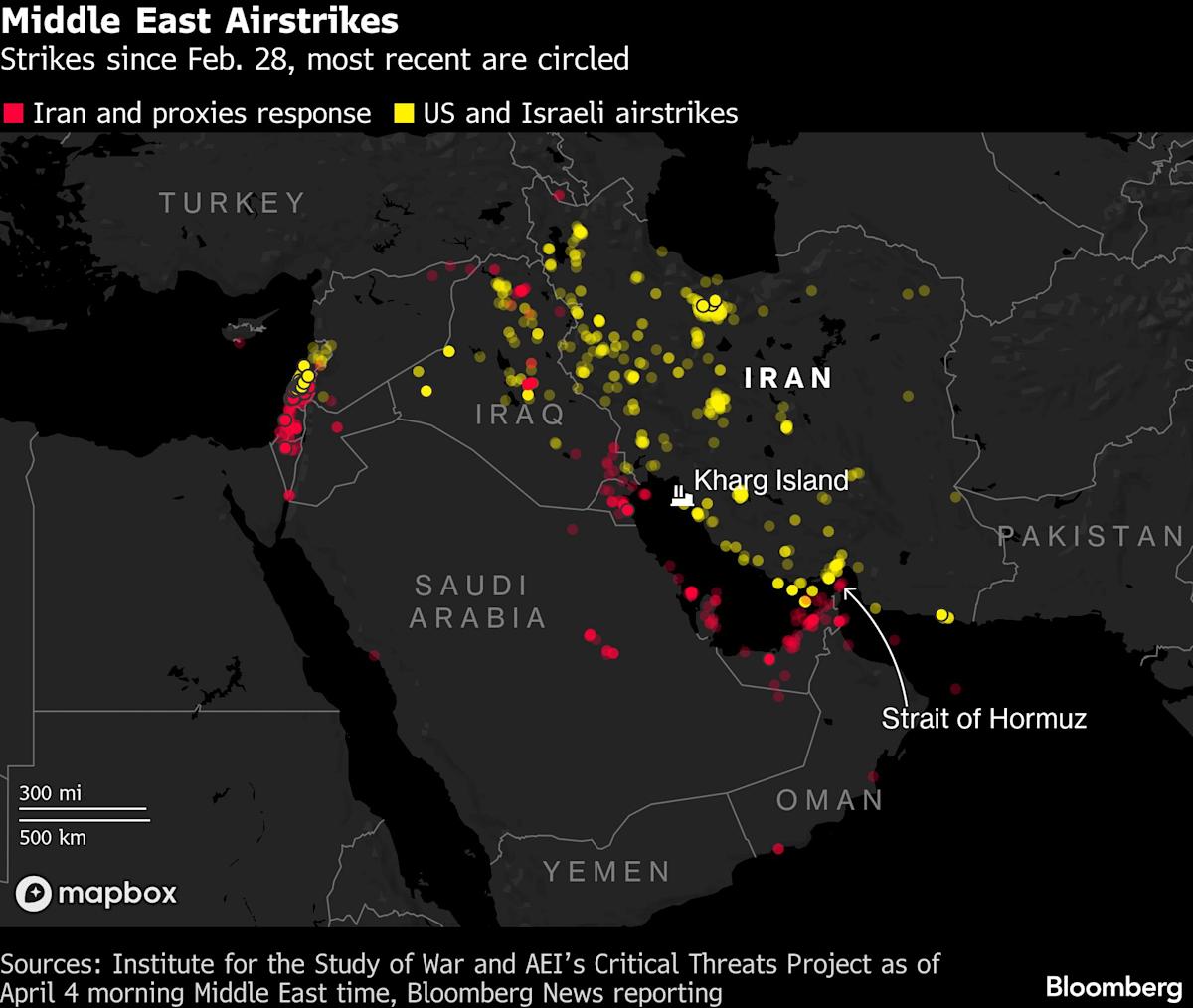
Trump Announces Iran Ceasefire, Markets Rally


- Market Reaction: Trump's announcement to suspend attacks on Iran led to a market rally, with oil prices plummeting over 14% to below $100 per barrel, alleviating global supply chain pressures caused by the conflict.
- Ceasefire Agreement: Iran agreed to abide by the ceasefire, allowing safe passage through the Strait of Hormuz, a crucial artery for global oil flows, indicating a de-escalation in regional tensions.
- Diplomatic Mediation: Pakistan played a mediating role in the conflict, facilitating a two-week ceasefire agreement, with Trump noting it was based on Iran's 10-point proposal, underscoring the importance of diplomatic efforts.
- Impact of Oil Price Volatility: The conflict has caused U.S. jet fuel prices to nearly double, prompting some airlines to consider cutting international flights, reflecting the market's sensitivity to oil price fluctuations.
See More

AI Supercycle Shift Benefits Broadcom and Others

- AI Infrastructure Boom: With the surge in demand for computing power to train large language models, Broadcom (market cap $1.5 trillion) leads in Ethernet switches and data center networking components, driving a 6.21% stock price increase and highlighting its critical role in the AI supercycle.
- ASIC Technology Advantage: Broadcom's leadership in application-specific integrated circuit (ASIC) technology enables it to design custom chips for clients, particularly in the inference market, where such designs maximize data throughput and reduce energy consumption, further solidifying its market position.
- Alphabet's Cost Advantage: Alphabet's collaboration with Broadcom to develop tensor processing units (TPUs) has resulted in a 44% total cost of ownership advantage in AI workloads compared to competitors relying on Nvidia GPUs, showcasing its optimized hardware and software capabilities that enhance market competitiveness.
- Growing Data Center Networking Demand: Arista Networks (market cap $159 billion) leverages its Extensible Operating System (EOS) software platform alongside Broadcom's networking components to meet the increasing demand for AI chip clusters, which is expected to drive further expansion of its customer base and revenue growth.
See More

AI Supercycle Drives Data Center Networking Growth
- Market Trend Analysis: Despite a rotation out of tech stocks this year, the AI supercycle continues, with companies like Broadcom and Arista Networks positioned at the intersection of this new trend, expected to benefit significantly.
- Broadcom's Technological Edge: As a leader in Ethernet switches and ASIC technology, Broadcom enhances AI cluster performance and reduces congestion in data centers, thereby improving overall efficiency to meet the growing demand for AI computing.
- Alphabet's Cost Advantage: Alphabet's collaboration with Broadcom on TPUs allows it to achieve a 44% lower total cost of ownership compared to Nvidia servers, giving it a competitive edge in the high-performance inference market and attracting significant orders like the $21 billion from Anthropic.
- AMD and Arm's Market Outlook: AMD and Arm Holdings are actively developing new CPU architectures for agentic AI, with projections indicating the data center CPU market could reach $100 billion in five years, and Arm targeting a 15% market share, positioning both for strong growth in this trend.
See More

US Stocks Fluctuate Slightly as Oil Prices Rise Impact Market


- Market Fluctuations: The S&P 500 Index rose by 0.08%, while the Dow Jones Industrial Average fell by 0.18%, and the Nasdaq 100 Index increased by 0.04%, indicating a cautious market response amid rising oil prices and geopolitical tensions.
- Oil Price Impact: Crude oil prices surged to a four-week high due to escalating tensions with Iran, leading to declines in airline and cruise line stocks, with Norwegian Cruise Line Holdings, Carnival, and Royal Caribbean all dropping over 3%.
- Economic Data: February's non-defense capital goods new orders rose by 0.6% month-over-month, surpassing the expected 0.5%, indicating an improvement in capital spending, although consumer credit growth fell short of expectations, potentially affecting consumer confidence.
- Fed Policy Expectations: The market is pricing in only a 3% chance of a 25 basis point rate hike at the Fed's April meeting, reflecting investor caution regarding future monetary policy, especially in light of rising oil prices that could drive inflation.
See More

Trump Extends Iran Deadline by Two Weeks


- Futures Market Surge: Futures jumped as President Trump agreed to extend the Iran deadline by two weeks, reflecting investor optimism about future market stability, which may encourage short-term investment inflows.
- Oil Price Plunge: Oil prices dived in response to the news, likely due to market expectations of stable supply, alleviating upward pressure on prices and impacting the earnings outlook for related energy companies.
- Market Reaction Analysis: Investors welcomed Trump's decision, believing it could help avoid escalating tensions with Iran, thereby potentially stabilizing the global economy, particularly in energy-intensive sectors.
- Policy Impact Assessment: This move not only delays potential economic sanctions but may also create space for future diplomatic negotiations, influencing international relations and global market dynamics.
See More
Broadcom Projects Over $100 Billion Revenue by 2027
- Significant Revenue Growth: Broadcom reported a 29% year-over-year revenue increase last quarter, reaching $19.3 billion, with management projecting a 47% year-over-year growth to $22 billion in the second quarter, highlighting strong demand and market potential in the AI sector.
- Optimistic 2027 Outlook: CEO Hock Tan revealed that Broadcom expects to generate over $100 billion in revenue by 2027, a target primarily driven by customer demand for AI chips and the company's robust capabilities in custom chips and networking equipment.
- Customer Demand Drivers: Broadcom's revenue outlook is bolstered by close collaborations with key clients like Google and OpenAI, who are accelerating investments in AI infrastructure, particularly with Google's next-generation Ironwood chip and OpenAI's custom chip plans.
- Supply Chain Advantages: Broadcom has secured leading-edge wafers and high-bandwidth memory, ensuring it can meet customer demands through 2028, thereby mitigating risks associated with chip production bottlenecks and enhancing the company's competitive position in the market.
See More
Trump Announces Iran Ceasefire, Markets Rally
- Market Reaction: Trump's announcement to suspend attacks on Iran led to a market rally, with oil prices plummeting over 14% to below $100 per barrel, alleviating global supply chain pressures caused by the conflict.
- Ceasefire Agreement: Iran agreed to abide by the ceasefire, allowing safe passage through the Strait of Hormuz, a crucial artery for global oil flows, indicating a de-escalation in regional tensions.
- Diplomatic Mediation: Pakistan played a mediating role in the conflict, facilitating a two-week ceasefire agreement, with Trump noting it was based on Iran's 10-point proposal, underscoring the importance of diplomatic efforts.
- Impact of Oil Price Volatility: The conflict has caused U.S. jet fuel prices to nearly double, prompting some airlines to consider cutting international flights, reflecting the market's sensitivity to oil price fluctuations.
See More
AI Supercycle Shift Benefits Broadcom and Others
- AI Infrastructure Boom: With the surge in demand for computing power to train large language models, Broadcom (market cap $1.5 trillion) leads in Ethernet switches and data center networking components, driving a 6.21% stock price increase and highlighting its critical role in the AI supercycle.
- ASIC Technology Advantage: Broadcom's leadership in application-specific integrated circuit (ASIC) technology enables it to design custom chips for clients, particularly in the inference market, where such designs maximize data throughput and reduce energy consumption, further solidifying its market position.
- Alphabet's Cost Advantage: Alphabet's collaboration with Broadcom to develop tensor processing units (TPUs) has resulted in a 44% total cost of ownership advantage in AI workloads compared to competitors relying on Nvidia GPUs, showcasing its optimized hardware and software capabilities that enhance market competitiveness.
- Growing Data Center Networking Demand: Arista Networks (market cap $159 billion) leverages its Extensible Operating System (EOS) software platform alongside Broadcom's networking components to meet the increasing demand for AI chip clusters, which is expected to drive further expansion of its customer base and revenue growth.
See More
AI Supercycle Drives Data Center Networking Growth
- Market Trend Analysis: Despite a rotation out of tech stocks this year, the AI supercycle continues, with companies like Broadcom and Arista Networks positioned at the intersection of this new trend, expected to benefit significantly.
- Broadcom's Technological Edge: As a leader in Ethernet switches and ASIC technology, Broadcom enhances AI cluster performance and reduces congestion in data centers, thereby improving overall efficiency to meet the growing demand for AI computing.
- Alphabet's Cost Advantage: Alphabet's collaboration with Broadcom on TPUs allows it to achieve a 44% lower total cost of ownership compared to Nvidia servers, giving it a competitive edge in the high-performance inference market and attracting significant orders like the $21 billion from Anthropic.
- AMD and Arm's Market Outlook: AMD and Arm Holdings are actively developing new CPU architectures for agentic AI, with projections indicating the data center CPU market could reach $100 billion in five years, and Arm targeting a 15% market share, positioning both for strong growth in this trend.
See More
US Stocks Fluctuate Slightly as Oil Prices Rise Impact Market
- Market Fluctuations: The S&P 500 Index rose by 0.08%, while the Dow Jones Industrial Average fell by 0.18%, and the Nasdaq 100 Index increased by 0.04%, indicating a cautious market response amid rising oil prices and geopolitical tensions.
- Oil Price Impact: Crude oil prices surged to a four-week high due to escalating tensions with Iran, leading to declines in airline and cruise line stocks, with Norwegian Cruise Line Holdings, Carnival, and Royal Caribbean all dropping over 3%.
- Economic Data: February's non-defense capital goods new orders rose by 0.6% month-over-month, surpassing the expected 0.5%, indicating an improvement in capital spending, although consumer credit growth fell short of expectations, potentially affecting consumer confidence.
- Fed Policy Expectations: The market is pricing in only a 3% chance of a 25 basis point rate hike at the Fed's April meeting, reflecting investor caution regarding future monetary policy, especially in light of rising oil prices that could drive inflation.
See More
Trump Extends Iran Deadline by Two Weeks
- Futures Market Surge: Futures jumped as President Trump agreed to extend the Iran deadline by two weeks, reflecting investor optimism about future market stability, which may encourage short-term investment inflows.
- Oil Price Plunge: Oil prices dived in response to the news, likely due to market expectations of stable supply, alleviating upward pressure on prices and impacting the earnings outlook for related energy companies.
- Market Reaction Analysis: Investors welcomed Trump's decision, believing it could help avoid escalating tensions with Iran, thereby potentially stabilizing the global economy, particularly in energy-intensive sectors.
- Policy Impact Assessment: This move not only delays potential economic sanctions but may also create space for future diplomatic negotiations, influencing international relations and global market dynamics.
See More