Twilio's Stock Declines Amid Broader Market Weakness
Written by Emily J. Thompson, Senior Investment Analyst
Updated: Feb 05 2026
0mins
Source: Benzinga
Twilio Inc. experienced a significant decline, hitting a 5-day low as the stock fell by 6.43% during regular trading hours.
The drop in Twilio's stock price comes amid broader market weakness, with the Nasdaq-100 down 2.56% and the S&P 500 down 1.36%. This indicates a sector rotation, as Twilio's performance contrasts with the overall market trend.
Investors are closely monitoring Twilio's fundamentals, especially in the context of AI investment opportunities, as highlighted by analysts. However, the current market conditions have led to a cautious sentiment among investors.
Trade with 70% Backtested Accuracy
Stop guessing "Should I Buy TWLO?" and start using high-conviction signals backed by rigorous historical data.
Sign up today to access powerful investing tools and make smarter, data-driven decisions.
Analyst Views on TWLO
Wall Street analysts forecast TWLO stock price to fall
20 Analyst Rating
14 Buy
4 Hold
2 Sell
Moderate Buy
Current: 188.110

Low
100.00
Averages
146.28
High
185.00
Current: 188.110
Low
100.00
Averages
146.28
High
185.00
About TWLO
Twilio Inc. provides a customer engagement platform to build direct, personalized relationships with their customers everywhere in the world. Its platform provides developers with tools to build, scale, and deploy real-time communications within software applications. Its segments include Twilio Communications (Communications) and Twilio Segment (Segment). The Communications segment consists of a variety of application programming interfaces (APIs) and software solutions to optimize communications between its customers and their end users. Its key offerings in its Communications segment include Messaging, Voice, Email (includes Marketing Campaigns), Flex and User Authentication and Identity. Its Twilio Flex is a digital engagement center for the entire customer journey. Twilio Segment is a customer data platform that provides businesses with the tools to harness the power of contextual data by unifying real-time information collected throughout each customer’s journey into a profile.
About the author

Emily J. Thompson
Emily J. Thompson, a Chartered Financial Analyst (CFA) with 12 years in investment research, graduated with honors from the Wharton School. Specializing in industrial and technology stocks, she provides in-depth analysis for Intellectia’s earnings and market brief reports.

Investment Outlook for AI Stocks: Key Players and Trends


- Significant Revenue Growth: Nebius Group N.V. boasts a staggering revenue growth rate of 574.95% and a market cap of $56.9 billion, indicating strong performance in the AI sector that is likely to attract more investor interest.
- Market Leadership: Innodata Inc. shows a revenue growth rate of 40.1% with a market cap of $3.44 billion, solidifying its position in AI-driven solutions and paving the way for future business expansion.
- Technological Infrastructure: Arista Networks, Inc., a key provider of networking infrastructure for AI data centers, reports a revenue growth rate of 30.57% and a market cap of $196.94 billion, highlighting its critical role in supporting the AI ecosystem.
- Enterprise Software Integration: Twilio Inc. has a revenue growth rate of 15.67% and a market cap of $31.36 billion, leveraging its AI-integrated products to drive digital transformation for enterprise clients, enhancing its competitive edge in the market.
See More
IJH ETF 52-Week Price Range Analysis

- Price Range Analysis: The IJH ETF's 52-week low is $59.84 per share, with a high of $75.645, and the latest trade at $75.22 indicates stability near its peak, potentially attracting investor interest in its price movements.
- Technical Analysis Tool: Comparing the latest share price to the 200-day moving average provides valuable insights for investors, helping to assess market trends and identify potential buying opportunities, thereby optimizing investment decisions.
- ETF Unit Trading Mechanism: ETFs trade like stocks, where investors buy and sell 'units' that can be created or destroyed based on demand, offering flexibility that enhances their adaptability during market fluctuations.
- Inflows and Outflows Monitoring: Weekly monitoring of changes in shares outstanding for ETFs highlights those experiencing significant inflows (new units created) or outflows (old units destroyed), as these liquidity shifts can impact the performance of underlying stocks and overall market sentiment.
See More
Analysis of Declines in Twilio and Other Tech Stocks

- Market Reaction: Following the release of new models by Anthropic, Twilio's stock fell by 4.1%, indicating market concerns about advancements in AI, particularly as more capable AI agents challenge the justification for high-priced enterprise subscriptions.
- Financial Performance: Twilio's recent earnings report revealed Q1 2026 revenue of $1.41 billion, a 20% year-over-year increase, with adjusted earnings per share of $1.50, both surpassing Wall Street expectations and demonstrating significant improvement in profitability.
- Future Outlook: The company guided for Q2 revenue of $1.43 billion, reflecting management's optimistic view on future growth, while operating margin expanded from 2% last year to 7.7%, indicating enhanced operational efficiency.
- Long-term Investment Value: Despite a 47% increase since the beginning of the year, Twilio's current stock price remains 14.3% below its 52-week high, potentially presenting a buying opportunity for investors amid increasing market volatility.
See More

SpaceX Plans Record IPO, Aiming to Raise $75 Billion


- IPO Fundraising Scale: SpaceX plans to issue 555,555,555 shares at $135 each, aiming to raise $75 billion and achieve a valuation of $1.77 trillion, setting a historic record that reflects strong market confidence in its growth potential.
- Business Diversification: The company operates in three segments: rocket launches, satellite internet, and artificial intelligence, with the rocket launch segment having successfully launched approximately 650 times at a 99% success rate, solidifying its leadership in the aerospace market.
- Strategic Partnership Agreement: SpaceX has reached a deal with Alphabet to receive $920 million per month for computing capacity from 2026 to 2029, valued at $30 billion, which will significantly enhance the company's financial position and market competitiveness.
- Investment Risk Warning: Despite the optimistic IPO outlook, historical data shows that over half of the 30 largest IPOs in the past 15 years saw stock prices decline within the first week and at 12 months, indicating that investors should approach newly listed stocks with caution due to their volatility.
See More

SpaceX IPO Set to Break Historical Records
- Massive Fundraising: SpaceX plans to offer 555,555,555 shares at $135 each, aiming to raise $75 billion and achieve a valuation of $1.77 trillion, setting a historical record that reflects strong market confidence in its growth prospects.
- Diverse Business Segments: SpaceX operates in rocket launches, satellite internet, and artificial intelligence, with a notable 99% success rate in rocket launches and a network of approximately 9,600 Starlink satellites, enhancing its competitive edge globally.
- Intriguing Financials: In 2025, SpaceX generated $18.7 billion in revenue, a 33% year-over-year increase, but reported a net loss of $4.9 billion; however, an adjusted EBITDA of $6.6 billion indicates potential profitability, and a $30 billion deal with Alphabet will further improve its financial position.
- Investment Risk Advisory: Historical data shows that over half of the 30 largest IPOs in the past 15 years performed poorly in their first year, prompting investors to exercise caution, especially since founder Elon Musk will control 82% of the voting power, limiting retail investors' influence on company decisions.
See More
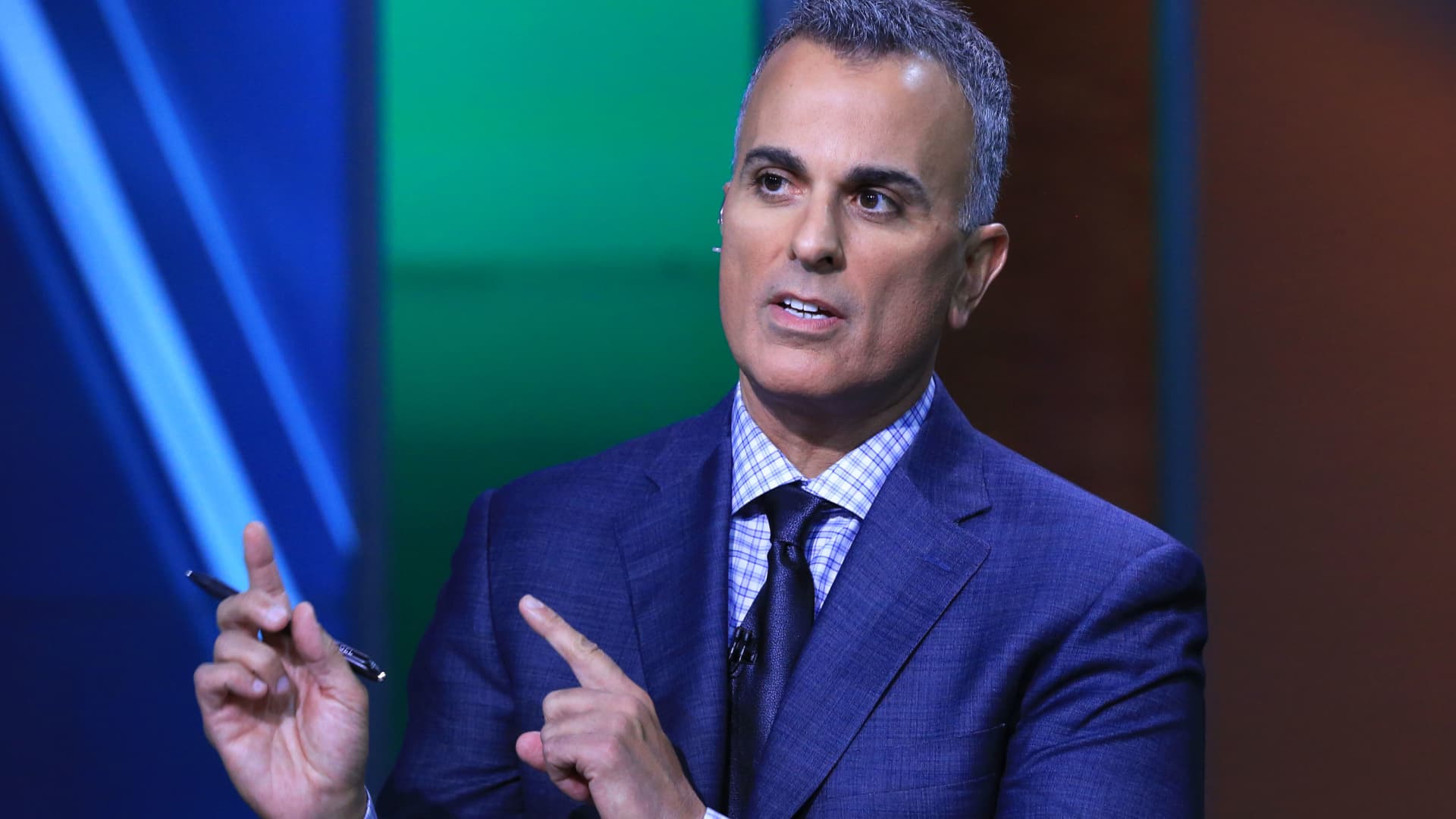
Investors Favor Twilio and Generac Amid AI Surge

- AI Investment Opportunities: Joe Terranova highlighted on CNBC that both Twilio and Generac are showing strong growth potential amid the AI surge, with Twilio's stock up about 60% year-to-date and Generac's stock having more than doubled, indicating robust fundamentals and market momentum.
- Technical Analysis Support: Terranova also mentioned Starbucks' technical performance, noting that while its stock has risen nearly 14% year-to-date, it has dropped almost 10% in the past month, currently finding support near the 200-day moving average, which may present a buying opportunity for investors.
- Retail Stock Performance: Investor Brian Belski recently purchased Dick's Sporting Goods and Academy Sports, with the former performing well due to its integration with Foot Locker; however, both stocks have underperformed the S&P 500 year-to-date, with Dick's stock up nearly 9%.
- Travel and Energy Investments: Belski also invested in American Airlines and Hyatt Hotels, the latter being a standout performer in the hotel sector and considered under-owned by institutions, while he pointed out Eversource Energy as an AI-related investment opportunity offering nearly a 5% dividend yield.
See More
Investment Outlook for AI Stocks: Key Players and Trends
- Significant Revenue Growth: Nebius Group N.V. boasts a staggering revenue growth rate of 574.95% and a market cap of $56.9 billion, indicating strong performance in the AI sector that is likely to attract more investor interest.
- Market Leadership: Innodata Inc. shows a revenue growth rate of 40.1% with a market cap of $3.44 billion, solidifying its position in AI-driven solutions and paving the way for future business expansion.
- Technological Infrastructure: Arista Networks, Inc., a key provider of networking infrastructure for AI data centers, reports a revenue growth rate of 30.57% and a market cap of $196.94 billion, highlighting its critical role in supporting the AI ecosystem.
- Enterprise Software Integration: Twilio Inc. has a revenue growth rate of 15.67% and a market cap of $31.36 billion, leveraging its AI-integrated products to drive digital transformation for enterprise clients, enhancing its competitive edge in the market.
See More
IJH ETF 52-Week Price Range Analysis
- Price Range Analysis: The IJH ETF's 52-week low is $59.84 per share, with a high of $75.645, and the latest trade at $75.22 indicates stability near its peak, potentially attracting investor interest in its price movements.
- Technical Analysis Tool: Comparing the latest share price to the 200-day moving average provides valuable insights for investors, helping to assess market trends and identify potential buying opportunities, thereby optimizing investment decisions.
- ETF Unit Trading Mechanism: ETFs trade like stocks, where investors buy and sell 'units' that can be created or destroyed based on demand, offering flexibility that enhances their adaptability during market fluctuations.
- Inflows and Outflows Monitoring: Weekly monitoring of changes in shares outstanding for ETFs highlights those experiencing significant inflows (new units created) or outflows (old units destroyed), as these liquidity shifts can impact the performance of underlying stocks and overall market sentiment.
See More
Analysis of Declines in Twilio and Other Tech Stocks
- Market Reaction: Following the release of new models by Anthropic, Twilio's stock fell by 4.1%, indicating market concerns about advancements in AI, particularly as more capable AI agents challenge the justification for high-priced enterprise subscriptions.
- Financial Performance: Twilio's recent earnings report revealed Q1 2026 revenue of $1.41 billion, a 20% year-over-year increase, with adjusted earnings per share of $1.50, both surpassing Wall Street expectations and demonstrating significant improvement in profitability.
- Future Outlook: The company guided for Q2 revenue of $1.43 billion, reflecting management's optimistic view on future growth, while operating margin expanded from 2% last year to 7.7%, indicating enhanced operational efficiency.
- Long-term Investment Value: Despite a 47% increase since the beginning of the year, Twilio's current stock price remains 14.3% below its 52-week high, potentially presenting a buying opportunity for investors amid increasing market volatility.
See More
SpaceX Plans Record IPO, Aiming to Raise $75 Billion
- IPO Fundraising Scale: SpaceX plans to issue 555,555,555 shares at $135 each, aiming to raise $75 billion and achieve a valuation of $1.77 trillion, setting a historic record that reflects strong market confidence in its growth potential.
- Business Diversification: The company operates in three segments: rocket launches, satellite internet, and artificial intelligence, with the rocket launch segment having successfully launched approximately 650 times at a 99% success rate, solidifying its leadership in the aerospace market.
- Strategic Partnership Agreement: SpaceX has reached a deal with Alphabet to receive $920 million per month for computing capacity from 2026 to 2029, valued at $30 billion, which will significantly enhance the company's financial position and market competitiveness.
- Investment Risk Warning: Despite the optimistic IPO outlook, historical data shows that over half of the 30 largest IPOs in the past 15 years saw stock prices decline within the first week and at 12 months, indicating that investors should approach newly listed stocks with caution due to their volatility.
See More
SpaceX IPO Set to Break Historical Records
- Massive Fundraising: SpaceX plans to offer 555,555,555 shares at $135 each, aiming to raise $75 billion and achieve a valuation of $1.77 trillion, setting a historical record that reflects strong market confidence in its growth prospects.
- Diverse Business Segments: SpaceX operates in rocket launches, satellite internet, and artificial intelligence, with a notable 99% success rate in rocket launches and a network of approximately 9,600 Starlink satellites, enhancing its competitive edge globally.
- Intriguing Financials: In 2025, SpaceX generated $18.7 billion in revenue, a 33% year-over-year increase, but reported a net loss of $4.9 billion; however, an adjusted EBITDA of $6.6 billion indicates potential profitability, and a $30 billion deal with Alphabet will further improve its financial position.
- Investment Risk Advisory: Historical data shows that over half of the 30 largest IPOs in the past 15 years performed poorly in their first year, prompting investors to exercise caution, especially since founder Elon Musk will control 82% of the voting power, limiting retail investors' influence on company decisions.
See More
Investors Favor Twilio and Generac Amid AI Surge
- AI Investment Opportunities: Joe Terranova highlighted on CNBC that both Twilio and Generac are showing strong growth potential amid the AI surge, with Twilio's stock up about 60% year-to-date and Generac's stock having more than doubled, indicating robust fundamentals and market momentum.
- Technical Analysis Support: Terranova also mentioned Starbucks' technical performance, noting that while its stock has risen nearly 14% year-to-date, it has dropped almost 10% in the past month, currently finding support near the 200-day moving average, which may present a buying opportunity for investors.
- Retail Stock Performance: Investor Brian Belski recently purchased Dick's Sporting Goods and Academy Sports, with the former performing well due to its integration with Foot Locker; however, both stocks have underperformed the S&P 500 year-to-date, with Dick's stock up nearly 9%.
- Travel and Energy Investments: Belski also invested in American Airlines and Hyatt Hotels, the latter being a standout performer in the hotel sector and considered under-owned by institutions, while he pointed out Eversource Energy as an AI-related investment opportunity offering nearly a 5% dividend yield.
See More