NVIDIA Reports Strong Q4 Earnings Amid Market Concerns

NVIDIA Corp's stock fell 5.00% as it crossed below the 5-day SMA, reflecting broader market weakness with the Nasdaq-100 down 1.70% and the S&P 500 down 0.92%.
Despite NVIDIA's strong fourth-quarter earnings report, which showed a 73% year-over-year revenue increase and exceeded analyst expectations, the stock experienced a decline. The company's data center revenue surged 75%, but concerns over AI spending sustainability and market competition, particularly in China, have led to investor caution. This situation highlights a sector rotation as investors reassess their positions in tech stocks amid broader market declines.
The implications of NVIDIA's performance indicate a strong foundation in the AI sector, yet the challenges posed by market dynamics and competition could impact future growth. Investors will need to monitor these developments closely.
Trade with 70% Backtested Accuracy
Analyst Views on NVDA

About NVDA
About the author


Nvidia's Stock Underperformance Despite Rapid Revenue Growth
- Significant Revenue Growth: Nvidia reported $68.1 billion in revenue for Q4 FY2026, a 73% increase year-over-year, with data center sales contributing $62.3 billion, up 75%, highlighting strong demand and market position in the AI sector.
- Capital Expenditure Commitments: The 'Magnificent Seven', including Alphabet, Microsoft, Amazon, and Meta, announced up to $700 billion in capital expenditures for 2023, which, while not all directed to Nvidia, will drive demand for its GPUs and impact future performance.
- Market Capitalization vs. Valuation: Despite Nvidia's market capitalization soaring to the highest in the past two years, its forward P/E ratio stands at 23.9, significantly below the three-year average of 79, indicating that the market may be underestimating its future growth potential, presenting a possible investment opportunity.
- Future Growth Expectations: CEO Jensen Huang forecasts that Nvidia could achieve $1 trillion in AI revenue by 2027, compared to just $215.9 billion in 2025, suggesting the company is on a trajectory of rapid growth that investors should closely monitor.
Asia-Pacific Markets Rise Amid Middle East Tensions
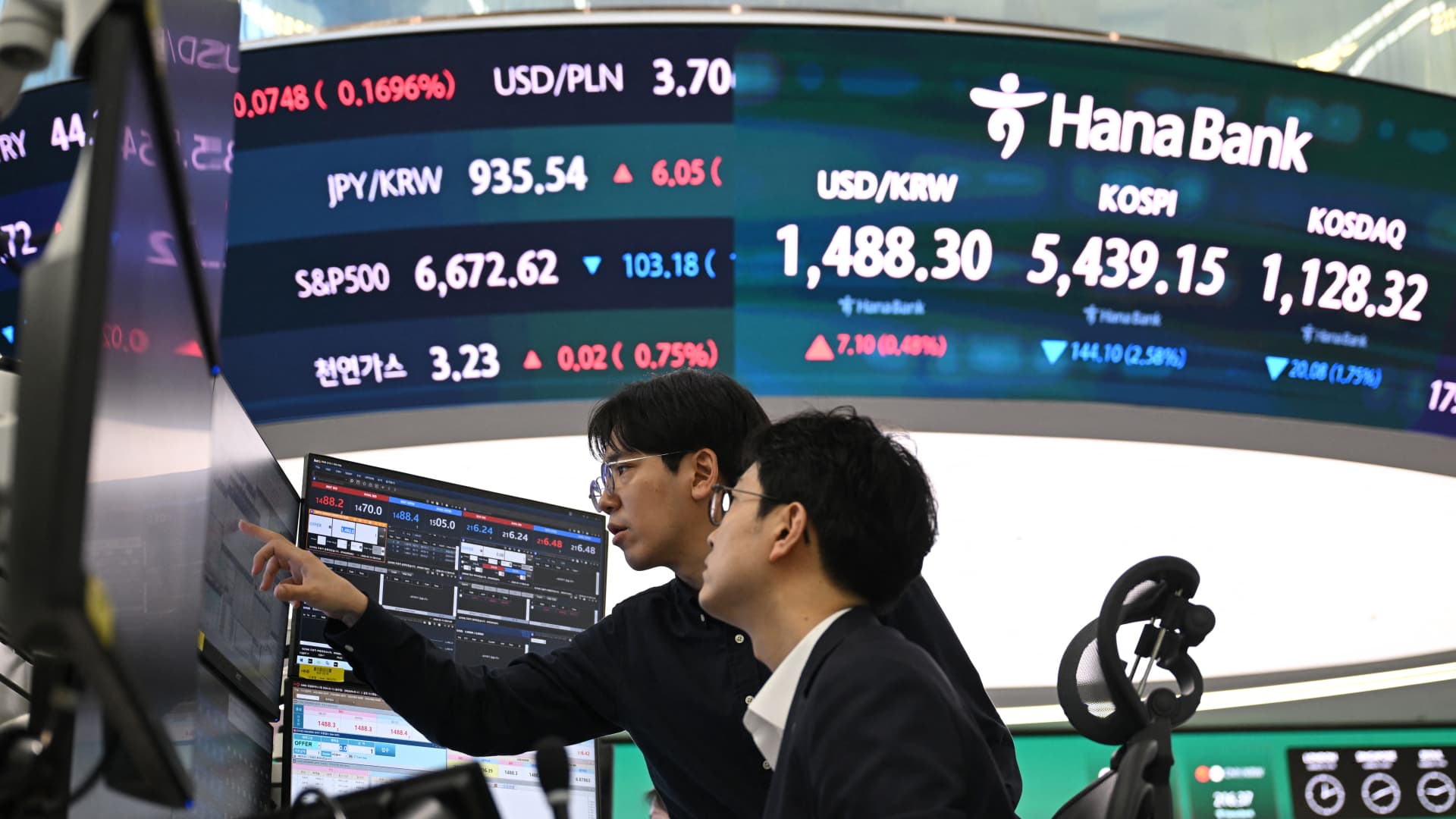
- Market Response: Asia-Pacific markets mostly rose on Monday, with South Korea's Kospi index up 1.19% and the small-cap Kosdaq gaining 1.14%, indicating cautious optimism among investors regarding the Middle East situation.
- Oil Price Fluctuations: West Texas Intermediate futures rose 6.14% to $89 per barrel, while Brent crude increased by 5.51% to $95.36 per barrel, reflecting the direct impact of escalating tensions in the Middle East on energy markets.
- Chinese Economic Data: China reported a 5% GDP growth in Q1, up from 4.5% in the previous quarter, but the central bank opted to keep benchmark lending rates unchanged due to heightened tensions in the Middle East, indicating a cautious outlook for future economic growth.
- U.S. Market Dynamics: Wall Street futures fell, with S&P 500 futures down 0.8% and Dow Jones Industrial Average futures shedding 425 points, reflecting investor concerns over global economic uncertainties.

Nebius Group: Potential and Challenges in AI Cloud Computing


- Significant Contract Backlog: Nebius Group has a contracted backlog approaching $50 billion for the 2027-2031 period, with 2025 revenue at $530 million, indicating substantial future growth potential, particularly through long-term partnerships with Microsoft and Meta.
- Market Valuation and Growth Expectations: With a current market cap of approximately $41 billion and analyst price targets ranging from $143 to $211, if Nebius successfully converts its backlog into revenue, projected 2026 revenue could reach $3 billion to $3.4 billion, with an EBITDA margin near 40%.
- Capital Expenditure Plans: Nebius plans to invest $16 billion to $20 billion in capital expenditures in 2026, which, while outpacing current revenue, could lay the groundwork for future growth if infrastructure is built on time.
- Technology and Market Risks: Despite Nvidia's investment validating its technology, Nebius faces execution risks, including the timely construction of infrastructure and potential changes in demand from key clients, which will directly impact its market performance.

Nebius Secures $50 Billion Backlog with Microsoft and Meta
- Significant Contract Backlog: Nebius has secured a five-year contract worth up to $19.4 billion with Microsoft and expanded its deal with Meta to $27 billion, resulting in a total contracted backlog approaching $50 billion for the 2027-2031 period, indicating strong visibility into future revenues.
- Capital Expenditure Plans: The company aims to scale its data center capacity from 170 megawatts to between 800 megawatts and 1 gigawatt by 2026, with projected revenues of $3 billion to $3.4 billion and an EBITDA margin near 40%, which could significantly enhance market expectations for its valuation.
- Technological Investment Support: Nvidia's $2 billion direct equity investment in Nebius underscores confidence in Nebius as a strategic partner for next-generation hyperscale AI infrastructure, further solidifying its position in the AI cloud computing sector.
- Risks and Challenges: Despite Nebius's competitive advantages, its plan to spend $16 billion to $20 billion in capital expenditures in 2026 presents execution risks and market demand fluctuations, necessitating careful assessment of its long-term growth potential.

Nebius Group Secures $46 Billion in AI Cloud Contracts
- Significant Contract Backlog: Nebius Group has a contracted backlog approaching $50 billion for the 2027-2031 period, with 2025 revenue at $530 million, indicating strong demand and future growth potential in the AI cloud computing market.
- Strategic Investment Support: Nvidia's $2 billion direct equity investment in Nebius underscores confidence in Nebius as a strategic partner for next-generation hyperscale AI infrastructure, further solidifying its position in the industry.
- Market Expectations Rise: Analysts have price targets for Nebius ranging from $143 to $211, with a current market cap of approximately $41 billion; if successful in converting contracts to revenue, projected 2026 revenue could reach $3 billion to $3.4 billion with an EBITDA margin near 40%.
- Capital Expenditure Risks: Nebius plans to spend $16 billion to $20 billion in capital expenditures in 2026, and while its backlog is substantial, execution risks and the timely construction of infrastructure will directly impact its future market performance.

SK hynix Begins Mass Production of 192GB SOCAMM2
- Next-Gen Memory Module: SK hynix has announced the mass production of the 192GB SOCAMM2 memory module, based on the latest 1cnm process, designed to provide an efficient memory solution for next-generation AI servers, which is expected to significantly enhance AI infrastructure performance.
- Power and Bandwidth Improvement: The SOCAMM2 product delivers over double the bandwidth compared to conventional RDIMMs, with over 75% improved power efficiency, optimizing design to meet the memory demands of large language model training and inference, thereby accelerating AI computation.
- Collaboration with NVIDIA: SK hynix is closely collaborating with NVIDIA to address bottlenecks in AI infrastructure, and the launch of SOCAMM2 will provide stable memory supply for global cloud service providers, further solidifying its leadership position in the AI memory market.
- Market Demand Response: As the AI market shifts focus from inference to training, SOCAMM2 is gaining significant attention as a next-generation memory solution, and SK hynix ensures to meet global customer demands through an early stabilized mass production system, enhancing its market competitiveness.
Nvidia's Stock Underperformance Despite Rapid Revenue Growth
- Significant Revenue Growth: Nvidia reported $68.1 billion in revenue for Q4 FY2026, a 73% increase year-over-year, with data center sales contributing $62.3 billion, up 75%, highlighting strong demand and market position in the AI sector.
- Capital Expenditure Commitments: The 'Magnificent Seven', including Alphabet, Microsoft, Amazon, and Meta, announced up to $700 billion in capital expenditures for 2023, which, while not all directed to Nvidia, will drive demand for its GPUs and impact future performance.
- Market Capitalization vs. Valuation: Despite Nvidia's market capitalization soaring to the highest in the past two years, its forward P/E ratio stands at 23.9, significantly below the three-year average of 79, indicating that the market may be underestimating its future growth potential, presenting a possible investment opportunity.
- Future Growth Expectations: CEO Jensen Huang forecasts that Nvidia could achieve $1 trillion in AI revenue by 2027, compared to just $215.9 billion in 2025, suggesting the company is on a trajectory of rapid growth that investors should closely monitor.
Asia-Pacific Markets Rise Amid Middle East Tensions
- Market Response: Asia-Pacific markets mostly rose on Monday, with South Korea's Kospi index up 1.19% and the small-cap Kosdaq gaining 1.14%, indicating cautious optimism among investors regarding the Middle East situation.
- Oil Price Fluctuations: West Texas Intermediate futures rose 6.14% to $89 per barrel, while Brent crude increased by 5.51% to $95.36 per barrel, reflecting the direct impact of escalating tensions in the Middle East on energy markets.
- Chinese Economic Data: China reported a 5% GDP growth in Q1, up from 4.5% in the previous quarter, but the central bank opted to keep benchmark lending rates unchanged due to heightened tensions in the Middle East, indicating a cautious outlook for future economic growth.
- U.S. Market Dynamics: Wall Street futures fell, with S&P 500 futures down 0.8% and Dow Jones Industrial Average futures shedding 425 points, reflecting investor concerns over global economic uncertainties.
Nebius Group: Potential and Challenges in AI Cloud Computing
- Significant Contract Backlog: Nebius Group has a contracted backlog approaching $50 billion for the 2027-2031 period, with 2025 revenue at $530 million, indicating substantial future growth potential, particularly through long-term partnerships with Microsoft and Meta.
- Market Valuation and Growth Expectations: With a current market cap of approximately $41 billion and analyst price targets ranging from $143 to $211, if Nebius successfully converts its backlog into revenue, projected 2026 revenue could reach $3 billion to $3.4 billion, with an EBITDA margin near 40%.
- Capital Expenditure Plans: Nebius plans to invest $16 billion to $20 billion in capital expenditures in 2026, which, while outpacing current revenue, could lay the groundwork for future growth if infrastructure is built on time.
- Technology and Market Risks: Despite Nvidia's investment validating its technology, Nebius faces execution risks, including the timely construction of infrastructure and potential changes in demand from key clients, which will directly impact its market performance.
Nebius Secures $50 Billion Backlog with Microsoft and Meta
- Significant Contract Backlog: Nebius has secured a five-year contract worth up to $19.4 billion with Microsoft and expanded its deal with Meta to $27 billion, resulting in a total contracted backlog approaching $50 billion for the 2027-2031 period, indicating strong visibility into future revenues.
- Capital Expenditure Plans: The company aims to scale its data center capacity from 170 megawatts to between 800 megawatts and 1 gigawatt by 2026, with projected revenues of $3 billion to $3.4 billion and an EBITDA margin near 40%, which could significantly enhance market expectations for its valuation.
- Technological Investment Support: Nvidia's $2 billion direct equity investment in Nebius underscores confidence in Nebius as a strategic partner for next-generation hyperscale AI infrastructure, further solidifying its position in the AI cloud computing sector.
- Risks and Challenges: Despite Nebius's competitive advantages, its plan to spend $16 billion to $20 billion in capital expenditures in 2026 presents execution risks and market demand fluctuations, necessitating careful assessment of its long-term growth potential.
Nebius Group Secures $46 Billion in AI Cloud Contracts
- Significant Contract Backlog: Nebius Group has a contracted backlog approaching $50 billion for the 2027-2031 period, with 2025 revenue at $530 million, indicating strong demand and future growth potential in the AI cloud computing market.
- Strategic Investment Support: Nvidia's $2 billion direct equity investment in Nebius underscores confidence in Nebius as a strategic partner for next-generation hyperscale AI infrastructure, further solidifying its position in the industry.
- Market Expectations Rise: Analysts have price targets for Nebius ranging from $143 to $211, with a current market cap of approximately $41 billion; if successful in converting contracts to revenue, projected 2026 revenue could reach $3 billion to $3.4 billion with an EBITDA margin near 40%.
- Capital Expenditure Risks: Nebius plans to spend $16 billion to $20 billion in capital expenditures in 2026, and while its backlog is substantial, execution risks and the timely construction of infrastructure will directly impact its future market performance.
SK hynix Begins Mass Production of 192GB SOCAMM2
- Next-Gen Memory Module: SK hynix has announced the mass production of the 192GB SOCAMM2 memory module, based on the latest 1cnm process, designed to provide an efficient memory solution for next-generation AI servers, which is expected to significantly enhance AI infrastructure performance.
- Power and Bandwidth Improvement: The SOCAMM2 product delivers over double the bandwidth compared to conventional RDIMMs, with over 75% improved power efficiency, optimizing design to meet the memory demands of large language model training and inference, thereby accelerating AI computation.
- Collaboration with NVIDIA: SK hynix is closely collaborating with NVIDIA to address bottlenecks in AI infrastructure, and the launch of SOCAMM2 will provide stable memory supply for global cloud service providers, further solidifying its leadership position in the AI memory market.
- Market Demand Response: As the AI market shifts focus from inference to training, SOCAMM2 is gaining significant attention as a next-generation memory solution, and SK hynix ensures to meet global customer demands through an early stabilized mass production system, enhancing its market competitiveness.