First Solar Faces Downgrade Amid Competitive Pressures

First Solar Inc (FSLR) saw its shares rise by 5.17% as it crossed above the 5-day SMA, despite broader market declines with the Nasdaq-100 down 0.91% and the S&P 500 down 0.34%.
The stock's movement comes amid a downgrade from BMO Capital, which lowered First Solar's rating from 'Outperform' to 'Market Perform' and cut its price target from $285 to $263, reflecting concerns over competitive threats from Tesla's solar expansion plans. Analysts believe that while Tesla's plans may create pressure, First Solar's established market position and cost advantages could mitigate the impact.
This situation highlights the ongoing competitive dynamics in the solar industry, where First Solar's technological leadership and proactive investor communication are crucial for maintaining investor confidence, even as market sentiment shifts due to external pressures.
Trade with 70% Backtested Accuracy
Analyst Views on FSLR

About FSLR
About the author


India Eases Investment Restrictions on China

- Policy Adjustment: The Indian cabinet has approved changes to its foreign direct investment policy, allowing investments from 'land bordering countries,' particularly in manufacturing sectors like electronic components and solar cells, signaling New Delhi's attempt to reset economic ties with Beijing after six years of tension.
- Accelerated Approval Process: Under the new rules, Chinese investments in Indian companies will be expedited with a processing time of 60 days, provided that the firms remain Indian-owned, which is expected to attract foreign capital and improve the ease of doing business.
- Increased Market Attractiveness: Experts suggest that allowing limited Chinese participation could facilitate multinational companies in shifting final assembly to India while maintaining access to Chinese inputs, thereby enhancing India's attractiveness within the 'China-plus-one' supply chain diversification strategies.
- Geopolitical Risks: Despite the easing of restrictions, experts remain cautious about the actual impact on investment flows, noting that unresolved border tensions and deeper strategic mistrust may hinder the influx of Chinese capital into India.

Alternative Energy Investments Surge Due to Rising Energy Demand


- Positive Performance of Renewable-Energy Stocks: Despite negative political headlines, the past year has been highly favorable for renewable-energy stock funds.
- Contrast with Political Climate: The strong performance of these funds contrasts sharply with the prevailing negative political environment, highlighting a disconnect between market trends and political narratives.
- Investor Sentiment: Investors may be increasingly optimistic about the future of renewable energy, leading to significant gains in this sector.
- Market Trends: The success of renewable-energy stocks suggests a growing trend towards sustainable investments, regardless of external political factors.

First Solar's Q4 2025 Earnings Reveal Growth Stagnation
- Disappointing Guidance: First Solar's 2026 revenue guidance of $4.9 to $5.2 billion falls short of Wall Street estimates by approximately $1 billion, indicating significant growth challenges, which led to a sharp decline in stock price as the market becomes more aware of underlying fundamental issues.
- Significant Order Decline: By the end of 2025, First Solar's contracted orders plummeted from 78.3 GW at the end of 2023 to just 50.1 GW, highlighting severe order depletion, with net bookings for 2025 reported at negative 0.9 GW, reflecting weak demand and insufficient market confidence.
- Tax Credit Dependency: The company benefits from $0.17 per watt in 45X tax credits, which constitutes 55% of its selling price; without these credits phasing out starting in 2030, gross margins could collapse from around 40% to 7-10%, severely impacting profitability.
- Manufacturing Issues and Capacity Expansion: First Solar faces quality control issues with its Series 7 modules, resulting in warranty reserves of up to $100 million, while also announcing capacity cuts in Malaysia and Vietnam, indicating risks associated with expanding capacity amid weakening demand.
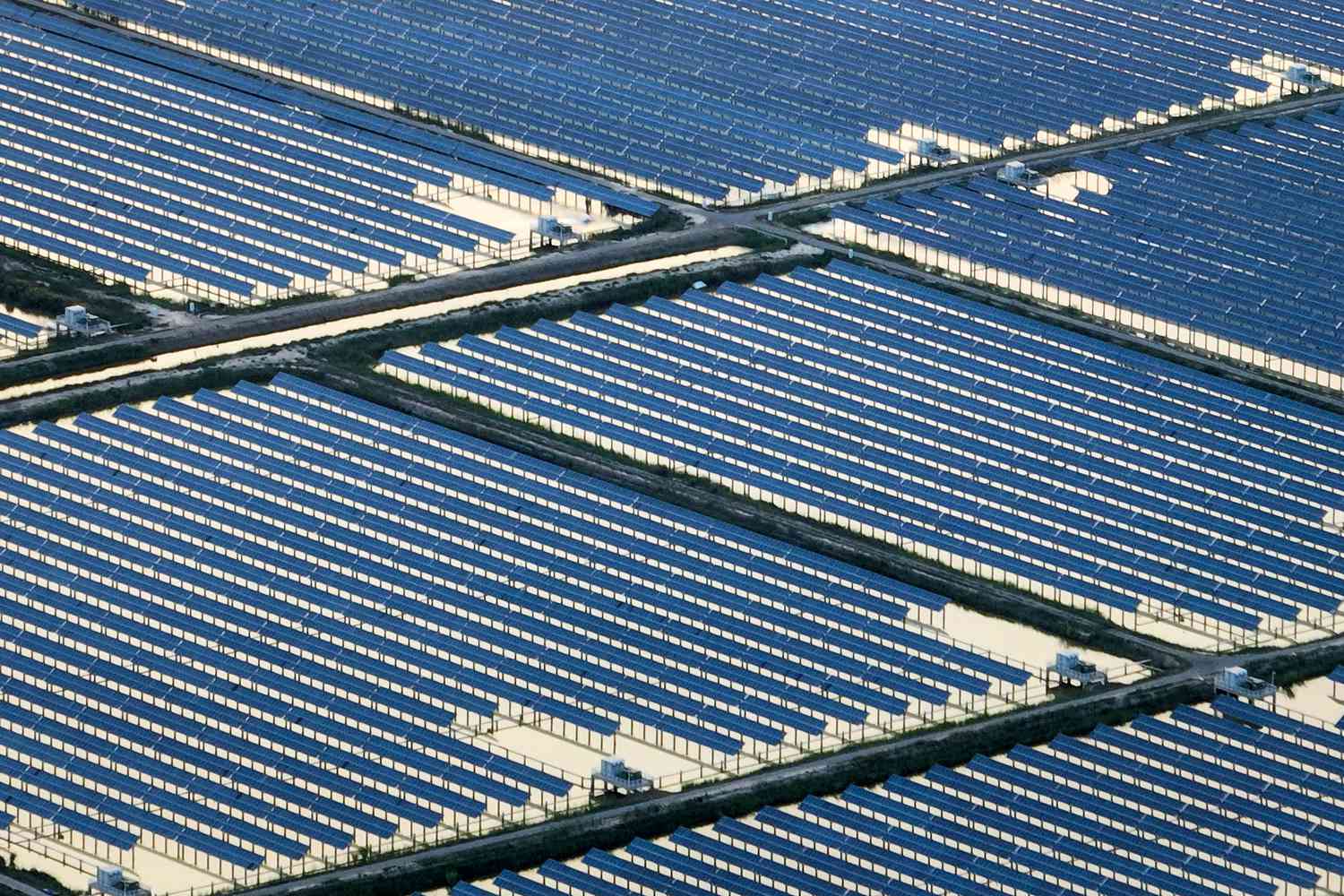
First Solar Inc. Downgraded Amid Earnings Miss
- Analyst Rating Changes: First Solar Inc. (FSLR) holds a consensus rating of Moderate Buy from 24 analysts; however, Deutsche Bank downgraded its rating to Hold from Buy and lowered the price target from $300 to $245, reflecting disappointment over the company's fourth-quarter earnings miss.
- Financial Performance Overview: The company reported fourth-quarter revenue of $1.7 billion, an increase of $0.1 billion year-over-year, with full-year net sales rising 24% to $5.2 billion, yet the fourth-quarter net income per diluted share of $4.84 fell short of market expectations.
- Guidance Downgrade: Jefferies reduced its price target from $260 to $205, citing concerns over the company's forward-looking guidance, which projected 2026 revenue between $4.9 billion and $5.2 billion, 17% below analysts' estimates.
- Market Competition Analysis: While First Solar leads the U.S. photovoltaic market specializing in cadmium telluride thin-film modules, analysts suggest that certain AI stocks present greater upside potential and lower downside risk, potentially influencing investor decisions.

Trump Pushes Tech Firms for Self-Powered AI Data Centers


- Self-Power Commitment: Trump is set to sign an agreement with major tech firms like Amazon, Google, and Meta, mandating them to supply their own power for AI data centers, addressing rising public anger over electricity prices, although the specifics of the commitment remain unclear.
- Rising Electricity Pressure: Average residential electricity prices in the U.S. increased by 6% in 2025, contrasting Trump's promise to halve prices during his term, highlighting the government's challenges in controlling energy costs, which could impact his support in the midterm elections.
- Implementation Challenges: The decentralized nature of electric grid regulations across states poses significant hurdles for the Trump administration in converting the pledge into actionable policy, with experts indicating that new federal legislation is necessary to address power supply shortages.
- Increased Political Pressure: Trump is leveraging his political influence to pressure tech companies into absorbing the costs associated with their data centers, despite the complexities arising from state-level regulation of power generation, which may complicate policy implementation.

FVAL Stock Price Analysis and ETF Dynamics

- Price Fluctuation Analysis: FVAL's 52-week low is $51.5832 per share, with a high of $74.6423, and the current trading price at $72.95 indicates volatility near the high, potentially influencing investor buying decisions.
- Technical Analysis Tool: Comparing the current stock price to the 200-day moving average can provide valuable insights for investors, aiding in market trend assessment and identifying potential buying opportunities.
- ETF Trading Mechanism: Exchange-traded funds (ETFs) trade similarly to stocks, where investors buy and sell 'units' that can be created or destroyed based on demand, impacting liquidity and market performance.
- Inflows and Outflows Monitoring: Weekly monitoring of changes in ETF shares outstanding focuses on those experiencing notable inflows (new units created) or outflows (old units destroyed), allowing for assessment of their impact on underlying assets and market trends.
India Eases Investment Restrictions on China
- Policy Adjustment: The Indian cabinet has approved changes to its foreign direct investment policy, allowing investments from 'land bordering countries,' particularly in manufacturing sectors like electronic components and solar cells, signaling New Delhi's attempt to reset economic ties with Beijing after six years of tension.
- Accelerated Approval Process: Under the new rules, Chinese investments in Indian companies will be expedited with a processing time of 60 days, provided that the firms remain Indian-owned, which is expected to attract foreign capital and improve the ease of doing business.
- Increased Market Attractiveness: Experts suggest that allowing limited Chinese participation could facilitate multinational companies in shifting final assembly to India while maintaining access to Chinese inputs, thereby enhancing India's attractiveness within the 'China-plus-one' supply chain diversification strategies.
- Geopolitical Risks: Despite the easing of restrictions, experts remain cautious about the actual impact on investment flows, noting that unresolved border tensions and deeper strategic mistrust may hinder the influx of Chinese capital into India.
Alternative Energy Investments Surge Due to Rising Energy Demand
- Positive Performance of Renewable-Energy Stocks: Despite negative political headlines, the past year has been highly favorable for renewable-energy stock funds.
- Contrast with Political Climate: The strong performance of these funds contrasts sharply with the prevailing negative political environment, highlighting a disconnect between market trends and political narratives.
- Investor Sentiment: Investors may be increasingly optimistic about the future of renewable energy, leading to significant gains in this sector.
- Market Trends: The success of renewable-energy stocks suggests a growing trend towards sustainable investments, regardless of external political factors.
First Solar's Q4 2025 Earnings Reveal Growth Stagnation
- Disappointing Guidance: First Solar's 2026 revenue guidance of $4.9 to $5.2 billion falls short of Wall Street estimates by approximately $1 billion, indicating significant growth challenges, which led to a sharp decline in stock price as the market becomes more aware of underlying fundamental issues.
- Significant Order Decline: By the end of 2025, First Solar's contracted orders plummeted from 78.3 GW at the end of 2023 to just 50.1 GW, highlighting severe order depletion, with net bookings for 2025 reported at negative 0.9 GW, reflecting weak demand and insufficient market confidence.
- Tax Credit Dependency: The company benefits from $0.17 per watt in 45X tax credits, which constitutes 55% of its selling price; without these credits phasing out starting in 2030, gross margins could collapse from around 40% to 7-10%, severely impacting profitability.
- Manufacturing Issues and Capacity Expansion: First Solar faces quality control issues with its Series 7 modules, resulting in warranty reserves of up to $100 million, while also announcing capacity cuts in Malaysia and Vietnam, indicating risks associated with expanding capacity amid weakening demand.
First Solar Inc. Downgraded Amid Earnings Miss
- Analyst Rating Changes: First Solar Inc. (FSLR) holds a consensus rating of Moderate Buy from 24 analysts; however, Deutsche Bank downgraded its rating to Hold from Buy and lowered the price target from $300 to $245, reflecting disappointment over the company's fourth-quarter earnings miss.
- Financial Performance Overview: The company reported fourth-quarter revenue of $1.7 billion, an increase of $0.1 billion year-over-year, with full-year net sales rising 24% to $5.2 billion, yet the fourth-quarter net income per diluted share of $4.84 fell short of market expectations.
- Guidance Downgrade: Jefferies reduced its price target from $260 to $205, citing concerns over the company's forward-looking guidance, which projected 2026 revenue between $4.9 billion and $5.2 billion, 17% below analysts' estimates.
- Market Competition Analysis: While First Solar leads the U.S. photovoltaic market specializing in cadmium telluride thin-film modules, analysts suggest that certain AI stocks present greater upside potential and lower downside risk, potentially influencing investor decisions.
Trump Pushes Tech Firms for Self-Powered AI Data Centers
- Self-Power Commitment: Trump is set to sign an agreement with major tech firms like Amazon, Google, and Meta, mandating them to supply their own power for AI data centers, addressing rising public anger over electricity prices, although the specifics of the commitment remain unclear.
- Rising Electricity Pressure: Average residential electricity prices in the U.S. increased by 6% in 2025, contrasting Trump's promise to halve prices during his term, highlighting the government's challenges in controlling energy costs, which could impact his support in the midterm elections.
- Implementation Challenges: The decentralized nature of electric grid regulations across states poses significant hurdles for the Trump administration in converting the pledge into actionable policy, with experts indicating that new federal legislation is necessary to address power supply shortages.
- Increased Political Pressure: Trump is leveraging his political influence to pressure tech companies into absorbing the costs associated with their data centers, despite the complexities arising from state-level regulation of power generation, which may complicate policy implementation.
FVAL Stock Price Analysis and ETF Dynamics
- Price Fluctuation Analysis: FVAL's 52-week low is $51.5832 per share, with a high of $74.6423, and the current trading price at $72.95 indicates volatility near the high, potentially influencing investor buying decisions.
- Technical Analysis Tool: Comparing the current stock price to the 200-day moving average can provide valuable insights for investors, aiding in market trend assessment and identifying potential buying opportunities.
- ETF Trading Mechanism: Exchange-traded funds (ETFs) trade similarly to stocks, where investors buy and sell 'units' that can be created or destroyed based on demand, impacting liquidity and market performance.
- Inflows and Outflows Monitoring: Weekly monitoring of changes in ETF shares outstanding focuses on those experiencing notable inflows (new units created) or outflows (old units destroyed), allowing for assessment of their impact on underlying assets and market trends.