Firefly Aerospace increases credit facility by $45 million

Firefly Aerospace Inc's stock rose by 3.01% as it reached a 20-day high. The company announced an increase in its revolving credit facility by $45 million, raising the total to $305 million, which is expected to provide additional financial flexibility to support its operations and growth initiatives.
This increase in the credit facility is a confirmed catalyst for Firefly Aerospace, as it enhances the company's financial position and ability to invest in future projects. The announcement reflects the company's proactive approach to securing funding, which is crucial for its ongoing operations and ambitions in the competitive space industry.
The implications of this financial maneuver are significant, as it positions Firefly Aerospace to better navigate the challenges of the space sector and capitalize on growth opportunities, especially in light of the increasing investor interest in space-related stocks.
Trade with 70% Backtested Accuracy
Analyst Views on FLY

About FLY
About the author


Firefly Partners with Nvidia for Lunar Imaging Service
- Collaborative Innovation: Firefly Aerospace (FLY) has partnered with Nvidia (NVDA) to embed an Nvidia Jetson module in high-resolution telescopes, enhancing the Ocula lunar imaging service's real-time data processing capabilities, which is expected to significantly improve customer decision-making.
- Mission Planning: The Ocula service will be activated on the Elytra spacecraft, targeted for launch no earlier than late 2026, serving as a long-haul communications relay and transfer vehicle for the Blue Ghost lander, with an operational lifespan of approximately five years in lunar orbit for continuous imaging.
- Technological Application: Firefly's AI software will enhance space domain awareness in lunar orbit, supporting advanced lunar surface mapping, mineral detection, and reconnaissance, thereby increasing the scientific value and commercial potential of the missions.
- Market Reaction: Firefly (FLY) shares rallied 9.8% in early afternoon trading, reaching a new high for 2026, reflecting positive market sentiment regarding its growth potential and demonstrating investor confidence in the space industry.

Firefly Aerospace Inc. Secures Contract to Launch Two More Elytra Vehicles for Blue Ghost Missions 3 and 4

Contract Award: Firefly Aerospace has been contracted to deploy two additional LEO (Low Earth Orbit) travel vehicles.
Mission Support: The new vehicles will support Blue Ghost missions 3 and 4.

FIREFLY AEROSPACE INC - OCULA SERVICE SET TO LAUNCH ON ELYTRA FOR BLUE GHOST MISSION 2 IN LATE 2026
- Mission Activation: Firefly Aerospace's mission, designated "Blue Ghost," is set to be activated in late 2026.
- Service Type: The mission will focus on lunar services, specifically targeting the deployment of payloads to the Moon.
Firefly Aerospace Facilitates On-Orbit Processing for Lunar Imaging Service Using NVIDIA Jetson
Partnership Announcement: Firefly Aerospace has partnered with NVIDIA to enhance on-orbit processing capabilities for moon imaging services.
Technological Advancements: The collaboration aims to leverage NVIDIA's Jetson platform to improve data processing and analysis for lunar missions.
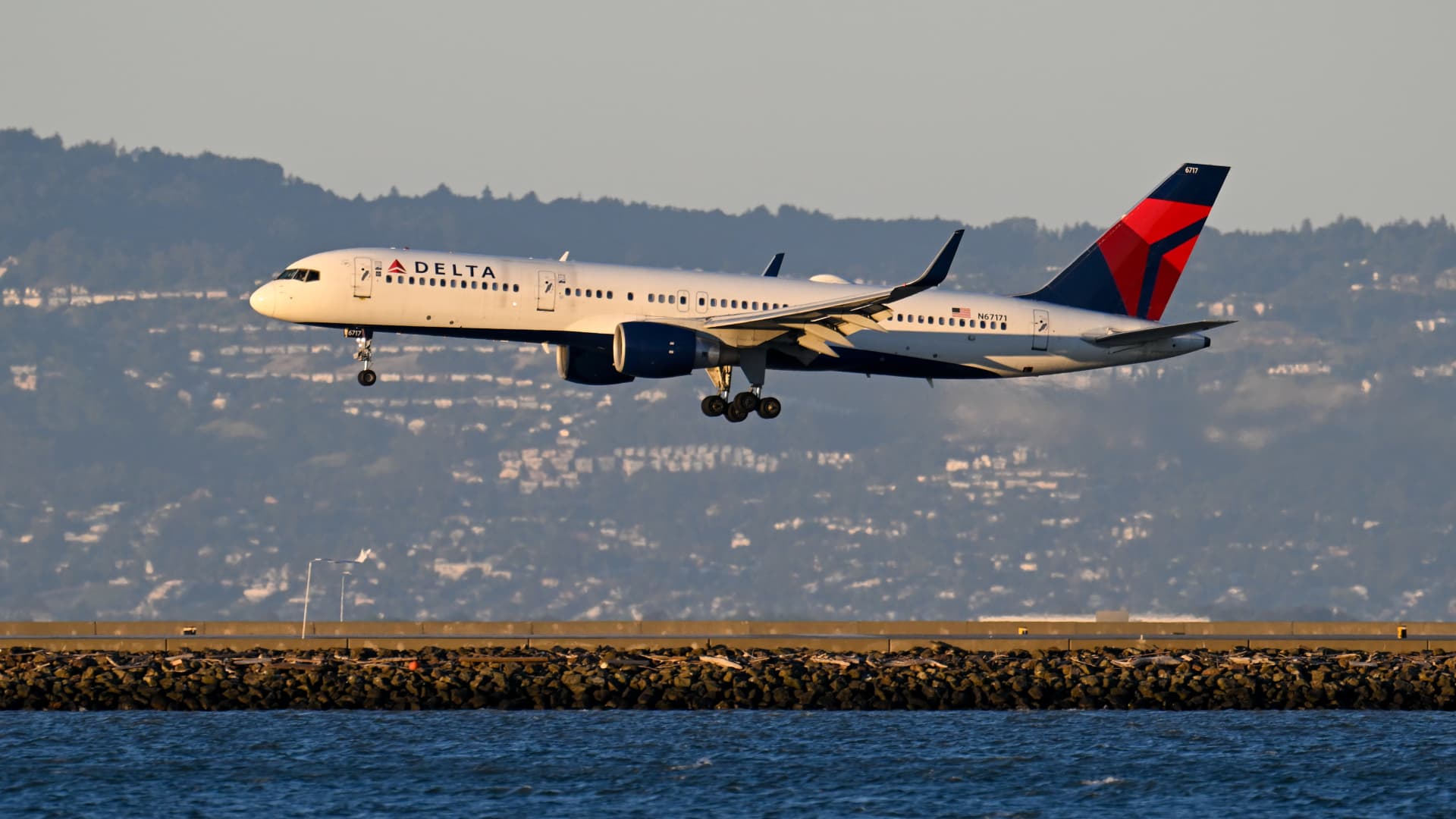
Delta Air Lines Raises Baggage Fees Amid Rising Fuel Costs


- Earnings Season Kickoff: Delta Air Lines is set to release its earnings report on Wednesday morning, marking the start of the earnings season for major airlines, which is expected to significantly impact market sentiment.
- Baggage Fee Increase: In response to rising fuel prices, Delta has announced an increase in checked baggage fees, a move that could affect customer travel choices and potentially boost company revenues amid cost pressures.
- Competitive Comparison: Delta's stock is down 5.5% in 2026, which is relatively better compared to American Airlines and United Airlines, which have seen declines of nearly 30% and 20% respectively, highlighting the intense competition in the airline industry.
- Chinese Tech Stocks Struggling: The KraneShares CSI China Internet ETF (KWEB) has dropped over 17% year-to-date, with notable laggards like Tencent Music, Trip.com, and NetEase facing significant losses, reflecting the challenges within the Chinese tech sector.

Space Economy Returns: Rocket Lab's Bright Future
- Rocket Lab's Leading Position: Rocket Lab has made significant strides in commercial rocket launches, successfully launching its small Electron rocket 21 times in 2025 and signing over 30 new launch contracts, indicating strong market demand and future growth potential.
- Revenue Growth and Profitability Challenges: Rocket Lab generated $403 million in revenue last year, surpassing its $199 million launch revenue, and while it faced a net loss of $200 million, the growth in equipment and service sales lays a foundation for future profitability.
- Firefly's Ambitious Goals: Firefly went public last year, raising $868 million, and although it reported $160 million in revenue with a net loss nearing $300 million, its lunar lander mission in partnership with NASA marks a significant breakthrough in the commercial space sector.
- Investment Choice Analysis: Despite Rocket Lab's price-to-sales ratio of 60 compared to Firefly's 32, investors with a long-term horizon may prefer Rocket Lab due to its superior track record in launching payloads for commercial customers, making it a more promising investment option.
Firefly Partners with Nvidia for Lunar Imaging Service
- Collaborative Innovation: Firefly Aerospace (FLY) has partnered with Nvidia (NVDA) to embed an Nvidia Jetson module in high-resolution telescopes, enhancing the Ocula lunar imaging service's real-time data processing capabilities, which is expected to significantly improve customer decision-making.
- Mission Planning: The Ocula service will be activated on the Elytra spacecraft, targeted for launch no earlier than late 2026, serving as a long-haul communications relay and transfer vehicle for the Blue Ghost lander, with an operational lifespan of approximately five years in lunar orbit for continuous imaging.
- Technological Application: Firefly's AI software will enhance space domain awareness in lunar orbit, supporting advanced lunar surface mapping, mineral detection, and reconnaissance, thereby increasing the scientific value and commercial potential of the missions.
- Market Reaction: Firefly (FLY) shares rallied 9.8% in early afternoon trading, reaching a new high for 2026, reflecting positive market sentiment regarding its growth potential and demonstrating investor confidence in the space industry.
Firefly Aerospace Inc. Secures Contract to Launch Two More Elytra Vehicles for Blue Ghost Missions 3 and 4
Contract Award: Firefly Aerospace has been contracted to deploy two additional LEO (Low Earth Orbit) travel vehicles.
Mission Support: The new vehicles will support Blue Ghost missions 3 and 4.
FIREFLY AEROSPACE INC - OCULA SERVICE SET TO LAUNCH ON ELYTRA FOR BLUE GHOST MISSION 2 IN LATE 2026
- Mission Activation: Firefly Aerospace's mission, designated "Blue Ghost," is set to be activated in late 2026.
- Service Type: The mission will focus on lunar services, specifically targeting the deployment of payloads to the Moon.
Firefly Aerospace Facilitates On-Orbit Processing for Lunar Imaging Service Using NVIDIA Jetson
Partnership Announcement: Firefly Aerospace has partnered with NVIDIA to enhance on-orbit processing capabilities for moon imaging services.
Technological Advancements: The collaboration aims to leverage NVIDIA's Jetson platform to improve data processing and analysis for lunar missions.
Delta Air Lines Raises Baggage Fees Amid Rising Fuel Costs
- Earnings Season Kickoff: Delta Air Lines is set to release its earnings report on Wednesday morning, marking the start of the earnings season for major airlines, which is expected to significantly impact market sentiment.
- Baggage Fee Increase: In response to rising fuel prices, Delta has announced an increase in checked baggage fees, a move that could affect customer travel choices and potentially boost company revenues amid cost pressures.
- Competitive Comparison: Delta's stock is down 5.5% in 2026, which is relatively better compared to American Airlines and United Airlines, which have seen declines of nearly 30% and 20% respectively, highlighting the intense competition in the airline industry.
- Chinese Tech Stocks Struggling: The KraneShares CSI China Internet ETF (KWEB) has dropped over 17% year-to-date, with notable laggards like Tencent Music, Trip.com, and NetEase facing significant losses, reflecting the challenges within the Chinese tech sector.
Space Economy Returns: Rocket Lab's Bright Future
- Rocket Lab's Leading Position: Rocket Lab has made significant strides in commercial rocket launches, successfully launching its small Electron rocket 21 times in 2025 and signing over 30 new launch contracts, indicating strong market demand and future growth potential.
- Revenue Growth and Profitability Challenges: Rocket Lab generated $403 million in revenue last year, surpassing its $199 million launch revenue, and while it faced a net loss of $200 million, the growth in equipment and service sales lays a foundation for future profitability.
- Firefly's Ambitious Goals: Firefly went public last year, raising $868 million, and although it reported $160 million in revenue with a net loss nearing $300 million, its lunar lander mission in partnership with NASA marks a significant breakthrough in the commercial space sector.
- Investment Choice Analysis: Despite Rocket Lab's price-to-sales ratio of 60 compared to Firefly's 32, investors with a long-term horizon may prefer Rocket Lab due to its superior track record in launching payloads for commercial customers, making it a more promising investment option.