Deere's Stock Rises Amid Analyst Confidence in Infrastructure Recovery

Deere & Co's stock increased by 3.00% and reached a 20-day high, despite the broader market decline with the Nasdaq-100 down 1.50% and the S&P 500 down 0.85%.
Analysts have expressed confidence in Deere's potential for revenue growth, projecting a 2% increase despite a recent warning of a 20% sales decline. This optimism is attributed to rising global infrastructure needs, positioning Deere to benefit from an eventual recovery in the sector. The company's strategic investments in infrastructure are seen as a key driver for future performance.
This positive outlook suggests that Deere may continue to attract investor interest, particularly as infrastructure spending is expected to rise, which could enhance its market position and financial performance.
Trade with 70% Backtested Accuracy
Analyst Views on DE

About DE
About the author

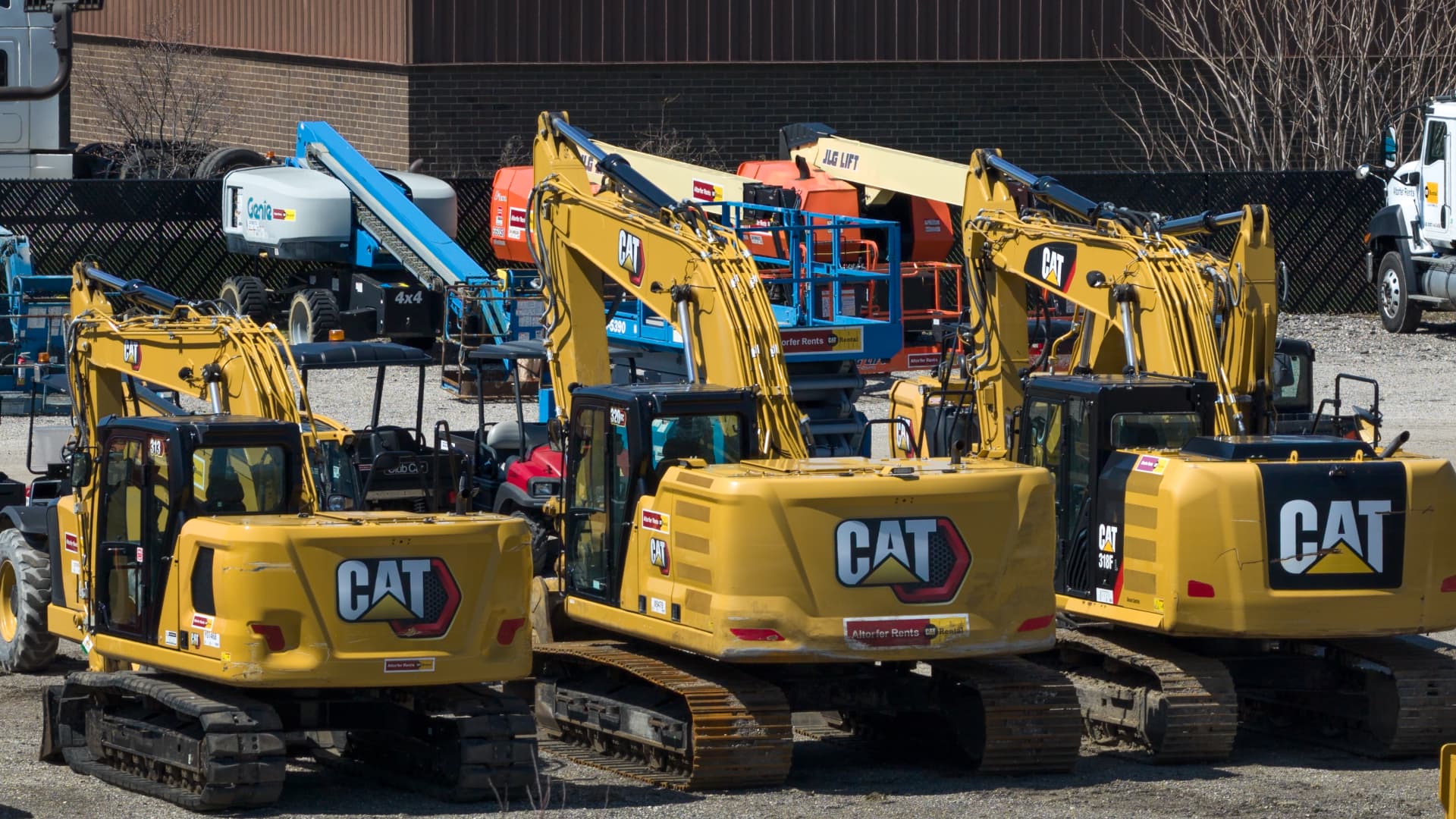
Caterpillar Stock Shows Strong Performance

- Breakout Growth: Caterpillar (CAT) has surged 120% since breaking out of a multi-year consolidation last July, showcasing its strong performance in the AI bull market and becoming a focal point for investors.
- Industry Leadership: Within the machinery sector, Caterpillar leads with a 33% annual return, significantly outperforming the S&P 500's 2%, highlighting its competitive edge and robust market demand in the heavy industrial space.
- Power & Energy Growth: Caterpillar's Power & Energy segment achieved $32.2 billion in sales for 2025, up 12%, with the power generation sub-segment surging 32% to $10.3 billion, primarily driven by data center demand, indicating strong future growth potential.
- Risk Management Strategy: Although Caterpillar's stock is currently well above its 200-day moving average at around $770, investors should wait for the next consolidation period to find a more attractive entry point, avoiding chasing the stock at elevated levels.

U.S. Stocks Edge Up as PepsiCo and TSMC Shine


- PepsiCo's Quarter Performance: PepsiCo achieved its first volume growth in North American food business in two years, with CEO Ramon Laguarta addressing the industry's threat from GLP-1 weight-loss drugs, leading to a 1% rise in shares, demonstrating the company's resilience and adaptability in a competitive consumer goods market.
- TSMC Profit Surge: TSMC reported a 58% year-over-year profit increase, despite facing challenges with shortages of industrial gases; management noted a 'little bit softer' memory pricing, indicating ongoing demand and competitive pressures in advanced chip manufacturing that could impact future profitability.
- J.B. Hunt Transport Services: J.B. Hunt indicated the start of a new cycle with positive demand signals, reporting a first-quarter earnings beat and a 1% premarket share increase, reflecting potential growth opportunities in the transportation sector.
- Analyst Rating Changes: JPMorgan downgraded Corning to hold and cut its price target from $175 to $115, citing the need for greater earnings visibility to support stock upside, indicating a cautious market outlook on the company's future performance.

Trump's Tariff Suspension Could Boost Stock Market
- Potential Impact of Tariff Suspension: If Trump suspends tariffs, many companies, particularly those importing clothing and toys like Nike and Mattel, are expected to see immediate earnings boosts, which could enhance market confidence significantly.
- Fed's Flexibility: The suspension of tariffs would provide the Federal Reserve with greater flexibility to potentially lower interest rates, which would be positive news for many stocks, especially given that inflation has risen due to tariffs.
- Temporary Market Rebound: Although a tariff suspension could trigger an initial market rebound, the momentum may be fleeting due to other factors such as geopolitical risks, necessitating caution among investors.
- Diversified Investment Strategy: In an uncertain market environment, investors should ensure their portfolios are well-diversified to cushion against underperforming sectors, with a long-term mindset being crucial to navigate market volatility.

Trump's Potential Tariff Suspension Could Spark Market Rally
- Market Performance Monitoring: Trump has frequently referenced stock market performance on social media, claiming 53 all-time highs since the election, indicating his view of the market as a key indicator of his administration's performance, which may influence future policy decisions.
- Potential Impact of Tariff Suspension: Should Trump decide to suspend tariffs, many affected companies, such as Nike and Mattel, could see immediate earnings boosts, potentially driving stock prices higher, especially ahead of the upcoming congressional elections.
- Federal Reserve Policy Flexibility: The suspension of tariffs could provide the Federal Reserve with more room to lower interest rates, further stimulating the stock market, particularly as Trump's tariffs have been identified as a contributing factor to inflation.
- Complexity of Market Reactions: While a tariff suspension may lead to a short-term market rebound, geopolitical risks and skepticism about the permanence of such a suspension could limit the sustainability of the rally, prompting investors to maintain diversified portfolios to mitigate potential volatility.

Deere's Agriculture Business Faces Cyclical Downturn

- Agricultural Downturn: Deere's core agriculture business is experiencing a prolonged cyclical downturn, with revenue projected to decline by 25% to approximately $46 billion in 2025, reflecting ongoing weakness following a peak in U.S. farm income in 2022.
- Construction and Forestry Growth: Despite agricultural struggles, Deere's construction and forestry segment achieved a 34% year-over-year revenue growth, primarily driven by demand for data center construction, highlighting the company's potential in non-cyclical markets.
- Significant Order Backlog: The construction and forestry division saw a 50% increase in order backlog, indicating strong demand for heavy equipment, particularly in the context of AI infrastructure expansion, which enhances Deere's market position.
- Earnings Guidance Raised: Deere raised its 2023 earnings guidance to $4.5 billion to $5.0 billion, despite facing approximately $1.2 billion in annual tariff-related costs, with expected operating margins recovering to a range of 9% to 11% for the year, demonstrating management's confidence in future performance.

Deere's Q1 Earnings Surpass Expectations Driven by Construction Growth
- Construction and Forestry Surge: Deere's Construction and Forestry segment achieved a remarkable 34% year-over-year revenue growth in Q1, primarily driven by the accelerated build-out of data centers, showcasing the company's strong performance in non-cyclical demand and enhancing revenue stability.
- Significant Order Backlog Increase: The segment's order backlog surged by 50%, reflecting robust demand for heavy equipment, particularly in the context of AI infrastructure expansion, further solidifying Deere's competitive position in the market.
- Agricultural Cycle Bottoming: Despite challenges in the agricultural cycle, which is expected to bottom this year, a 24% revenue growth in the small ag and turf segment effectively offset a modest 3% gain in the flagship production and precision ag segment, pushing total revenue to $9.6 billion, well above the consensus estimate of $7.6 billion.
- Earnings Guidance Raised: Deere raised its full-year earnings guidance to $4.5 billion to $5.0 billion and increased its operating cash flow projection by $500 million, demonstrating confidence in future growth despite facing $1.2 billion in tariff-related costs.
Caterpillar Stock Shows Strong Performance
- Breakout Growth: Caterpillar (CAT) has surged 120% since breaking out of a multi-year consolidation last July, showcasing its strong performance in the AI bull market and becoming a focal point for investors.
- Industry Leadership: Within the machinery sector, Caterpillar leads with a 33% annual return, significantly outperforming the S&P 500's 2%, highlighting its competitive edge and robust market demand in the heavy industrial space.
- Power & Energy Growth: Caterpillar's Power & Energy segment achieved $32.2 billion in sales for 2025, up 12%, with the power generation sub-segment surging 32% to $10.3 billion, primarily driven by data center demand, indicating strong future growth potential.
- Risk Management Strategy: Although Caterpillar's stock is currently well above its 200-day moving average at around $770, investors should wait for the next consolidation period to find a more attractive entry point, avoiding chasing the stock at elevated levels.
U.S. Stocks Edge Up as PepsiCo and TSMC Shine
- PepsiCo's Quarter Performance: PepsiCo achieved its first volume growth in North American food business in two years, with CEO Ramon Laguarta addressing the industry's threat from GLP-1 weight-loss drugs, leading to a 1% rise in shares, demonstrating the company's resilience and adaptability in a competitive consumer goods market.
- TSMC Profit Surge: TSMC reported a 58% year-over-year profit increase, despite facing challenges with shortages of industrial gases; management noted a 'little bit softer' memory pricing, indicating ongoing demand and competitive pressures in advanced chip manufacturing that could impact future profitability.
- J.B. Hunt Transport Services: J.B. Hunt indicated the start of a new cycle with positive demand signals, reporting a first-quarter earnings beat and a 1% premarket share increase, reflecting potential growth opportunities in the transportation sector.
- Analyst Rating Changes: JPMorgan downgraded Corning to hold and cut its price target from $175 to $115, citing the need for greater earnings visibility to support stock upside, indicating a cautious market outlook on the company's future performance.
Trump's Tariff Suspension Could Boost Stock Market
- Potential Impact of Tariff Suspension: If Trump suspends tariffs, many companies, particularly those importing clothing and toys like Nike and Mattel, are expected to see immediate earnings boosts, which could enhance market confidence significantly.
- Fed's Flexibility: The suspension of tariffs would provide the Federal Reserve with greater flexibility to potentially lower interest rates, which would be positive news for many stocks, especially given that inflation has risen due to tariffs.
- Temporary Market Rebound: Although a tariff suspension could trigger an initial market rebound, the momentum may be fleeting due to other factors such as geopolitical risks, necessitating caution among investors.
- Diversified Investment Strategy: In an uncertain market environment, investors should ensure their portfolios are well-diversified to cushion against underperforming sectors, with a long-term mindset being crucial to navigate market volatility.
Trump's Potential Tariff Suspension Could Spark Market Rally
- Market Performance Monitoring: Trump has frequently referenced stock market performance on social media, claiming 53 all-time highs since the election, indicating his view of the market as a key indicator of his administration's performance, which may influence future policy decisions.
- Potential Impact of Tariff Suspension: Should Trump decide to suspend tariffs, many affected companies, such as Nike and Mattel, could see immediate earnings boosts, potentially driving stock prices higher, especially ahead of the upcoming congressional elections.
- Federal Reserve Policy Flexibility: The suspension of tariffs could provide the Federal Reserve with more room to lower interest rates, further stimulating the stock market, particularly as Trump's tariffs have been identified as a contributing factor to inflation.
- Complexity of Market Reactions: While a tariff suspension may lead to a short-term market rebound, geopolitical risks and skepticism about the permanence of such a suspension could limit the sustainability of the rally, prompting investors to maintain diversified portfolios to mitigate potential volatility.
Deere's Agriculture Business Faces Cyclical Downturn
- Agricultural Downturn: Deere's core agriculture business is experiencing a prolonged cyclical downturn, with revenue projected to decline by 25% to approximately $46 billion in 2025, reflecting ongoing weakness following a peak in U.S. farm income in 2022.
- Construction and Forestry Growth: Despite agricultural struggles, Deere's construction and forestry segment achieved a 34% year-over-year revenue growth, primarily driven by demand for data center construction, highlighting the company's potential in non-cyclical markets.
- Significant Order Backlog: The construction and forestry division saw a 50% increase in order backlog, indicating strong demand for heavy equipment, particularly in the context of AI infrastructure expansion, which enhances Deere's market position.
- Earnings Guidance Raised: Deere raised its 2023 earnings guidance to $4.5 billion to $5.0 billion, despite facing approximately $1.2 billion in annual tariff-related costs, with expected operating margins recovering to a range of 9% to 11% for the year, demonstrating management's confidence in future performance.
Deere's Q1 Earnings Surpass Expectations Driven by Construction Growth
- Construction and Forestry Surge: Deere's Construction and Forestry segment achieved a remarkable 34% year-over-year revenue growth in Q1, primarily driven by the accelerated build-out of data centers, showcasing the company's strong performance in non-cyclical demand and enhancing revenue stability.
- Significant Order Backlog Increase: The segment's order backlog surged by 50%, reflecting robust demand for heavy equipment, particularly in the context of AI infrastructure expansion, further solidifying Deere's competitive position in the market.
- Agricultural Cycle Bottoming: Despite challenges in the agricultural cycle, which is expected to bottom this year, a 24% revenue growth in the small ag and turf segment effectively offset a modest 3% gain in the flagship production and precision ag segment, pushing total revenue to $9.6 billion, well above the consensus estimate of $7.6 billion.
- Earnings Guidance Raised: Deere raised its full-year earnings guidance to $4.5 billion to $5.0 billion and increased its operating cash flow projection by $500 million, demonstrating confidence in future growth despite facing $1.2 billion in tariff-related costs.