Wall Street Analysts Bullish on Nvidia and Nebius
Written by Emily J. Thompson, Senior Investment Analyst
Updated: 2 days ago
0mins


Should l Buy NVDA?
Source: Fool
- Nvidia Growth Momentum: Nvidia's revenue surged 73% year-over-year in Q4 of fiscal 2026, with management forecasting a 77% growth for Q1 of fiscal 2027, demonstrating its ability to maintain rapid growth amidst insatiable demand for AI computing units, despite being the largest company by market cap.
- Price Target Analysis: The average 12-month price target for Nvidia is approximately $270, while its current trading price is $175, indicating a potential upside of about 57%, thus making it a no-brainer buy, reflecting the market's optimistic outlook on its future performance.
- Nebius Investment Potential: Nebius, which Nvidia has invested in, has a market cap of nearly $30 billion and is expected to increase its annual run rate from $1.25 billion to between $7 billion and $9 billion by the end of 2026, showcasing its rapid expansion potential in the AI data center market as a go-to partner for several hyperscalers.
- Microsoft's Market Opportunity: Despite a 24% decline in Microsoft's stock price at the start of 2026, its Q2 fiscal 2026 revenue rose 17% year-over-year with a 60% increase in earnings per share, and analysts have set an average price target of $595, 55% above current levels, indicating that investors should seize this buying opportunity given the current low P/E ratio.
Trade with 70% Backtested Accuracy
Stop guessing "Should I Buy NVDA?" and start using high-conviction signals backed by rigorous historical data.
Sign up today to access powerful investing tools and make smarter, data-driven decisions.
Analyst Views on NVDA
Wall Street analysts forecast NVDA stock price to rise
41 Analyst Rating
39 Buy
1 Hold
1 Sell
Strong Buy
Current: 171.240

Low
200.00
Averages
264.97
High
352.00
Current: 171.240
Low
200.00
Averages
264.97
High
352.00
About NVDA
NVIDIA Corporation is a full-stack computing infrastructure company. The Company is engaged in accelerated computing to help solve the challenging computational problems. The Company’s segments include Compute & Networking and Graphics. The Compute & Networking segment includes its Data Center accelerated computing platforms and artificial intelligence (AI) solutions and software; networking; automotive platforms and autonomous and electric vehicle solutions; Jetson for robotics and other embedded platforms, and DGX Cloud computing services. The Graphics segment includes GeForce GPUs for gaming and PCs, the GeForce NOW game streaming service and related infrastructure, and solutions for gaming platforms; Quadro/NVIDIA RTX GPUs for enterprise workstation graphics; virtual GPU software for cloud-based visual and virtual computing; automotive platforms for infotainment systems, and Omniverse Enterprise software for building and operating industrial AI and digital twin applications.
About the author

Emily J. Thompson
Emily J. Thompson, a Chartered Financial Analyst (CFA) with 12 years in investment research, graduated with honors from the Wharton School. Specializing in industrial and technology stocks, she provides in-depth analysis for Intellectia’s earnings and market brief reports.

French AI Startup Mistral Secures $830 Million in Debt Financing

- Significant Financing: French AI startup Mistral has successfully secured $830 million in debt financing, which will be allocated towards building a data center near Paris, marking a substantial investment in AI infrastructure.
- Infrastructure Expansion Plans: The company plans to utilize these funds to acquire thousands of Nvidia chips to support the operation of its data center, aiming to enhance its competitiveness in AI model development, particularly against rivals like OpenAI and Anthropic.
- Demand-Driven Strategy: CEO Arthur Mensch stated that with surging demand from governments, enterprises, and research institutions for customized AI environments, Mistral will continue to invest in infrastructure to ensure that AI innovation and autonomy remain central to Europe.
- Strong Banking Support: The financing transaction was backed by a consortium of seven top-tier global banks, including Bpifrance, BNP Paribas, and Crédit Agricole CIB, reflecting strong market confidence in Mistral's future growth.
See More

Nvidia Advances Space Data Center Concept
- Potential of Space Data Centers: Nvidia's Space-1 Vera Rubin module, announced on March 16, aims to address data transmission bottlenecks in space by enabling real-time data analysis, thereby laying the groundwork for future orbital data centers.
- Market Demand and Challenges: While the concept of space data centers garners interest, practical implementation faces high launch costs and technical hurdles, with Nvidia's advancements potentially serving as a first step in overcoming these obstacles.
- Partnerships: Nvidia collaborates with several space tech companies, including Starcloud, which successfully launched the first satellite operating an Nvidia H100 GPU in space, showcasing its strategic positioning in the space market.
- Investment Outlook: Although market expectations for Nvidia's future growth have moderated, the current forward P/E ratio of 21.4 still reflects its core position in AI and data centers, with the success of space data centers likely to further enhance its market value.
See More

Quantum Firms Go Public Amid Market Volatility, Accelerating Commercialization

- Quantum IPO Wave: Despite market turbulence, quantum companies like Xanadu Quantum and Horizon Quantum have successfully gone public, with Xanadu rallying 15% on its Nasdaq and Toronto debut, reflecting investor confidence in the commercialization of quantum technology.
- Shift in Funding Trends: Investors are transitioning from foundational research to early-revenue opportunities, with practical quantum advantage expected around 2028-2029, prompting companies to accelerate their commercialization efforts.
- Accelerated Technological Breakthroughs: Significant advancements in quantum computing over the past 18 months, including improvements in quantum error correction and increased qubit counts, are laying the groundwork for more complex computations, with large-scale applications anticipated in the 2030s.
- Massive Market Potential: The mature market for quantum technology is estimated to reach $100 billion to $250 billion, attracting investments from tech giants like Alphabet, Microsoft, and Amazon, indicating a broad consensus on the promising commercial prospects of quantum computing.
See More

Shift in Investor Sentiment Towards AI Stocks


- Surging AI Revenue: Broadcom's AI revenue exceeded $8.4 billion in the recent quarter, marking over 100% year-over-year growth, with expectations to surpass $10 billion this quarter, indicating strong customer demand for networking equipment and custom chips, thereby enhancing the company's growth potential in the AI market.
- Successful Multi-Cloud Strategy: Oracle achieved over 500% growth in multi-cloud database revenue, reflecting a rapid increase in demand for its cloud infrastructure, while its remaining performance obligations (RPO) jumped over 300% to $553 billion, showcasing the company's strong market position as businesses transition to AI applications.
- Competitive Landscape: Broadcom has successfully avoided direct competition with market leader Nvidia by offering XPUs designed for specific tasks, a differentiation strategy that has allowed it to carve out a niche in the AI accelerator market, further solidifying its market position.
- Valuation Appeal: While Broadcom is expected to grow revenue by 65% this year, Oracle's stock is trading near its lowest relative to forward earnings estimates in nearly two years, presenting an attractive investment opportunity for value-seeking investors, despite Broadcom's higher growth rate.
See More

Broadcom and Oracle's AI Growth Potential
- Broadcom's AI Revenue Surge: In the recent quarter, Broadcom's AI revenue exceeded $8.4 billion, marking a more than 100% year-over-year increase and surpassing company forecasts, with expectations to exceed $10 billion in the current quarter, indicating strong customer demand for networking equipment and custom chips, thereby solidifying its position in the AI market.
- Oracle's Multi-Cloud Database Growth: Oracle's multi-cloud database revenue soared over 500% in the recent quarter, reflecting strong customer demand for its cloud services, while remaining performance obligations (RPO) jumped over 300% to $553 billion, signaling robust future revenue growth potential.
- Competitive Advantage: Broadcom's XPUs are designed for specific tasks, avoiding direct competition with market leader Nvidia, and this differentiation strategy has allowed it to carve out a niche in the AI accelerator market, driving sustained growth for the company.
- Valuation Appeal: While Broadcom is expected to see a 65% revenue increase this year, Oracle's stock appears undervalued, presenting an attractive buying opportunity for investors, particularly those seeking value investments, making Oracle a compelling choice in the current market.
See More
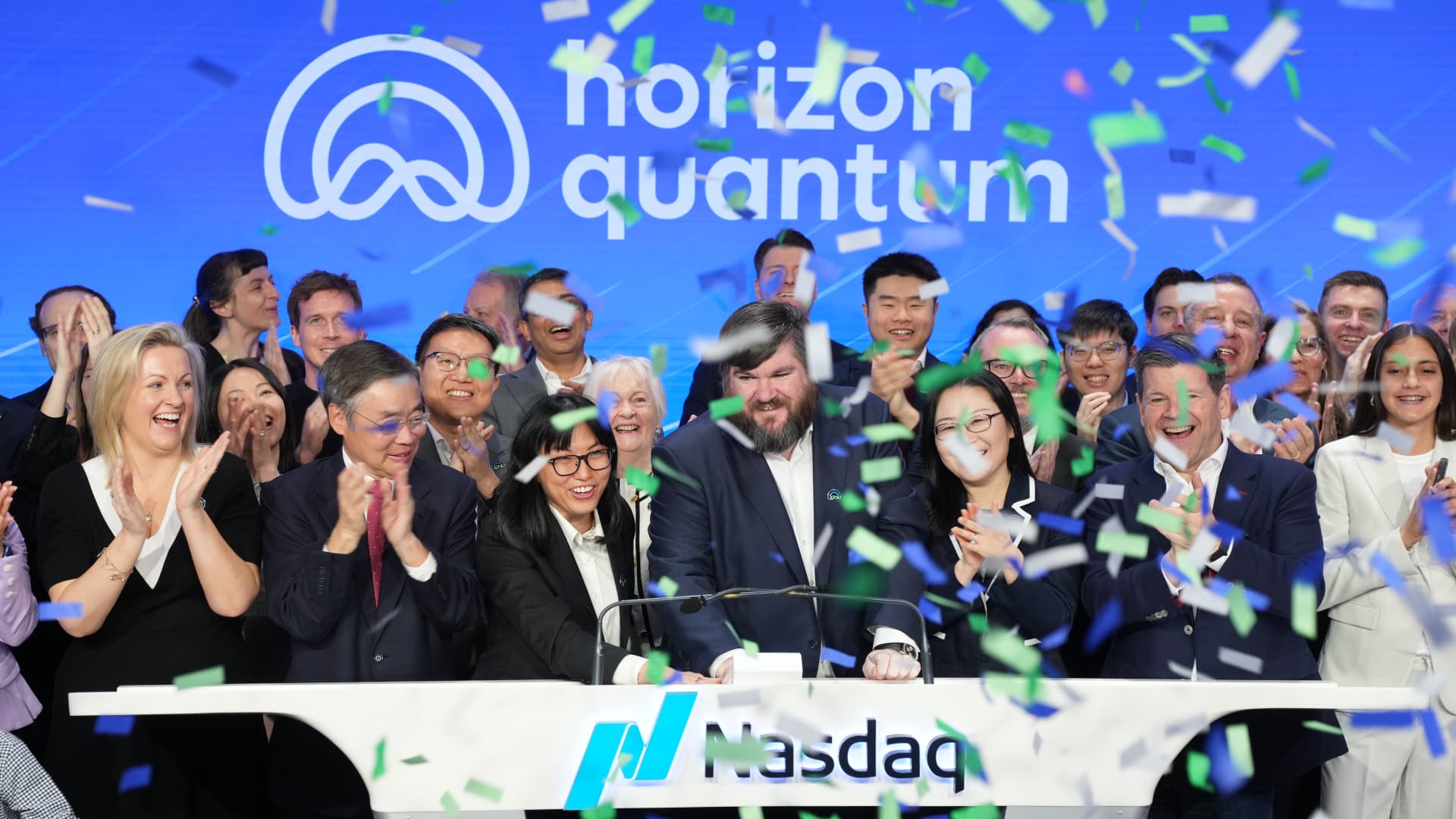
Xanadu Quantum Successfully Goes Public Amid Market Turbulence

- IPO Performance: Xanadu Quantum's shares rose 15% on their debut on Nasdaq and the Toronto Stock Exchange, although they fell over 10% in after-hours trading, indicating a mix of market interest and caution towards quantum computing firms.
- SPAC Merger: Xanadu went public through a merger with the special purpose acquisition company Crane Harbor Acquisition, a method that provides a quicker financing route for quantum startups, reflecting growing market confidence in quantum technology.
- Industry Breakthroughs: Significant advancements in quantum computing over the past 18 months, including improvements in quantum error correction and increased qubit counts, lay the groundwork for commercial applications, with expectations for larger-scale quantum computing capabilities by the mid-2030s.
- Market Potential: The quantum computing market is estimated to be worth between $100 billion and $250 billion, attracting investments from tech giants like Alphabet and Microsoft, indicating a positive long-term outlook from investors in this sector.
See More
French AI Startup Mistral Secures $830 Million in Debt Financing
- Significant Financing: French AI startup Mistral has successfully secured $830 million in debt financing, which will be allocated towards building a data center near Paris, marking a substantial investment in AI infrastructure.
- Infrastructure Expansion Plans: The company plans to utilize these funds to acquire thousands of Nvidia chips to support the operation of its data center, aiming to enhance its competitiveness in AI model development, particularly against rivals like OpenAI and Anthropic.
- Demand-Driven Strategy: CEO Arthur Mensch stated that with surging demand from governments, enterprises, and research institutions for customized AI environments, Mistral will continue to invest in infrastructure to ensure that AI innovation and autonomy remain central to Europe.
- Strong Banking Support: The financing transaction was backed by a consortium of seven top-tier global banks, including Bpifrance, BNP Paribas, and Crédit Agricole CIB, reflecting strong market confidence in Mistral's future growth.
See More
Nvidia Advances Space Data Center Concept
- Potential of Space Data Centers: Nvidia's Space-1 Vera Rubin module, announced on March 16, aims to address data transmission bottlenecks in space by enabling real-time data analysis, thereby laying the groundwork for future orbital data centers.
- Market Demand and Challenges: While the concept of space data centers garners interest, practical implementation faces high launch costs and technical hurdles, with Nvidia's advancements potentially serving as a first step in overcoming these obstacles.
- Partnerships: Nvidia collaborates with several space tech companies, including Starcloud, which successfully launched the first satellite operating an Nvidia H100 GPU in space, showcasing its strategic positioning in the space market.
- Investment Outlook: Although market expectations for Nvidia's future growth have moderated, the current forward P/E ratio of 21.4 still reflects its core position in AI and data centers, with the success of space data centers likely to further enhance its market value.
See More
Quantum Firms Go Public Amid Market Volatility, Accelerating Commercialization
- Quantum IPO Wave: Despite market turbulence, quantum companies like Xanadu Quantum and Horizon Quantum have successfully gone public, with Xanadu rallying 15% on its Nasdaq and Toronto debut, reflecting investor confidence in the commercialization of quantum technology.
- Shift in Funding Trends: Investors are transitioning from foundational research to early-revenue opportunities, with practical quantum advantage expected around 2028-2029, prompting companies to accelerate their commercialization efforts.
- Accelerated Technological Breakthroughs: Significant advancements in quantum computing over the past 18 months, including improvements in quantum error correction and increased qubit counts, are laying the groundwork for more complex computations, with large-scale applications anticipated in the 2030s.
- Massive Market Potential: The mature market for quantum technology is estimated to reach $100 billion to $250 billion, attracting investments from tech giants like Alphabet, Microsoft, and Amazon, indicating a broad consensus on the promising commercial prospects of quantum computing.
See More
Shift in Investor Sentiment Towards AI Stocks
- Surging AI Revenue: Broadcom's AI revenue exceeded $8.4 billion in the recent quarter, marking over 100% year-over-year growth, with expectations to surpass $10 billion this quarter, indicating strong customer demand for networking equipment and custom chips, thereby enhancing the company's growth potential in the AI market.
- Successful Multi-Cloud Strategy: Oracle achieved over 500% growth in multi-cloud database revenue, reflecting a rapid increase in demand for its cloud infrastructure, while its remaining performance obligations (RPO) jumped over 300% to $553 billion, showcasing the company's strong market position as businesses transition to AI applications.
- Competitive Landscape: Broadcom has successfully avoided direct competition with market leader Nvidia by offering XPUs designed for specific tasks, a differentiation strategy that has allowed it to carve out a niche in the AI accelerator market, further solidifying its market position.
- Valuation Appeal: While Broadcom is expected to grow revenue by 65% this year, Oracle's stock is trading near its lowest relative to forward earnings estimates in nearly two years, presenting an attractive investment opportunity for value-seeking investors, despite Broadcom's higher growth rate.
See More
Broadcom and Oracle's AI Growth Potential
- Broadcom's AI Revenue Surge: In the recent quarter, Broadcom's AI revenue exceeded $8.4 billion, marking a more than 100% year-over-year increase and surpassing company forecasts, with expectations to exceed $10 billion in the current quarter, indicating strong customer demand for networking equipment and custom chips, thereby solidifying its position in the AI market.
- Oracle's Multi-Cloud Database Growth: Oracle's multi-cloud database revenue soared over 500% in the recent quarter, reflecting strong customer demand for its cloud services, while remaining performance obligations (RPO) jumped over 300% to $553 billion, signaling robust future revenue growth potential.
- Competitive Advantage: Broadcom's XPUs are designed for specific tasks, avoiding direct competition with market leader Nvidia, and this differentiation strategy has allowed it to carve out a niche in the AI accelerator market, driving sustained growth for the company.
- Valuation Appeal: While Broadcom is expected to see a 65% revenue increase this year, Oracle's stock appears undervalued, presenting an attractive buying opportunity for investors, particularly those seeking value investments, making Oracle a compelling choice in the current market.
See More
Xanadu Quantum Successfully Goes Public Amid Market Turbulence
- IPO Performance: Xanadu Quantum's shares rose 15% on their debut on Nasdaq and the Toronto Stock Exchange, although they fell over 10% in after-hours trading, indicating a mix of market interest and caution towards quantum computing firms.
- SPAC Merger: Xanadu went public through a merger with the special purpose acquisition company Crane Harbor Acquisition, a method that provides a quicker financing route for quantum startups, reflecting growing market confidence in quantum technology.
- Industry Breakthroughs: Significant advancements in quantum computing over the past 18 months, including improvements in quantum error correction and increased qubit counts, lay the groundwork for commercial applications, with expectations for larger-scale quantum computing capabilities by the mid-2030s.
- Market Potential: The quantum computing market is estimated to be worth between $100 billion and $250 billion, attracting investments from tech giants like Alphabet and Microsoft, indicating a positive long-term outlook from investors in this sector.
See More