Volkswagen Begins Production of First All-Electric SUV
Written by Emily J. Thompson, Senior Investment Analyst
Updated: Mar 17 2026
0mins


Should l Buy NVDA?
Source: CNBC
- Production Launch: Volkswagen commenced production of its first all-electric SUV, the ID. UNYX 08, on March 13, 2026, in Hefei, utilizing Xpeng's Turing chip, which signifies a crucial advancement in its electric vehicle strategy aimed at enhancing competitiveness in the Chinese market.
- Delivery Timeline: The ID. UNYX 08 is set to begin deliveries by the end of June, equipped with L2 advanced driver-assist technology that aids drivers in navigating highways and urban streets, thereby increasing consumer demand for smart electric vehicles.
- Future Technology Plans: Volkswagen anticipates that its vehicles in China will achieve L3 autonomous driving capabilities within two years, allowing drivers to take their hands off the wheel under specific conditions, which will shift liability for accidents from drivers to manufacturers, enhancing consumer trust.
- Market Strategy Adjustment: Following a business overhaul in 2023, Volkswagen plans to launch 20 new electric models in 2026 and aims for a total of 50 new models by 2030, demonstrating a strong commitment to the Chinese market and a focus on electrification transformation.
Trade with 70% Backtested Accuracy
Stop guessing "Should I Buy NVDA?" and start using high-conviction signals backed by rigorous historical data.
Sign up today to access powerful investing tools and make smarter, data-driven decisions.
Analyst Views on NVDA
Wall Street analysts forecast NVDA stock price to rise
41 Analyst Rating
39 Buy
1 Hold
1 Sell
Strong Buy
Current: 167.520

Low
200.00
Averages
264.97
High
352.00
Current: 167.520
Low
200.00
Averages
264.97
High
352.00
About NVDA
NVIDIA Corporation is a full-stack computing infrastructure company. The Company is engaged in accelerated computing to help solve the challenging computational problems. The Company’s segments include Compute & Networking and Graphics. The Compute & Networking segment includes its Data Center accelerated computing platforms and artificial intelligence (AI) solutions and software; networking; automotive platforms and autonomous and electric vehicle solutions; Jetson for robotics and other embedded platforms, and DGX Cloud computing services. The Graphics segment includes GeForce GPUs for gaming and PCs, the GeForce NOW game streaming service and related infrastructure, and solutions for gaming platforms; Quadro/NVIDIA RTX GPUs for enterprise workstation graphics; virtual GPU software for cloud-based visual and virtual computing; automotive platforms for infotainment systems, and Omniverse Enterprise software for building and operating industrial AI and digital twin applications.
About the author

Emily J. Thompson
Emily J. Thompson, a Chartered Financial Analyst (CFA) with 12 years in investment research, graduated with honors from the Wharton School. Specializing in industrial and technology stocks, she provides in-depth analysis for Intellectia’s earnings and market brief reports.

French AI Startup Mistral Secures $830 Million in Debt Financing

- Significant Financing: French AI startup Mistral has successfully secured $830 million in debt financing, which will be allocated towards building a data center near Paris, marking a substantial investment in AI infrastructure.
- Infrastructure Expansion Plans: The company plans to utilize these funds to acquire thousands of Nvidia chips to support the operation of its data center, aiming to enhance its competitiveness in AI model development, particularly against rivals like OpenAI and Anthropic.
- Demand-Driven Strategy: CEO Arthur Mensch stated that with surging demand from governments, enterprises, and research institutions for customized AI environments, Mistral will continue to invest in infrastructure to ensure that AI innovation and autonomy remain central to Europe.
- Strong Banking Support: The financing transaction was backed by a consortium of seven top-tier global banks, including Bpifrance, BNP Paribas, and Crédit Agricole CIB, reflecting strong market confidence in Mistral's future growth.
See More

Nvidia Advances Space Data Center Concept
- Potential of Space Data Centers: Nvidia's Space-1 Vera Rubin module, announced on March 16, aims to address data transmission bottlenecks in space by enabling real-time data analysis, thereby laying the groundwork for future orbital data centers.
- Market Demand and Challenges: While the concept of space data centers garners interest, practical implementation faces high launch costs and technical hurdles, with Nvidia's advancements potentially serving as a first step in overcoming these obstacles.
- Partnerships: Nvidia collaborates with several space tech companies, including Starcloud, which successfully launched the first satellite operating an Nvidia H100 GPU in space, showcasing its strategic positioning in the space market.
- Investment Outlook: Although market expectations for Nvidia's future growth have moderated, the current forward P/E ratio of 21.4 still reflects its core position in AI and data centers, with the success of space data centers likely to further enhance its market value.
See More
Nvidia Faces Market Challenges and Opportunities

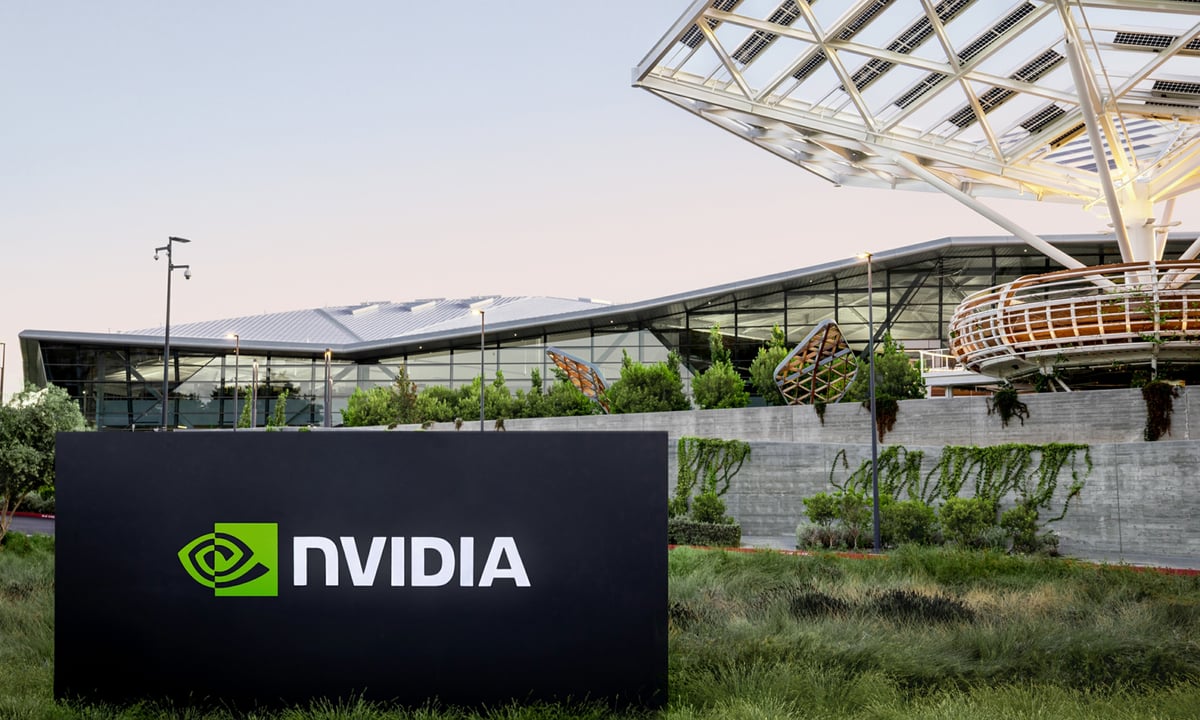
- Stock Decline: Despite Nvidia's strong quarterly performance with a 73% year-over-year revenue increase and a 79% surge in net income, its stock has fallen over 11%, indicating market concerns about future growth.
- Guidance Outlook: CEO Jensen Huang anticipates $1 trillion in sales from the current Blackwell platform and the upcoming Vera Rubin platform by 2027, yet the market's muted response has led to its P/E ratio aligning with the S&P 500 for the first time in over a decade.
- Capital Expenditure Concerns: While Nvidia itself is not a major capital spender, it relies on hyperscalers' $700 billion investment in AI infrastructure to sell its chips, raising investor worries about the sustainability of returns from such intense spending.
- China Market Reopening: Huang announced plans to restart chip sales to businesses in China, a segment that has been dormant for several quarters due to geopolitical issues, but historically contributed significantly to revenue, potentially providing a new growth avenue for the company.
See More

Rebellions Secures $400M for U.S. Expansion Ahead of IPO

- Funding and Valuation: South Korean startup Rebellions has secured $400 million at a valuation of $2.34 billion, with plans to use the funds for U.S. expansion, reflecting strong market confidence in its AI inference chips.
- Technological Edge: Positioned as a 'K-Nvidia', Rebellions claims its Rebel100 NPU offers superior energy efficiency compared to competitors, particularly for clients like Meta Platforms, indicating its competitive strength in the AI hardware market.
- Supply Chain Strategy: By counting major memory manufacturers as shareholders, Rebellions aims to bypass the crippling component shortages and price hikes, providing crucial support for its survival and growth in the semiconductor industry.
- Market Positioning: The management is focusing on the lower-power, high-speed execution phase of AI to avoid direct competition with Nvidia's GPU dominance, targeting specialized labs instead of traditional hyperscalers, showcasing a unique market strategy.
See More
Rebellions Raises $400 Million to Enter U.S. Market

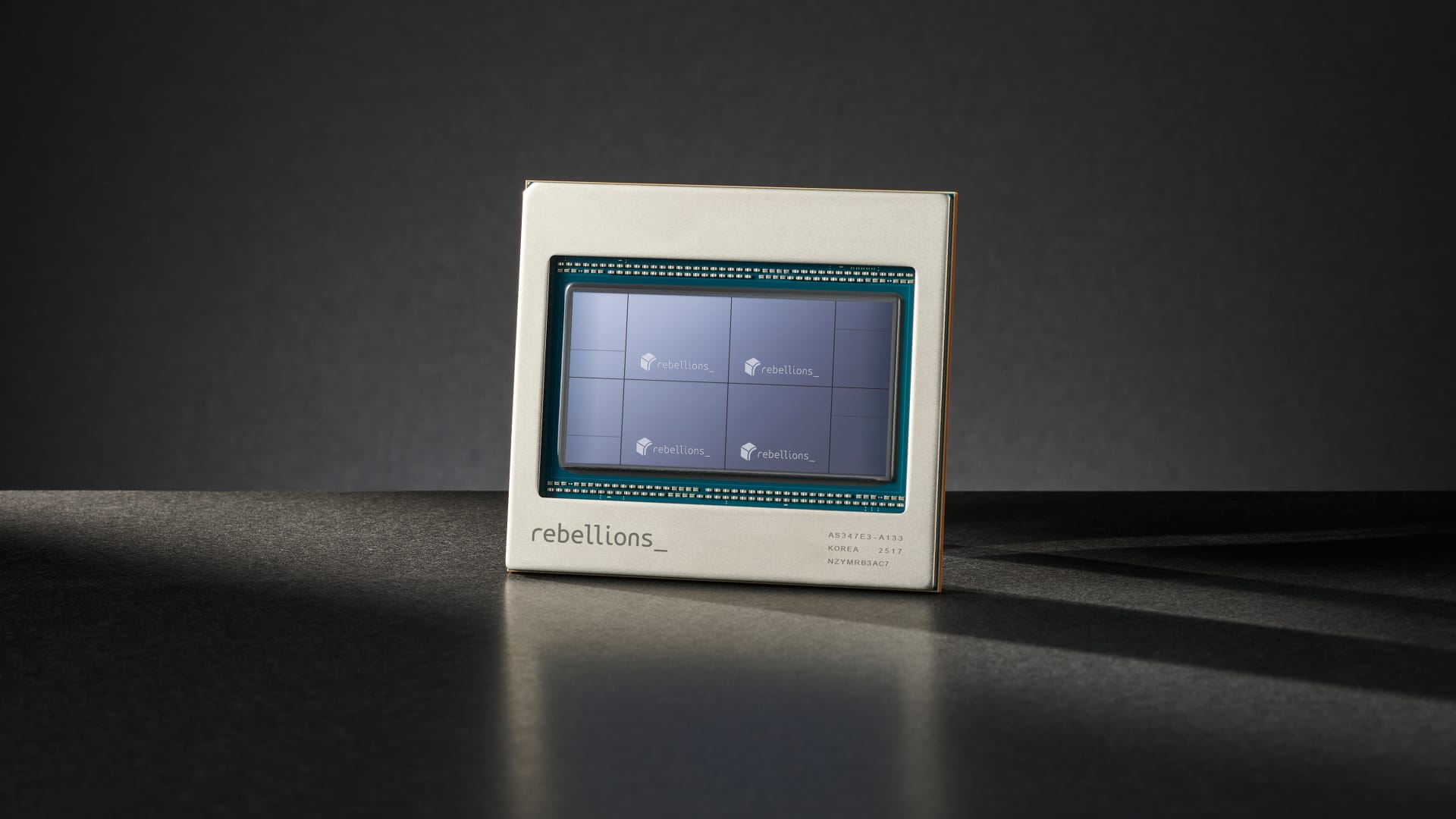
- Funding and Valuation: Rebellions successfully raised $400 million, achieving a valuation of $2.34 billion, with this funding round led by Mirae Asset Financial Group and the Korea National Growth Fund, reflecting strong market demand and investor confidence in its AI chips.
- Market Expansion Goals: The company plans to use the funds to expand into the U.S. market, with CEO Sunghyun Park stating that the main targets are large lab customers like Meta and xAI, rather than traditional hyperscalers, highlighting its unique market positioning.
- Technological Differentiation: Rebellions' chips focus on inference processes, offering higher energy efficiency and performance; while the CEO did not disclose sales figures, he mentioned a strong revenue pipeline, indicating robust market potential.
- Supply Chain Challenges and Opportunities: Despite facing challenges with memory chip shortages, Park noted that Rebellions is well-positioned to secure memory supplies due to investments from major manufacturers like Samsung and SK Hynix, enhancing its competitive edge in the market.
See More

Rebellions Raises $400 Million to Expand U.S. Market Ahead of IPO

- Funding and Valuation: South Korean AI chip startup Rebellions raised $400 million in its latest funding round, achieving a valuation of $2.34 billion, reflecting strong market demand for its AI inferencing chips and investor confidence.
- Market Expansion Plans: Rebellions intends to use the funds to expand into the U.S. market, targeting large lab customers like Meta and xAI rather than traditional hyperscalers, aiming to quickly capture market share.
- Technological Competitive Edge: Rebellions' Rebel100 NPU chips focus on AI inferencing, offering higher energy efficiency and performance; despite competition from Nvidia and other startups, its unique technological positioning provides a competitive advantage in the market.
- Supply Chain Challenges and Opportunities: While facing challenges with memory chip shortages, Rebellions is well-positioned to secure necessary memory supplies due to investments from major manufacturers like Samsung and SK Hynix, supporting its business growth.
See More
French AI Startup Mistral Secures $830 Million in Debt Financing
- Significant Financing: French AI startup Mistral has successfully secured $830 million in debt financing, which will be allocated towards building a data center near Paris, marking a substantial investment in AI infrastructure.
- Infrastructure Expansion Plans: The company plans to utilize these funds to acquire thousands of Nvidia chips to support the operation of its data center, aiming to enhance its competitiveness in AI model development, particularly against rivals like OpenAI and Anthropic.
- Demand-Driven Strategy: CEO Arthur Mensch stated that with surging demand from governments, enterprises, and research institutions for customized AI environments, Mistral will continue to invest in infrastructure to ensure that AI innovation and autonomy remain central to Europe.
- Strong Banking Support: The financing transaction was backed by a consortium of seven top-tier global banks, including Bpifrance, BNP Paribas, and Crédit Agricole CIB, reflecting strong market confidence in Mistral's future growth.
See More
Nvidia Advances Space Data Center Concept
- Potential of Space Data Centers: Nvidia's Space-1 Vera Rubin module, announced on March 16, aims to address data transmission bottlenecks in space by enabling real-time data analysis, thereby laying the groundwork for future orbital data centers.
- Market Demand and Challenges: While the concept of space data centers garners interest, practical implementation faces high launch costs and technical hurdles, with Nvidia's advancements potentially serving as a first step in overcoming these obstacles.
- Partnerships: Nvidia collaborates with several space tech companies, including Starcloud, which successfully launched the first satellite operating an Nvidia H100 GPU in space, showcasing its strategic positioning in the space market.
- Investment Outlook: Although market expectations for Nvidia's future growth have moderated, the current forward P/E ratio of 21.4 still reflects its core position in AI and data centers, with the success of space data centers likely to further enhance its market value.
See More
Nvidia Faces Market Challenges and Opportunities
- Stock Decline: Despite Nvidia's strong quarterly performance with a 73% year-over-year revenue increase and a 79% surge in net income, its stock has fallen over 11%, indicating market concerns about future growth.
- Guidance Outlook: CEO Jensen Huang anticipates $1 trillion in sales from the current Blackwell platform and the upcoming Vera Rubin platform by 2027, yet the market's muted response has led to its P/E ratio aligning with the S&P 500 for the first time in over a decade.
- Capital Expenditure Concerns: While Nvidia itself is not a major capital spender, it relies on hyperscalers' $700 billion investment in AI infrastructure to sell its chips, raising investor worries about the sustainability of returns from such intense spending.
- China Market Reopening: Huang announced plans to restart chip sales to businesses in China, a segment that has been dormant for several quarters due to geopolitical issues, but historically contributed significantly to revenue, potentially providing a new growth avenue for the company.
See More
Rebellions Secures $400M for U.S. Expansion Ahead of IPO
- Funding and Valuation: South Korean startup Rebellions has secured $400 million at a valuation of $2.34 billion, with plans to use the funds for U.S. expansion, reflecting strong market confidence in its AI inference chips.
- Technological Edge: Positioned as a 'K-Nvidia', Rebellions claims its Rebel100 NPU offers superior energy efficiency compared to competitors, particularly for clients like Meta Platforms, indicating its competitive strength in the AI hardware market.
- Supply Chain Strategy: By counting major memory manufacturers as shareholders, Rebellions aims to bypass the crippling component shortages and price hikes, providing crucial support for its survival and growth in the semiconductor industry.
- Market Positioning: The management is focusing on the lower-power, high-speed execution phase of AI to avoid direct competition with Nvidia's GPU dominance, targeting specialized labs instead of traditional hyperscalers, showcasing a unique market strategy.
See More
Rebellions Raises $400 Million to Enter U.S. Market
- Funding and Valuation: Rebellions successfully raised $400 million, achieving a valuation of $2.34 billion, with this funding round led by Mirae Asset Financial Group and the Korea National Growth Fund, reflecting strong market demand and investor confidence in its AI chips.
- Market Expansion Goals: The company plans to use the funds to expand into the U.S. market, with CEO Sunghyun Park stating that the main targets are large lab customers like Meta and xAI, rather than traditional hyperscalers, highlighting its unique market positioning.
- Technological Differentiation: Rebellions' chips focus on inference processes, offering higher energy efficiency and performance; while the CEO did not disclose sales figures, he mentioned a strong revenue pipeline, indicating robust market potential.
- Supply Chain Challenges and Opportunities: Despite facing challenges with memory chip shortages, Park noted that Rebellions is well-positioned to secure memory supplies due to investments from major manufacturers like Samsung and SK Hynix, enhancing its competitive edge in the market.
See More
Rebellions Raises $400 Million to Expand U.S. Market Ahead of IPO
- Funding and Valuation: South Korean AI chip startup Rebellions raised $400 million in its latest funding round, achieving a valuation of $2.34 billion, reflecting strong market demand for its AI inferencing chips and investor confidence.
- Market Expansion Plans: Rebellions intends to use the funds to expand into the U.S. market, targeting large lab customers like Meta and xAI rather than traditional hyperscalers, aiming to quickly capture market share.
- Technological Competitive Edge: Rebellions' Rebel100 NPU chips focus on AI inferencing, offering higher energy efficiency and performance; despite competition from Nvidia and other startups, its unique technological positioning provides a competitive advantage in the market.
- Supply Chain Challenges and Opportunities: While facing challenges with memory chip shortages, Rebellions is well-positioned to secure necessary memory supplies due to investments from major manufacturers like Samsung and SK Hynix, supporting its business growth.
See More