UBS Lowers Target Price for Church & Dwight Co Inc to $98 from $102
Written by Emily J. Thompson, Senior Investment Analyst
Updated: Apr 07 2026
0mins
Should l Buy CHD?
Source: moomoo
- Target Price Adjustment: Church & Dwight has cut its target price for its stock from $102 to $98.
- Market Impact: This adjustment reflects changes in market conditions and company performance expectations.
Trade with 70% Backtested Accuracy
Stop guessing "Should I Buy CHD?" and start using high-conviction signals backed by rigorous historical data.
Sign up today to access powerful investing tools and make smarter, data-driven decisions.
Analyst Views on CHD
Wall Street analysts forecast CHD stock price to rise
16 Analyst Rating
10 Buy
4 Hold
2 Sell
Moderate Buy
Current: 96.880

Low
82.00
Averages
98.71
High
114.00
Current: 96.880
Low
82.00
Averages
98.71
High
114.00
About CHD
Church & Dwight Co., Inc. develops, manufactures and markets a range of consumer household and personal care products and specialty products focused on animal and food production, chemicals and cleaners. The Company’s segments include Consumer Domestic, Consumer International, and Specialty Products Division (SPD). The Consumer Domestic segment includes each of its seven power brands, as well as other brands and household and personal care products. The Consumer International segment markets a variety of personal care, household and over-the-counter products in international subsidiary markets, including Australia, Canada, France, Germany, Japan, Mexico, China and the United Kingdom. Its SPD segment focuses on sales to businesses and participates in three product areas: animal nutrition, specialty chemicals and commercial and professional. Its brands include ARM & HAMMER, TROJAN, OXICLEAN, FIRST RESPONSE, NAIR, ORAJEL, XTRA, BATISTE, WATERPIK, ZICAM, THERABREATH, HERO, among others.
About the author

Emily J. Thompson
Emily J. Thompson, a Chartered Financial Analyst (CFA) with 12 years in investment research, graduated with honors from the Wharton School. Specializing in industrial and technology stocks, she provides in-depth analysis for Intellectia’s earnings and market brief reports.
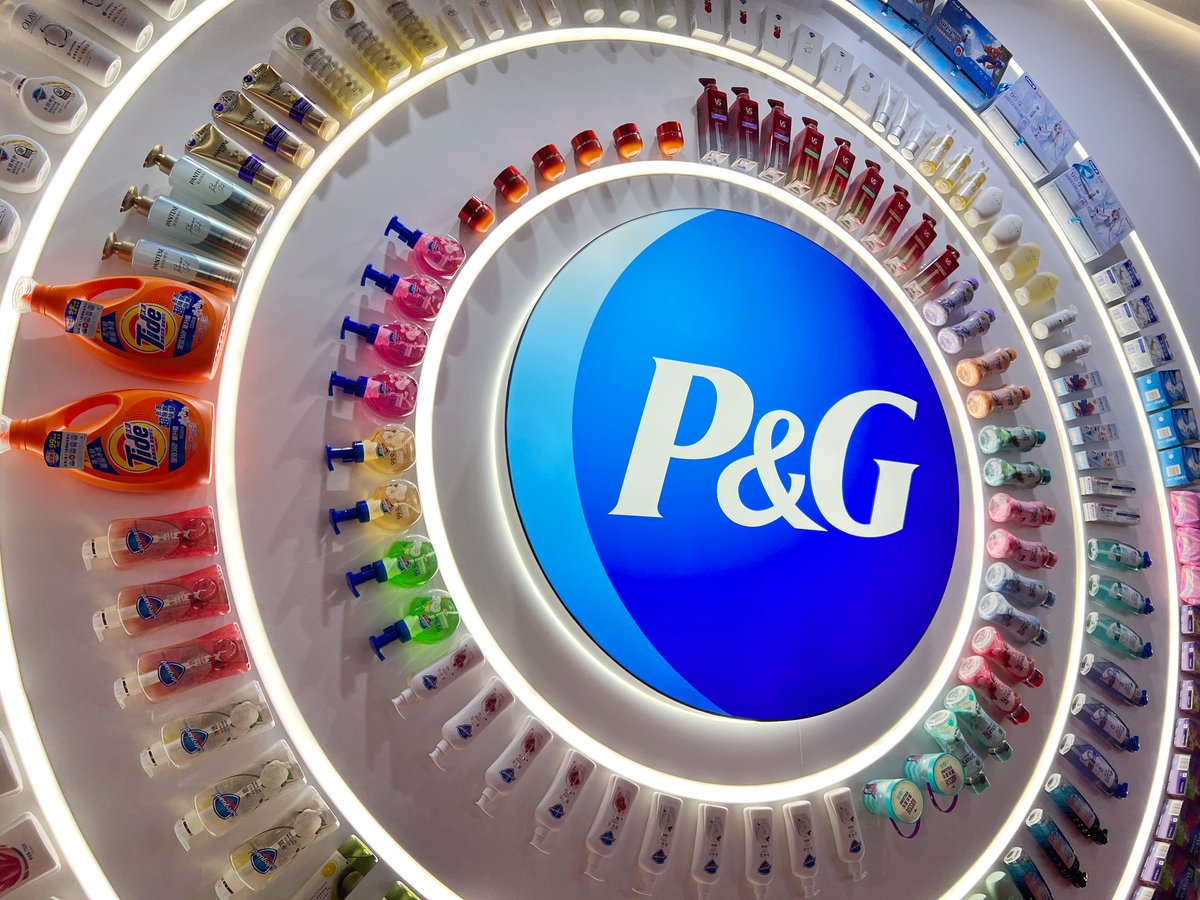
Procter & Gamble Announces 70th Consecutive Dividend Increase

- Dividend Increase: Procter & Gamble raised its quarterly dividend from $1.0568 to $1.0885 per share, resulting in an annual payout of $4.354 and a forward yield of 3%, reflecting the company's ongoing commitment to shareholder returns.
- Dividend King Status: This increase positions P&G among only five companies that have raised dividends for over 70 consecutive years, further solidifying its status as a Dividend King and attracting income-focused investors.
- Market Competitiveness: As the largest household and personal products company globally, P&G demonstrates resilience with an operating margin exceeding 20%, despite facing consumer spending challenges, showcasing its ability to maintain stability during economic fluctuations.
- Investment Opportunity: The recent stock sell-off has pushed P&G's dividend yield to a five-year high, with a price-to-earnings ratio of 21.4 and a forward P/E of 20.8, presenting an attractive buying opportunity for value investors looking to anchor their passive income portfolios.
See More

Procter & Gamble Announces 70th Consecutive Dividend Increase
- Dividend Increase: Procter & Gamble raised its quarterly dividend from $1.0568 to $1.0885 per share, resulting in an annual payout of $4.354 and a forward yield of 3%, demonstrating the company's resilience amid economic slowdowns.
- Industry Position: As the largest household and personal products company globally, P&G ranks third in market capitalization among U.S. consumer staples, trailing only Walmart and Costco, highlighting its strong competitive edge in the market.
- Financial Health: With earnings per share at $6.75 and free cash flow at $6.09, P&G maintains a solid dividend payout ratio of 61.9%, indicating robust financial health while sustaining dividend growth.
- Market Adaptability: Despite consumer spending challenges, P&G effectively offsets weak performance in North America by leveraging a diversified product portfolio and geographic flexibility, ensuring continued growth in the global market.
See More

Delta Air Lines Posts Strong Q1 Earnings Amid Fuel Price Surge

- Q1 Performance: Despite jet fuel prices surging nearly 88% since late February, Delta Air Lines achieved adjusted earnings per share of $0.64 and operating revenue of $14.2 billion in Q1, demonstrating resilience and profitability in a high-cost environment.
- Consumer Confidence Fluctuations: Following the Iran conflict, the S&P 500 surged over 2.5% on the day the ceasefire was announced; however, consumer confidence remains shaky, with the 30-year mortgage rate climbing back above 6.1%, potentially impacting future travel demand.
- Oil Price Volatility Impact: Oil prices skyrocketed from $72 per barrel to over $100 due to Iran's threats to shut the Strait of Hormuz, with analysts warning that renewed conflict could push prices to the $120 to $130 range, significantly affecting transportation costs for consumer goods companies.
- Market Watch Signals: Investors should monitor sales trends from consumer staples companies like Procter & Gamble and Colgate; if volumes decline, it may indicate consumer pushback against rising prices, further compressing margins and highlighting the uniqueness of Delta's performance within the industry.
See More

Impact of Rising Oil Prices on Consumer Goods Companies
- Surging Oil Prices: Oil prices have surged over 40% since late February due to the Iran conflict, putting pressure on household budgets and corporate margins, particularly affecting consumer goods companies like Colgate-Palmolive and Church & Dwight facing higher input costs.
- Market Reaction: Colgate-Palmolive's rating was downgraded from 'Buy' to 'Hold' by TD Cowen due to a 40% increase in key ingredient prices driven by rising oil costs, with analysts lowering the price target from $96 to $85, indicating market concerns about future performance.
- Consumer Confidence Fragile: While Delta Air Lines posted an EPS of $0.64 despite high oil prices, broader consumer goods companies may face risks of declining volumes as consumers may shift to cheaper brands amid pricing fatigue.
- Future Outlook: Procter & Gamble anticipates organic sales growth of 0% to 4% for 2026, reflecting consumer pricing fatigue, and if oil prices remain elevated, it could push volumes into negative territory, impacting overall market performance.
See More

Investment Opportunities in Consumer Staples Stocks

- Dividend Durability: Despite short-term earnings pressure, General Mills (GIS) maintains a 127-year uninterrupted dividend payment history, currently yielding 6.7%, making it highly attractive for long-term income investors within the S&P 500.
- Brand Resilience: Hormel Foods (HRL) has raised its dividend for 59 consecutive years, and despite a 50% drop in share price since April 2022, its brands like Spam and Skippy remain market leaders, showcasing strong brand resilience and adaptability.
- Market Potential: Kenvue (KVUE), spun off from Johnson & Johnson in 2023, has seen its stock price drop about 30%, yet its product portfolio including Tylenol and Listerine shows a 3.2% revenue growth quarter-over-quarter, indicating defensibility and growth potential in consumer health.
- E-commerce Penetration: Church & Dwight (CHD) has achieved a 23% e-commerce channel share in global sales, with brands like Arm & Hammer contributing 70% of revenue, and is guiding for 3% to 4% organic sales growth in 2026, highlighting strong market prospects and investment value.
See More

Investment Opportunities in Consumer Stocks
- Market Confidence Decline: The consumer confidence index has dropped to 56.4, nearing recession levels, prompting a shift towards defensive businesses, and despite flat performance in consumer staples in 2025, there are opportunities to buy at low prices.
- General Mills' Investment Value: General Mills (GIS) is trading at a 15-year low with a year-to-date decline of about 21%, yet its 127-year uninterrupted dividend history and a 6.7% yield make it a reliable choice for long-term passive income.
- Hormel Foods' Resilience: Hormel Foods (HRL) has raised its dividend for 59 consecutive years, and despite a 50% drop from its 2022 peak, its brand leadership and dual position in private-label manufacturing provide a defensive edge.
- Kenvue's Market Potential: Kenvue (KVUE), spun off from Johnson & Johnson, is down 30% from its 52-week high, but its stable product portfolio and analyst support make it an investment worth considering.
See More
Procter & Gamble Announces 70th Consecutive Dividend Increase
- Dividend Increase: Procter & Gamble raised its quarterly dividend from $1.0568 to $1.0885 per share, resulting in an annual payout of $4.354 and a forward yield of 3%, reflecting the company's ongoing commitment to shareholder returns.
- Dividend King Status: This increase positions P&G among only five companies that have raised dividends for over 70 consecutive years, further solidifying its status as a Dividend King and attracting income-focused investors.
- Market Competitiveness: As the largest household and personal products company globally, P&G demonstrates resilience with an operating margin exceeding 20%, despite facing consumer spending challenges, showcasing its ability to maintain stability during economic fluctuations.
- Investment Opportunity: The recent stock sell-off has pushed P&G's dividend yield to a five-year high, with a price-to-earnings ratio of 21.4 and a forward P/E of 20.8, presenting an attractive buying opportunity for value investors looking to anchor their passive income portfolios.
See More
Procter & Gamble Announces 70th Consecutive Dividend Increase
- Dividend Increase: Procter & Gamble raised its quarterly dividend from $1.0568 to $1.0885 per share, resulting in an annual payout of $4.354 and a forward yield of 3%, demonstrating the company's resilience amid economic slowdowns.
- Industry Position: As the largest household and personal products company globally, P&G ranks third in market capitalization among U.S. consumer staples, trailing only Walmart and Costco, highlighting its strong competitive edge in the market.
- Financial Health: With earnings per share at $6.75 and free cash flow at $6.09, P&G maintains a solid dividend payout ratio of 61.9%, indicating robust financial health while sustaining dividend growth.
- Market Adaptability: Despite consumer spending challenges, P&G effectively offsets weak performance in North America by leveraging a diversified product portfolio and geographic flexibility, ensuring continued growth in the global market.
See More
Delta Air Lines Posts Strong Q1 Earnings Amid Fuel Price Surge
- Q1 Performance: Despite jet fuel prices surging nearly 88% since late February, Delta Air Lines achieved adjusted earnings per share of $0.64 and operating revenue of $14.2 billion in Q1, demonstrating resilience and profitability in a high-cost environment.
- Consumer Confidence Fluctuations: Following the Iran conflict, the S&P 500 surged over 2.5% on the day the ceasefire was announced; however, consumer confidence remains shaky, with the 30-year mortgage rate climbing back above 6.1%, potentially impacting future travel demand.
- Oil Price Volatility Impact: Oil prices skyrocketed from $72 per barrel to over $100 due to Iran's threats to shut the Strait of Hormuz, with analysts warning that renewed conflict could push prices to the $120 to $130 range, significantly affecting transportation costs for consumer goods companies.
- Market Watch Signals: Investors should monitor sales trends from consumer staples companies like Procter & Gamble and Colgate; if volumes decline, it may indicate consumer pushback against rising prices, further compressing margins and highlighting the uniqueness of Delta's performance within the industry.
See More
Impact of Rising Oil Prices on Consumer Goods Companies
- Surging Oil Prices: Oil prices have surged over 40% since late February due to the Iran conflict, putting pressure on household budgets and corporate margins, particularly affecting consumer goods companies like Colgate-Palmolive and Church & Dwight facing higher input costs.
- Market Reaction: Colgate-Palmolive's rating was downgraded from 'Buy' to 'Hold' by TD Cowen due to a 40% increase in key ingredient prices driven by rising oil costs, with analysts lowering the price target from $96 to $85, indicating market concerns about future performance.
- Consumer Confidence Fragile: While Delta Air Lines posted an EPS of $0.64 despite high oil prices, broader consumer goods companies may face risks of declining volumes as consumers may shift to cheaper brands amid pricing fatigue.
- Future Outlook: Procter & Gamble anticipates organic sales growth of 0% to 4% for 2026, reflecting consumer pricing fatigue, and if oil prices remain elevated, it could push volumes into negative territory, impacting overall market performance.
See More
Investment Opportunities in Consumer Staples Stocks
- Dividend Durability: Despite short-term earnings pressure, General Mills (GIS) maintains a 127-year uninterrupted dividend payment history, currently yielding 6.7%, making it highly attractive for long-term income investors within the S&P 500.
- Brand Resilience: Hormel Foods (HRL) has raised its dividend for 59 consecutive years, and despite a 50% drop in share price since April 2022, its brands like Spam and Skippy remain market leaders, showcasing strong brand resilience and adaptability.
- Market Potential: Kenvue (KVUE), spun off from Johnson & Johnson in 2023, has seen its stock price drop about 30%, yet its product portfolio including Tylenol and Listerine shows a 3.2% revenue growth quarter-over-quarter, indicating defensibility and growth potential in consumer health.
- E-commerce Penetration: Church & Dwight (CHD) has achieved a 23% e-commerce channel share in global sales, with brands like Arm & Hammer contributing 70% of revenue, and is guiding for 3% to 4% organic sales growth in 2026, highlighting strong market prospects and investment value.
See More
Investment Opportunities in Consumer Stocks
- Market Confidence Decline: The consumer confidence index has dropped to 56.4, nearing recession levels, prompting a shift towards defensive businesses, and despite flat performance in consumer staples in 2025, there are opportunities to buy at low prices.
- General Mills' Investment Value: General Mills (GIS) is trading at a 15-year low with a year-to-date decline of about 21%, yet its 127-year uninterrupted dividend history and a 6.7% yield make it a reliable choice for long-term passive income.
- Hormel Foods' Resilience: Hormel Foods (HRL) has raised its dividend for 59 consecutive years, and despite a 50% drop from its 2022 peak, its brand leadership and dual position in private-label manufacturing provide a defensive edge.
- Kenvue's Market Potential: Kenvue (KVUE), spun off from Johnson & Johnson, is down 30% from its 52-week high, but its stable product portfolio and analyst support make it an investment worth considering.
See More