Symbotic: A Leader in AI-Driven Warehouse Automation
Written by Emily J. Thompson, Senior Investment Analyst
Updated: Mar 06 2026
0mins
Should l Buy SYM?
Source: Fool
- Market Growth Potential: Opto Foresight anticipates that the industrial automation market will grow at an annual rate of 17% through 2035, reaching over $375 billion, positioning Symbotic at the forefront of this growth wave.
- Strong Customer Base: Symbotic's largest customer, Walmart, generates over $700 billion in annual revenue and utilizes Symbotic's AI-driven robotics to enhance warehouse efficiency, optimizing the fulfillment of online orders and distribution of goods.
- Significant Revenue Growth: The company generated over $2.2 billion in revenue last fiscal year, marking a 26% year-over-year increase, with projected revenue growth rates of 24% and 28% over the next two years, which will help the company move towards profitability.
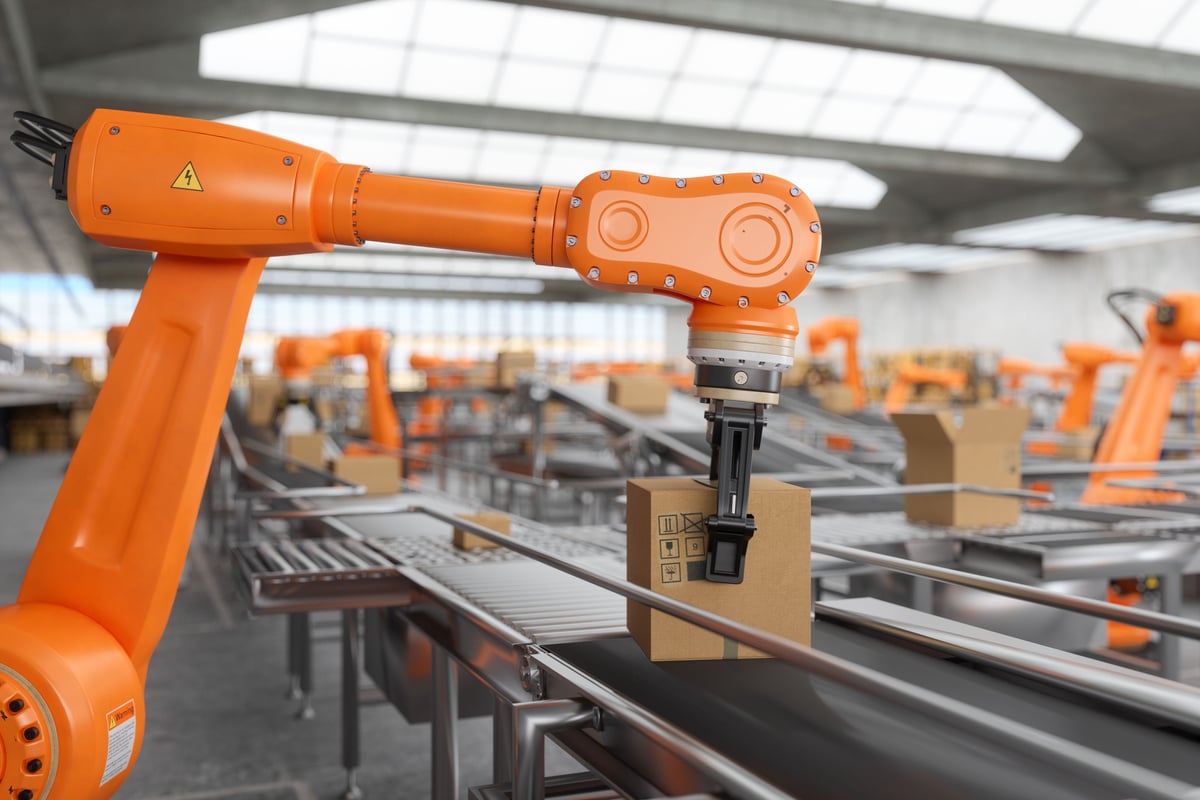
- Clear Technological Advantage: Compared to competitors, Symbotic's technology has proven effective, integrating self-driving pallet movers with articulated arms, demonstrating its adaptability across various industries and showcasing its broad application potential in the future market.
Trade with 70% Backtested Accuracy
Stop guessing "Should I Buy SYM?" and start using high-conviction signals backed by rigorous historical data.
Sign up today to access powerful investing tools and make smarter, data-driven decisions.
Analyst Views on SYM
Wall Street analysts forecast SYM stock price to rise
14 Analyst Rating
7 Buy
5 Hold
2 Sell
Moderate Buy
Current: 63.170

Low
42.00
Averages
67.27
High
83.00
Current: 63.170
Low
42.00
Averages
67.27
High
83.00
About SYM
Symbotic Inc. is an automation technology company reimagining the supply chain with its end-to-end, artificial intelligence (AI) powered robotic and software platform. It develops, commercializes, and deploys end-to-end technology solutions that improve supply chain operations. It automates the processing of pallets and cases in large warehouses or distribution centers for some of the retail and wholesale companies in the world. The Symbotic platform is based on an approach to connecting producers of goods to end users in a way that resolves the mismatches of quantity, timing and location that arise between the two, while reducing costs. It utilizes fully autonomous robots, collectively controlled by its AI-enabled system software, to achieve at scale, real world supply chain improvements. It serves various industries: retail grocery, food wholesale, consumer packaged goods, retail general merchandise, footwear and apparel, and food and beverage.
About the author

Emily J. Thompson
Emily J. Thompson, a Chartered Financial Analyst (CFA) with 12 years in investment research, graduated with honors from the Wharton School. Specializing in industrial and technology stocks, she provides in-depth analysis for Intellectia’s earnings and market brief reports.
Latest Rating Changes on Wall Street

- Apple's Positive Outlook: Wells Fargo reiterates Apple (AAPL) as overweight, anticipating better-than-expected iPhone demand and continued double-digit growth in services ahead of its earnings report, with a price target of $300.
- SolarEdge Downgraded: Goldman Sachs downgrades SolarEdge (SEDG) from neutral to sell, citing elevated expectations and challenging valuation as key factors behind the downgrade.
- Meta's Advertising Growth: Deutsche Bank maintains a buy rating on Meta (META), highlighting that its investments in AI are yielding increasing returns for advertisers, which supports accelerated advertising revenue growth.
- Autodesk Positioned Well: Jefferies initiates coverage on Autodesk (ADSK) with a buy rating, noting its strong positioning in agentic AI and solid fundamentals, presenting an attractive risk/reward profile at current levels.
See More

AI Drives Symbotic's Growth Potential
- Significant Market Potential: Symbotic achieved $2.2 billion in robotics sales last year, reflecting a 25% year-over-year growth, indicating strong performance in the rapidly expanding AI robotics market, which is expected to further enhance the company's profitability.
- Optimistic Industry Outlook: According to Precedence Research, the global AI robotics industry is projected to grow at an average annual rate of nearly 21% through 2034, reaching nearly $50 billion, positioning Symbotic to capture a significant share of this growth and transition to profitability.
- Potential S&P 500 Inclusion: With a market cap exceeding $30 billion, Symbotic comfortably surpasses the S&P 500's minimum market cap requirement of $22.7 billion, suggesting a strong likelihood of being added to the index, which would increase institutional ownership.
- Strong Customer Base: As Walmart's primary customer and development partner, Symbotic's technology is also utilized by retailers like Albertsons and Target, bolstering its market position and business stability.
See More
Symbotic Poised for Potential S&P 500 Inclusion
- Optimistic Market Outlook: Symbotic reported $2.2 billion in robotics sales and services last year, marking a 25% year-over-year increase, indicating strong performance in the rapidly growing AI robotics market, which is expected to enhance the company's profitability.
- Diverse Customer Base: As Walmart's primary customer and development partner, Symbotic also provides technology to retailers like Albertsons and Target, demonstrating broad industry application and recognition of its products, thereby strengthening its market competitiveness.
- Industry Growth Potential: According to Precedence Research, the global AI robotics industry is projected to grow at an average annual rate of nearly 21% through 2034, reaching nearly $50 billion, positioning Symbotic to capture a significant share of this growth and help the company move out of the red.
- Meets S&P 500 Criteria: With a market capitalization exceeding $30 billion, Symbotic far surpasses the S&P 500's minimum market cap requirement of $22.7 billion, indicating its significant role in the U.S. economy and eligibility for inclusion in the index.
See More

Snap Shares Surge on Activist Investor Proposal

- Snap Share Surge: Shares of social media platform Snap surged 12% after activist investor Irenic disclosed a 2.5% stake and proposed shutting down its augmented reality Specs business to boost share prices, indicating strong market confidence in its strategic direction.
- FactSet Earnings Beat: FactSet's adjusted earnings for Q2 came in at $4.46 per share, exceeding the consensus estimate of $4.38, while the company raised its full-year guidance to an expected adjusted earnings range of $17.25 to $17.75 per share, reflecting robust market performance and growth potential.
- Symbotic Strategic Agreement: Robotics company Symbotic's stock jumped nearly 5% following a strategic agreement to provide warehouse automation capabilities at Associated Wholesale Grocers' Gulf Coast Division Support Center in Louisiana, highlighting its expansion in logistics automation and growing market demand.
- Apellis Pharmaceuticals Stock Doubles: Shares of Apellis Pharmaceuticals soared 135% after Biogen announced it would acquire the company for $5.6 billion in cash, enhancing Biogen's portfolio in immunology and rare diseases, showcasing strong market approval for the deal.
See More

Analysis of Symbotic's Stock Performance
- Stock Price Decline: Symbotic has experienced an approximately 8% decline in share price over the past month and a 16% drop over the last three months, indicating a cautious market sentiment that could impact investor confidence.
- Strong Long-term Returns: Despite the recent downturn, Symbotic boasts a total shareholder return of about 150% over the past year, highlighting its robust growth potential and attracting investor interest in the long run.
- Strong Market Demand: With reported revenue of approximately $2.39 billion and a market value nearing $30.36 billion, Symbotic is well-positioned in the context of accelerating global e-commerce and rising automation demand, suggesting sustained growth ahead.
- Valuation Upside: Analysts peg Symbotic's fair value at around $64.05, significantly above the current closing price of $50.42, indicating that the market has yet to fully price in expectations for future growth.
See More

Investment Opportunities in the AI Era


- Symbotic's Growth Potential: In Q1 2026, Symbotic reported $630 million in revenue, a 29% year-over-year increase, with expectations for Q2 revenue between $650 million and $670 million, highlighting its strong performance in the rapidly expanding global AI robotics market.
- Fastly's Revenue Surge: Fastly achieved $172.6 million in revenue for Q4 2025, representing a 23% year-over-year growth, and has seen consistent growth over the past six quarters, indicating robust market demand amid rising AI traffic.
- Astera Labs' Rapid Growth: Astera Labs recorded $270.6 million in revenue for Q4 2025, a staggering 92% year-over-year increase, and strengthened its competitive edge in AI connectivity solutions through the acquisition of aiXscale Photonics.
- Strategic Opportunities in AI Market: With the rapid expansion of the AI market, companies like Symbotic, Fastly, and Astera Labs are showcasing strong growth potential in their respective fields, making them attractive investment opportunities for future performance.
See More
Latest Rating Changes on Wall Street
- Apple's Positive Outlook: Wells Fargo reiterates Apple (AAPL) as overweight, anticipating better-than-expected iPhone demand and continued double-digit growth in services ahead of its earnings report, with a price target of $300.
- SolarEdge Downgraded: Goldman Sachs downgrades SolarEdge (SEDG) from neutral to sell, citing elevated expectations and challenging valuation as key factors behind the downgrade.
- Meta's Advertising Growth: Deutsche Bank maintains a buy rating on Meta (META), highlighting that its investments in AI are yielding increasing returns for advertisers, which supports accelerated advertising revenue growth.
- Autodesk Positioned Well: Jefferies initiates coverage on Autodesk (ADSK) with a buy rating, noting its strong positioning in agentic AI and solid fundamentals, presenting an attractive risk/reward profile at current levels.
See More
AI Drives Symbotic's Growth Potential
- Significant Market Potential: Symbotic achieved $2.2 billion in robotics sales last year, reflecting a 25% year-over-year growth, indicating strong performance in the rapidly expanding AI robotics market, which is expected to further enhance the company's profitability.
- Optimistic Industry Outlook: According to Precedence Research, the global AI robotics industry is projected to grow at an average annual rate of nearly 21% through 2034, reaching nearly $50 billion, positioning Symbotic to capture a significant share of this growth and transition to profitability.
- Potential S&P 500 Inclusion: With a market cap exceeding $30 billion, Symbotic comfortably surpasses the S&P 500's minimum market cap requirement of $22.7 billion, suggesting a strong likelihood of being added to the index, which would increase institutional ownership.
- Strong Customer Base: As Walmart's primary customer and development partner, Symbotic's technology is also utilized by retailers like Albertsons and Target, bolstering its market position and business stability.
See More
Symbotic Poised for Potential S&P 500 Inclusion
- Optimistic Market Outlook: Symbotic reported $2.2 billion in robotics sales and services last year, marking a 25% year-over-year increase, indicating strong performance in the rapidly growing AI robotics market, which is expected to enhance the company's profitability.
- Diverse Customer Base: As Walmart's primary customer and development partner, Symbotic also provides technology to retailers like Albertsons and Target, demonstrating broad industry application and recognition of its products, thereby strengthening its market competitiveness.
- Industry Growth Potential: According to Precedence Research, the global AI robotics industry is projected to grow at an average annual rate of nearly 21% through 2034, reaching nearly $50 billion, positioning Symbotic to capture a significant share of this growth and help the company move out of the red.
- Meets S&P 500 Criteria: With a market capitalization exceeding $30 billion, Symbotic far surpasses the S&P 500's minimum market cap requirement of $22.7 billion, indicating its significant role in the U.S. economy and eligibility for inclusion in the index.
See More
Snap Shares Surge on Activist Investor Proposal
- Snap Share Surge: Shares of social media platform Snap surged 12% after activist investor Irenic disclosed a 2.5% stake and proposed shutting down its augmented reality Specs business to boost share prices, indicating strong market confidence in its strategic direction.
- FactSet Earnings Beat: FactSet's adjusted earnings for Q2 came in at $4.46 per share, exceeding the consensus estimate of $4.38, while the company raised its full-year guidance to an expected adjusted earnings range of $17.25 to $17.75 per share, reflecting robust market performance and growth potential.
- Symbotic Strategic Agreement: Robotics company Symbotic's stock jumped nearly 5% following a strategic agreement to provide warehouse automation capabilities at Associated Wholesale Grocers' Gulf Coast Division Support Center in Louisiana, highlighting its expansion in logistics automation and growing market demand.
- Apellis Pharmaceuticals Stock Doubles: Shares of Apellis Pharmaceuticals soared 135% after Biogen announced it would acquire the company for $5.6 billion in cash, enhancing Biogen's portfolio in immunology and rare diseases, showcasing strong market approval for the deal.
See More
Analysis of Symbotic's Stock Performance
- Stock Price Decline: Symbotic has experienced an approximately 8% decline in share price over the past month and a 16% drop over the last three months, indicating a cautious market sentiment that could impact investor confidence.
- Strong Long-term Returns: Despite the recent downturn, Symbotic boasts a total shareholder return of about 150% over the past year, highlighting its robust growth potential and attracting investor interest in the long run.
- Strong Market Demand: With reported revenue of approximately $2.39 billion and a market value nearing $30.36 billion, Symbotic is well-positioned in the context of accelerating global e-commerce and rising automation demand, suggesting sustained growth ahead.
- Valuation Upside: Analysts peg Symbotic's fair value at around $64.05, significantly above the current closing price of $50.42, indicating that the market has yet to fully price in expectations for future growth.
See More
Investment Opportunities in the AI Era
- Symbotic's Growth Potential: In Q1 2026, Symbotic reported $630 million in revenue, a 29% year-over-year increase, with expectations for Q2 revenue between $650 million and $670 million, highlighting its strong performance in the rapidly expanding global AI robotics market.
- Fastly's Revenue Surge: Fastly achieved $172.6 million in revenue for Q4 2025, representing a 23% year-over-year growth, and has seen consistent growth over the past six quarters, indicating robust market demand amid rising AI traffic.
- Astera Labs' Rapid Growth: Astera Labs recorded $270.6 million in revenue for Q4 2025, a staggering 92% year-over-year increase, and strengthened its competitive edge in AI connectivity solutions through the acquisition of aiXscale Photonics.
- Strategic Opportunities in AI Market: With the rapid expansion of the AI market, companies like Symbotic, Fastly, and Astera Labs are showcasing strong growth potential in their respective fields, making them attractive investment opportunities for future performance.
See More