JetBlue Plans to Increase Presence in Upstate New York with New Direct Flights


JetBlue's New Routes: JetBlue Airways is launching new nonstop services from Buffalo to Fort Myers and San Juan, and from Syracuse to Fort Lauderdale, starting in March, with introductory fares as low as $59 one-way.
Commitment to Upstate New York: The airline emphasizes its dedication to expanding its network in Upstate and Western New York, following the announcement of new flights between Rochester and Orlando.
Competitive Positioning: These expansions aim to enhance regional connectivity and travel options for customers, potentially strengthening JetBlue's competitive position in the airline industry.
Investor Insights: Investors may also consider LATAM Airlines and SkyWest, both of which have strong earnings growth expectations and positive earnings surprise histories, as potential opportunities in the transportation sector.
Trade with 70% Backtested Accuracy
Analyst Views on JBLU

About JBLU
About the author


JETBLUE AIRWAYS CEO STATES AIRLINE HAS NO PLANS TO FILE FOR BANKRUPTCY, ACCORDING TO MEMO OBTAINED BY REUTERS
- JetBlue Airways CEO Statement: The CEO of JetBlue Airways has indicated that the airline is not considering filing for bankruptcy at this time.
- Context of the Memo: This statement comes in light of a memo that was seen by Reuters, which may have raised concerns about the airline's financial stability.
JetBlue Vacations Introduces Flexible Payment Options
- Flexible Payment Options: JetBlue Vacations has partnered with Upgrade, Inc.'s Flex Pay to introduce a new installment payment option, allowing customers to spread the cost of flight + hotel packages over monthly payments, enhancing their flexibility in planning and paying for trips.
- 0% APR Promotion: To celebrate the launch, JetBlue Vacations is offering a limited-time 0% APR promotion for bookings made before April 23, 2026, with no minimum purchase required, further reducing travel costs for customers.
- Streamlined Application Process: Customers can complete the application in just a few minutes during checkout, and once approved, they can select a payment plan that best fits their needs, with no late fees or prepayment penalties, significantly improving the user experience.
- Enhanced Customer Experience: By displaying estimated monthly payment amounts during the booking process, customers can better understand how different selections impact the total cost, making travel planning more feasible and helping JetBlue Vacations attract more customers.

NASDAQ 100 After Hours Update: Key Stocks and Volume Insights

- Index Performance: The NASDAQ 100 index rose by 46.41 points in after-hours trading, reaching 26,636.75, indicating market stability and investor confidence.
- Active Stock Overview: JetBlue Airways Corporation (JBLU) fell by $0.0235 in after-hours trading with a volume of 2,707,599 shares, currently priced at $5.73, significantly above the target price of $4.5, suggesting optimistic market expectations for its future performance.
- NVIDIA Stock Dynamics: NVIDIA Corporation (NVDA) remained unchanged at $202.06 in after-hours trading with a volume of 2,506,214 shares, with analysts generally recommending a
JetBlue Clarifies Financing Plans Amid Bankruptcy Rumors
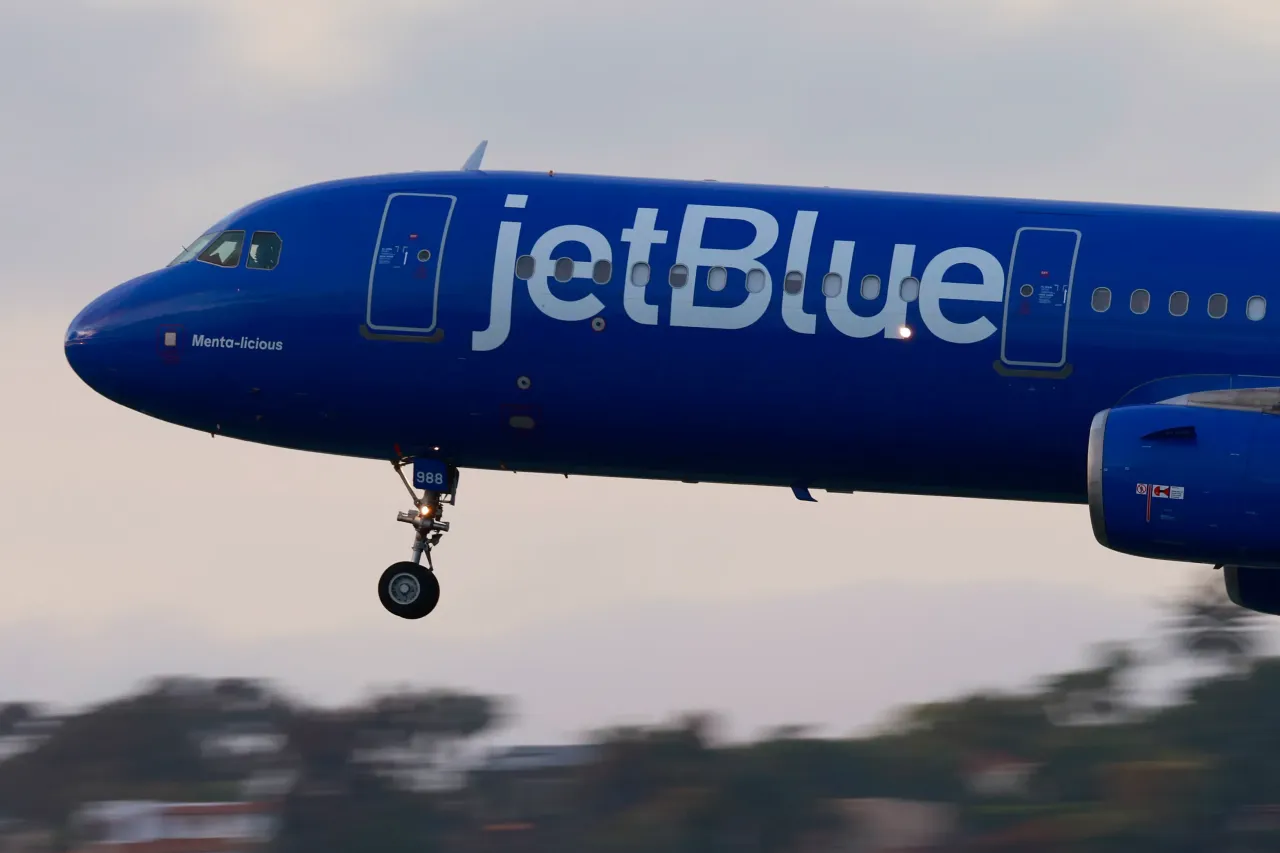
- Financing Agreement Reached: JetBlue has entered into a framework agreement with SKY Leasing and UMB Bank for up to $500 million in new debt financing, secured by 22 existing A320 and A220 aircraft, with fixed interest rates ranging from 6.00% to 6.75%, demonstrating proactive measures for liquidity management.
- Bankruptcy Rumors Clarified: Despite founder David Neeleman's comments about the company being in a “tough position,” CEO Joanna Geraghty reassured employees in a memo that JetBlue has sufficient liquidity and is not considering bankruptcy this year, alleviating market concerns regarding its financial health.
- Market Reaction Stable: JetBlue's shares fell 2% at the time of the news, yet the stock has gained over 60% in the past 12 months, indicating that retail investors maintain confidence in the company's future despite short-term challenges.
- Uncertain M&A Plans: JetBlue had considered merger talks with United Airlines, Alaska Airlines, or Southwest Airlines, but is currently not engaged in any active discussions, reflecting a cautious approach in strategic direction amid potential antitrust scrutiny.
JetBlue CEO Denies Bankruptcy Rumors for 2023
- Bankruptcy Rumor Clarification: JetBlue CEO Joanna Geraghty stated in an internal memo that the airline is not considering filing for bankruptcy this year, alleviating employee concerns about financial health and boosting morale.
- Strong Liquidity Position: Geraghty emphasized that JetBlue has ample liquidity and access to additional capital, indicating the company's financial stability in the current economic climate, which supports ongoing operations and potential business expansion.
- Transparent Internal Communication: The information was conveyed through an internal memo, demonstrating the company's commitment to transparency in crisis management, aimed at fostering employee trust and support for future developments.
- Positive Market Reaction: Although JetBlue has not yet responded to media inquiries, this news may positively impact investors and the market, enhancing the company's image and stabilizing its stock price.
JetBlue CEO Reassures Employees Against Bankruptcy Speculation
- Bankruptcy Speculation Clarified: JetBlue CEO Joanna Geraghty reassured employees in an internal memo that the airline is not considering bankruptcy protection this year, aiming to alleviate liquidity concerns stemming from high jet fuel costs.
- Capital Access Capability: Geraghty highlighted that JetBlue has sufficient access to capital, including a recent $500 million aircraft-backed loan with an option to raise an additional $250 million, enhancing the company's financial flexibility.
- Financial Overview: In 2025, JetBlue reported a net loss of approximately $602 million with operating revenue around $9.1 billion and liquidity of $2.5 billion, indicating pressure but not an immediate liquidity crisis.
- Market Confidence Indicators: JetBlue's shares have risen 28% year-to-date, reflecting investor confidence, although short interest stands at 18% of the total float, indicating a cautious market outlook on its future.
JETBLUE AIRWAYS CEO STATES AIRLINE HAS NO PLANS TO FILE FOR BANKRUPTCY, ACCORDING TO MEMO OBTAINED BY REUTERS
- JetBlue Airways CEO Statement: The CEO of JetBlue Airways has indicated that the airline is not considering filing for bankruptcy at this time.
- Context of the Memo: This statement comes in light of a memo that was seen by Reuters, which may have raised concerns about the airline's financial stability.
JetBlue Vacations Introduces Flexible Payment Options
- Flexible Payment Options: JetBlue Vacations has partnered with Upgrade, Inc.'s Flex Pay to introduce a new installment payment option, allowing customers to spread the cost of flight + hotel packages over monthly payments, enhancing their flexibility in planning and paying for trips.
- 0% APR Promotion: To celebrate the launch, JetBlue Vacations is offering a limited-time 0% APR promotion for bookings made before April 23, 2026, with no minimum purchase required, further reducing travel costs for customers.
- Streamlined Application Process: Customers can complete the application in just a few minutes during checkout, and once approved, they can select a payment plan that best fits their needs, with no late fees or prepayment penalties, significantly improving the user experience.
- Enhanced Customer Experience: By displaying estimated monthly payment amounts during the booking process, customers can better understand how different selections impact the total cost, making travel planning more feasible and helping JetBlue Vacations attract more customers.
NASDAQ 100 After Hours Update: Key Stocks and Volume Insights
- Index Performance: The NASDAQ 100 index rose by 46.41 points in after-hours trading, reaching 26,636.75, indicating market stability and investor confidence.
- Active Stock Overview: JetBlue Airways Corporation (JBLU) fell by $0.0235 in after-hours trading with a volume of 2,707,599 shares, currently priced at $5.73, significantly above the target price of $4.5, suggesting optimistic market expectations for its future performance.
- NVIDIA Stock Dynamics: NVIDIA Corporation (NVDA) remained unchanged at $202.06 in after-hours trading with a volume of 2,506,214 shares, with analysts generally recommending a
JetBlue Clarifies Financing Plans Amid Bankruptcy Rumors
- Financing Agreement Reached: JetBlue has entered into a framework agreement with SKY Leasing and UMB Bank for up to $500 million in new debt financing, secured by 22 existing A320 and A220 aircraft, with fixed interest rates ranging from 6.00% to 6.75%, demonstrating proactive measures for liquidity management.
- Bankruptcy Rumors Clarified: Despite founder David Neeleman's comments about the company being in a “tough position,” CEO Joanna Geraghty reassured employees in a memo that JetBlue has sufficient liquidity and is not considering bankruptcy this year, alleviating market concerns regarding its financial health.
- Market Reaction Stable: JetBlue's shares fell 2% at the time of the news, yet the stock has gained over 60% in the past 12 months, indicating that retail investors maintain confidence in the company's future despite short-term challenges.
- Uncertain M&A Plans: JetBlue had considered merger talks with United Airlines, Alaska Airlines, or Southwest Airlines, but is currently not engaged in any active discussions, reflecting a cautious approach in strategic direction amid potential antitrust scrutiny.
JetBlue CEO Denies Bankruptcy Rumors for 2023
- Bankruptcy Rumor Clarification: JetBlue CEO Joanna Geraghty stated in an internal memo that the airline is not considering filing for bankruptcy this year, alleviating employee concerns about financial health and boosting morale.
- Strong Liquidity Position: Geraghty emphasized that JetBlue has ample liquidity and access to additional capital, indicating the company's financial stability in the current economic climate, which supports ongoing operations and potential business expansion.
- Transparent Internal Communication: The information was conveyed through an internal memo, demonstrating the company's commitment to transparency in crisis management, aimed at fostering employee trust and support for future developments.
- Positive Market Reaction: Although JetBlue has not yet responded to media inquiries, this news may positively impact investors and the market, enhancing the company's image and stabilizing its stock price.
JetBlue CEO Reassures Employees Against Bankruptcy Speculation
- Bankruptcy Speculation Clarified: JetBlue CEO Joanna Geraghty reassured employees in an internal memo that the airline is not considering bankruptcy protection this year, aiming to alleviate liquidity concerns stemming from high jet fuel costs.
- Capital Access Capability: Geraghty highlighted that JetBlue has sufficient access to capital, including a recent $500 million aircraft-backed loan with an option to raise an additional $250 million, enhancing the company's financial flexibility.
- Financial Overview: In 2025, JetBlue reported a net loss of approximately $602 million with operating revenue around $9.1 billion and liquidity of $2.5 billion, indicating pressure but not an immediate liquidity crisis.
- Market Confidence Indicators: JetBlue's shares have risen 28% year-to-date, reflecting investor confidence, although short interest stands at 18% of the total float, indicating a cautious market outlook on its future.