Ford's Strategic Shift to EREV for Lightning Truck
Written by Emily J. Thompson, Senior Investment Analyst
Updated: Mar 13 2026
0mins

Source: NASDAQ.COM
- Strategic Context: Ford's decision to convert the all-electric F-150 Lightning into an EREV is primarily driven by short-term necessity rather than a significant strategic shift, resulting in approximately $19.5 billion in special charges during Q4, leading to a net loss of $11.1 billion, highlighting the high costs of its EV strategy adjustments.
- Market Potential of EREVs: While EREVs are gaining traction in North America and Europe, particularly influenced by domestic brands like Li Auto in China, Ford's shift may provide a lower-cost alternative, especially with significant improvements in battery costs and range.
- Cost-Benefit Analysis: According to McKinsey, the smaller batteries in EREVs can save about $6,000 in powertrain production costs, offering Ford greater flexibility in electric vehicle platform design, although it also faces challenges related to maintenance complexity and short-term benefits.
- Future Outlook: Ford is not planning to completely replace its small full EV lineup with EREVs but aims to leverage EREVs to revitalize the F-150 Lightning until the launch of its Universal EV Platform in 2027, addressing current market challenges and reducing costs.
Trade with 70% Backtested Accuracy
Stop guessing "Should I Buy F?" and start using high-conviction signals backed by rigorous historical data.
Sign up today to access powerful investing tools and make smarter, data-driven decisions.
Analyst Views on F
Wall Street analysts forecast F stock price to fall
14 Analyst Rating
3 Buy
10 Hold
1 Sell
Hold
Current: 13.960

Low
11.00
Averages
13.65
High
16.00
Current: 13.960
Low
11.00
Averages
13.65
High
16.00
About F
Ford Motor Company develops and delivers Ford trucks, sport utility vehicles, commercial vans and cars, and Lincoln luxury vehicles, along with connected services, including BlueCruise (ADAS) and security. The Company's segments include Ford Blue, Ford Model e, Ford Pro, and Ford Credit. The Ford Blue segment primarily includes the sale of Ford and Lincoln internal combustion engine (ICE) and hybrid vehicles, service parts, accessories, and digital services for retail customers. The Ford Model e segment primarily includes the sale of its electric vehicles, service parts, accessories, and digital services for retail customers. The Ford Pro segment primarily includes the sale of Ford and Lincoln vehicles, service parts, accessories, and services for commercial, government, and rental customers. The Ford Credit segment consists of the Ford Credit business on a consolidated basis, which is primarily vehicle-related financing and leasing activities. Its vehicle brands are Ford and Lincoln.
About the author

Emily J. Thompson
Emily J. Thompson, a Chartered Financial Analyst (CFA) with 12 years in investment research, graduated with honors from the Wharton School. Specializing in industrial and technology stocks, she provides in-depth analysis for Intellectia’s earnings and market brief reports.

Ford Faces New Challenges with China-Built Vehicle Imports

- Import Authorization Challenge: Ford Motor Company is struggling to secure U.S. Commerce Department authorization for its China-built Lincoln Nautilus SUV due to new restrictions on Chinese-linked software in connected vehicles, forcing a reassessment of its sourcing strategies.
- Software Restrictions Impact: According to Reuters, the new software prohibitions will take effect with 2027 models, while hardware restrictions will begin in 2030, posing broader challenges for the automotive industry, particularly regarding national security concerns related to vehicle data collection.
- Industry Response: General Motors has already set a 2027 deadline for suppliers to eliminate China-linked components, indicating a pressing response within the industry to the new regulations, which Ford must also adapt to in order to comply.
- Investment Outlook Analysis: While Ford is considered one of the best EV stocks, analysts suggest that certain AI stocks may offer greater upside potential and lower downside risk, indicating that Ford's relative attractiveness in investment portfolios may be impacted.
See More
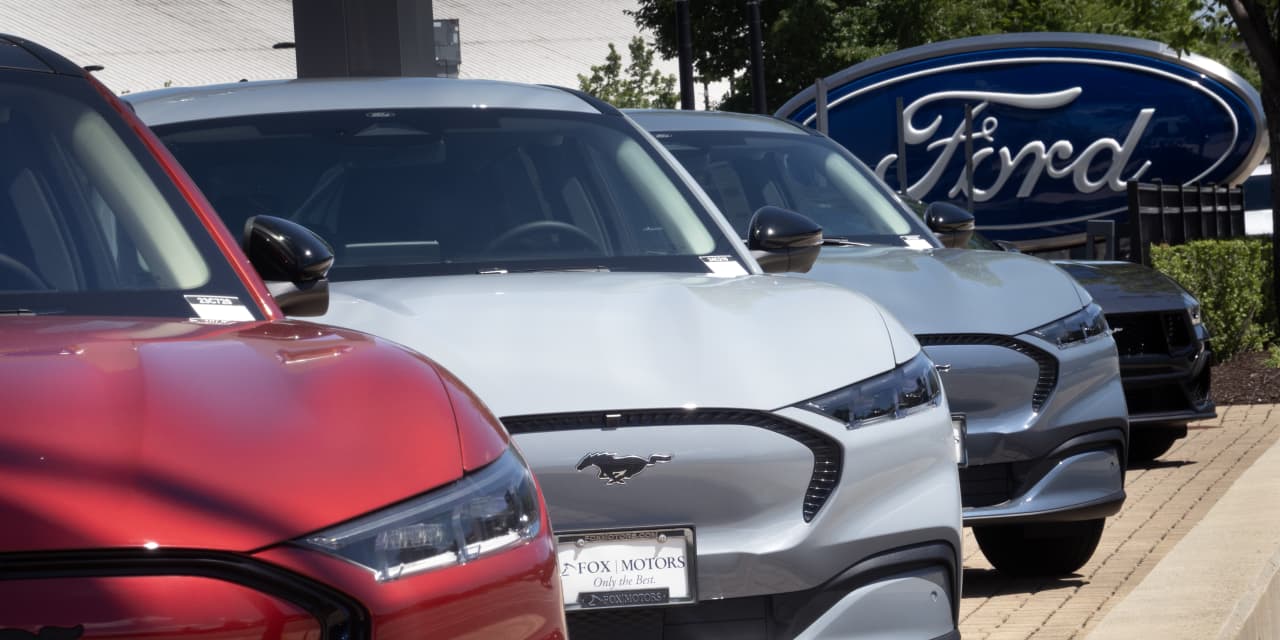
Ford's Battery Storage Business Poised for Growth

- Battery Storage Initiative: Ford plans to launch its battery storage business in 2026, with projected revenues reaching $5 billion by 2030, indicating a strategic pivot in response to declining EV demand in the U.S.
- Positive Market Reaction: Morgan Stanley's forecast of $500 million to $600 million in annual operating profit from Ford's energy business fueled a 45% stock surge in May, reflecting investor confidence in the new business model.
- Competitor Developments: General Motors is also exploring energy storage solutions, including a vehicle-to-grid project in partnership with utility companies and the development of sodium-ion batteries, highlighting increased competition in the energy market.
- Profitability Analysis: While Ford anticipates $5 billion in additional revenue by 2030, its current 0.8% operating profit margin suggests only $40 million in profit, indicating that the new business's profitability will require time to materialize.
See More

Ford's New Energy Storage Business Captivates Investors
- New Business Launch: Ford announced plans to initiate its battery energy storage business in 2026, with production set to begin in mid-2027 and an annual capacity of 20 gigawatt-hours, potentially generating $5 billion in new revenue by 2030, thereby significantly enhancing its competitiveness in the energy market.
- Positive Market Reaction: Morgan Stanley predicts that Ford's energy business could yield between $500 million and $600 million in annual operating profit, a forecast that propelled Ford's stock to soar 45% in the last two weeks of May, indicating strong market approval of its new strategy.
- Competitor Developments: General Motors is also exploring energy storage solutions, planning to partner with utility companies for a vehicle-to-grid system and collaborating with Redwood Materials to recycle old batteries, highlighting the industry's keen interest and competitive landscape in energy solutions.
- Profitability Analysis: With Ford's current operating profit margin at approximately 0.8%, achieving $5 billion in revenue by 2030 would only add about $40 million in profit, raising questions about its profitability compared to GM's 6.6% margin, suggesting that Ford's new business model requires further validation for financial success.
See More

Analysis of Ford's Energy Business Prospects

- New Business Launch: Ford announced its energy storage business in May, leading to a 47% stock price increase, with projections suggesting it could generate $500 million in operating profit by 2030, indicating strong market enthusiasm for its strategic pivot.
- EV Challenges: The company has incurred $16 billion in losses from its EV division, with management forecasting continued losses for the next three years, prompting Ford to seek recovery through its energy storage initiative, demonstrating adaptability to market pressures.
- Investment and Capacity Goals: Ford aims to produce up to 20 gigawatts of battery storage capacity over the next five years, committing $2 billion to kickstart this business, which underscores its focus on new market opportunities and long-term strategic planning.
- Market Reaction and Risks: Although Ford's energy business has yet to generate profit or revenue, the stock surge reflects investor optimism towards AI-related ventures; however, analysts caution that shareholders should prioritize cost management and vehicle sales improvements to ensure long-term financial stability.
See More

Ford Shifts Focus to Energy Storage Business
- Launch of Energy Storage: Ford announced in May the launch of Ford Energy, aiming to produce up to 20 gigawatts of battery storage capacity over the next five years, with deliveries starting in 2028, as a strategy to recover from $16 billion in losses from its EV division.
- Optimistic Profit Forecast: Analysts predict that Ford Energy could generate $500 million in operating profit by 2030, which, while modest compared to Ford's nearly $6.8 billion EBIT last year, indicates the company's proactive approach to exploring new revenue streams.
- Investment and Market Reaction: Ford plans to invest $2 billion in this new venture, and despite having no current profits or revenues, its stock surged 47% last month due to investor enthusiasm for its energy storage business, reflecting a broader excitement for AI-related initiatives.
- Future Challenges and Risks: While Ford's move into energy storage is noteworthy, analysts caution that investors should not rush to buy the stock solely based on this transition, especially given the company's ongoing challenges, including a staggering $8.2 billion net loss related to its EV restructuring.
See More
EV Demand Rebounds, Ford Seizes Opportunity

- EV Sales Rebound: In May, U.S. EV sales surpassed 85,000 units despite the absence of federal tax credits, indicating a significant recovery since last year's third quarter, which may present new growth opportunities for EV manufacturers.
- Average Transaction Price Decline: The average transaction price for EVs fell to $54,532 in May, a 4% decrease from the previous year, suggesting that manufacturers are working to reduce costs despite rising demand, which could impact future pricing strategies.
- Increased Incentive Spending: Automakers allocated approximately 14% of an EV's ATP to incentives, equating to about $7,600 per vehicle, which is double the industry average and may pressure profit margins, warranting close investor scrutiny.
- Ford's Strategic Shift: Ford plans to launch a new midsize EV platform in 2027, and despite a 58% decline in EV sales year-to-date, the rebound in market demand offers hope for future profitability, highlighting the company's potential in the EV sector.
See More
Ford Faces New Challenges with China-Built Vehicle Imports
- Import Authorization Challenge: Ford Motor Company is struggling to secure U.S. Commerce Department authorization for its China-built Lincoln Nautilus SUV due to new restrictions on Chinese-linked software in connected vehicles, forcing a reassessment of its sourcing strategies.
- Software Restrictions Impact: According to Reuters, the new software prohibitions will take effect with 2027 models, while hardware restrictions will begin in 2030, posing broader challenges for the automotive industry, particularly regarding national security concerns related to vehicle data collection.
- Industry Response: General Motors has already set a 2027 deadline for suppliers to eliminate China-linked components, indicating a pressing response within the industry to the new regulations, which Ford must also adapt to in order to comply.
- Investment Outlook Analysis: While Ford is considered one of the best EV stocks, analysts suggest that certain AI stocks may offer greater upside potential and lower downside risk, indicating that Ford's relative attractiveness in investment portfolios may be impacted.
See More
Ford's Battery Storage Business Poised for Growth
- Battery Storage Initiative: Ford plans to launch its battery storage business in 2026, with projected revenues reaching $5 billion by 2030, indicating a strategic pivot in response to declining EV demand in the U.S.
- Positive Market Reaction: Morgan Stanley's forecast of $500 million to $600 million in annual operating profit from Ford's energy business fueled a 45% stock surge in May, reflecting investor confidence in the new business model.
- Competitor Developments: General Motors is also exploring energy storage solutions, including a vehicle-to-grid project in partnership with utility companies and the development of sodium-ion batteries, highlighting increased competition in the energy market.
- Profitability Analysis: While Ford anticipates $5 billion in additional revenue by 2030, its current 0.8% operating profit margin suggests only $40 million in profit, indicating that the new business's profitability will require time to materialize.
See More
Ford's New Energy Storage Business Captivates Investors
- New Business Launch: Ford announced plans to initiate its battery energy storage business in 2026, with production set to begin in mid-2027 and an annual capacity of 20 gigawatt-hours, potentially generating $5 billion in new revenue by 2030, thereby significantly enhancing its competitiveness in the energy market.
- Positive Market Reaction: Morgan Stanley predicts that Ford's energy business could yield between $500 million and $600 million in annual operating profit, a forecast that propelled Ford's stock to soar 45% in the last two weeks of May, indicating strong market approval of its new strategy.
- Competitor Developments: General Motors is also exploring energy storage solutions, planning to partner with utility companies for a vehicle-to-grid system and collaborating with Redwood Materials to recycle old batteries, highlighting the industry's keen interest and competitive landscape in energy solutions.
- Profitability Analysis: With Ford's current operating profit margin at approximately 0.8%, achieving $5 billion in revenue by 2030 would only add about $40 million in profit, raising questions about its profitability compared to GM's 6.6% margin, suggesting that Ford's new business model requires further validation for financial success.
See More
Analysis of Ford's Energy Business Prospects
- New Business Launch: Ford announced its energy storage business in May, leading to a 47% stock price increase, with projections suggesting it could generate $500 million in operating profit by 2030, indicating strong market enthusiasm for its strategic pivot.
- EV Challenges: The company has incurred $16 billion in losses from its EV division, with management forecasting continued losses for the next three years, prompting Ford to seek recovery through its energy storage initiative, demonstrating adaptability to market pressures.
- Investment and Capacity Goals: Ford aims to produce up to 20 gigawatts of battery storage capacity over the next five years, committing $2 billion to kickstart this business, which underscores its focus on new market opportunities and long-term strategic planning.
- Market Reaction and Risks: Although Ford's energy business has yet to generate profit or revenue, the stock surge reflects investor optimism towards AI-related ventures; however, analysts caution that shareholders should prioritize cost management and vehicle sales improvements to ensure long-term financial stability.
See More
Ford Shifts Focus to Energy Storage Business
- Launch of Energy Storage: Ford announced in May the launch of Ford Energy, aiming to produce up to 20 gigawatts of battery storage capacity over the next five years, with deliveries starting in 2028, as a strategy to recover from $16 billion in losses from its EV division.
- Optimistic Profit Forecast: Analysts predict that Ford Energy could generate $500 million in operating profit by 2030, which, while modest compared to Ford's nearly $6.8 billion EBIT last year, indicates the company's proactive approach to exploring new revenue streams.
- Investment and Market Reaction: Ford plans to invest $2 billion in this new venture, and despite having no current profits or revenues, its stock surged 47% last month due to investor enthusiasm for its energy storage business, reflecting a broader excitement for AI-related initiatives.
- Future Challenges and Risks: While Ford's move into energy storage is noteworthy, analysts caution that investors should not rush to buy the stock solely based on this transition, especially given the company's ongoing challenges, including a staggering $8.2 billion net loss related to its EV restructuring.
See More
EV Demand Rebounds, Ford Seizes Opportunity
- EV Sales Rebound: In May, U.S. EV sales surpassed 85,000 units despite the absence of federal tax credits, indicating a significant recovery since last year's third quarter, which may present new growth opportunities for EV manufacturers.
- Average Transaction Price Decline: The average transaction price for EVs fell to $54,532 in May, a 4% decrease from the previous year, suggesting that manufacturers are working to reduce costs despite rising demand, which could impact future pricing strategies.
- Increased Incentive Spending: Automakers allocated approximately 14% of an EV's ATP to incentives, equating to about $7,600 per vehicle, which is double the industry average and may pressure profit margins, warranting close investor scrutiny.
- Ford's Strategic Shift: Ford plans to launch a new midsize EV platform in 2027, and despite a 58% decline in EV sales year-to-date, the rebound in market demand offers hope for future profitability, highlighting the company's potential in the EV sector.
See More