Exxon Mobil Gains from Middle East War Impacting Helium Supply
Written by Emily J. Thompson, Senior Investment Analyst
Updated: Apr 07 2026
0mins

Should l Buy XOM?
Source: CNBC
- Market Opportunity: The ongoing Middle East war has tightened global helium supply, with UBS analysts noting that Exxon Mobil stands to benefit as a net beneficiary of helium market conditions, particularly as Qatar's production is disrupted.
- Production Capacity: Exxon's LaBarge facility in Wyoming is capable of producing approximately 1.4 billion cubic feet of Grade A helium annually, remaining unaffected by Middle Eastern events, and is expected to play a significant role in helium supply for the next eight decades.
- Price Surge: Spot helium prices have soared to $1,000-$1,200 per thousand cubic feet due to the war, up from about $500 under older contracts, with UBS estimating that every $100 increase in prices could add $119 million to Exxon's EBITDA.
- Investment Rating: UBS reiterated a buy rating for Exxon Mobil with a 12-month price target of $171, implying about 5% upside from Monday's close of $163.37, reflecting positive market sentiment regarding the company's growth prospects.
Trade with 70% Backtested Accuracy
Stop guessing "Should I Buy XOM?" and start using high-conviction signals backed by rigorous historical data.
Sign up today to access powerful investing tools and make smarter, data-driven decisions.
Analyst Views on XOM
Wall Street analysts forecast XOM stock price to fall
19 Analyst Rating
12 Buy
7 Hold
0 Sell
Moderate Buy
Current: 149.240

Low
114.00
Averages
132.17
High
158.00
Current: 149.240
Low
114.00
Averages
132.17
High
158.00
About XOM
Exxon Mobil Corporation is an energy provider and chemical manufacturer. The Company’s principal business involves exploration for, and production of, crude oil and natural gas; the manufacture, trade, transport and sale of crude oil, natural gas, petroleum products, petrochemicals and a wide variety of specialty products; and pursuit of lower-emission and other new business opportunities, including carbon capture and storage, hydrogen, lower-emission fuels, Proxxima systems, carbon materials, and lithium. Its Upstream segment explores for and produces crude oil and natural gas. The Energy Products, Chemical Products, and Specialty Products segments manufacture and sell petroleum products and petrochemicals. Energy Products segment includes fuels, aromatics, and catalysts and licensing. Chemical Products segment consists of olefins, polyolefins, and intermediates. Specialty Products segment includes finished lubricants, basestocks and waxes, synthetics, and elastomers and resins.
About the author

Emily J. Thompson
Emily J. Thompson, a Chartered Financial Analyst (CFA) with 12 years in investment research, graduated with honors from the Wharton School. Specializing in industrial and technology stocks, she provides in-depth analysis for Intellectia’s earnings and market brief reports.
Greece Signs Offshore Drilling Contract for First Time in 40 Years

- Contract Signing: Exxon Mobil (XOM), Energean (EERGF), and Greece's largest refiner Helleniq Energy have signed a contract with Stena Drilling to conduct exploratory drilling in western Greece, marking the country's first offshore exploration in 40 years scheduled for February 2027.
- Exploration Block: The drilling will focus on Block 2 in the Ionian Sea, aiming to discover natural gas reserves, which is expected to create new growth opportunities for Greece's energy market and enhance national energy independence.
- Technical Advantage: Stena will deploy a high-performance vessel capable of operating in deep-sea waters and drilling up to 35,000 feet deep, targeting deposits that were previously considered hard to access, thereby driving technological advancements and resource development.
- Market Impact: This drilling initiative is poised to elevate Greece's status in the international energy market and may attract more investors to the region's energy potential, fostering economic growth and job opportunities.
See More

Wednesday ETF Trading Volume Insights

- Bank Performance: On Wednesday, Bank of America saw over 25 million shares traded, with a price increase of approximately 1.8%, indicating market confidence in its stability, which may attract more investor interest.
- Energy Stock Fluctuations: Exxon Mobil experienced a trading volume exceeding 4.9 million shares, with a slight decline of about 0.2%, reflecting cautious market sentiment regarding energy demand prospects, potentially impacting its short-term investment appeal.
- Industrial Stock Weakness: Stanley Black & Decker fell by approximately 6.1% on Wednesday, making it the worst performer in the Touchstone Strategic Income Opportunities ETF, highlighting market concerns over its future performance and prompting investors to reassess their investment strategies.
- ETF Market Dynamics: The overall performance of the Touchstone Strategic Income Opportunities ETF is influenced by individual component stocks, particularly those with high trading volumes, which may trigger renewed investor attention and evaluation of the ETF.
See More

Market Crash Risks and Investment Strategies

- Market Crash Risks: Despite the S&P 500's 2% rise this year, investors should remain cautious of potential market crashes due to high valuations and economic uncertainty, particularly if the war in Iran continues to escalate inflation.
- ExxonMobil as a Safe Investment: ExxonMobil's stock surged over 80% in 2022 due to rising oil prices, currently priced at $148.47 with a market cap of $622 billion and a 2.71% dividend yield, making it a safe haven during market turmoil.
- Eli Lilly's Growth Potential: Eli Lilly's stock rose 32% in 2022 following the success of its GLP-1 drugs, currently priced at $899.50 with a market cap of $872 billion; despite a 14% drop this year, the approval of its weight-loss drug Foundayo could serve as a significant growth catalyst.
- Berkshire Hathaway's Stability: During market downturns, Berkshire Hathaway's stock is favored for its low beta of 0.70, currently priced at $474.82 with a market cap of $1 trillion; although down 5% this year, its value investing approach continues to attract safety-seeking investors.
See More

Three Strong Stocks to Diversify Your Portfolio
- Market Resilience: ExxonMobil's stock surged over 80% during the S&P 500's 19% decline in 2022, demonstrating its safety during market turmoil, particularly as oil prices surpassed $100 per barrel, making it a safe haven for investors.
- Healthcare Growth: Eli Lilly's stock rose 32% in 2022 due to strong demand for its GLP-1 drugs, and the recent approval of the weight-loss pill Foundayo could serve as a significant growth catalyst, despite a 14% decline this year, highlighting its ongoing appeal to investors.
- Value Investment Choice: Berkshire Hathaway saw a modest 3% increase in 2022, and while its stock is down 5% this year, its low beta of 0.70 indicates it does not move in sync with the market, making it attractive for investors seeking stability amid rising market uncertainties.
- Risk Management in Portfolios: Given high valuations and increasing economic uncertainty, investors can mitigate overall portfolio risk by holding strong stocks like ExxonMobil, Eli Lilly, and Berkshire Hathaway, enhancing their portfolio's resilience against potential downturns.
See More

Increased Uncertainty in Energy Markets Amid War

- Strait of Hormuz Situation: The U.S. blockade of Iranian ports in the Strait of Hormuz has led to heightened uncertainty in the oil market, as any attack could cause oil prices to soar, reflecting the precarious nature of current geopolitical tensions.
- Pipeline Developments: The construction of backup pipelines by Saudi Arabia and the UAE has halved the flow of shipborne oil through the Strait, with Saudi's capacity at 7 million barrels per day and UAE's at 1.5 million, reducing reliance on this critical chokepoint.
- Focus on Energy Security: Investors are advised to concentrate on companies enhancing energy security, such as GE Vernova, whose stock has surged 51%, indicating strong market confidence in its long-term growth potential amidst ongoing uncertainties.
- Optimism for Pipeline Companies: Kinder Morgan is highlighted as a top choice for oil and gas transport, boasting nearly 80,000 miles of pipeline; despite trading near all-time highs, demand for its core energy infrastructure remains robust, suggesting a favorable outlook for the sector.
See More
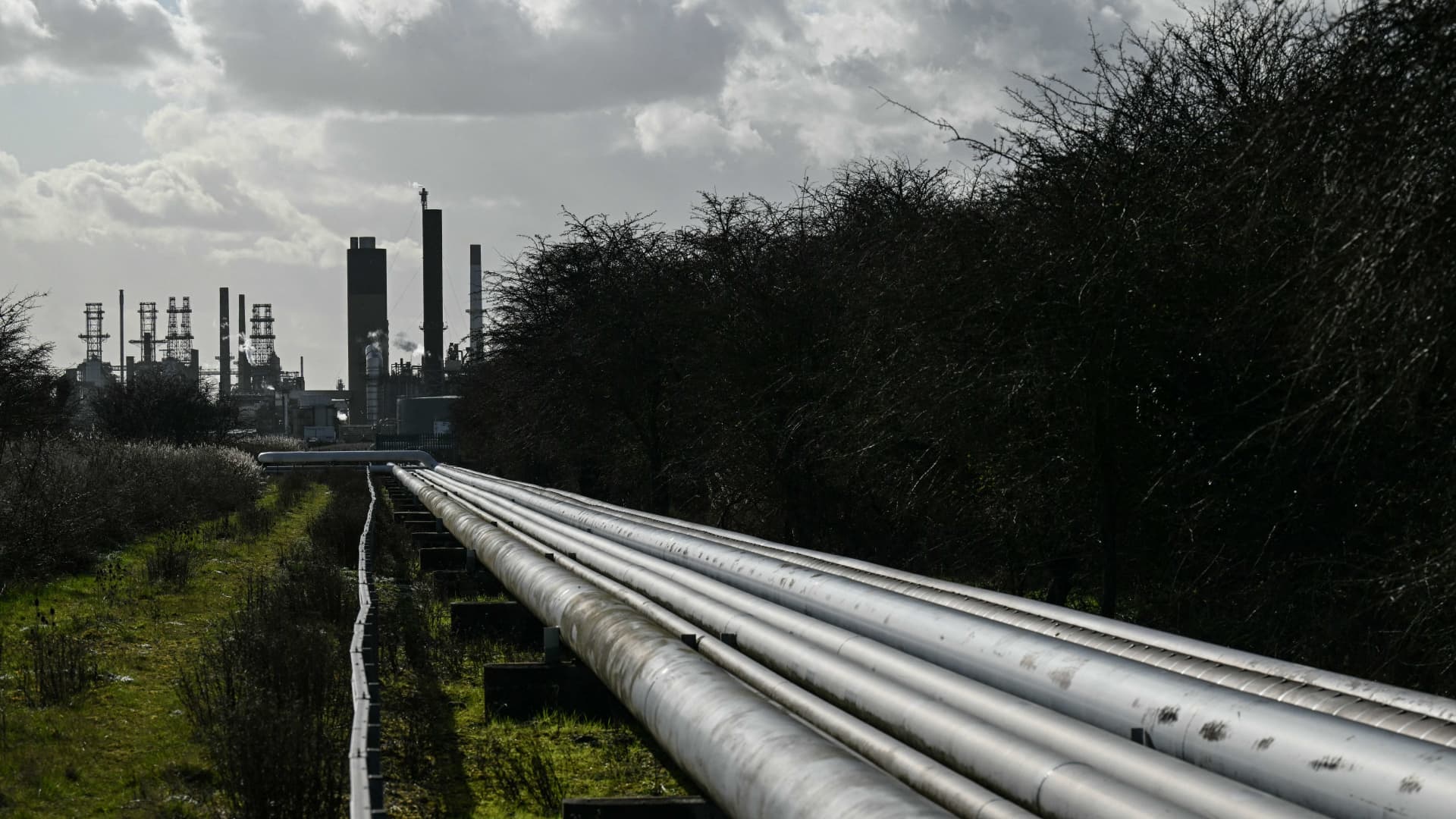
UK Refining Capacity Decline Sparks Fuel Shortage Crisis

- Declining Refining Capacity: The UK's refining capacity has decreased by 41% since 2000, primarily due to the exit of major oil companies like BP and Shell in 2011, which has diminished market competitiveness and affected the stability of domestic fuel supplies.
- Increased Import Dependency: In 2024, the UK imported 3.1 times more kerosene than it produced and 2.5 times more diesel, indicating a significant decline in self-sufficiency in these critical fuels due to refinery closures, thereby increasing reliance on external supplies.
- Stockpile Crisis: The UK's kerosene stockpiles are only sufficient for one month's supply, far below the levels of most other countries, creating an urgent demand for kerosene in the international market, especially during peak aviation fuel demand periods.
- Price Hike Expectations: With European kerosene prices having doubled, airfares are expected to rise this summer, and airlines may cut capacity, which could impact the UK's tourism sector, although it may encourage more domestic vacations, providing opportunities for local hospitality businesses.
See More
Greece Signs Offshore Drilling Contract for First Time in 40 Years
- Contract Signing: Exxon Mobil (XOM), Energean (EERGF), and Greece's largest refiner Helleniq Energy have signed a contract with Stena Drilling to conduct exploratory drilling in western Greece, marking the country's first offshore exploration in 40 years scheduled for February 2027.
- Exploration Block: The drilling will focus on Block 2 in the Ionian Sea, aiming to discover natural gas reserves, which is expected to create new growth opportunities for Greece's energy market and enhance national energy independence.
- Technical Advantage: Stena will deploy a high-performance vessel capable of operating in deep-sea waters and drilling up to 35,000 feet deep, targeting deposits that were previously considered hard to access, thereby driving technological advancements and resource development.
- Market Impact: This drilling initiative is poised to elevate Greece's status in the international energy market and may attract more investors to the region's energy potential, fostering economic growth and job opportunities.
See More
Wednesday ETF Trading Volume Insights
- Bank Performance: On Wednesday, Bank of America saw over 25 million shares traded, with a price increase of approximately 1.8%, indicating market confidence in its stability, which may attract more investor interest.
- Energy Stock Fluctuations: Exxon Mobil experienced a trading volume exceeding 4.9 million shares, with a slight decline of about 0.2%, reflecting cautious market sentiment regarding energy demand prospects, potentially impacting its short-term investment appeal.
- Industrial Stock Weakness: Stanley Black & Decker fell by approximately 6.1% on Wednesday, making it the worst performer in the Touchstone Strategic Income Opportunities ETF, highlighting market concerns over its future performance and prompting investors to reassess their investment strategies.
- ETF Market Dynamics: The overall performance of the Touchstone Strategic Income Opportunities ETF is influenced by individual component stocks, particularly those with high trading volumes, which may trigger renewed investor attention and evaluation of the ETF.
See More
Market Crash Risks and Investment Strategies
- Market Crash Risks: Despite the S&P 500's 2% rise this year, investors should remain cautious of potential market crashes due to high valuations and economic uncertainty, particularly if the war in Iran continues to escalate inflation.
- ExxonMobil as a Safe Investment: ExxonMobil's stock surged over 80% in 2022 due to rising oil prices, currently priced at $148.47 with a market cap of $622 billion and a 2.71% dividend yield, making it a safe haven during market turmoil.
- Eli Lilly's Growth Potential: Eli Lilly's stock rose 32% in 2022 following the success of its GLP-1 drugs, currently priced at $899.50 with a market cap of $872 billion; despite a 14% drop this year, the approval of its weight-loss drug Foundayo could serve as a significant growth catalyst.
- Berkshire Hathaway's Stability: During market downturns, Berkshire Hathaway's stock is favored for its low beta of 0.70, currently priced at $474.82 with a market cap of $1 trillion; although down 5% this year, its value investing approach continues to attract safety-seeking investors.
See More
Three Strong Stocks to Diversify Your Portfolio
- Market Resilience: ExxonMobil's stock surged over 80% during the S&P 500's 19% decline in 2022, demonstrating its safety during market turmoil, particularly as oil prices surpassed $100 per barrel, making it a safe haven for investors.
- Healthcare Growth: Eli Lilly's stock rose 32% in 2022 due to strong demand for its GLP-1 drugs, and the recent approval of the weight-loss pill Foundayo could serve as a significant growth catalyst, despite a 14% decline this year, highlighting its ongoing appeal to investors.
- Value Investment Choice: Berkshire Hathaway saw a modest 3% increase in 2022, and while its stock is down 5% this year, its low beta of 0.70 indicates it does not move in sync with the market, making it attractive for investors seeking stability amid rising market uncertainties.
- Risk Management in Portfolios: Given high valuations and increasing economic uncertainty, investors can mitigate overall portfolio risk by holding strong stocks like ExxonMobil, Eli Lilly, and Berkshire Hathaway, enhancing their portfolio's resilience against potential downturns.
See More
Increased Uncertainty in Energy Markets Amid War
- Strait of Hormuz Situation: The U.S. blockade of Iranian ports in the Strait of Hormuz has led to heightened uncertainty in the oil market, as any attack could cause oil prices to soar, reflecting the precarious nature of current geopolitical tensions.
- Pipeline Developments: The construction of backup pipelines by Saudi Arabia and the UAE has halved the flow of shipborne oil through the Strait, with Saudi's capacity at 7 million barrels per day and UAE's at 1.5 million, reducing reliance on this critical chokepoint.
- Focus on Energy Security: Investors are advised to concentrate on companies enhancing energy security, such as GE Vernova, whose stock has surged 51%, indicating strong market confidence in its long-term growth potential amidst ongoing uncertainties.
- Optimism for Pipeline Companies: Kinder Morgan is highlighted as a top choice for oil and gas transport, boasting nearly 80,000 miles of pipeline; despite trading near all-time highs, demand for its core energy infrastructure remains robust, suggesting a favorable outlook for the sector.
See More
UK Refining Capacity Decline Sparks Fuel Shortage Crisis
- Declining Refining Capacity: The UK's refining capacity has decreased by 41% since 2000, primarily due to the exit of major oil companies like BP and Shell in 2011, which has diminished market competitiveness and affected the stability of domestic fuel supplies.
- Increased Import Dependency: In 2024, the UK imported 3.1 times more kerosene than it produced and 2.5 times more diesel, indicating a significant decline in self-sufficiency in these critical fuels due to refinery closures, thereby increasing reliance on external supplies.
- Stockpile Crisis: The UK's kerosene stockpiles are only sufficient for one month's supply, far below the levels of most other countries, creating an urgent demand for kerosene in the international market, especially during peak aviation fuel demand periods.
- Price Hike Expectations: With European kerosene prices having doubled, airfares are expected to rise this summer, and airlines may cut capacity, which could impact the UK's tourism sector, although it may encourage more domestic vacations, providing opportunities for local hospitality businesses.
See More