Carvana Shares Plunge 35% Despite Record Earnings Report
Written by Emily J. Thompson, Senior Investment Analyst
Updated: 3 days ago
0mins
Should l Buy CVNA?
Source: Fool
- Significant Revenue Growth: Carvana's fourth-quarter revenue surged 58% year-over-year to $5.6 billion, driven by a 43% increase in retail units sold, exceeding 163,000, indicating strong market demand and a solid business foundation.
- Profit Signal: Despite reporting a net income of $951 million in Q4, Carvana's results included a $685 million non-cash benefit, reflecting management's confidence in future profitability by releasing the valuation allowance against deferred tax assets.
- Profitability Pressure: While revenue growth is robust, Carvana's adjusted EBITDA stood at $511 million, with the EBITDA margin narrowing from 11.3% in Q3 to 9.1%, highlighting profitability pressures and investor concerns regarding its valuation.
- High Valuation Risks: With a price-to-earnings ratio of 33, Carvana's shares remain expensive even after a 35% drop, necessitating caution among investors regarding future growth expectations, especially amid macroeconomic uncertainties.
Trade with 70% Backtested Accuracy
Stop guessing "Should I Buy CVNA?" and start using high-conviction signals backed by rigorous historical data.
Sign up today to access powerful investing tools and make smarter, data-driven decisions.
Analyst Views on CVNA
Wall Street analysts forecast CVNA stock price to rise
18 Analyst Rating
16 Buy
2 Hold
0 Sell
Strong Buy
Current: 294.180

Low
395.00
Averages
497.94
High
550.00
Current: 294.180
Low
395.00
Averages
497.94
High
550.00
About CVNA
Carvana Co. is a holding company. The Company operates an e-commerce platform for buying and selling used cars. The Company primarily acquires used vehicle inventory directly from customers, used car auctions, and wholesale used vehicle suppliers, including retail marketplace partners. Once it acquires a vehicle, the Company leverages its in-house logistics network or a vendor to transport the vehicle to one of its inspection and reconditioning centers (IRC) or auction locations with reconditioning capabilities, at which point the vehicle enters its inventory management system. The Company offers a mobile-optimized Website, where prospective retail car buyers can immediately begin browsing, researching, filtering, and identifying their vehicle of choice, where it offers an annotated virtual vehicle tour, which includes a 360-degree view of the interior and exterior of the actual vehicle. The Company also offers integrated financing using its loan origination platform.
About the author

Emily J. Thompson
Emily J. Thompson, a Chartered Financial Analyst (CFA) with 12 years in investment research, graduated with honors from the Wharton School. Specializing in industrial and technology stocks, she provides in-depth analysis for Intellectia’s earnings and market brief reports.

Brightlight Capital Reduces Stake in Hilton Grand Vacations


- Stake Reduction Impact: Brightlight Capital Management disclosed in a February 17, 2026 SEC filing that it reduced its stake in Hilton Grand Vacations by 79,500 shares, resulting in a $2.43 million decrease in quarter-end position value, indicating a cautious outlook on the company's future performance.
- Ownership Ratio Change: Following this transaction, Brightlight's stake in Hilton Grand Vacations now represents 9.65%, which may affect market confidence in the company, especially as its primary revenue source from vacation ownership sales faces challenges.
- Financial Overview: As of February 13, 2026, Hilton Grand Vacations' stock price was $46.22, reflecting a 9.3% increase over the past year, yet underperforming the S&P 500 by 2.5 percentage points, indicating relative weakness in the market that could influence investor decisions.
- Investor Considerations: Hilton Grand Vacations relies heavily on vacation ownership sales and resort operations for revenue; while it has stable recurring income, it still faces consumer credit risk, prompting investors to monitor market demand and credit conditions' impact on sales and profitability.
See More

Brightlight Capital Reduces Stake in Hilton Grand Vacations
- Share Reduction Details: Brightlight Capital Management disclosed in an SEC filing dated February 17, 2026, that it sold 79,500 shares of Hilton Grand Vacations, resulting in a $2.43 million decline in quarter-end position value, reflecting both trading activity and stock price movements.
- Holding Proportion Change: Following this transaction, Brightlight's stake decreased to 303,200 shares valued at $13.57 million, representing 9.65% of its assets under management, which places it outside the fund's top five holdings, indicating a strategic shift in investment focus.
- Market Performance Analysis: As of February 13, 2026, Hilton Grand Vacations' stock was priced at $46.22, up 9.3% over the past year, yet underperformed the S&P 500 by 2.5 percentage points, reflecting a potential decline in market confidence towards the company.
- Business Model and Risks: Hilton Grand Vacations relies on revenue from timeshare sales and club management, with approximately 333,000 members; however, its performance is highly dependent on consumer demand and credit risk, suggesting that economic fluctuations could significantly impact profitability.
See More
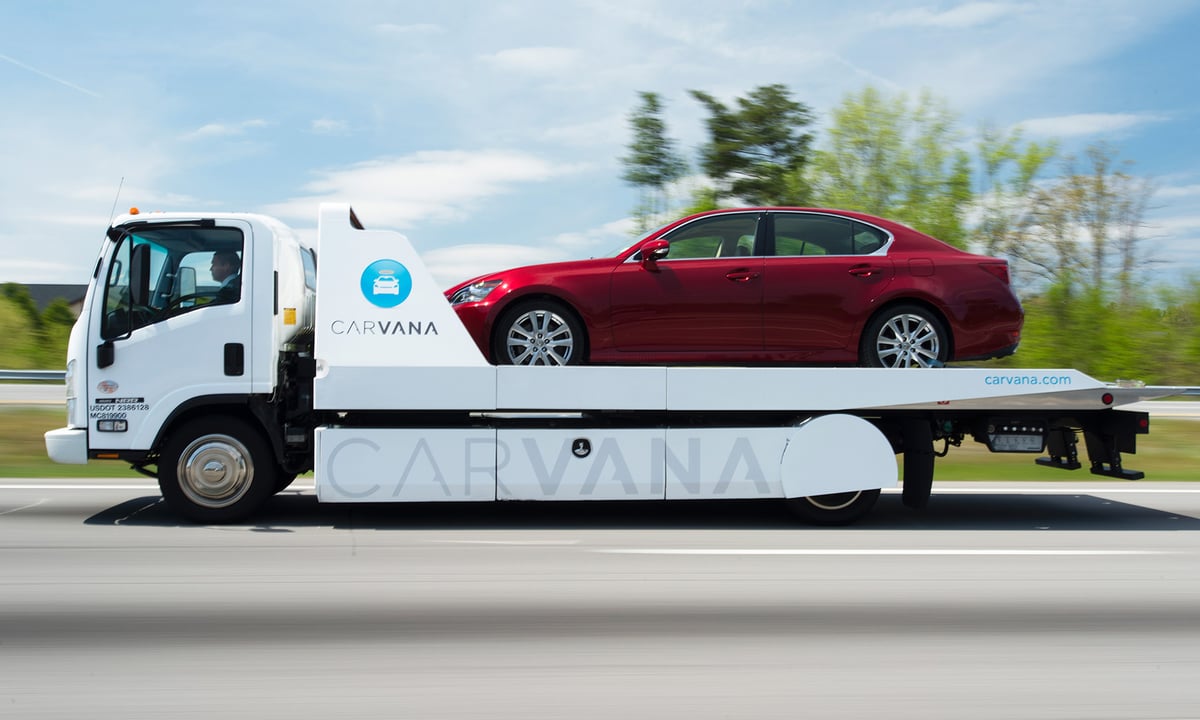
Carvana Shares Plunge 35% Despite Record Earnings Report
- Significant Revenue Growth: Carvana's fourth-quarter revenue surged 58% year-over-year to $5.6 billion, driven by a 43% increase in retail units sold, exceeding 163,000, indicating strong market demand and a solid business foundation.
- Profit Signal: Despite reporting a net income of $951 million in Q4, Carvana's results included a $685 million non-cash benefit, reflecting management's confidence in future profitability by releasing the valuation allowance against deferred tax assets.
- Profitability Pressure: While revenue growth is robust, Carvana's adjusted EBITDA stood at $511 million, with the EBITDA margin narrowing from 11.3% in Q3 to 9.1%, highlighting profitability pressures and investor concerns regarding its valuation.
- High Valuation Risks: With a price-to-earnings ratio of 33, Carvana's shares remain expensive even after a 35% drop, necessitating caution among investors regarding future growth expectations, especially amid macroeconomic uncertainties.
See More

Carvana Reports 58% Revenue Surge in Q4 2025
- Significant Revenue Growth: Carvana's Q4 2025 revenue surged 58% year-over-year to $5.6 billion, driven by a 43% increase in retail units sold, exceeding 163,000, indicating strong demand and business expansion in the used car market.
- Net Income Surge: The company reported a net income of $951 million for Q4, positively impacted by approximately $685 million in non-cash tax benefits, reflecting management's confidence in future profitability by releasing the valuation allowance on deferred tax assets.
- Profitability Fluctuations: Although adjusted EBITDA improved to $511 million from $359 million year-over-year, the EBITDA margin narrowed to 9.1% from 11.3% in Q3, indicating potential pressures on profitability that may affect investor sentiment.
- High Valuation Risks: With a price-to-earnings ratio of 33, Carvana's stock remains highly valued despite a 35% drop this year, necessitating caution from investors regarding potential demand fluctuations amid macroeconomic uncertainties.
See More

Market Capitalization Comparison: Datadog vs Carvana

- Market Cap Comparison: Datadog Inc (Ticker: DDOG) has a market capitalization of $43.09 billion, while Carvana Co (Ticker: CVNA) stands at $41.56 billion, highlighting their relative size differences in the market, which influences investor valuation assessments.
- Investor Misconceptions: Many novice investors mistakenly judge company value solely based on stock price, but market capitalization provides a more accurate basis for comparison, helping investors avoid erroneous investment decisions.
- Market Positioning Impact: Market capitalization not only affects a company's ranking among peers but also determines which mutual funds and ETFs may invest in these stocks, particularly as large funds tend to favor companies with market caps exceeding $10 billion.
- Stock Price Fluctuations: At Thursday's close, DDOG's stock price fell by approximately 1%, while CVNA's stock price rose by about 1.3%, reflecting differing market reactions to the short-term performance of these two companies.
See More

Carvana's Stock Soars 4,300%: Future Growth Potential
- Outstanding Market Performance: Carvana's stock has surged approximately 4,300% over the past three years, significantly outperforming the S&P 500's 70% gain, highlighting its strong growth potential in the used car market and attracting investor interest.
- Margin Improvement: Despite higher-than-expected reconditioning costs in Q4 2025, if Carvana can leverage data-driven software to streamline operations, it is expected to further enhance margins, boosting investor confidence.
- Industry Consolidation Trend: As the second-largest used car retailer in the U.S., Carvana holds only 1.6% of the market, yet its e-commerce platform positions it favorably for the impending industry consolidation, potentially expanding its market share.
- Future Growth Opportunities: Carvana's operational efficiencies and industry consolidation are set to drive high growth in the future; although investors may have missed earlier gains, substantial growth potential remains on the horizon.
See More
Brightlight Capital Reduces Stake in Hilton Grand Vacations
- Stake Reduction Impact: Brightlight Capital Management disclosed in a February 17, 2026 SEC filing that it reduced its stake in Hilton Grand Vacations by 79,500 shares, resulting in a $2.43 million decrease in quarter-end position value, indicating a cautious outlook on the company's future performance.
- Ownership Ratio Change: Following this transaction, Brightlight's stake in Hilton Grand Vacations now represents 9.65%, which may affect market confidence in the company, especially as its primary revenue source from vacation ownership sales faces challenges.
- Financial Overview: As of February 13, 2026, Hilton Grand Vacations' stock price was $46.22, reflecting a 9.3% increase over the past year, yet underperforming the S&P 500 by 2.5 percentage points, indicating relative weakness in the market that could influence investor decisions.
- Investor Considerations: Hilton Grand Vacations relies heavily on vacation ownership sales and resort operations for revenue; while it has stable recurring income, it still faces consumer credit risk, prompting investors to monitor market demand and credit conditions' impact on sales and profitability.
See More
Brightlight Capital Reduces Stake in Hilton Grand Vacations
- Share Reduction Details: Brightlight Capital Management disclosed in an SEC filing dated February 17, 2026, that it sold 79,500 shares of Hilton Grand Vacations, resulting in a $2.43 million decline in quarter-end position value, reflecting both trading activity and stock price movements.
- Holding Proportion Change: Following this transaction, Brightlight's stake decreased to 303,200 shares valued at $13.57 million, representing 9.65% of its assets under management, which places it outside the fund's top five holdings, indicating a strategic shift in investment focus.
- Market Performance Analysis: As of February 13, 2026, Hilton Grand Vacations' stock was priced at $46.22, up 9.3% over the past year, yet underperformed the S&P 500 by 2.5 percentage points, reflecting a potential decline in market confidence towards the company.
- Business Model and Risks: Hilton Grand Vacations relies on revenue from timeshare sales and club management, with approximately 333,000 members; however, its performance is highly dependent on consumer demand and credit risk, suggesting that economic fluctuations could significantly impact profitability.
See More
Carvana Shares Plunge 35% Despite Record Earnings Report
- Significant Revenue Growth: Carvana's fourth-quarter revenue surged 58% year-over-year to $5.6 billion, driven by a 43% increase in retail units sold, exceeding 163,000, indicating strong market demand and a solid business foundation.
- Profit Signal: Despite reporting a net income of $951 million in Q4, Carvana's results included a $685 million non-cash benefit, reflecting management's confidence in future profitability by releasing the valuation allowance against deferred tax assets.
- Profitability Pressure: While revenue growth is robust, Carvana's adjusted EBITDA stood at $511 million, with the EBITDA margin narrowing from 11.3% in Q3 to 9.1%, highlighting profitability pressures and investor concerns regarding its valuation.
- High Valuation Risks: With a price-to-earnings ratio of 33, Carvana's shares remain expensive even after a 35% drop, necessitating caution among investors regarding future growth expectations, especially amid macroeconomic uncertainties.
See More
Carvana Reports 58% Revenue Surge in Q4 2025
- Significant Revenue Growth: Carvana's Q4 2025 revenue surged 58% year-over-year to $5.6 billion, driven by a 43% increase in retail units sold, exceeding 163,000, indicating strong demand and business expansion in the used car market.
- Net Income Surge: The company reported a net income of $951 million for Q4, positively impacted by approximately $685 million in non-cash tax benefits, reflecting management's confidence in future profitability by releasing the valuation allowance on deferred tax assets.
- Profitability Fluctuations: Although adjusted EBITDA improved to $511 million from $359 million year-over-year, the EBITDA margin narrowed to 9.1% from 11.3% in Q3, indicating potential pressures on profitability that may affect investor sentiment.
- High Valuation Risks: With a price-to-earnings ratio of 33, Carvana's stock remains highly valued despite a 35% drop this year, necessitating caution from investors regarding potential demand fluctuations amid macroeconomic uncertainties.
See More
Market Capitalization Comparison: Datadog vs Carvana
- Market Cap Comparison: Datadog Inc (Ticker: DDOG) has a market capitalization of $43.09 billion, while Carvana Co (Ticker: CVNA) stands at $41.56 billion, highlighting their relative size differences in the market, which influences investor valuation assessments.
- Investor Misconceptions: Many novice investors mistakenly judge company value solely based on stock price, but market capitalization provides a more accurate basis for comparison, helping investors avoid erroneous investment decisions.
- Market Positioning Impact: Market capitalization not only affects a company's ranking among peers but also determines which mutual funds and ETFs may invest in these stocks, particularly as large funds tend to favor companies with market caps exceeding $10 billion.
- Stock Price Fluctuations: At Thursday's close, DDOG's stock price fell by approximately 1%, while CVNA's stock price rose by about 1.3%, reflecting differing market reactions to the short-term performance of these two companies.
See More
Carvana's Stock Soars 4,300%: Future Growth Potential
- Outstanding Market Performance: Carvana's stock has surged approximately 4,300% over the past three years, significantly outperforming the S&P 500's 70% gain, highlighting its strong growth potential in the used car market and attracting investor interest.
- Margin Improvement: Despite higher-than-expected reconditioning costs in Q4 2025, if Carvana can leverage data-driven software to streamline operations, it is expected to further enhance margins, boosting investor confidence.
- Industry Consolidation Trend: As the second-largest used car retailer in the U.S., Carvana holds only 1.6% of the market, yet its e-commerce platform positions it favorably for the impending industry consolidation, potentially expanding its market share.
- Future Growth Opportunities: Carvana's operational efficiencies and industry consolidation are set to drive high growth in the future; although investors may have missed earlier gains, substantial growth potential remains on the horizon.
See More