Apple Inc. Scales Back Vision Pro Production Amid Sales Struggles
Written by Emily J. Thompson, Senior Investment Analyst
Updated: Jan 02 2026
0mins


Should l Buy AAPL?
Source: Benzinga
- Sales Weakness: Apple Inc. has reportedly scaled back production and promotion of its Vision Pro headset due to sluggish sales, resulting in a 0.5% drop in stock price to $271.86 on Wednesday, highlighting challenges in achieving mass-market success for its mixed-reality device.
- Export License Approval: Taiwan Semiconductor Manufacturing Co. secured a one-year U.S. export license allowing the import of U.S. chipmaking equipment into its China operations, with shares rising 2.3% to $1,585.00 on Wednesday, underscoring its critical role in the global semiconductor supply chain.
- Share Consolidation: VS Media Holdings Ltd. announced a 1-for-20 share combination, leading to a 17% increase in stock price to $0.10 on Wednesday, aimed at enhancing shareholder value and improving market perception.
- FDA Response: Outlook Therapeutics disclosed that the FDA issued a complete response letter regarding its ONS-5010 biologics license application, causing shares to plummet 63.3% to $0.58 in after-hours trading, indicating a significant setback in its drug development efforts.
Trade with 70% Backtested Accuracy
Stop guessing "Should I Buy AAPL?" and start using high-conviction signals backed by rigorous historical data.
Sign up today to access powerful investing tools and make smarter, data-driven decisions.
Analyst Views on AAPL
Wall Street analysts forecast AAPL stock price to rise
27 Analyst Rating
17 Buy
9 Hold
1 Sell
Moderate Buy
Current: 271.350

Low
239.00
Averages
306.89
High
350.00
Current: 271.350
Low
239.00
Averages
306.89
High
350.00
About AAPL
Apple Inc. designs, manufactures and markets smartphones, personal computers, tablets, wearables and accessories, and sells a variety of related services. Its product categories include iPhone, Mac, iPad, Wearables, Home and Accessories. Its services include advertising, AppleCare, cloud services, digital content, and payment services. The Company operates various platforms, including the App Store, that allow customers to discover and download applications and digital content, such as books, music, video, games and podcasts. It also offers digital content through subscription-based services, including Apple Arcade, Apple Fitness+, Apple Music, Apple News+, and Apple TV+. Its wearables include smartwatches, wireless headphones, and spatial computers. Its products include iPhone 16 Pro, iPhone 16, iPhone 15, iPhone 14, iPhone SE, MacBook Air, MacBook Pro, iMac, Mac mini, Mac Studio, Mac Pro, iPad Pro, iPad Air, AirPods, AirPods Pro, AirPods Max, Apple TV, Apple Vision Pro and others.
About the author

Emily J. Thompson
Emily J. Thompson, a Chartered Financial Analyst (CFA) with 12 years in investment research, graduated with honors from the Wharton School. Specializing in industrial and technology stocks, she provides in-depth analysis for Intellectia’s earnings and market brief reports.

Apple Reports Strong Q1 2026 Results, Surpassing Expectations

- Strong Performance: Apple reported Q1 2026 revenue of $111.2 billion, a 16.6% year-over-year increase, with earnings per share rising 21.8% to $2.01, surpassing Wall Street expectations and demonstrating robust market demand and operational efficiency.
- Robust Product Demand: The strong demand for the iPhone 17 family and double-digit growth in Services drove significant growth across all major markets, with CEO Tim Cook highlighting double-digit growth in every product category, further solidifying Apple's competitive position globally.
- Improved Profitability: Both gross and operating margins expanded compared to the same period last year, reflecting the company's successful strategies in cost control and pricing, alleviating market concerns about its growth trajectory.
- Positive Stock Performance: Although shares rose 4% in the morning session before cooling to $284.61, still up 4.7% from the previous close, this indicates investor confidence in the company's future growth, with the stock trading close to its 52-week high of $286.19.
See More

Apple Reports Strong Earnings Growth, Increases Shareholder Dividends
- Significant Revenue Growth: Apple reported a 17% year-over-year revenue increase to $111.2 billion for the fiscal second quarter ending March 28, primarily driven by extraordinary demand for the iPhone 17, indicating strong performance in the smartphone market.
- Surge in iPhone Sales: iPhone sales soared by 22% to $57 billion, reflecting robust consumer interest in new products and further solidifying Apple's leadership position in the premium smartphone segment.
- Increase in Services Revenue: Apple's high-margin services revenue rose by 16% to $31 billion, benefiting from its massive installed base of active devices, which allows the company to continuously expand its service offerings and enhance overall profitability.
- Increased Shareholder Returns: Apple raised its quarterly cash dividend by 4% to $0.27 per share and announced a new $100 billion stock buyback program, demonstrating the company's strong cash flow and commitment to returning value to shareholders.
See More

U.S. Navy Actions and Oil Price Fluctuations


- Naval Actions: The U.S. Navy inspected M/V Blue Star III on April 28, confirming it would not head to Iran, demonstrating strict enforcement of the blockade, although this action did not significantly sway market sentiment.
- OPEC+ Production Increase: Seven OPEC+ members agreed to raise production by 188,000 barrels per day in June, but with the Strait of Hormuz still closed, the real-world impact is limited, leading to a muted market reaction and slight oil price declines.
- Record U.S. Oil Exports: U.S. oil exports surged to 5.2 million barrels per day in April, up over 30% from February, indicating strong performance in the U.S. energy market amid Middle Eastern tensions, which could influence global oil price trends.
- U.S.-China Tensions: China's Commerce Ministry blocked U.S. sanctions against five Chinese refiners, highlighting escalating tensions between the two nations, which may have far-reaching implications for global markets, particularly in the energy sector.
See More

Stock Market Rebounds, Apple and Broadcom Enter Buy Zones

- Market Rebound: The stock market rebounded late last week after a brief pause, with the S&P 500 and Nasdaq reaching new highs, indicating a recovery in investor confidence and increased market activity.
- Strong Tech Performance: Apple and Broadcom stocks have shown remarkable performance during the rebound, entering buy zones, suggesting a positive outlook on their future growth potential, which may attract more investor interest.
- Improved Investor Sentiment: As major indices rise, investor sentiment has notably improved, enhancing expectations for economic recovery, which could lead to increased capital inflows into the stock market and further price appreciation.
- Technical Analysis Insights: Technical analysis indicates that the strong performance of the S&P 500 and Nasdaq may attract more institutional investors, potentially driving further market gains and creating a virtuous cycle.
See More

Stock Market Rebounds, Apple and Broadcom Enter Buy Zones


- Market Rebound: The stock market rebounded late last week after a brief pause, with the S&P 500 and Nasdaq reaching new highs, indicating a restoration of investor confidence that could lay the groundwork for further market gains.
- Apple Stock Performance: Apple is currently in a buy zone, with optimistic expectations for its future performance, particularly against the backdrop of new product launches and growth in service revenues, which may drive the stock price higher.
- Broadcom Stock Opportunity: Broadcom has also entered a buy zone, as sustained demand for semiconductors and the company's expansion in 5G and cloud computing are expected to generate significant revenue growth, attracting more investor interest.
- Investor Sentiment Recovery: The overall market rebound reflects a renewed confidence in tech stocks and may signal economic recovery, prompting investors to pay attention to future market trends and economic data.
See More
Data Center Spending Bubble Talk Disproven This Quarter


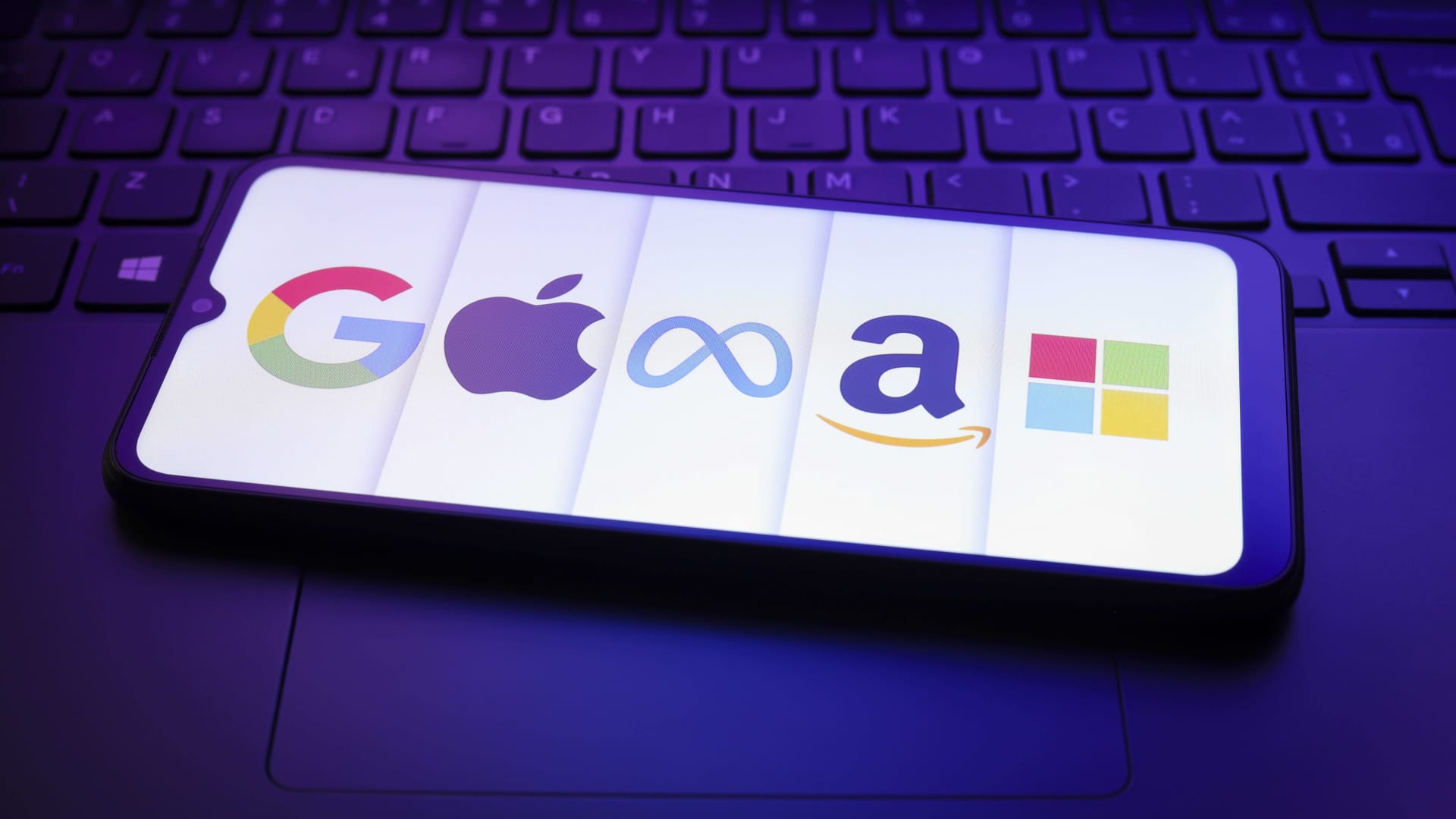
- Capital Expenditure Overview: Alphabet, the parent company of Google, estimates its data center spending for 2023 to be between $180 billion and $190 billion, with its stock price rising from $349 to $385, reflecting a 12% weekly gain that indicates strong market confidence in its cloud business growth.
- Amazon Cloud Services Growth: Amazon anticipates $200 billion in spending, with its stock price increasing from $260 to $268, a weekly gain of 1.6%, as its AWS business achieves a quarterly revenue of $37.6 billion, growing at 28%, marking the fastest growth in 15 quarters.
- Apple's Low Spending Strategy: Apple has allocated only $13 billion for data centers, with its stock price rising from $271 to $280, a weekly gain of 3.4%, and despite relying on Google's Gemini service, it maintains high margins due to its global installed base of 2.5 billion devices.
- Challenges for Microsoft and Meta: Microsoft expects to spend $190 billion, with its stock price declining from $429 to $414, a weekly loss of 2.4%, as Azure grows at 40% but lacks market confidence; Meta plans to increase spending by $10 billion, with its stock price dropping from $670 to $605, a 9.8% weekly loss, facing significant uncertainty.
See More
Apple Reports Strong Q1 2026 Results, Surpassing Expectations
- Strong Performance: Apple reported Q1 2026 revenue of $111.2 billion, a 16.6% year-over-year increase, with earnings per share rising 21.8% to $2.01, surpassing Wall Street expectations and demonstrating robust market demand and operational efficiency.
- Robust Product Demand: The strong demand for the iPhone 17 family and double-digit growth in Services drove significant growth across all major markets, with CEO Tim Cook highlighting double-digit growth in every product category, further solidifying Apple's competitive position globally.
- Improved Profitability: Both gross and operating margins expanded compared to the same period last year, reflecting the company's successful strategies in cost control and pricing, alleviating market concerns about its growth trajectory.
- Positive Stock Performance: Although shares rose 4% in the morning session before cooling to $284.61, still up 4.7% from the previous close, this indicates investor confidence in the company's future growth, with the stock trading close to its 52-week high of $286.19.
See More
Apple Reports Strong Earnings Growth, Increases Shareholder Dividends
- Significant Revenue Growth: Apple reported a 17% year-over-year revenue increase to $111.2 billion for the fiscal second quarter ending March 28, primarily driven by extraordinary demand for the iPhone 17, indicating strong performance in the smartphone market.
- Surge in iPhone Sales: iPhone sales soared by 22% to $57 billion, reflecting robust consumer interest in new products and further solidifying Apple's leadership position in the premium smartphone segment.
- Increase in Services Revenue: Apple's high-margin services revenue rose by 16% to $31 billion, benefiting from its massive installed base of active devices, which allows the company to continuously expand its service offerings and enhance overall profitability.
- Increased Shareholder Returns: Apple raised its quarterly cash dividend by 4% to $0.27 per share and announced a new $100 billion stock buyback program, demonstrating the company's strong cash flow and commitment to returning value to shareholders.
See More
U.S. Navy Actions and Oil Price Fluctuations
- Naval Actions: The U.S. Navy inspected M/V Blue Star III on April 28, confirming it would not head to Iran, demonstrating strict enforcement of the blockade, although this action did not significantly sway market sentiment.
- OPEC+ Production Increase: Seven OPEC+ members agreed to raise production by 188,000 barrels per day in June, but with the Strait of Hormuz still closed, the real-world impact is limited, leading to a muted market reaction and slight oil price declines.
- Record U.S. Oil Exports: U.S. oil exports surged to 5.2 million barrels per day in April, up over 30% from February, indicating strong performance in the U.S. energy market amid Middle Eastern tensions, which could influence global oil price trends.
- U.S.-China Tensions: China's Commerce Ministry blocked U.S. sanctions against five Chinese refiners, highlighting escalating tensions between the two nations, which may have far-reaching implications for global markets, particularly in the energy sector.
See More
Stock Market Rebounds, Apple and Broadcom Enter Buy Zones
- Market Rebound: The stock market rebounded late last week after a brief pause, with the S&P 500 and Nasdaq reaching new highs, indicating a recovery in investor confidence and increased market activity.
- Strong Tech Performance: Apple and Broadcom stocks have shown remarkable performance during the rebound, entering buy zones, suggesting a positive outlook on their future growth potential, which may attract more investor interest.
- Improved Investor Sentiment: As major indices rise, investor sentiment has notably improved, enhancing expectations for economic recovery, which could lead to increased capital inflows into the stock market and further price appreciation.
- Technical Analysis Insights: Technical analysis indicates that the strong performance of the S&P 500 and Nasdaq may attract more institutional investors, potentially driving further market gains and creating a virtuous cycle.
See More
Stock Market Rebounds, Apple and Broadcom Enter Buy Zones
- Market Rebound: The stock market rebounded late last week after a brief pause, with the S&P 500 and Nasdaq reaching new highs, indicating a restoration of investor confidence that could lay the groundwork for further market gains.
- Apple Stock Performance: Apple is currently in a buy zone, with optimistic expectations for its future performance, particularly against the backdrop of new product launches and growth in service revenues, which may drive the stock price higher.
- Broadcom Stock Opportunity: Broadcom has also entered a buy zone, as sustained demand for semiconductors and the company's expansion in 5G and cloud computing are expected to generate significant revenue growth, attracting more investor interest.
- Investor Sentiment Recovery: The overall market rebound reflects a renewed confidence in tech stocks and may signal economic recovery, prompting investors to pay attention to future market trends and economic data.
See More
Data Center Spending Bubble Talk Disproven This Quarter
- Capital Expenditure Overview: Alphabet, the parent company of Google, estimates its data center spending for 2023 to be between $180 billion and $190 billion, with its stock price rising from $349 to $385, reflecting a 12% weekly gain that indicates strong market confidence in its cloud business growth.
- Amazon Cloud Services Growth: Amazon anticipates $200 billion in spending, with its stock price increasing from $260 to $268, a weekly gain of 1.6%, as its AWS business achieves a quarterly revenue of $37.6 billion, growing at 28%, marking the fastest growth in 15 quarters.
- Apple's Low Spending Strategy: Apple has allocated only $13 billion for data centers, with its stock price rising from $271 to $280, a weekly gain of 3.4%, and despite relying on Google's Gemini service, it maintains high margins due to its global installed base of 2.5 billion devices.
- Challenges for Microsoft and Meta: Microsoft expects to spend $190 billion, with its stock price declining from $429 to $414, a weekly loss of 2.4%, as Azure grows at 40% but lacks market confidence; Meta plans to increase spending by $10 billion, with its stock price dropping from $670 to $605, a 9.8% weekly loss, facing significant uncertainty.
See More