Alphabet CEO Sundar Pichai's Compensation Package Could Reach $692 Million
Written by Emily J. Thompson, Senior Investment Analyst
Updated: 14 hours ago
0mins


Should l Buy GOOG?
Source: seekingalpha
- Compensation Structure: Alphabet CEO Sundar Pichai's new compensation package could reach up to $692 million over the next three years, including two tranches of performance stock units (PSUs) valued at $63 million each, positioning him among the highest-paid CEOs globally.
- Performance Dependency: The vesting of PSUs will depend on Alphabet's total shareholder return relative to S&P 100 companies during 2026-2027, with the risk of no vesting if performance is poor, highlighting the close link between compensation and company performance.
- Stock Incentive Plan: Pichai will also receive $84 million in restricted stock units (RSUs) that will vest monthly over three years, ensuring stability during his tenure, along with approximately $130 million in stock incentives and $45 million tied to the growth of Waymo and Wing Aviation.
- Support for Tech Investment: The performance units (BPUs) for Waymo and Wing will unlock based on their unit value growth, potentially reaching 200% of the target, further supporting Alphabet's long-term goal of investing in new technologies, showcasing the company's strong potential in autonomous driving and drone delivery.
Trade with 70% Backtested Accuracy
Stop guessing "Should I Buy GOOG?" and start using high-conviction signals backed by rigorous historical data.
Sign up today to access powerful investing tools and make smarter, data-driven decisions.
Analyst Views on GOOG
Wall Street analysts forecast GOOG stock price to rise
15 Analyst Rating
14 Buy
1 Hold
0 Sell
Strong Buy
Current: 298.300

Low
255.00
Averages
336.08
High
400.00
Current: 298.300
Low
255.00
Averages
336.08
High
400.00
About GOOG
Alphabet Inc. is a holding company. The Company's segments include Google Services, Google Cloud, and Other Bets. The Google Services segment includes products and services such as ads, Android, Chrome, devices, Google Maps, Google Play, Search, and YouTube. The Google Cloud segment includes infrastructure and platform services, collaboration tools, and other services for enterprise customers. Its Other Bets segment is engaged in the sale of healthcare-related services and Internet services. Its Google Cloud provides enterprise-ready cloud services, including Google Cloud Platform and Google Workspace. Google Cloud Platform provides access to solutions such as artificial intelligence (AI) offerings, including its AI infrastructure, Vertex AI platform, and Gemini for Google Cloud; cybersecurity, and data and analytics. Google Workspace includes cloud-based communication and collaboration tools for enterprises, such as Calendar, Gmail, Docs, Drive, and Meet.
About the author

Emily J. Thompson
Emily J. Thompson, a Chartered Financial Analyst (CFA) with 12 years in investment research, graduated with honors from the Wharton School. Specializing in industrial and technology stocks, she provides in-depth analysis for Intellectia’s earnings and market brief reports.

Big Tech Companies Ramp Up AI Hardware Investments


- Market Dominance: Taiwan Semiconductor Manufacturing (TSMC) holds a commanding 72% market share in the semiconductor industry, far surpassing Samsung Electronics at 7%, positioning it to benefit significantly from the surging demand for AI hardware.
- Strong Financial Performance: TSMC's revenue for 2025 reached $122.42 billion, a 35.9% year-over-year increase, with diluted earnings per share growing by 46%, showcasing robust profitability and cash flow that further solidifies its near-monopoly status.
- ASML's Unique Advantage: ASML is the sole supplier of extreme ultraviolet (EUV) lithography machines, achieving sales of €32.6 billion in 2025, up 15% from 2024, with a net profit margin of 29.42%, reflecting strong market demand and profitability.
- AI Investment Surge: With hundreds of billions allocated to AI hardware buildout, data center construction costs can reach $12 million per megawatt, making TSMC and ASML critical suppliers poised to play pivotal roles in the ongoing AI capital expenditure war.
See More

Tech Giants Ramp Up AI Investment
- Surge in Capex: Microsoft plans a 66% increase in capital expenditures to $37.5 billion for 2026, while Meta's spending is projected to reach between $162 billion and $169 billion, reflecting a robust commitment to AI investments.
- Semiconductor Market Dominance: Taiwan Semiconductor achieved $122.42 billion in revenue for 2025, a 35.9% year-over-year increase, capturing a 72% share of the global semiconductor market, underscoring its critical role amid rising AI hardware demands.
- Lithography Machine Monopoly: ASML remains the sole supplier of extreme ultraviolet (EUV) lithography machines, with 2025 sales totaling €32.6 billion, a 15% increase, and a net profit margin of 29.42%, highlighting its irreplaceable position in advanced chip production.
- AI Investment Outlook: As tech giants pour substantial funds into AI, Taiwan Semiconductor and ASML, as foundational infrastructure providers, are poised to play pivotal roles in the future of AI development, securing their market positions and profitability.
See More
The Fragile Supply Chain Risk of the AI Revolution


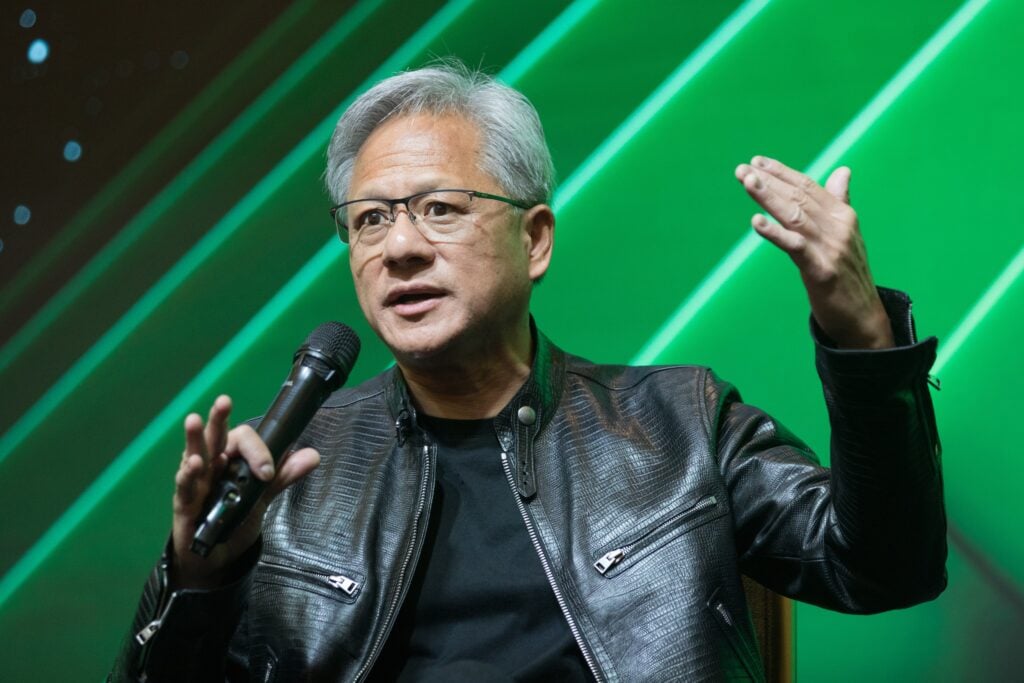
- Chip Manufacturing Dependency: Every AI processor designed by Nvidia is manufactured by TSMC, highlighting the global AI supply chain's heavy reliance on Taiwan, where geopolitical tensions could disrupt chip production and impact the entire AI industry's growth.
- Energy Vulnerability: Taiwan imports approximately 97-98% of its energy, much of which is shipped through global energy routes tied to the Middle East, meaning TSMC's production capacity is directly affected by energy supply, increasing supply chain uncertainty.
- Market Stress Test: Recent energy supply issues in South Korea led to rapid fluctuations in semiconductor stocks, reflecting investors' sensitivity to vulnerabilities in energy supply chains, which could raise similar concerns for Taiwan's semiconductor industry.
- Fundamental Dependency of AI Industry: While the AI sector is being financed at historic scales, its chip manufacturing relies on TSMC's continuous power supply, underscoring that the AI supply chain depends not only on algorithms but also on the stability of basic energy resources.
See More

Investment Opportunities Amid Tech Stock Pullback

- Nvidia's Market Dominance: Nvidia (NVDA) is trading near its lowest point in a year, yet it maintains a strong position in the rapidly growing AI market, with a commitment to annual chip updates that could drive revenue growth, presenting an excellent entry point for investors.
- Google's AI-Driven Growth: Alphabet is enhancing its search platform with its proprietary large language model, which is crucial as advertising remains its largest revenue driver, while Google Cloud is experiencing a surge in demand for generative AI, making its current stock price appear undervalued.
- Microsoft's Strong Cloud Performance: Microsoft (MSFT) reported a 39% increase in cloud services revenue in the latest quarter, and with analysts predicting the AI market could reach $2 trillion by the early next decade, the company's stock is seen as a valuable investment opportunity.
- Market Environment Impact: Despite external factors like concerns over the war in Iran dampening investor appetite for tech stocks, many high-quality tech stocks are currently trading at bargain prices, providing a favorable entry point for investors seeking opportunities.
See More
Nvidia and Micron Technology's Future Collaboration Prospects

- Surging Market Demand: Nvidia's unprecedented demand for GPUs has significantly boosted the demand for Micron Technology's high-bandwidth memory (HBM), DRAM, and NAND processors, although Micron faces persistent shortages of data center memory chips, which may adversely affect its market performance.
- Competitor Supply: Nvidia's flagship Vera Rubin chip will source HBM4 memory chips from SK Hynix and Samsung Electronics, with SK Hynix expected to supply over 50% of Nvidia's total HBM supply, indicating increased competitive pressure on Micron in the market.
- Market Share Analysis: According to Counterpoint Research, SK Hynix and Samsung Electronics hold 34% and 33% of the HBM market share respectively, while Micron ranks third with a 26% share, highlighting the challenges Micron faces in the high-end memory market.
- Investment Opportunity: Despite Micron's stock price declining 13% from its peak, the company is expected to grow its revenue by 109% this year, with a forward P/E ratio of 11, indicating that there are still investment opportunities amidst uncertainty, attracting attention to its future growth potential.
See More

Micron Faces Competitive Pressure and Opportunities Amid AI Demand
- Intensifying Market Competition: Micron, a key supplier to Nvidia, faces competition from SK Hynix and Samsung Electronics, which will be the sole suppliers of HBM4 for Nvidia's new flagship Vera Rubin chip, potentially impacting Micron's market share.
- Sustained Demand Growth: Despite competition, demand for Micron's high-bandwidth memory (HBM), DRAM, and NAND processors remains strong, with an estimated $700 billion in capital expenditures earmarked for AI data centers in 2026, ensuring opportunities for Micron in other memory chip markets.
- Price Surge Expectations: Citi analysts predict that prices for certain memory chips will skyrocket by 171% due to persistent data center demand and shortages, providing Micron with additional market space, even though its role in the Vera Rubin chip may be limited.
- Emerging Investment Opportunities: Micron's stock has fallen 13% from its peak, with a current P/E ratio of 36 times earnings, but a more reasonable forward multiple of 11 times, alongside an expected revenue growth of 109% this year, presenting a relatively attractive entry point for investors.
See More
Big Tech Companies Ramp Up AI Hardware Investments
- Market Dominance: Taiwan Semiconductor Manufacturing (TSMC) holds a commanding 72% market share in the semiconductor industry, far surpassing Samsung Electronics at 7%, positioning it to benefit significantly from the surging demand for AI hardware.
- Strong Financial Performance: TSMC's revenue for 2025 reached $122.42 billion, a 35.9% year-over-year increase, with diluted earnings per share growing by 46%, showcasing robust profitability and cash flow that further solidifies its near-monopoly status.
- ASML's Unique Advantage: ASML is the sole supplier of extreme ultraviolet (EUV) lithography machines, achieving sales of €32.6 billion in 2025, up 15% from 2024, with a net profit margin of 29.42%, reflecting strong market demand and profitability.
- AI Investment Surge: With hundreds of billions allocated to AI hardware buildout, data center construction costs can reach $12 million per megawatt, making TSMC and ASML critical suppliers poised to play pivotal roles in the ongoing AI capital expenditure war.
See More
Tech Giants Ramp Up AI Investment
- Surge in Capex: Microsoft plans a 66% increase in capital expenditures to $37.5 billion for 2026, while Meta's spending is projected to reach between $162 billion and $169 billion, reflecting a robust commitment to AI investments.
- Semiconductor Market Dominance: Taiwan Semiconductor achieved $122.42 billion in revenue for 2025, a 35.9% year-over-year increase, capturing a 72% share of the global semiconductor market, underscoring its critical role amid rising AI hardware demands.
- Lithography Machine Monopoly: ASML remains the sole supplier of extreme ultraviolet (EUV) lithography machines, with 2025 sales totaling €32.6 billion, a 15% increase, and a net profit margin of 29.42%, highlighting its irreplaceable position in advanced chip production.
- AI Investment Outlook: As tech giants pour substantial funds into AI, Taiwan Semiconductor and ASML, as foundational infrastructure providers, are poised to play pivotal roles in the future of AI development, securing their market positions and profitability.
See More
The Fragile Supply Chain Risk of the AI Revolution
- Chip Manufacturing Dependency: Every AI processor designed by Nvidia is manufactured by TSMC, highlighting the global AI supply chain's heavy reliance on Taiwan, where geopolitical tensions could disrupt chip production and impact the entire AI industry's growth.
- Energy Vulnerability: Taiwan imports approximately 97-98% of its energy, much of which is shipped through global energy routes tied to the Middle East, meaning TSMC's production capacity is directly affected by energy supply, increasing supply chain uncertainty.
- Market Stress Test: Recent energy supply issues in South Korea led to rapid fluctuations in semiconductor stocks, reflecting investors' sensitivity to vulnerabilities in energy supply chains, which could raise similar concerns for Taiwan's semiconductor industry.
- Fundamental Dependency of AI Industry: While the AI sector is being financed at historic scales, its chip manufacturing relies on TSMC's continuous power supply, underscoring that the AI supply chain depends not only on algorithms but also on the stability of basic energy resources.
See More
Investment Opportunities Amid Tech Stock Pullback
- Nvidia's Market Dominance: Nvidia (NVDA) is trading near its lowest point in a year, yet it maintains a strong position in the rapidly growing AI market, with a commitment to annual chip updates that could drive revenue growth, presenting an excellent entry point for investors.
- Google's AI-Driven Growth: Alphabet is enhancing its search platform with its proprietary large language model, which is crucial as advertising remains its largest revenue driver, while Google Cloud is experiencing a surge in demand for generative AI, making its current stock price appear undervalued.
- Microsoft's Strong Cloud Performance: Microsoft (MSFT) reported a 39% increase in cloud services revenue in the latest quarter, and with analysts predicting the AI market could reach $2 trillion by the early next decade, the company's stock is seen as a valuable investment opportunity.
- Market Environment Impact: Despite external factors like concerns over the war in Iran dampening investor appetite for tech stocks, many high-quality tech stocks are currently trading at bargain prices, providing a favorable entry point for investors seeking opportunities.
See More
Nvidia and Micron Technology's Future Collaboration Prospects
- Surging Market Demand: Nvidia's unprecedented demand for GPUs has significantly boosted the demand for Micron Technology's high-bandwidth memory (HBM), DRAM, and NAND processors, although Micron faces persistent shortages of data center memory chips, which may adversely affect its market performance.
- Competitor Supply: Nvidia's flagship Vera Rubin chip will source HBM4 memory chips from SK Hynix and Samsung Electronics, with SK Hynix expected to supply over 50% of Nvidia's total HBM supply, indicating increased competitive pressure on Micron in the market.
- Market Share Analysis: According to Counterpoint Research, SK Hynix and Samsung Electronics hold 34% and 33% of the HBM market share respectively, while Micron ranks third with a 26% share, highlighting the challenges Micron faces in the high-end memory market.
- Investment Opportunity: Despite Micron's stock price declining 13% from its peak, the company is expected to grow its revenue by 109% this year, with a forward P/E ratio of 11, indicating that there are still investment opportunities amidst uncertainty, attracting attention to its future growth potential.
See More
Micron Faces Competitive Pressure and Opportunities Amid AI Demand
- Intensifying Market Competition: Micron, a key supplier to Nvidia, faces competition from SK Hynix and Samsung Electronics, which will be the sole suppliers of HBM4 for Nvidia's new flagship Vera Rubin chip, potentially impacting Micron's market share.
- Sustained Demand Growth: Despite competition, demand for Micron's high-bandwidth memory (HBM), DRAM, and NAND processors remains strong, with an estimated $700 billion in capital expenditures earmarked for AI data centers in 2026, ensuring opportunities for Micron in other memory chip markets.
- Price Surge Expectations: Citi analysts predict that prices for certain memory chips will skyrocket by 171% due to persistent data center demand and shortages, providing Micron with additional market space, even though its role in the Vera Rubin chip may be limited.
- Emerging Investment Opportunities: Micron's stock has fallen 13% from its peak, with a current P/E ratio of 36 times earnings, but a more reasonable forward multiple of 11 times, alongside an expected revenue growth of 109% this year, presenting a relatively attractive entry point for investors.
See More