WeRide Launches GENESIS1 Simulation Model to Accelerate AV Development
The company states: "WeRide announced the launch of WeRide GENESIS1, its proprietary general-purpose simulation model. WeRide GENESIS bridges physical AI and generative AI, connecting the real and simulated worlds to accelerate the development, training, and validation of autonomous vehicles (AVs) at scale. Leveraging generative AI, WeRide GENESIS can rapidly generate highly realistic virtual worlds, building simulated cities within minutes and accurately reproducing rare, extreme real-world driving scenarios that are difficult to capture on actual roads. This enables AVs to undergo large-scale training and validation in simulation. Insights generated are continuously fed back into real-world operations - significantly enhancing AV performance in complex scenarios, speeding up iteration cycles, and reducing time and cost compared to traditional road testing."
Trade with 70% Backtested Accuracy
Analyst Views on WRD

About WRD
About the author


WeRide Expands Strategic Cooperation with Geely Farizon

- Strategic Cooperation Upgrade: WeRide has signed an expanded strategic cooperation agreement with Geely Farizon, planning to deliver 2,000 upgraded Robotaxi GXRs by 2026, marking a significant milestone in WeRide's global Robotaxi commercialization efforts.
- Global Fleet Expansion: WeRide's global Robotaxi fleet is expected to surpass 2,600 vehicles in 2026, indicating steady progress towards its goal of tens of thousands by 2030, showcasing its market leadership in autonomous driving.
- Technological Innovation Enhancement: The new Robotaxi GXR is equipped with WeRide's latest GEN8 autonomous driving system, which enhances safety and reliability, with a LiDAR detection range of 600 meters and a 70% increase in reaction time, ensuring safer decision-making in high-speed scenarios.
- Manufacturing Efficiency Improvement: Utilizing Farizon's AI-driven chassis, the assembly time for the Robotaxi GXR has been reduced from one hour to under 10 minutes, with vehicle costs expected to decrease by another 15%, accelerating the commercial rollout of Robotaxis across key markets including China, the Middle East, and Europe.
Tesla Faces Demand Weakness Challenges


- Weakening Demand: Tesla is experiencing declining demand across several global markets in 2025, which poses a challenge to its lofty valuation, highlighting a gap between market expectations and actual sales performance.
- Overinflated Valuation: Market experts argue that Tesla's stock price, currently at $388.85, is inflated due to Elon Musk's loyal fan base, with shares down over 20% from their 52-week high, indicating excessive optimism among investors regarding future growth.
- Revised Delivery Expectations: Analysts have revised their delivery estimates for Tesla to only 2.8 million vehicles by 2030, significantly lower than the previous target of 20 million, reflecting a diminishing confidence in the company's growth trajectory.
- Increased Competition: With rising competition in the autonomous driving sector and a forward price-to-earnings ratio exceeding 200x, analysts express caution regarding Tesla's future performance, advising investors to remain wary of Musk's overly optimistic statements.
Zoox to Test Autonomous Robotaxis in Dallas and Phoenix
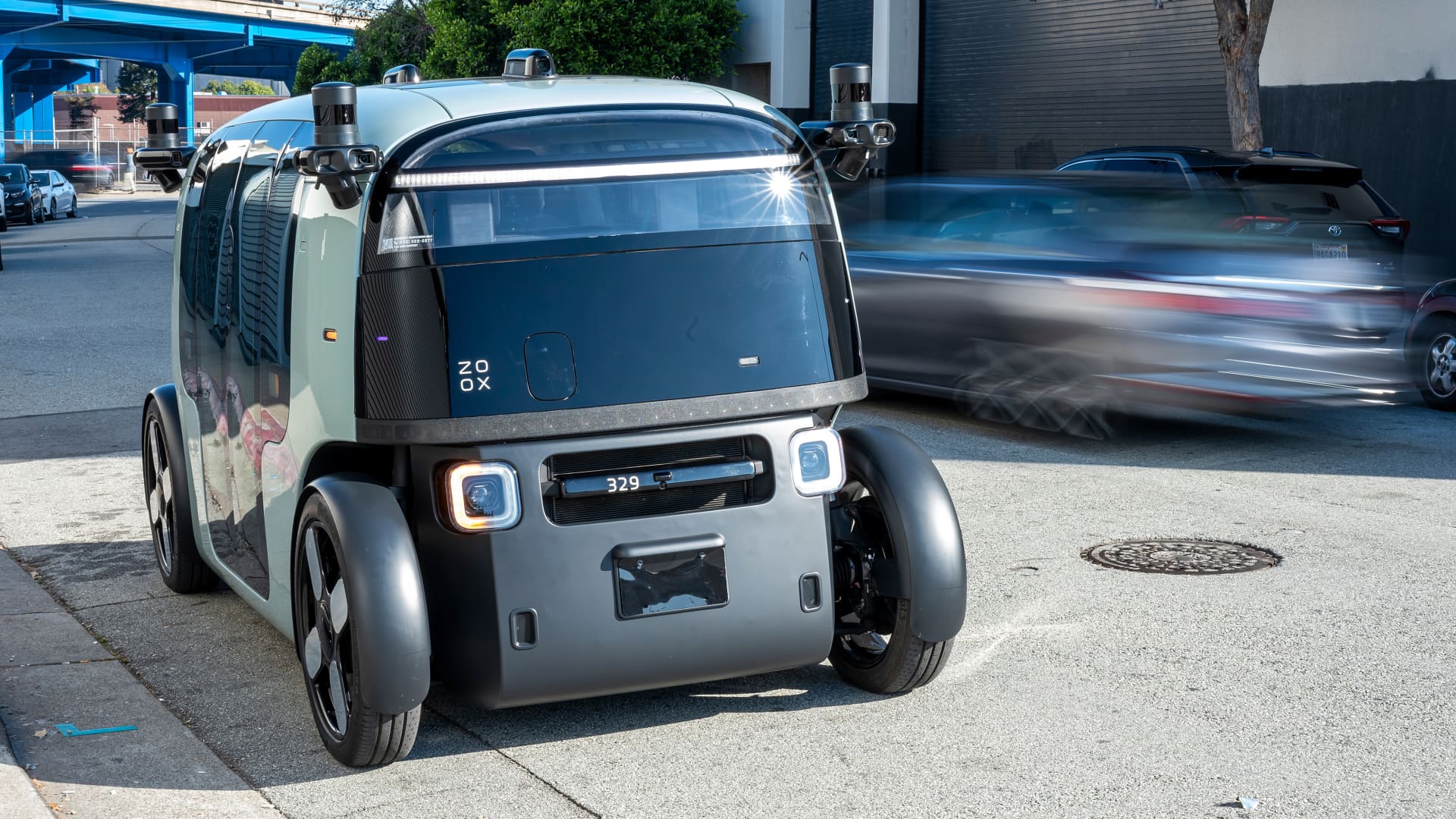
- Market Expansion: Zoox plans to test its autonomous robotaxis in Dallas and Phoenix, initially deploying a small number of retrofitted Toyota Highlander SUVs to optimize technology performance through diverse weather conditions and complex road networks, thereby enhancing its competitive edge.
- Testing Advantages: In Phoenix, Zoox will assess its sensors and battery performance under extreme heat and dust, while Dallas provides a varied testing ground for its AI systems, which will help improve the reliability and safety of its autonomous driving technology.
- User Base Growth: Since its launch, Zoox has served over 300,000 riders in Las Vegas and San Francisco, and with its expansion into 10 U.S. markets, it is expected to further enhance user experience and market penetration.
- Manufacturing Capacity Boost: Zoox has opened a 220,000-square-foot factory in the San Francisco Bay Area, aiming to produce 10,000 autonomous vehicles annually, a move that will support its long-term growth strategy in the U.S. market and compete against rivals like Waymo and Tesla.

Zoox Expands Autonomous Testing to Dallas and Phoenix
- Testing Area Expansion: Zoox announced the expansion of its autonomous technology testing to Dallas and Phoenix, initially deploying a small number of retrofitted Toyota Highlander SUVs with human safety drivers to map complex road networks, thereby laying the groundwork for subsequent robotaxi testing.
- Passenger Service Milestone: Since its launch in Las Vegas and San Francisco, Zoox has served over 300,000 riders, a figure that not only demonstrates market acceptance but also reflects the company's rapid development and the establishment of user trust in the autonomous driving sector.
- Manufacturing Capacity Enhancement: Zoox has opened a 220,000-square-foot factory in the San Francisco Bay Area, aiming to produce 10,000 autonomous vehicles annually once fully operational, a move that will significantly boost its production capacity to meet growing market demand.
- Competitive Landscape Analysis: This expansion gives Zoox's fleet a presence in 10 U.S. markets, coinciding with Amazon's efforts to compete with rivals like Waymo and Tesla, and the diverse testing will help optimize technology performance under complex weather conditions, enhancing its competitive edge.
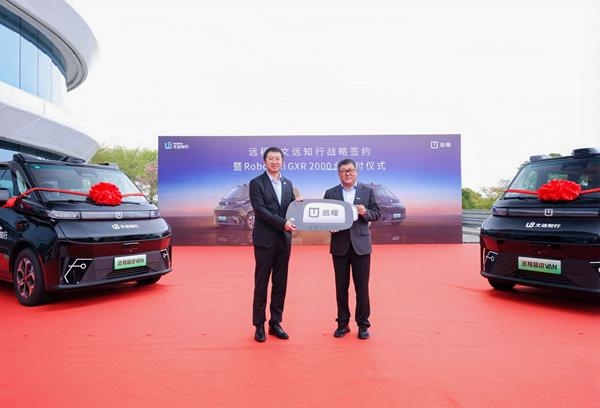
WeRide Expands Partnership with Geely for New Robotaxi Delivery
- Partnership Expansion: WeRide has expanded its partnership with Geely's Zhejiang Farizon New Energy Commercial Vehicle Group, planning to deliver 2,000 upgraded Robotaxi GXR vehicles by 2026, which underscores the company's strategic positioning in the future mobility sector.
- Fleet Growth: As of January 2026, WeRide's global robotaxi fleet reached 1,023 vehicles, and with the addition of the new GXRs, the total is expected to exceed 2,600, further advancing the company's long-term goal of deploying tens of thousands of vehicles by 2030, enhancing its market competitiveness.
- Stock Performance Weakness: Over the past 12 months, WeRide's stock has declined by 60.21%, currently priced at $6.39, significantly below the 52-week high of $20.50, indicating long-term downward pressure that investors should approach with caution.
- Analyst Expectations: WeRide is set to report earnings on March 23, 2026, with analysts anticipating an EPS loss of 25 cents and revenue of $22.5 million, indicating that while revenue is expected to grow, attention must be paid to improving profitability.

WeRide Expands Strategic Cooperation with Geely
- Strategic Cooperation Agreement: WeRide has signed an expanded strategic cooperation agreement with Geely's Zhejiang Farizon New Energy Commercial Vehicle Group, planning to deliver 2,000 upgraded Robotaxi GXRs by 2026, marking a significant advancement in WeRide's global Robotaxi commercialization efforts.
- Production Schedule: The new Robotaxi GXR is set to officially roll off the production line in the third quarter of 2026, which is expected to significantly enhance WeRide's market competitiveness and lay a solid foundation for future large-scale operations.
- Fleet Expansion: As of January, WeRide's global robotaxi fleet had reached 1,023 vehicles, and with the addition of 2,000 new Robotaxi GXRs, the global operating fleet is expected to surpass 2,600 this year, steadily progressing towards the vision of tens of thousands of vehicles by 2030.
- Market Outlook: This collaboration not only strengthens WeRide's market position in the autonomous driving sector but also provides robust support for its future commercialization efforts, demonstrating the company's strategic positioning within the global Robotaxi industry chain.
WeRide Expands Strategic Cooperation with Geely Farizon
- Strategic Cooperation Upgrade: WeRide has signed an expanded strategic cooperation agreement with Geely Farizon, planning to deliver 2,000 upgraded Robotaxi GXRs by 2026, marking a significant milestone in WeRide's global Robotaxi commercialization efforts.
- Global Fleet Expansion: WeRide's global Robotaxi fleet is expected to surpass 2,600 vehicles in 2026, indicating steady progress towards its goal of tens of thousands by 2030, showcasing its market leadership in autonomous driving.
- Technological Innovation Enhancement: The new Robotaxi GXR is equipped with WeRide's latest GEN8 autonomous driving system, which enhances safety and reliability, with a LiDAR detection range of 600 meters and a 70% increase in reaction time, ensuring safer decision-making in high-speed scenarios.
- Manufacturing Efficiency Improvement: Utilizing Farizon's AI-driven chassis, the assembly time for the Robotaxi GXR has been reduced from one hour to under 10 minutes, with vehicle costs expected to decrease by another 15%, accelerating the commercial rollout of Robotaxis across key markets including China, the Middle East, and Europe.
Tesla Faces Demand Weakness Challenges
- Weakening Demand: Tesla is experiencing declining demand across several global markets in 2025, which poses a challenge to its lofty valuation, highlighting a gap between market expectations and actual sales performance.
- Overinflated Valuation: Market experts argue that Tesla's stock price, currently at $388.85, is inflated due to Elon Musk's loyal fan base, with shares down over 20% from their 52-week high, indicating excessive optimism among investors regarding future growth.
- Revised Delivery Expectations: Analysts have revised their delivery estimates for Tesla to only 2.8 million vehicles by 2030, significantly lower than the previous target of 20 million, reflecting a diminishing confidence in the company's growth trajectory.
- Increased Competition: With rising competition in the autonomous driving sector and a forward price-to-earnings ratio exceeding 200x, analysts express caution regarding Tesla's future performance, advising investors to remain wary of Musk's overly optimistic statements.
Zoox to Test Autonomous Robotaxis in Dallas and Phoenix
- Market Expansion: Zoox plans to test its autonomous robotaxis in Dallas and Phoenix, initially deploying a small number of retrofitted Toyota Highlander SUVs to optimize technology performance through diverse weather conditions and complex road networks, thereby enhancing its competitive edge.
- Testing Advantages: In Phoenix, Zoox will assess its sensors and battery performance under extreme heat and dust, while Dallas provides a varied testing ground for its AI systems, which will help improve the reliability and safety of its autonomous driving technology.
- User Base Growth: Since its launch, Zoox has served over 300,000 riders in Las Vegas and San Francisco, and with its expansion into 10 U.S. markets, it is expected to further enhance user experience and market penetration.
- Manufacturing Capacity Boost: Zoox has opened a 220,000-square-foot factory in the San Francisco Bay Area, aiming to produce 10,000 autonomous vehicles annually, a move that will support its long-term growth strategy in the U.S. market and compete against rivals like Waymo and Tesla.
Zoox Expands Autonomous Testing to Dallas and Phoenix
- Testing Area Expansion: Zoox announced the expansion of its autonomous technology testing to Dallas and Phoenix, initially deploying a small number of retrofitted Toyota Highlander SUVs with human safety drivers to map complex road networks, thereby laying the groundwork for subsequent robotaxi testing.
- Passenger Service Milestone: Since its launch in Las Vegas and San Francisco, Zoox has served over 300,000 riders, a figure that not only demonstrates market acceptance but also reflects the company's rapid development and the establishment of user trust in the autonomous driving sector.
- Manufacturing Capacity Enhancement: Zoox has opened a 220,000-square-foot factory in the San Francisco Bay Area, aiming to produce 10,000 autonomous vehicles annually once fully operational, a move that will significantly boost its production capacity to meet growing market demand.
- Competitive Landscape Analysis: This expansion gives Zoox's fleet a presence in 10 U.S. markets, coinciding with Amazon's efforts to compete with rivals like Waymo and Tesla, and the diverse testing will help optimize technology performance under complex weather conditions, enhancing its competitive edge.
WeRide Expands Partnership with Geely for New Robotaxi Delivery
- Partnership Expansion: WeRide has expanded its partnership with Geely's Zhejiang Farizon New Energy Commercial Vehicle Group, planning to deliver 2,000 upgraded Robotaxi GXR vehicles by 2026, which underscores the company's strategic positioning in the future mobility sector.
- Fleet Growth: As of January 2026, WeRide's global robotaxi fleet reached 1,023 vehicles, and with the addition of the new GXRs, the total is expected to exceed 2,600, further advancing the company's long-term goal of deploying tens of thousands of vehicles by 2030, enhancing its market competitiveness.
- Stock Performance Weakness: Over the past 12 months, WeRide's stock has declined by 60.21%, currently priced at $6.39, significantly below the 52-week high of $20.50, indicating long-term downward pressure that investors should approach with caution.
- Analyst Expectations: WeRide is set to report earnings on March 23, 2026, with analysts anticipating an EPS loss of 25 cents and revenue of $22.5 million, indicating that while revenue is expected to grow, attention must be paid to improving profitability.
WeRide Expands Strategic Cooperation with Geely
- Strategic Cooperation Agreement: WeRide has signed an expanded strategic cooperation agreement with Geely's Zhejiang Farizon New Energy Commercial Vehicle Group, planning to deliver 2,000 upgraded Robotaxi GXRs by 2026, marking a significant advancement in WeRide's global Robotaxi commercialization efforts.
- Production Schedule: The new Robotaxi GXR is set to officially roll off the production line in the third quarter of 2026, which is expected to significantly enhance WeRide's market competitiveness and lay a solid foundation for future large-scale operations.
- Fleet Expansion: As of January, WeRide's global robotaxi fleet had reached 1,023 vehicles, and with the addition of 2,000 new Robotaxi GXRs, the global operating fleet is expected to surpass 2,600 this year, steadily progressing towards the vision of tens of thousands of vehicles by 2030.
- Market Outlook: This collaboration not only strengthens WeRide's market position in the autonomous driving sector but also provides robust support for its future commercialization efforts, demonstrating the company's strategic positioning within the global Robotaxi industry chain.