Visa's Financial Performance Continues to Grow
Written by Emily J. Thompson, Senior Investment Analyst
Updated: 1 hour ago
0mins
Should l Buy V?
Source: NASDAQ.COM
- Consistent Revenue Growth: Visa has posted revenue growth every year over the past decade except for fiscal 2020, when sales dipped by 5% due to the COVID-19 pandemic, demonstrating the company's resilience and adaptability.
- Economic Drivers: With GDP expected to rise annually, Visa is well-positioned to maintain stable revenue growth amid economic fluctuations, with projected revenue compound annual growth rate of 10.7% from fiscal 2025 to 2028, driven by the rise of cashless transactions.
- Profitability Enhancement: The scalability of Visa's business model is expected to lead to an annualized adjusted earnings per share growth rate of 12.5% between fiscal 2025 and 2028, further boosting its profitability.
- Investment Opportunity: Although Visa's stock is currently 17% below its peak, its strong market position and ongoing growth potential make it a focal point for investors, even as the analyst team did not include Visa among their top stock recommendations.
Trade with 70% Backtested Accuracy
Stop guessing "Should I Buy V?" and start using high-conviction signals backed by rigorous historical data.
Sign up today to access powerful investing tools and make smarter, data-driven decisions.
Analyst Views on V
Wall Street analysts forecast V stock price to rise
25 Analyst Rating
23 Buy
2 Hold
0 Sell
Strong Buy
Current: 308.880

Low
330.00
Averages
406.59
High
450.00
Current: 308.880
Low
330.00
Averages
406.59
High
450.00
About V
Visa Inc. is a global payments technology company. It facilitates global commerce and money movement across more than 200 countries and territories among a global set of consumers, merchants, financial institutions and government entities through technologies. It operates through the Payment Services segment. It provides transaction processing services (primarily authorization, clearing and settlement) to its financial institution and merchant clients through VisaNet, its proprietary advanced transaction processing network. It offers a range of Visa-branded payment products that its clients, including nearly 14,500 financial institutions, use to develop and offer payment solutions or services, including credit, debit, prepaid and cash access programs for individual, business and government account holders. It also provides value-added services to its clients, including issuing solutions, acceptance solutions, risk and identity solutions, open banking solutions and advisory services.
About the author

Emily J. Thompson
Emily J. Thompson, a Chartered Financial Analyst (CFA) with 12 years in investment research, graduated with honors from the Wharton School. Specializing in industrial and technology stocks, she provides in-depth analysis for Intellectia’s earnings and market brief reports.

Visa's Financial Performance Remains Strong Amid Challenges

- Stable Revenue Growth: Between fiscal 2015 and fiscal 2025, Visa managed to increase its revenue every year except for fiscal 2020, when sales dipped by 5% due to the COVID-19 pandemic, showcasing its business resilience.
- Strong Economic Adaptability: Despite facing challenges such as health crises, supply chain bottlenecks, and high inflation, Visa achieved double-digit revenue growth annually from 2020 to 2025, reflecting its robust adaptability in uncertain economic conditions.
- Cashless Transaction Trend: Visa benefits from the rising trend of cashless transactions, which positions it advantageously in the shift away from cash and paper-based payments, further driving revenue growth.
- Future Growth Expectations: Analysts project Visa's revenue to grow at a compound annual rate of 10.7% between fiscal 2025 and 2028, with adjusted earnings per share expected to rise at an annualized pace of 12.5%, indicating sustained profitability improvements.
See More

Visa's Financial Performance Continues to Grow
- Consistent Revenue Growth: Visa has posted revenue growth every year over the past decade except for fiscal 2020, when sales dipped by 5% due to the COVID-19 pandemic, demonstrating the company's resilience and adaptability.
- Economic Drivers: With GDP expected to rise annually, Visa is well-positioned to maintain stable revenue growth amid economic fluctuations, with projected revenue compound annual growth rate of 10.7% from fiscal 2025 to 2028, driven by the rise of cashless transactions.
- Profitability Enhancement: The scalability of Visa's business model is expected to lead to an annualized adjusted earnings per share growth rate of 12.5% between fiscal 2025 and 2028, further boosting its profitability.
- Investment Opportunity: Although Visa's stock is currently 17% below its peak, its strong market position and ongoing growth potential make it a focal point for investors, even as the analyst team did not include Visa among their top stock recommendations.
See More

SpaceX IPO Could Become Largest in History


- Staggering IPO Valuation: SpaceX aims for an IPO valuation between $1.75 trillion and $2 trillion, potentially raising $75 billion, which could make it the largest IPO in history, nearly three times the amount raised by Saudi Aramco, reflecting immense market interest in the space and AI sectors.
- Massive Market Potential: The global space economy is projected to reach $1.8 trillion by 2035, while AI is expected to create $15.7 trillion in economic value by 2030, indicating that SpaceX's business prospects align closely with these significant market trends, potentially driving long-term growth for the company.
- Historical Caution: Despite the excitement surrounding SpaceX's IPO, historical data shows that since 1999, five major IPOs have averaged a 10% decline six months post-debut, suggesting SpaceX could face a $200 billion market cap loss, urging investors to proceed with caution.
- Significant Valuation Risks: SpaceX's projected price-to-sales ratio of 125 far exceeds the sustainable threshold of 30 seen historically, indicating that if market sentiment shifts, the company could lose over $1 trillion in market value, necessitating close attention to its future financial performance.
See More

SpaceX IPO Could Become Largest in History
- Massive IPO Potential: SpaceX confidentially filed for an IPO on April 1, aiming to raise $75 billion with a market valuation between $1.75 trillion and $2 trillion, which would make it the largest IPO in history, significantly surpassing Saudi Aramco's $29.4 billion.
- Vast Market Opportunities: SpaceX operates in two of the largest global markets, space and artificial intelligence, with McKinsey projecting a $1.8 trillion space economy by 2035 and PwC forecasting AI to generate $15.7 trillion in economic value by 2030, indicating substantial long-term growth potential.
- Historical Cautionary Tale: Despite the excitement surrounding SpaceX's IPO, historical data shows that five major IPOs since 1999 averaged a 10% decline six months post-debut, suggesting a potential $200 billion loss in market cap for SpaceX.
- Valuation Bubble Concerns: With a projected valuation leading to a price-to-sales ratio of 125, far exceeding the sustainable threshold of 30, SpaceX could face over $1 trillion in market cap losses if market sentiment shifts, despite its popularity.
See More
Berkshire Hathaway Shares Decline Amid Market Gains

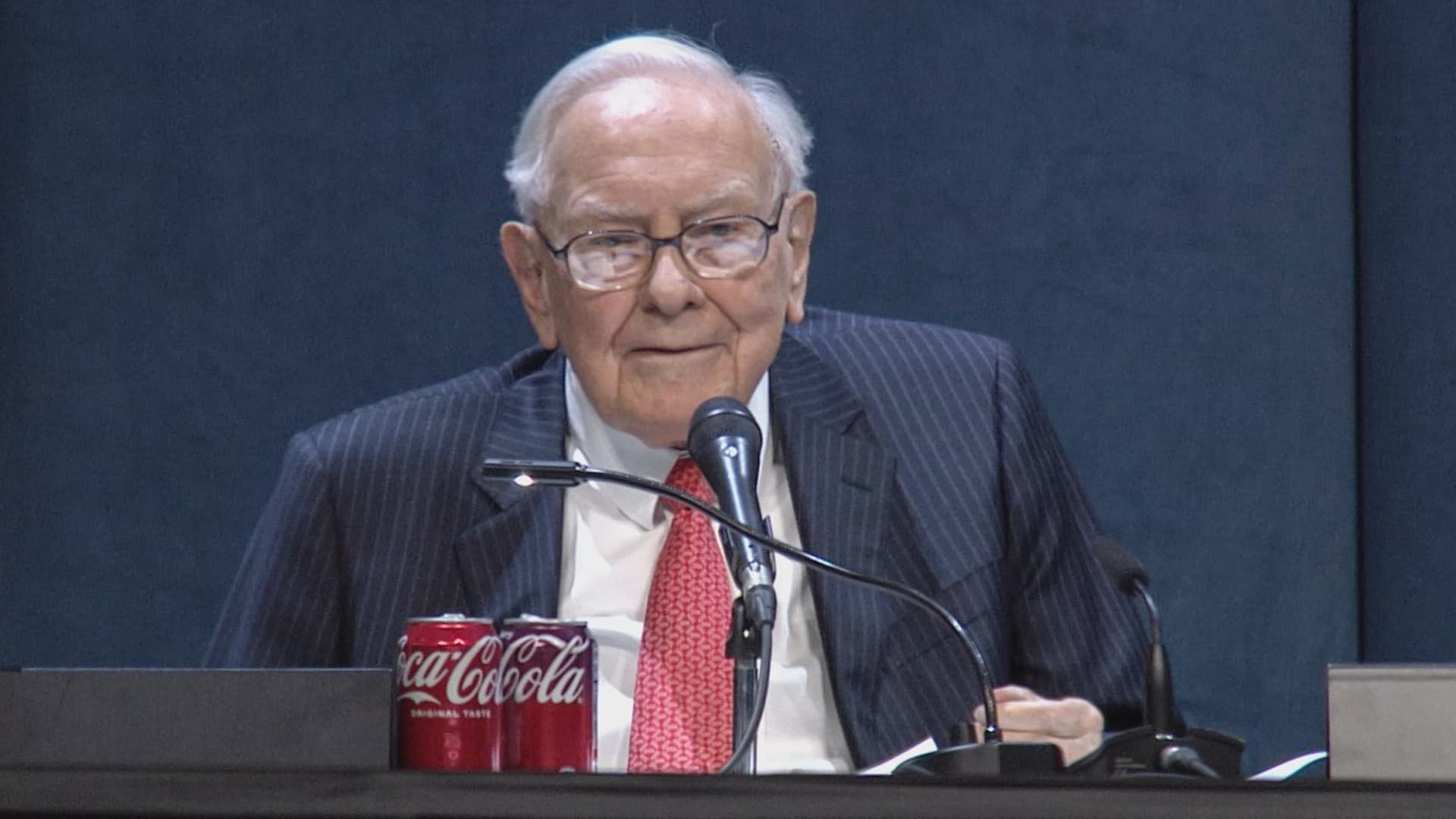
- Stock Underperformance: Berkshire Hathaway's B shares fell approximately 1% this week while the S&P 500 rose 0.6%, increasing the relative underperformance to 11.3 percentage points, indicating investor concerns about the company's future prospects.
- Buyback Potential: UBS analyst Brian Meredith estimates Berkshire is trading at an 8% discount to its intrinsic value, with expectations for 2026 repurchases raised to $1.7 billion, which could attract more investor interest in the stock.
- Management Changes Impact: New CEO Greg Abel has unloaded approximately $16 billion in stocks managed by Todd Combs, which may affect portfolio diversity but also provides Abel with a chance for direct management of the remaining assets.
- Market Value Shift: Walmart's market value has surged over 35% in the past year, surpassing Berkshire to become the ninth largest company in the U.S., reflecting market preference for retail over concerns regarding Berkshire's growth trajectory.
See More

Ethereum's Future Potential and Risk Assessment

- Current Status of Dog Coins: Shiba Inu, a dog-themed cryptocurrency, remains in the top 50 by market cap since its rise in 2021, yet it has plummeted 93% from its all-time high, highlighting its extreme volatility and lack of intrinsic value.
- Ethereum's Market Position: With a market cap of $280 billion and a price around $2,300, Ethereum has dropped 40% in the past six months, but it holds a 55% share in the asset tokenization market, indicating its potential for mainstream crypto adoption.
- Prospects of Asset Tokenization: The asset tokenization market is projected to grow from $19 billion today to $11 trillion by 2030, and if payment providers and financial institutions shift asset ownership to blockchain, cryptocurrencies could manage trillions in assets, further boosting Ethereum's transaction volume and price.
- Investment Risk Assessment: While optimistic about Ethereum's potential, investors should remain cautious and build a balanced portfolio to mitigate the volatility and risks associated with the crypto market, ensuring their financial well-being is not overly reliant on a single asset.
See More
Visa's Financial Performance Remains Strong Amid Challenges
- Stable Revenue Growth: Between fiscal 2015 and fiscal 2025, Visa managed to increase its revenue every year except for fiscal 2020, when sales dipped by 5% due to the COVID-19 pandemic, showcasing its business resilience.
- Strong Economic Adaptability: Despite facing challenges such as health crises, supply chain bottlenecks, and high inflation, Visa achieved double-digit revenue growth annually from 2020 to 2025, reflecting its robust adaptability in uncertain economic conditions.
- Cashless Transaction Trend: Visa benefits from the rising trend of cashless transactions, which positions it advantageously in the shift away from cash and paper-based payments, further driving revenue growth.
- Future Growth Expectations: Analysts project Visa's revenue to grow at a compound annual rate of 10.7% between fiscal 2025 and 2028, with adjusted earnings per share expected to rise at an annualized pace of 12.5%, indicating sustained profitability improvements.
See More
Visa's Financial Performance Continues to Grow
- Consistent Revenue Growth: Visa has posted revenue growth every year over the past decade except for fiscal 2020, when sales dipped by 5% due to the COVID-19 pandemic, demonstrating the company's resilience and adaptability.
- Economic Drivers: With GDP expected to rise annually, Visa is well-positioned to maintain stable revenue growth amid economic fluctuations, with projected revenue compound annual growth rate of 10.7% from fiscal 2025 to 2028, driven by the rise of cashless transactions.
- Profitability Enhancement: The scalability of Visa's business model is expected to lead to an annualized adjusted earnings per share growth rate of 12.5% between fiscal 2025 and 2028, further boosting its profitability.
- Investment Opportunity: Although Visa's stock is currently 17% below its peak, its strong market position and ongoing growth potential make it a focal point for investors, even as the analyst team did not include Visa among their top stock recommendations.
See More
SpaceX IPO Could Become Largest in History
- Staggering IPO Valuation: SpaceX aims for an IPO valuation between $1.75 trillion and $2 trillion, potentially raising $75 billion, which could make it the largest IPO in history, nearly three times the amount raised by Saudi Aramco, reflecting immense market interest in the space and AI sectors.
- Massive Market Potential: The global space economy is projected to reach $1.8 trillion by 2035, while AI is expected to create $15.7 trillion in economic value by 2030, indicating that SpaceX's business prospects align closely with these significant market trends, potentially driving long-term growth for the company.
- Historical Caution: Despite the excitement surrounding SpaceX's IPO, historical data shows that since 1999, five major IPOs have averaged a 10% decline six months post-debut, suggesting SpaceX could face a $200 billion market cap loss, urging investors to proceed with caution.
- Significant Valuation Risks: SpaceX's projected price-to-sales ratio of 125 far exceeds the sustainable threshold of 30 seen historically, indicating that if market sentiment shifts, the company could lose over $1 trillion in market value, necessitating close attention to its future financial performance.
See More
SpaceX IPO Could Become Largest in History
- Massive IPO Potential: SpaceX confidentially filed for an IPO on April 1, aiming to raise $75 billion with a market valuation between $1.75 trillion and $2 trillion, which would make it the largest IPO in history, significantly surpassing Saudi Aramco's $29.4 billion.
- Vast Market Opportunities: SpaceX operates in two of the largest global markets, space and artificial intelligence, with McKinsey projecting a $1.8 trillion space economy by 2035 and PwC forecasting AI to generate $15.7 trillion in economic value by 2030, indicating substantial long-term growth potential.
- Historical Cautionary Tale: Despite the excitement surrounding SpaceX's IPO, historical data shows that five major IPOs since 1999 averaged a 10% decline six months post-debut, suggesting a potential $200 billion loss in market cap for SpaceX.
- Valuation Bubble Concerns: With a projected valuation leading to a price-to-sales ratio of 125, far exceeding the sustainable threshold of 30, SpaceX could face over $1 trillion in market cap losses if market sentiment shifts, despite its popularity.
See More
Berkshire Hathaway Shares Decline Amid Market Gains
- Stock Underperformance: Berkshire Hathaway's B shares fell approximately 1% this week while the S&P 500 rose 0.6%, increasing the relative underperformance to 11.3 percentage points, indicating investor concerns about the company's future prospects.
- Buyback Potential: UBS analyst Brian Meredith estimates Berkshire is trading at an 8% discount to its intrinsic value, with expectations for 2026 repurchases raised to $1.7 billion, which could attract more investor interest in the stock.
- Management Changes Impact: New CEO Greg Abel has unloaded approximately $16 billion in stocks managed by Todd Combs, which may affect portfolio diversity but also provides Abel with a chance for direct management of the remaining assets.
- Market Value Shift: Walmart's market value has surged over 35% in the past year, surpassing Berkshire to become the ninth largest company in the U.S., reflecting market preference for retail over concerns regarding Berkshire's growth trajectory.
See More
Ethereum's Future Potential and Risk Assessment
- Current Status of Dog Coins: Shiba Inu, a dog-themed cryptocurrency, remains in the top 50 by market cap since its rise in 2021, yet it has plummeted 93% from its all-time high, highlighting its extreme volatility and lack of intrinsic value.
- Ethereum's Market Position: With a market cap of $280 billion and a price around $2,300, Ethereum has dropped 40% in the past six months, but it holds a 55% share in the asset tokenization market, indicating its potential for mainstream crypto adoption.
- Prospects of Asset Tokenization: The asset tokenization market is projected to grow from $19 billion today to $11 trillion by 2030, and if payment providers and financial institutions shift asset ownership to blockchain, cryptocurrencies could manage trillions in assets, further boosting Ethereum's transaction volume and price.
- Investment Risk Assessment: While optimistic about Ethereum's potential, investors should remain cautious and build a balanced portfolio to mitigate the volatility and risks associated with the crypto market, ensuring their financial well-being is not overly reliant on a single asset.
See More