U.S. Stock Futures Lower as Investors Weigh Oil Prices Against Geopolitical Risks


Stock futures are lower as investors balance oil prices against still-elevated geopolitical risk. The move follows a series of volatile sessions where markets have swung sharply based on headlines tied to the Middle East conflict and energy supply disruptions. Reports of fresh attacks on Iranian energy infrastructure have already caused intraday swings in both oil and equity futures.At the same time, investors are closely focused on the Federal Reserve, which is expected to hold interest rates steady but could shift its forward guidance in response to the recent energy-driven inflation shock. Rising fuel costs are keeping inflation expectations elevated, and markets are beginning to question whether rate cuts will be pushed further out or reduced altogether if oil remains above $100. Adding fuel to expectations that the Fed may remain on hold is this morning's data that showed that U.S. wholesale inflation rose more than expected in February.In pre-market trading, S&P 500 futures fell 0.41%, Nasdaq futures fell 0.37% and Dow futures fell 0.46%.Check out this morning's top movers from around Wall Street, compiled by The Fly.HIGHER -Coupangup 1% after announcing that its collaboration with Nvidiahas helped Coupang create an "AI factory" which is accelerating new innovations across the company's e-commerce logistics and delivery servicesUP AFTER EARNINGS -InspireMDup 14%Macy'sup 6%Spire Globalup 3%DOWN AFTER EARNINGS -SailPointdown 12%Weibodown 4%Lululemondown 2%Jabildown 2%One Stop Systemsdown 2%General Millsdown 1%Cibusup 1%LOWER -Trade Deskdown 5% after AdAgePublicis Groupeis telling clients it will no longer recommend Trade Deskas a demand-side platform for digital media buying following a recently completed audit
Trade with 70% Backtested Accuracy
Analyst Views on CPNG

About CPNG
About the author


US Stocks Surge as Tech Stocks Lead Gains


- Tech Stocks Rally: The Nasdaq 100 surged 2.08% to reach an all-time high on Wednesday, driven by stellar earnings from chipmakers and AI infrastructure firms, particularly Advanced Micro Devices, which rose over 17% as it raised its full-year sales forecast, reflecting strong investor optimism about ongoing AI investments.
- Crude Oil Plunge: WTI crude oil prices fell more than 7% to a two-week low as market expectations for a US-Iran peace agreement increased, easing inflation fears and contributing to stock market gains, with the 10-year Treasury yield dropping to a one-week low of 4.33%.
- Employment Data Impact: The April ADP employment report indicated that US companies added 109,000 jobs, below the expected 120,000, yet the market remains optimistic about the Fed's monetary policy, believing it will help maintain a low interest rate environment.
- International Market Surge: Overseas stock markets closed sharply higher, with the Euro Stoxx 50 rising 2.68% and China's Shanghai Composite gaining 1.17%, indicating a positive global market response to the US economic recovery, further boosting investor confidence.

Coupang Shares Plunge After Disappointing Q1 Results

- Disappointing Earnings: Coupang reported an 8% revenue increase in Q1, but a sharp net loss due to costs from last year's data breach led to a 13.70% drop in share price to $17.91, reducing market cap to $38 billion, highlighting challenges in regaining investor trust.
- Surge in Trading Volume: Trading volume reached 79.9 million shares, approximately 238% above the three-month average of 23.6 million shares, indicating strong market reaction to Coupang's earnings report and heightened investor sentiment volatility.
- Membership Recovery: Management noted that 80% of WOW memberships lost due to the breach had returned by April, suggesting some progress in restoring customer trust, although overall financial performance remains under pressure.
- Growth Potential: Coupang's Developing Offerings segment saw a 25% sales increase, with significant growth from its expansion in Taiwan, while its food delivery service and nascent Japanese operations continue to scale, indicating potential in diversifying its business.

US Stocks Surge to New Highs Led by Tech Earnings
- Tech Stock Rally: The Nasdaq 100 index surged over 1.44% to reach an all-time high, driven by strong earnings from chipmakers and AI infrastructure stocks, reflecting market optimism about sustained investment growth in artificial intelligence.
- Crude Oil Plunge: WTI crude oil prices fell more than 6% to a two-week low as the US nears a peace agreement with Iran, which is expected to lift restrictions on the Strait of Hormuz, thereby reducing energy costs and enhancing profitability prospects for airlines and cruise lines.
- Employment Data Impact: The April ADP employment change report indicated that US companies added 109,000 jobs, below the expected 120,000, yet the market remains optimistic about the Fed's monetary policy, suggesting a lower likelihood of interest rate hikes.
- Earnings Optimism: So far, 84% of the 375 S&P 500 companies that reported earnings have exceeded expectations, with Q1 earnings projected to rise 12% year-over-year, indicating strong corporate profitability that further supports the stock market's upward trend.

US Stocks Reach All-Time Highs as AI Investments Surge
- Market Performance: The S&P 500 index rose by 0.76% and the Nasdaq 100 index increased by 1.19%, reaching all-time highs, reflecting strong market optimism regarding ongoing investments in artificial intelligence, which are expected to continue driving stock prices higher.
- Chipmakers' Strong Earnings: Advanced Micro Devices (AMD) saw its stock price surge over 16% after raising its full-year sales forecast significantly due to robust data center spending, indicating a strong growth trajectory and reinforcing its competitive position in the semiconductor market.
- Crude Oil Price Plunge: WTI crude oil prices fell more than 5% to a two-week low as the US nears a peace agreement with Iran, which may help lower inflation expectations and improve profitability prospects for airlines and cruise operators amid declining fuel costs.
- Employment Data Impact: The April ADP employment change report indicated that US companies added 109,000 jobs, below the expected 120,000, yet the market remains optimistic about the Fed's monetary policy, which is likely to continue supporting stock market gains.
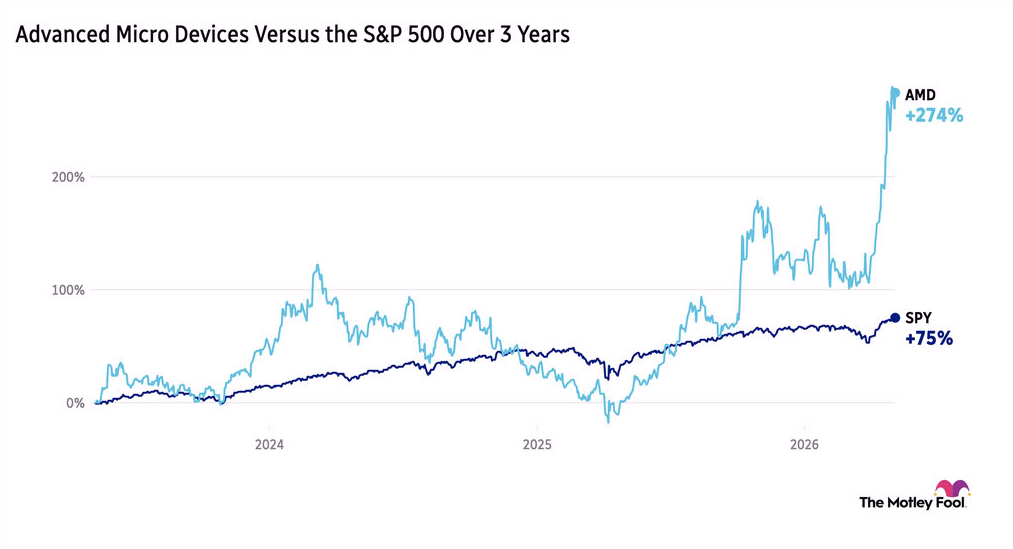
AMD Shares Surge 17% on Surge in Chip Demand


- Earnings Beat: AMD reported a 38% year-over-year revenue increase and a 43% rise in non-GAAP EPS for Q1 2026, exceeding market expectations and driving a 17% pre-market stock surge, highlighting the company's robust performance amid soaring AI infrastructure demand.
- Strategic Partnership: The collaboration with Meta is set to deploy 6 gigawatts of Instinct GPUs, which not only enhances AMD's competitive edge in the AI market but also lays a solid foundation for future revenue growth.
- Future Guidance: Management forecasts Q2 revenue to reach $11.2 billion, a 9% increase from Q1, translating to a 46% year-over-year growth, reflecting sustained growth potential and market confidence in AMD's AI initiatives.
- Market Reaction: Despite AMD's strong performance, Arista Networks saw a 9% drop in stock price due to cost pressures, indicating that supply chain challenges and rising costs in the semiconductor industry may affect overall market sentiment.

SpaceX Plans Historic IPO Targeting $1.75 Trillion Valuation

- IPO Filing: Last month, SpaceX confidentially filed for an initial public offering (IPO) with the SEC, planning to kick off its roadshow on June 8 to pitch the stock to institutional investors and analysts, although a specific IPO date has not been set, trading is expected to commence in late June or early July.
- Valuation Target: The company is aiming for a staggering $1.75 trillion valuation, which would make it the largest IPO in U.S. history; however, historical trends indicate that IPO stocks often underperform in their first year, prompting investors to exercise caution.
- Historical Performance Insights: Data shows that since 1980, around 9,300 companies have gone public on the NYSE or Nasdaq, with IPO stocks gaining an average of 19% on their first trading day, yet those with large market values frequently experience sharp declines after initial excitement fades.
- Long-Term Investment Risks: While SpaceX may perform well in the long run, most large IPO stocks historically have underperformed the S&P 500 post-listing, suggesting that investors might be better off investing in an S&P 500 index fund rather than directly purchasing SpaceX shares.
US Stocks Surge as Tech Stocks Lead Gains
- Tech Stocks Rally: The Nasdaq 100 surged 2.08% to reach an all-time high on Wednesday, driven by stellar earnings from chipmakers and AI infrastructure firms, particularly Advanced Micro Devices, which rose over 17% as it raised its full-year sales forecast, reflecting strong investor optimism about ongoing AI investments.
- Crude Oil Plunge: WTI crude oil prices fell more than 7% to a two-week low as market expectations for a US-Iran peace agreement increased, easing inflation fears and contributing to stock market gains, with the 10-year Treasury yield dropping to a one-week low of 4.33%.
- Employment Data Impact: The April ADP employment report indicated that US companies added 109,000 jobs, below the expected 120,000, yet the market remains optimistic about the Fed's monetary policy, believing it will help maintain a low interest rate environment.
- International Market Surge: Overseas stock markets closed sharply higher, with the Euro Stoxx 50 rising 2.68% and China's Shanghai Composite gaining 1.17%, indicating a positive global market response to the US economic recovery, further boosting investor confidence.
Coupang Shares Plunge After Disappointing Q1 Results
- Disappointing Earnings: Coupang reported an 8% revenue increase in Q1, but a sharp net loss due to costs from last year's data breach led to a 13.70% drop in share price to $17.91, reducing market cap to $38 billion, highlighting challenges in regaining investor trust.
- Surge in Trading Volume: Trading volume reached 79.9 million shares, approximately 238% above the three-month average of 23.6 million shares, indicating strong market reaction to Coupang's earnings report and heightened investor sentiment volatility.
- Membership Recovery: Management noted that 80% of WOW memberships lost due to the breach had returned by April, suggesting some progress in restoring customer trust, although overall financial performance remains under pressure.
- Growth Potential: Coupang's Developing Offerings segment saw a 25% sales increase, with significant growth from its expansion in Taiwan, while its food delivery service and nascent Japanese operations continue to scale, indicating potential in diversifying its business.
US Stocks Surge to New Highs Led by Tech Earnings
- Tech Stock Rally: The Nasdaq 100 index surged over 1.44% to reach an all-time high, driven by strong earnings from chipmakers and AI infrastructure stocks, reflecting market optimism about sustained investment growth in artificial intelligence.
- Crude Oil Plunge: WTI crude oil prices fell more than 6% to a two-week low as the US nears a peace agreement with Iran, which is expected to lift restrictions on the Strait of Hormuz, thereby reducing energy costs and enhancing profitability prospects for airlines and cruise lines.
- Employment Data Impact: The April ADP employment change report indicated that US companies added 109,000 jobs, below the expected 120,000, yet the market remains optimistic about the Fed's monetary policy, suggesting a lower likelihood of interest rate hikes.
- Earnings Optimism: So far, 84% of the 375 S&P 500 companies that reported earnings have exceeded expectations, with Q1 earnings projected to rise 12% year-over-year, indicating strong corporate profitability that further supports the stock market's upward trend.
US Stocks Reach All-Time Highs as AI Investments Surge
- Market Performance: The S&P 500 index rose by 0.76% and the Nasdaq 100 index increased by 1.19%, reaching all-time highs, reflecting strong market optimism regarding ongoing investments in artificial intelligence, which are expected to continue driving stock prices higher.
- Chipmakers' Strong Earnings: Advanced Micro Devices (AMD) saw its stock price surge over 16% after raising its full-year sales forecast significantly due to robust data center spending, indicating a strong growth trajectory and reinforcing its competitive position in the semiconductor market.
- Crude Oil Price Plunge: WTI crude oil prices fell more than 5% to a two-week low as the US nears a peace agreement with Iran, which may help lower inflation expectations and improve profitability prospects for airlines and cruise operators amid declining fuel costs.
- Employment Data Impact: The April ADP employment change report indicated that US companies added 109,000 jobs, below the expected 120,000, yet the market remains optimistic about the Fed's monetary policy, which is likely to continue supporting stock market gains.
AMD Shares Surge 17% on Surge in Chip Demand
- Earnings Beat: AMD reported a 38% year-over-year revenue increase and a 43% rise in non-GAAP EPS for Q1 2026, exceeding market expectations and driving a 17% pre-market stock surge, highlighting the company's robust performance amid soaring AI infrastructure demand.
- Strategic Partnership: The collaboration with Meta is set to deploy 6 gigawatts of Instinct GPUs, which not only enhances AMD's competitive edge in the AI market but also lays a solid foundation for future revenue growth.
- Future Guidance: Management forecasts Q2 revenue to reach $11.2 billion, a 9% increase from Q1, translating to a 46% year-over-year growth, reflecting sustained growth potential and market confidence in AMD's AI initiatives.
- Market Reaction: Despite AMD's strong performance, Arista Networks saw a 9% drop in stock price due to cost pressures, indicating that supply chain challenges and rising costs in the semiconductor industry may affect overall market sentiment.
SpaceX Plans Historic IPO Targeting $1.75 Trillion Valuation
- IPO Filing: Last month, SpaceX confidentially filed for an initial public offering (IPO) with the SEC, planning to kick off its roadshow on June 8 to pitch the stock to institutional investors and analysts, although a specific IPO date has not been set, trading is expected to commence in late June or early July.
- Valuation Target: The company is aiming for a staggering $1.75 trillion valuation, which would make it the largest IPO in U.S. history; however, historical trends indicate that IPO stocks often underperform in their first year, prompting investors to exercise caution.
- Historical Performance Insights: Data shows that since 1980, around 9,300 companies have gone public on the NYSE or Nasdaq, with IPO stocks gaining an average of 19% on their first trading day, yet those with large market values frequently experience sharp declines after initial excitement fades.
- Long-Term Investment Risks: While SpaceX may perform well in the long run, most large IPO stocks historically have underperformed the S&P 500 post-listing, suggesting that investors might be better off investing in an S&P 500 index fund rather than directly purchasing SpaceX shares.