TSMC's HPC Revenue Hits $18.87 Billion in 2025, Over 90% Market Share
Written by Emily J. Thompson, Senior Investment Analyst
Updated: Jan 17 2026
0mins
Should l Buy TSM?
Source: Fool
- Surge in HPC Revenue: TSMC's high-performance computing (HPC) revenue reached $18.87 billion in Q3 2025, a 159% increase from $7.26 billion in Q3 2023, reflecting strong demand for advanced AI chips and solidifying its market leadership.
- Leading Market Share: TSMC holds approximately 72% market share in the chip foundry industry and over 90% in advanced AI chips, providing a significant competitive edge that ensures continued growth potential in a competitive landscape.
- Diverse Product Line: While AI chip demand is robust, TSMC's product offerings span smartphones, computers, and TVs, ensuring that its overall business remains stable even if AI demand cools, which enhances investor confidence.
- Long-term Investment Value: With an average annual return of nearly 22% over the past five years, TSMC's indispensable role in the tech industry and its competitive moat make it an ideal choice for long-term investment, despite potential fluctuations in future returns.
Trade with 70% Backtested Accuracy
Stop guessing "Should I Buy TSM?" and start using high-conviction signals backed by rigorous historical data.
Sign up today to access powerful investing tools and make smarter, data-driven decisions.
Analyst Views on TSM
Wall Street analysts forecast TSM stock price to fall
8 Analyst Rating
7 Buy
1 Hold
0 Sell
Strong Buy
Current: 395.950

Low
63.24
Averages
313.46
High
390.00
Current: 395.950
Low
63.24
Averages
313.46
High
390.00
About TSM
Taiwan Semiconductor Manufacturing Co Ltd is a Taiwan-based integrated circuit foundry service provider. The Company is primarily engaged in integrated circuit manufacturing services. It offers advanced process technologies, specialised process solutions, advanced photomask and silicon stacking, and packaging-related technologies, while supporting a comprehensive design ecosystem. The Company's products serve diverse electronic sectors including artificial intelligence, high-performance computing, wired and wireless communications, automotive and industrial equipment, personal computing, information applications, consumer electronics, smart internet of things, and wearable devices.
About the author

Emily J. Thompson
Emily J. Thompson, a Chartered Financial Analyst (CFA) with 12 years in investment research, graduated with honors from the Wharton School. Specializing in industrial and technology stocks, she provides in-depth analysis for Intellectia’s earnings and market brief reports.

Taiwan and South Korea's Stock Markets Reshape Global Hierarchy

- Market Ranking Shift: According to HSBC data, Taiwan has surpassed Canada to become the world's sixth-largest stock market with a valuation of $4.7 trillion, while South Korea has jumped to eighth place at $4.4 trillion, illustrating the profound impact of the AI boom on market dynamics.
- Capital Concentration Phenomenon: TSMC accounts for over 40% of Taiwan's market capitalization, while Samsung Electronics and SK Hynix together represent 42.2% of South Korea's Kospi index, indicating that both markets have effectively become proxies for AI and semiconductors, reflecting a technology-driven market trend.
- Investment Risk Warning: Following a foreign sell-off of approximately $13 billion in South Korean stocks, market volatility has increased, and investor concerns regarding labor negotiations and potential strikes at Samsung Electronics have heightened uncertainty, signaling a rise in concentration risk.
- Historical Comparative Analysis: This market reshuffling is not unprecedented, akin to China's rise in the late 2000s and India's surpassing Hong Kong in 2023, yet the rapid ascent of Taiwan and South Korea stands out, potentially influencing the global investment landscape for the long term.
See More

Investment Risks and Opportunities Amid AI Boom


- Market Concentration Risk: Since the late 2022 release of ChatGPT, AI has dominated global markets, leading to significant investments in AI stocks, with TSMC, SK Hynix, and Samsung Electronics accounting for over half of the returns on the FTSE Asia ex-Japan index, prompting HSBC to warn of potential market dislocations.
- Forgotten Investment Opportunities: HSBC has identified ten overlooked companies in Asia, including Hong Kong Exchange, South Korean food manufacturer Samyang Foods, and Indonesian telecom provider PT Telkom, which have maintained high profitability while gaining market share.
- Fuyao Glass's Growth Potential: Fuyao Glass, the world's largest automotive glass manufacturer, holds about a 70% share of the Chinese market and is expanding internationally; HSBC analysts believe the market undervalues its growth trajectory and margin resilience amid shifting global competitive dynamics.
- WuXi AppTec's Strong Growth: WuXi AppTec, a China-based contract research and manufacturing organization, is projected to achieve 18%-22% revenue growth in 2026, driven by robust customer demand and global capacity expansion, with HSBC analysts suggesting this growth could last another two to three years.
See More
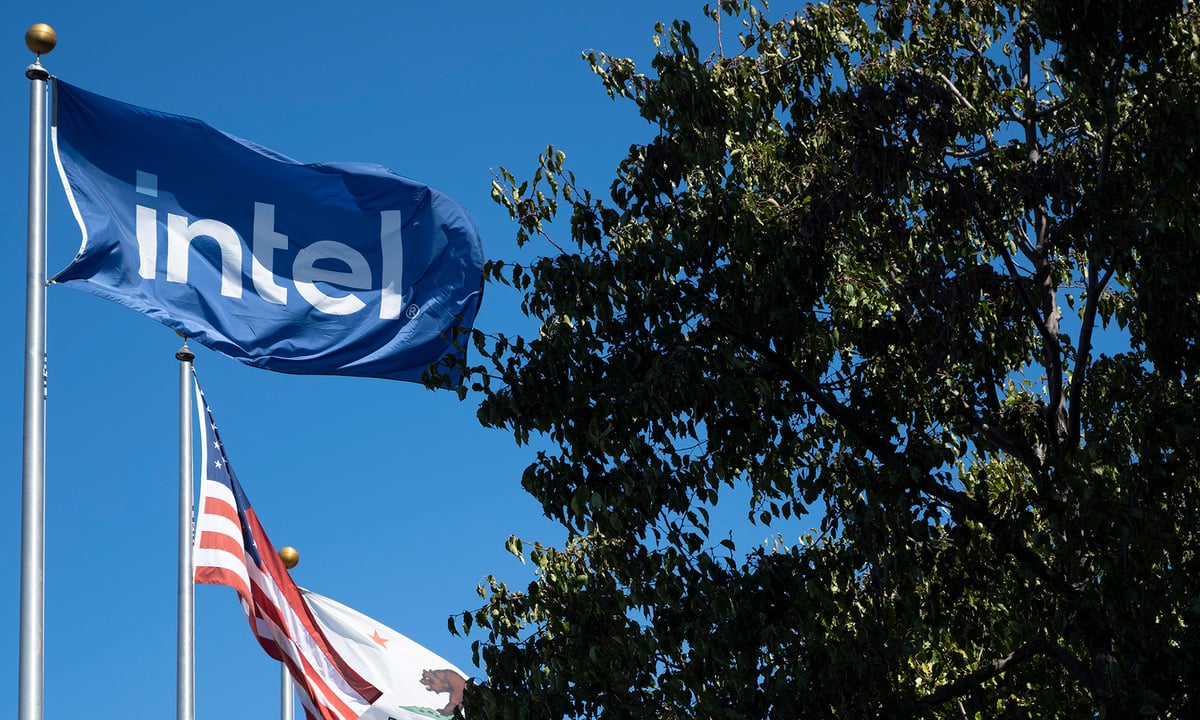
Intel's Manufacturing Yields Show Significant Improvement

- Yield Improvement: Intel CEO Lip-Bu Tan highlighted that the company's chip manufacturing yields are improving significantly, with a monthly yield increase of 7% to 8%, which will directly enhance its market competitiveness and boost investor confidence.
- Vertical Integration Advantage: Unlike competitors that rely on external foundries, Intel's vertically integrated model allows it to manufacture most of its chips, providing greater flexibility and control amid current supply chain uncertainties.
- Policy Support Benefits: U.S. government incentives, such as tax breaks for domestic chip manufacturing, align well with Intel's expansion strategy, likely attracting more chip designers to utilize its foundry services and increasing its market share.
- Technological Catch-Up: Tan mentioned that Intel's next-generation 14A process is expected to rival TSMC's advanced technology, marking a significant breakthrough that could further solidify Intel's position in the semiconductor industry and potentially alter the market landscape.
See More
Surging Semiconductor Demand Highlights Key Winners
- Market Demand Surge: Afternoon prices on May 17, 2026, indicate a significant rise in semiconductor demand, driving stock prices of related companies upward, reflecting strong market appetite for tech products and future growth potential.
- Winning Companies' Performance: Certain semiconductor firms have excelled during this demand surge, with rising stock prices showcasing their competitive advantages and bolstered investor confidence.
- Optimistic Industry Outlook: As global demand for electronic products continues to grow, the semiconductor sector is expected to enter a prolonged growth cycle, attracting increased investor interest.
- Innovation-Driven Growth: Companies are leveraging technological innovations and enhanced production capabilities to meet market demands, further solidifying their market positions and driving future profitability.
See More

Soaring Semiconductor Demand: Key Winners Emerge
- Surging Market Demand: Semiconductor demand is rapidly increasing, particularly for critical technologies needed by Nvidia and Intel, indicating significant growth in the industry that could drive stock prices higher.
- Unique Company Emergence: A little-known company is dubbed an 'Indispensable Monopoly' for providing essential technology to Nvidia and Intel, suggesting that its unique market position could lead to substantial profits in the future.
- Investment Advisory Caution: Despite the optimistic outlook for the semiconductor sector, the analyst team warns that Intel is not included in the current list of top ten recommended stocks, advising investors to consider this before making purchases.
- Historical Return Comparisons: Past recommendations like Netflix and Nvidia yielded massive returns of $483,476 and $1,362,941 respectively, highlighting the importance of selecting quality stocks, prompting investors to seek out potential high-return opportunities.
See More
Nvidia's Earnings Report Sparks Investor Interest
- Earnings Report Anticipation: Nvidia is set to release its fiscal Q1 2027 results on May 20, with investors keenly awaiting insights into the AI economy, despite a modest 21% stock gain over the past six months compared to a 73% rise in the semiconductor index.
- TSMC's Strong Performance: As Nvidia's foundry partner, TSMC's stock surged 33% in 2026, significantly outperforming Nvidia, while controlling 72% of the pure-play foundry market by the end of 2025, highlighting its competitive edge.
- Growth in Foundry 2.0 Market: Counterpoint Research indicates that the Foundry 2.0 market grew by 16% to $320 billion in 2025, with TSMC capturing 38% of this market, underscoring its leadership in the AI era.
- Future Growth Potential: TSMC plans to increase its 2nm production capacity at a 70% CAGR from 2026 to 2028, and with anticipated price hikes, it is poised for significant profit growth, further solidifying its dominant market position.
See More
Taiwan and South Korea's Stock Markets Reshape Global Hierarchy
- Market Ranking Shift: According to HSBC data, Taiwan has surpassed Canada to become the world's sixth-largest stock market with a valuation of $4.7 trillion, while South Korea has jumped to eighth place at $4.4 trillion, illustrating the profound impact of the AI boom on market dynamics.
- Capital Concentration Phenomenon: TSMC accounts for over 40% of Taiwan's market capitalization, while Samsung Electronics and SK Hynix together represent 42.2% of South Korea's Kospi index, indicating that both markets have effectively become proxies for AI and semiconductors, reflecting a technology-driven market trend.
- Investment Risk Warning: Following a foreign sell-off of approximately $13 billion in South Korean stocks, market volatility has increased, and investor concerns regarding labor negotiations and potential strikes at Samsung Electronics have heightened uncertainty, signaling a rise in concentration risk.
- Historical Comparative Analysis: This market reshuffling is not unprecedented, akin to China's rise in the late 2000s and India's surpassing Hong Kong in 2023, yet the rapid ascent of Taiwan and South Korea stands out, potentially influencing the global investment landscape for the long term.
See More
Investment Risks and Opportunities Amid AI Boom
- Market Concentration Risk: Since the late 2022 release of ChatGPT, AI has dominated global markets, leading to significant investments in AI stocks, with TSMC, SK Hynix, and Samsung Electronics accounting for over half of the returns on the FTSE Asia ex-Japan index, prompting HSBC to warn of potential market dislocations.
- Forgotten Investment Opportunities: HSBC has identified ten overlooked companies in Asia, including Hong Kong Exchange, South Korean food manufacturer Samyang Foods, and Indonesian telecom provider PT Telkom, which have maintained high profitability while gaining market share.
- Fuyao Glass's Growth Potential: Fuyao Glass, the world's largest automotive glass manufacturer, holds about a 70% share of the Chinese market and is expanding internationally; HSBC analysts believe the market undervalues its growth trajectory and margin resilience amid shifting global competitive dynamics.
- WuXi AppTec's Strong Growth: WuXi AppTec, a China-based contract research and manufacturing organization, is projected to achieve 18%-22% revenue growth in 2026, driven by robust customer demand and global capacity expansion, with HSBC analysts suggesting this growth could last another two to three years.
See More
Intel's Manufacturing Yields Show Significant Improvement
- Yield Improvement: Intel CEO Lip-Bu Tan highlighted that the company's chip manufacturing yields are improving significantly, with a monthly yield increase of 7% to 8%, which will directly enhance its market competitiveness and boost investor confidence.
- Vertical Integration Advantage: Unlike competitors that rely on external foundries, Intel's vertically integrated model allows it to manufacture most of its chips, providing greater flexibility and control amid current supply chain uncertainties.
- Policy Support Benefits: U.S. government incentives, such as tax breaks for domestic chip manufacturing, align well with Intel's expansion strategy, likely attracting more chip designers to utilize its foundry services and increasing its market share.
- Technological Catch-Up: Tan mentioned that Intel's next-generation 14A process is expected to rival TSMC's advanced technology, marking a significant breakthrough that could further solidify Intel's position in the semiconductor industry and potentially alter the market landscape.
See More
Surging Semiconductor Demand Highlights Key Winners
- Market Demand Surge: Afternoon prices on May 17, 2026, indicate a significant rise in semiconductor demand, driving stock prices of related companies upward, reflecting strong market appetite for tech products and future growth potential.
- Winning Companies' Performance: Certain semiconductor firms have excelled during this demand surge, with rising stock prices showcasing their competitive advantages and bolstered investor confidence.
- Optimistic Industry Outlook: As global demand for electronic products continues to grow, the semiconductor sector is expected to enter a prolonged growth cycle, attracting increased investor interest.
- Innovation-Driven Growth: Companies are leveraging technological innovations and enhanced production capabilities to meet market demands, further solidifying their market positions and driving future profitability.
See More
Soaring Semiconductor Demand: Key Winners Emerge
- Surging Market Demand: Semiconductor demand is rapidly increasing, particularly for critical technologies needed by Nvidia and Intel, indicating significant growth in the industry that could drive stock prices higher.
- Unique Company Emergence: A little-known company is dubbed an 'Indispensable Monopoly' for providing essential technology to Nvidia and Intel, suggesting that its unique market position could lead to substantial profits in the future.
- Investment Advisory Caution: Despite the optimistic outlook for the semiconductor sector, the analyst team warns that Intel is not included in the current list of top ten recommended stocks, advising investors to consider this before making purchases.
- Historical Return Comparisons: Past recommendations like Netflix and Nvidia yielded massive returns of $483,476 and $1,362,941 respectively, highlighting the importance of selecting quality stocks, prompting investors to seek out potential high-return opportunities.
See More
Nvidia's Earnings Report Sparks Investor Interest
- Earnings Report Anticipation: Nvidia is set to release its fiscal Q1 2027 results on May 20, with investors keenly awaiting insights into the AI economy, despite a modest 21% stock gain over the past six months compared to a 73% rise in the semiconductor index.
- TSMC's Strong Performance: As Nvidia's foundry partner, TSMC's stock surged 33% in 2026, significantly outperforming Nvidia, while controlling 72% of the pure-play foundry market by the end of 2025, highlighting its competitive edge.
- Growth in Foundry 2.0 Market: Counterpoint Research indicates that the Foundry 2.0 market grew by 16% to $320 billion in 2025, with TSMC capturing 38% of this market, underscoring its leadership in the AI era.
- Future Growth Potential: TSMC plans to increase its 2nm production capacity at a 70% CAGR from 2026 to 2028, and with anticipated price hikes, it is poised for significant profit growth, further solidifying its dominant market position.
See More