TSMC Projects 29% Revenue Growth in 2025 Driven by AI Chip Demand
Written by Emily J. Thompson, Senior Investment Analyst
Updated: Jan 01 2026
0mins
Source: Fool
- Market Share Leadership: As of Q3 2024, TSMC holds a commanding 72% revenue market share in the global foundry market, significantly outpacing Samsung's 7%, which underscores its dominant position amid surging AI chip demand and solidifies its industry leadership.
- Robust Customer Demand: Nvidia's $500 billion order backlog is expected to drive TSMC's business growth, with projections indicating nearly 29% average annual earnings growth over the next few years, highlighting the company's critical role in the AI investment cycle.
- Technological Innovation Edge: TSMC is manufacturing chips for Nvidia's upcoming Rubin architecture using its advanced 3-nanometer process, which will enhance performance while reducing power consumption, further strengthening its competitive position in the high-end chip market.
- Attractive Valuation: With a price-to-earnings ratio nearing 30, TSMC appears expensive, yet its PEG ratio of approximately 1 indicates it remains attractive at current prices, suggesting investors can expect strong long-term returns.
Trade with 70% Backtested Accuracy
Stop guessing "Should I Buy TSM?" and start using high-conviction signals backed by rigorous historical data.
Sign up today to access powerful investing tools and make smarter, data-driven decisions.
Analyst Views on TSM
Wall Street analysts forecast TSM stock price to fall
8 Analyst Rating
7 Buy
1 Hold
0 Sell
Strong Buy
Current: 435.630

Low
63.24
Averages
313.46
High
390.00
Current: 435.630
Low
63.24
Averages
313.46
High
390.00
About TSM
Taiwan Semiconductor Manufacturing Co Ltd is a Taiwan-based integrated circuit foundry service provider. The Company is primarily engaged in integrated circuit manufacturing services. It offers advanced process technologies, specialised process solutions, advanced photomask and silicon stacking, and packaging-related technologies, while supporting a comprehensive design ecosystem. The Company's products serve diverse electronic sectors including artificial intelligence, high-performance computing, wired and wireless communications, automotive and industrial equipment, personal computing, information applications, consumer electronics, smart internet of things, and wearable devices.
About the author

Emily J. Thompson
Emily J. Thompson, a Chartered Financial Analyst (CFA) with 12 years in investment research, graduated with honors from the Wharton School. Specializing in industrial and technology stocks, she provides in-depth analysis for Intellectia’s earnings and market brief reports.

Investment Opportunities Amid Market Downturns

- Market Downturn Opportunities: During market downturns, many large tech stocks saw valuations drop to recent lows, with investors buying back in March, leading to a 24.7% rise in the Nasdaq Composite and a 15.9% increase in the S&P 500 since April 1, both hitting new highs.
- Valuation Spike Risks: The Shiller P/E ratio has surged to 42 due to the recent rally, nearing levels last seen before the 1999 market crash, indicating potential risks of another downturn, which investors should monitor closely.
- TSMC Market Dominance: Taiwan Semiconductor Manufacturing Company (TSMC) controls 72% of the global foundry market and over 90% of the advanced chip market, leveraging its scale and technological advantages to maintain a strong competitive edge.
- Strong Return Performance: TSMC has risen 40% year-to-date and 119% over the past 12 months, averaging a 33% annualized return, indicating robust performance in the tech sector, making it a potential buy during market corrections.
See More

Nvidia Exceeds Expectations in Latest Quarter


- Significant Growth: Nvidia achieved an impressive 85% growth rate in its latest quarter, exceeding market expectations and establishing itself as one of the fastest-growing stocks, despite trailing many peers in valuation, indicating strong future growth potential.
- Strong Market Demand: With rising data center build-out rates, demand for Nvidia's GPUs has reached an all-time high, and projected AI hyperscaler capital expenditures for 2027 are expected to hit $1 trillion, providing the company with ongoing growth opportunities.
- Attractive Valuation: Compared to other major tech companies, Nvidia's forward P/E ratio is relatively low, and if it rises to the high 20s, investors could see substantial returns in June, highlighting the attractiveness of the current investment opportunity.
- Comparative Industry Advantage: When compared to AI-focused stocks like AMD, Broadcom, and Taiwan Semiconductor, Nvidia's stock appears even cheaper, suggesting that if its valuation were to double, it would still remain competitive, indicating significant investment opportunities in the company's future growth.
See More
Nvidia's Stock Underperforms Yet Promising Outlook Ahead
- Stock Performance Analysis: Nvidia's stock has risen about 13% this year, which is acceptable in a normal year; however, it lags behind the S&P 500's 11% and nearly 25% gain in tech stocks, leading to investor impatience regarding its performance.
- Future Growth Potential: Nvidia projects that AI hyperscaler capital expenditures will reach $1 trillion in 2027, opening doors for sustained growth and potentially extending its remarkable growth rates, particularly as June approaches.
- Strong Financial Performance: In its latest earnings report, Nvidia achieved an impressive 85% growth rate, making it one of the fastest-growing stocks in the market, despite its relatively low valuation compared to peers, indicating an attractive investment opportunity.
- Investment Timing: With Nvidia's forward P/E ratio currently low, if it rises to the high 20s, it could yield solid returns for investors, especially with 2027 expected to be another growth year, making this an opportune time to invest.
See More
Samsung in Talks with BYD for Autonomous Driving Chips

- Collaboration Potential: Samsung Electronics' foundry business is in discussions with BYD and other Chinese automakers to manufacture autonomous driving system-on-chips based on 4nm and 2nm processes, highlighting the urgent demand for advanced production capabilities in the Chinese automotive sector.
- Market Competition: BYD recently unveiled China's first 4nm intelligent driving chip, the Xuanji A3, yet nearly all automotive OEMs, including the largest globally, lack the capability to produce state-of-the-art 4nm chips, further emphasizing Samsung's market opportunity.
- Technological Advantage: Samsung's 4nm process is viewed as having stable yields, while its 2nm technology has gained attention after Tesla selected Samsung to manufacture its next-generation AI6 chip, establishing a strong technical foundation for Samsung in the automotive electronics sector in China.
- Future Outlook: Should agreements be reached with Chinese automakers, Samsung's customer roster would expand beyond Nio, which already uses its 5nm process, and successful collaboration could pave the way for broader partnerships in AI and high-performance computing semiconductors, despite constraints from U.S. export controls.
See More

Nvidia Shares Surge 6.3% Following Major Chip Announcements at Computex

- New Product Launch: At Computex in Taipei, Nvidia unveiled RTX Spark, its first system-on-chip for Windows laptops and compact desktops, integrating a 20-core Arm CPU and a Blackwell GPU with 6,144 CUDA cores, set to launch in fall 2026, significantly enhancing its competitiveness in the PC processor market.
- Production Capacity Boost: The Vera Rubin data center platform has entered full production, delivering 3.5 times the AI training performance and 5 times the inference performance, with early customers including OpenAI and Oracle, indicating Nvidia's rapid expansion in the AI computing market.
- Positive Market Reaction: Nvidia's shares surged 6.3% in afternoon trading with over 150 million shares traded, reflecting strong market response to the new products, while Intel, AMD, and Qualcomm saw declines, highlighting shifts in the competitive landscape.
- Analyst Optimism: Several Wall Street banks raised Nvidia's price targets, with Bank of America increasing its target to $320, indicating sustained optimism about the AI infrastructure spending cycle and bolstering investor confidence in Nvidia's future growth.
See More
China's Tech Self-Sufficiency Accelerates

- Diversified Chip Supply: Zelostech plans to utilize multiple chip suppliers from China and abroad over the next year, moving away from reliance on Nvidia chips, which will significantly reduce costs for its self-driving systems and enhance market competitiveness.
- Vehicle Scale Expansion: Currently operating over 25,000 vehicles across more than 20 countries primarily for logistics, Zelostech aims for rapid expansion, which will greatly enhance its data collection capabilities in the autonomous driving sector and strengthen its industry influence.
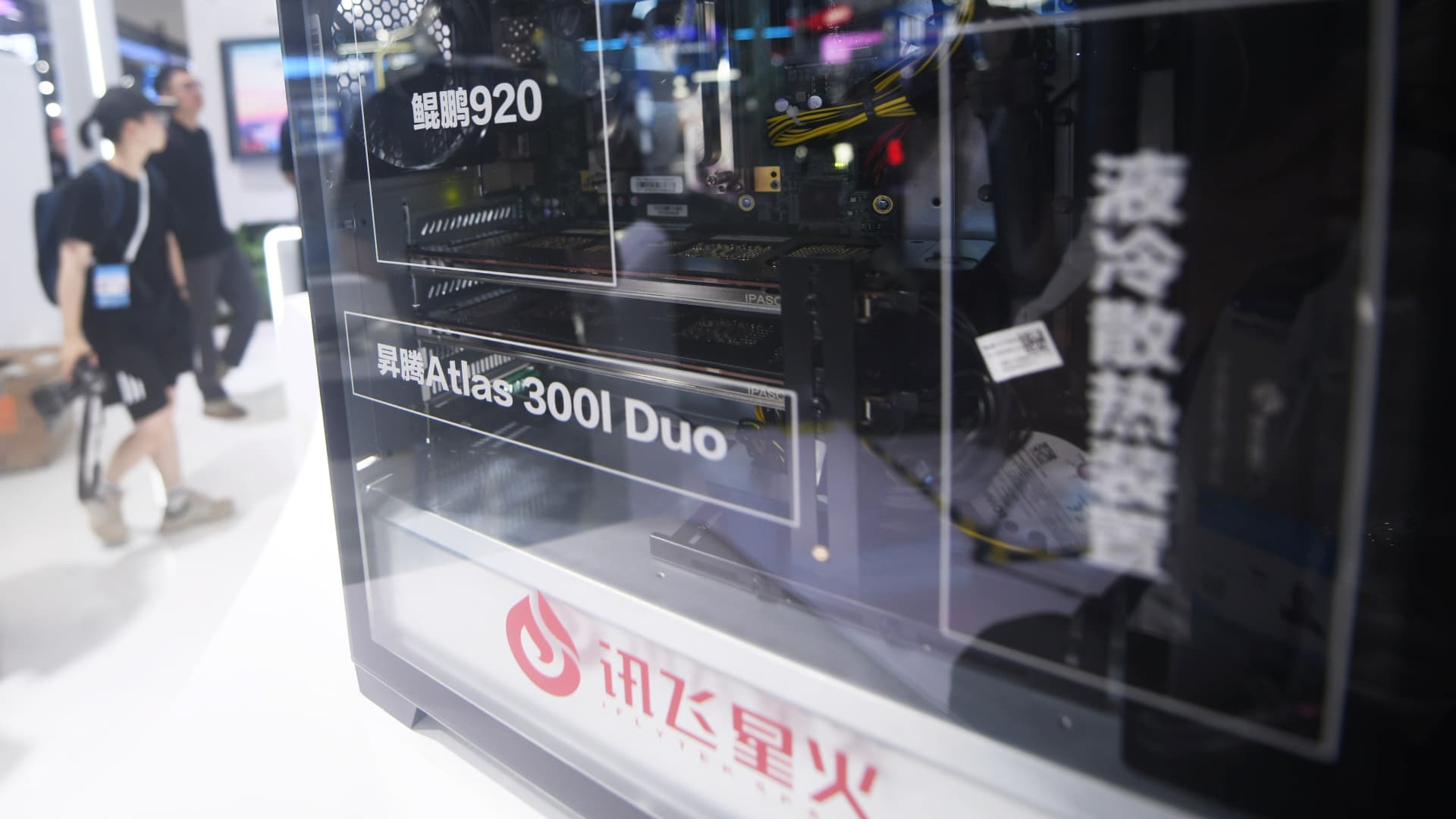
- Domestic Chip Adoption: Chinese EV manufacturers like Nio and BYD are increasing investments in their own semiconductors, with Nio planning a fivefold increase in computing power spending, indicating a strong push to reduce dependence on Nvidia and promote local technology development.
- Technological Collaboration and Innovation: Huawei is adopting new scientific methods for chip development and plans to incorporate them into future products, signaling a resurgence for Chinese tech giants under U.S. restrictions, potentially accelerating the application and development of domestic chips.
See More
Investment Opportunities Amid Market Downturns
- Market Downturn Opportunities: During market downturns, many large tech stocks saw valuations drop to recent lows, with investors buying back in March, leading to a 24.7% rise in the Nasdaq Composite and a 15.9% increase in the S&P 500 since April 1, both hitting new highs.
- Valuation Spike Risks: The Shiller P/E ratio has surged to 42 due to the recent rally, nearing levels last seen before the 1999 market crash, indicating potential risks of another downturn, which investors should monitor closely.
- TSMC Market Dominance: Taiwan Semiconductor Manufacturing Company (TSMC) controls 72% of the global foundry market and over 90% of the advanced chip market, leveraging its scale and technological advantages to maintain a strong competitive edge.
- Strong Return Performance: TSMC has risen 40% year-to-date and 119% over the past 12 months, averaging a 33% annualized return, indicating robust performance in the tech sector, making it a potential buy during market corrections.
See More
Nvidia Exceeds Expectations in Latest Quarter
- Significant Growth: Nvidia achieved an impressive 85% growth rate in its latest quarter, exceeding market expectations and establishing itself as one of the fastest-growing stocks, despite trailing many peers in valuation, indicating strong future growth potential.
- Strong Market Demand: With rising data center build-out rates, demand for Nvidia's GPUs has reached an all-time high, and projected AI hyperscaler capital expenditures for 2027 are expected to hit $1 trillion, providing the company with ongoing growth opportunities.
- Attractive Valuation: Compared to other major tech companies, Nvidia's forward P/E ratio is relatively low, and if it rises to the high 20s, investors could see substantial returns in June, highlighting the attractiveness of the current investment opportunity.
- Comparative Industry Advantage: When compared to AI-focused stocks like AMD, Broadcom, and Taiwan Semiconductor, Nvidia's stock appears even cheaper, suggesting that if its valuation were to double, it would still remain competitive, indicating significant investment opportunities in the company's future growth.
See More
Nvidia's Stock Underperforms Yet Promising Outlook Ahead
- Stock Performance Analysis: Nvidia's stock has risen about 13% this year, which is acceptable in a normal year; however, it lags behind the S&P 500's 11% and nearly 25% gain in tech stocks, leading to investor impatience regarding its performance.
- Future Growth Potential: Nvidia projects that AI hyperscaler capital expenditures will reach $1 trillion in 2027, opening doors for sustained growth and potentially extending its remarkable growth rates, particularly as June approaches.
- Strong Financial Performance: In its latest earnings report, Nvidia achieved an impressive 85% growth rate, making it one of the fastest-growing stocks in the market, despite its relatively low valuation compared to peers, indicating an attractive investment opportunity.
- Investment Timing: With Nvidia's forward P/E ratio currently low, if it rises to the high 20s, it could yield solid returns for investors, especially with 2027 expected to be another growth year, making this an opportune time to invest.
See More
Samsung in Talks with BYD for Autonomous Driving Chips
- Collaboration Potential: Samsung Electronics' foundry business is in discussions with BYD and other Chinese automakers to manufacture autonomous driving system-on-chips based on 4nm and 2nm processes, highlighting the urgent demand for advanced production capabilities in the Chinese automotive sector.
- Market Competition: BYD recently unveiled China's first 4nm intelligent driving chip, the Xuanji A3, yet nearly all automotive OEMs, including the largest globally, lack the capability to produce state-of-the-art 4nm chips, further emphasizing Samsung's market opportunity.
- Technological Advantage: Samsung's 4nm process is viewed as having stable yields, while its 2nm technology has gained attention after Tesla selected Samsung to manufacture its next-generation AI6 chip, establishing a strong technical foundation for Samsung in the automotive electronics sector in China.
- Future Outlook: Should agreements be reached with Chinese automakers, Samsung's customer roster would expand beyond Nio, which already uses its 5nm process, and successful collaboration could pave the way for broader partnerships in AI and high-performance computing semiconductors, despite constraints from U.S. export controls.
See More
Nvidia Shares Surge 6.3% Following Major Chip Announcements at Computex
- New Product Launch: At Computex in Taipei, Nvidia unveiled RTX Spark, its first system-on-chip for Windows laptops and compact desktops, integrating a 20-core Arm CPU and a Blackwell GPU with 6,144 CUDA cores, set to launch in fall 2026, significantly enhancing its competitiveness in the PC processor market.
- Production Capacity Boost: The Vera Rubin data center platform has entered full production, delivering 3.5 times the AI training performance and 5 times the inference performance, with early customers including OpenAI and Oracle, indicating Nvidia's rapid expansion in the AI computing market.
- Positive Market Reaction: Nvidia's shares surged 6.3% in afternoon trading with over 150 million shares traded, reflecting strong market response to the new products, while Intel, AMD, and Qualcomm saw declines, highlighting shifts in the competitive landscape.
- Analyst Optimism: Several Wall Street banks raised Nvidia's price targets, with Bank of America increasing its target to $320, indicating sustained optimism about the AI infrastructure spending cycle and bolstering investor confidence in Nvidia's future growth.
See More
China's Tech Self-Sufficiency Accelerates
- Diversified Chip Supply: Zelostech plans to utilize multiple chip suppliers from China and abroad over the next year, moving away from reliance on Nvidia chips, which will significantly reduce costs for its self-driving systems and enhance market competitiveness.
- Vehicle Scale Expansion: Currently operating over 25,000 vehicles across more than 20 countries primarily for logistics, Zelostech aims for rapid expansion, which will greatly enhance its data collection capabilities in the autonomous driving sector and strengthen its industry influence.
- Domestic Chip Adoption: Chinese EV manufacturers like Nio and BYD are increasing investments in their own semiconductors, with Nio planning a fivefold increase in computing power spending, indicating a strong push to reduce dependence on Nvidia and promote local technology development.
- Technological Collaboration and Innovation: Huawei is adopting new scientific methods for chip development and plans to incorporate them into future products, signaling a resurgence for Chinese tech giants under U.S. restrictions, potentially accelerating the application and development of domestic chips.
See More