TSMC Expected to Grow Earnings by 35% in 2026, Capturing 72% Market Share
Written by Emily J. Thompson, Senior Investment Analyst
Updated: Jan 17 2026
0mins
Source: Fool
- Semiconductor Market Growth: The semiconductor industry is projected to grow by 25% by 2026, reaching nearly $1 trillion, primarily driven by a surge in AI chip demand, indicating strong growth potential in the sector.
- TSMC Earnings Outlook: TSMC is expected to achieve earnings of $10.46 per share in 2025, reflecting a 49% increase from last year, and is anticipated to maintain over 20% growth rates in 2026 and 2027, showcasing its sustained profitability.
- Strong Customer Demand: With TSMC's fabrication lines sold out, customers are willing to pay a premium for quick chip production, positioning the company to potentially reach earnings of $19.07 per share in the coming years, further solidifying its market dominance.
- Micron Technology Growth Potential: Micron Technology is expected to see a staggering 291% increase in earnings to $32.43 per share this fiscal year, benefiting from a significant supply-demand imbalance in the memory market, highlighting its investment appeal among tech stocks.
Trade with 70% Backtested Accuracy
Stop guessing "Should I Buy MU?" and start using high-conviction signals backed by rigorous historical data.
Sign up today to access powerful investing tools and make smarter, data-driven decisions.
Analyst Views on MU
Wall Street analysts forecast MU stock price to fall
26 Analyst Rating
24 Buy
2 Hold
0 Sell
Strong Buy
Current: 403.110

Low
235.00
Averages
336.12
High
500.00
Current: 403.110
Low
235.00
Averages
336.12
High
500.00
About MU
Micron Technology, Inc. provides memory and storage solutions. The Company delivers a portfolio of high-performance dynamic random-access memory (DRAM), NAND, and NOR memory and storage products through its Micron and Crucial brands. The Company's products enable advancing in artificial intelligence (AI) and compute-intensive applications. Its segments include Compute and Networking Business Unit (CNBU), Mobile Business Unit (MBU), Embedded Business Unit (EBU), and Storage Business Unit (SBU). CNBU segment includes memory products and solutions sold into the data center, PC, graphics, and networking markets. MBU segment includes memory and storage products sold into the smartphone and other mobile-device markets. EBU segment includes memory and storage products and solutions sold into the intelligent edge through the automotive, industrial, and consumer embedded markets. SBU segment includes SSDs and component-level storage solutions sold into the data center, PC, and consumer markets.
About the author

Emily J. Thompson
Emily J. Thompson, a Chartered Financial Analyst (CFA) with 12 years in investment research, graduated with honors from the Wharton School. Specializing in industrial and technology stocks, she provides in-depth analysis for Intellectia’s earnings and market brief reports.
Citi Raises Micron Technology Price Target to $430 Ahead of Earnings

- Rating Maintained with Price Target Increase: Citi has maintained its Buy rating on Micron Technology while raising the price target from $385 to $430, reflecting optimism ahead of the company's quarterly results, particularly amid surging memory prices and strong AI demand.
- Memory Price Forecast: Citi analysts project that DRAM average selling prices will increase by 171% year-over-year by 2026, with NAND prices also expected to rise by 127%, driven by robust demand from data centers and eSSD, highlighting Micron's competitive position in the market.
- Market Cycle Analysis: Analysts noted that the key investor debate surrounding Micron is whether we are in an extended memory cycle akin to the 1990s Windows PC DRAM cycle, particularly given strong AI demand and limited new fab capacity, which could impact future price trends.
- Competitor Dynamics: Samsung's reported 100% quarter-over-quarter increase in DRAM prices in Q1 2026 has further heightened market interest in Micron, with analysts believing that despite the sharp price hikes in Q1, Micron's stock could still sustain gains this year.
See More

Inverse Cramer Portfolio Outperforms Expectations
- Significant Asset Growth: Since its launch in 2023, Autopilot has seen its assets soar from $2 million to $1.3 billion, indicating strong appeal among retail investors, particularly with 40% of assets allocated to popular meme portfolios, reflecting market acceptance of inverse investment strategies.
- Outstanding Inverse Cramer Performance: The Inverse Cramer portfolio has amassed $56 million in assets on Autopilot and has risen 158% since its inception, significantly outperforming the S&P 500's 68% increase during the same period, showcasing its popularity and effectiveness among investors.
- Market Reaction Analysis: Co-founder Josephs notes that Cramer's investment advice often comes too late, leading investors to pay attention only after stocks have already risen, while the Inverse Cramer portfolio capitalizes on this, successfully profiting from market volatility, demonstrating a deep understanding of market psychology.
- Comparison with Pelosi Portfolio: The Inverse Cramer portfolio has achieved a 90.6% gain over the past two years, surpassing Pelosi's 62.5% increase and ranking third on Autopilot, further solidifying its competitive position in investment strategies.
See More

US Stocks Decline Amid Multiple Pressures


- Stable Inflation Data: The US February CPI rose 2.4% year-over-year, with core CPI at 2.5%, indicating persistent inflation pressures that remain above the Fed's 2% target, potentially influencing future monetary policy decisions.
- Private Credit Market Constraints: JPMorgan Chase's restriction on lending to private credit funds hampers the $1.8 trillion private credit market amid investor exodus, which could exacerbate financial difficulties and impact overall market confidence.
- Mixed Tech Stock Performance: While Oracle surged over 10% due to strong earnings, other tech stocks like Amazon and Microsoft declined, indicating uneven support for the tech sector and potentially affecting investor sentiment towards technology investments.
- Oil Price Surge Impacting Markets: Oil prices rose by 4%, and despite the IEA's decision to release 400 million barrels from strategic reserves to address supply shortages, market reactions were muted, reflecting cautious investor sentiment regarding the oil market outlook.
See More

Morgan Stanley Bullish on Multiple Tech Companies Post Conference


- Deepening AI Discussions: At Morgan Stanley's tech conference in San Francisco, nearly every company delved into their AI strategies, indicating a significant shift towards deeper AI deployment across multiple business units, reflecting the market's heightened focus on AI technologies.
- Optimistic Outlook for Amazon: Analysts set a $300 price target for Amazon, believing its high-margin businesses will drive greater profits and support investments in last-mile delivery and cloud services, despite a recent 7% stock drop due to quarterly earnings misses.
- Strong Demand for Nvidia: Morgan Stanley remains bullish on Nvidia, with analysts noting robust demand for its Blackwell chip series, which is expected to continue pushing upward estimates, while the upcoming Rubin platform is anticipated to maintain Nvidia's leadership in AI computing architecture.
- Growth Potential for Spotify: Analysts highlight Spotify's 15% penetration in the global smartphone market of 3 billion, alongside its advertising business being just a fraction of the $20 billion global radio ad market, indicating substantial future growth opportunities, especially as user engagement continues to rise.
See More
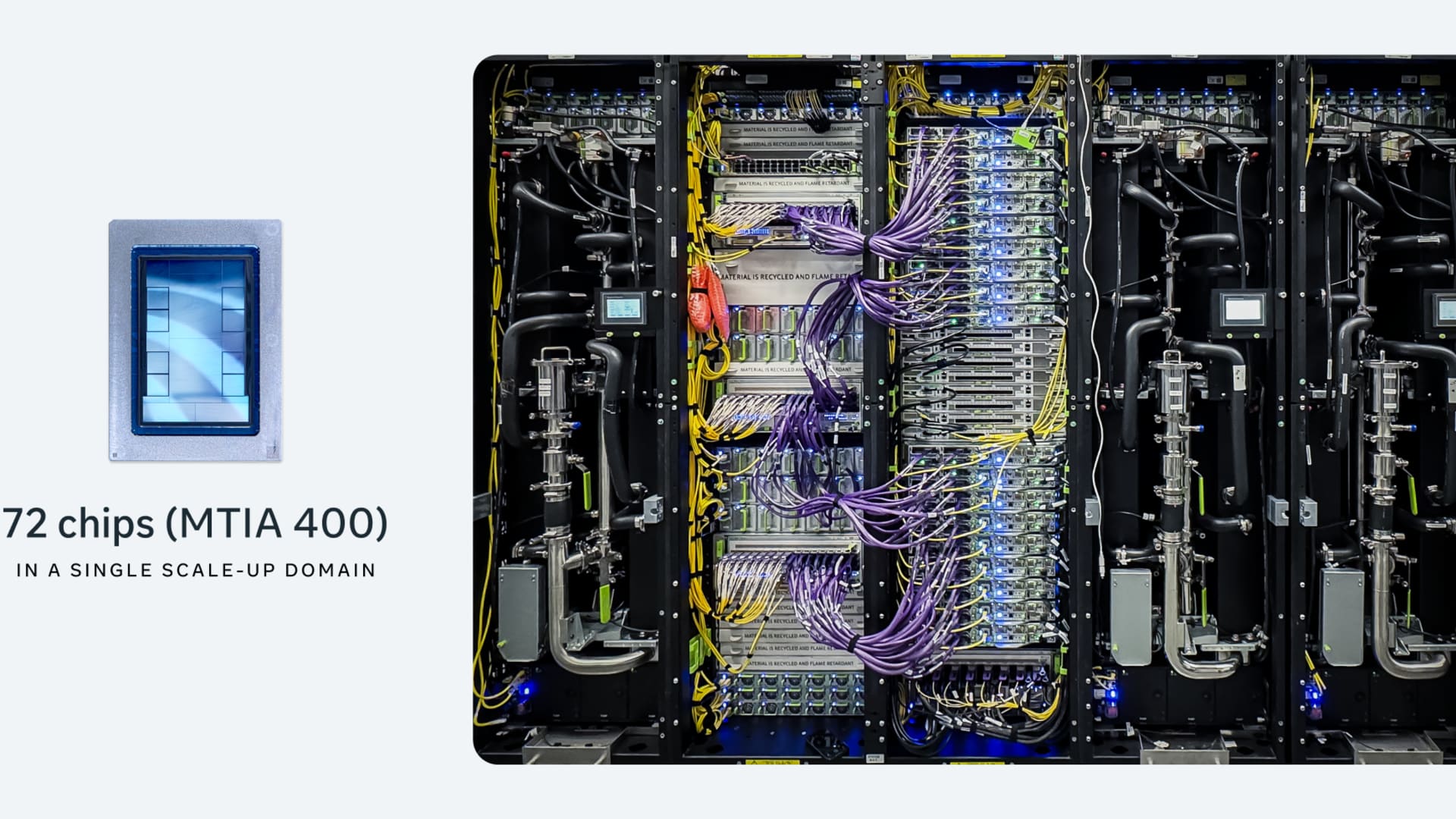
Meta Unveils Custom AI Chips to Expand Data Center Capacity


- Custom Chip Launch: Meta publicly unveiled its custom AI chip series, MTIA, aimed at enhancing data center performance and efficiency, which is expected to significantly boost its competitiveness in the AI sector.
- Chip Deployment Plans: The MTIA 300 chip was deployed a few weeks ago, focusing on training smaller AI models, while the MTIA 400, 450, and 500 chips are expected to be operational by 2027, further enhancing capabilities for generative AI tasks.
- Supply Chain Diversification: By partnering with Taiwan Semiconductor for chip manufacturing, Meta has increased the diversity of its silicon supply, reducing reliance on market price fluctuations and enhancing cost efficiency.
- Data Center Expansion: The 5-gigawatt data center being built in Louisiana is part of Meta's expansion plans, expected to support future AI workloads and further solidify its position in the cloud computing market.
See More

Meta Unveils Four Custom AI Chips for Data Centers

- Chip Release Schedule: Meta has recently unveiled four custom AI chips, with the MTIA 300 already deployed a few weeks ago, while the MTIA 400, MTIA 450, and MTIA 500 are set to be released every six months, aimed at enhancing data center processing capabilities and efficiency.
- Supply Chain Diversification: VP Yee Jiun Song stated that by partnering with Taiwan Semiconductor for chip manufacturing, Meta can achieve diversity in silicon supply, providing insulation against price fluctuations and strengthening the company's competitive position in the market.
- Memory Demand Challenges: While Meta expects the new chips to feature more high-bandwidth memory to support generative AI tasks, Song expressed concerns about HBM supply shortages, emphasizing that the company has adopted a diversified supply chain strategy to address future challenges.
- Data Center Expansion: Meta is accelerating the construction of data centers in Louisiana, Ohio, and Indiana, with plans to fully deploy the new chips by 2027 to meet the growing demand for AI computing.
See More
Citi Raises Micron Technology Price Target to $430 Ahead of Earnings
- Rating Maintained with Price Target Increase: Citi has maintained its Buy rating on Micron Technology while raising the price target from $385 to $430, reflecting optimism ahead of the company's quarterly results, particularly amid surging memory prices and strong AI demand.
- Memory Price Forecast: Citi analysts project that DRAM average selling prices will increase by 171% year-over-year by 2026, with NAND prices also expected to rise by 127%, driven by robust demand from data centers and eSSD, highlighting Micron's competitive position in the market.
- Market Cycle Analysis: Analysts noted that the key investor debate surrounding Micron is whether we are in an extended memory cycle akin to the 1990s Windows PC DRAM cycle, particularly given strong AI demand and limited new fab capacity, which could impact future price trends.
- Competitor Dynamics: Samsung's reported 100% quarter-over-quarter increase in DRAM prices in Q1 2026 has further heightened market interest in Micron, with analysts believing that despite the sharp price hikes in Q1, Micron's stock could still sustain gains this year.
See More
Inverse Cramer Portfolio Outperforms Expectations
- Significant Asset Growth: Since its launch in 2023, Autopilot has seen its assets soar from $2 million to $1.3 billion, indicating strong appeal among retail investors, particularly with 40% of assets allocated to popular meme portfolios, reflecting market acceptance of inverse investment strategies.
- Outstanding Inverse Cramer Performance: The Inverse Cramer portfolio has amassed $56 million in assets on Autopilot and has risen 158% since its inception, significantly outperforming the S&P 500's 68% increase during the same period, showcasing its popularity and effectiveness among investors.
- Market Reaction Analysis: Co-founder Josephs notes that Cramer's investment advice often comes too late, leading investors to pay attention only after stocks have already risen, while the Inverse Cramer portfolio capitalizes on this, successfully profiting from market volatility, demonstrating a deep understanding of market psychology.
- Comparison with Pelosi Portfolio: The Inverse Cramer portfolio has achieved a 90.6% gain over the past two years, surpassing Pelosi's 62.5% increase and ranking third on Autopilot, further solidifying its competitive position in investment strategies.
See More
US Stocks Decline Amid Multiple Pressures
- Stable Inflation Data: The US February CPI rose 2.4% year-over-year, with core CPI at 2.5%, indicating persistent inflation pressures that remain above the Fed's 2% target, potentially influencing future monetary policy decisions.
- Private Credit Market Constraints: JPMorgan Chase's restriction on lending to private credit funds hampers the $1.8 trillion private credit market amid investor exodus, which could exacerbate financial difficulties and impact overall market confidence.
- Mixed Tech Stock Performance: While Oracle surged over 10% due to strong earnings, other tech stocks like Amazon and Microsoft declined, indicating uneven support for the tech sector and potentially affecting investor sentiment towards technology investments.
- Oil Price Surge Impacting Markets: Oil prices rose by 4%, and despite the IEA's decision to release 400 million barrels from strategic reserves to address supply shortages, market reactions were muted, reflecting cautious investor sentiment regarding the oil market outlook.
See More
Morgan Stanley Bullish on Multiple Tech Companies Post Conference
- Deepening AI Discussions: At Morgan Stanley's tech conference in San Francisco, nearly every company delved into their AI strategies, indicating a significant shift towards deeper AI deployment across multiple business units, reflecting the market's heightened focus on AI technologies.
- Optimistic Outlook for Amazon: Analysts set a $300 price target for Amazon, believing its high-margin businesses will drive greater profits and support investments in last-mile delivery and cloud services, despite a recent 7% stock drop due to quarterly earnings misses.
- Strong Demand for Nvidia: Morgan Stanley remains bullish on Nvidia, with analysts noting robust demand for its Blackwell chip series, which is expected to continue pushing upward estimates, while the upcoming Rubin platform is anticipated to maintain Nvidia's leadership in AI computing architecture.
- Growth Potential for Spotify: Analysts highlight Spotify's 15% penetration in the global smartphone market of 3 billion, alongside its advertising business being just a fraction of the $20 billion global radio ad market, indicating substantial future growth opportunities, especially as user engagement continues to rise.
See More
Meta Unveils Custom AI Chips to Expand Data Center Capacity
- Custom Chip Launch: Meta publicly unveiled its custom AI chip series, MTIA, aimed at enhancing data center performance and efficiency, which is expected to significantly boost its competitiveness in the AI sector.
- Chip Deployment Plans: The MTIA 300 chip was deployed a few weeks ago, focusing on training smaller AI models, while the MTIA 400, 450, and 500 chips are expected to be operational by 2027, further enhancing capabilities for generative AI tasks.
- Supply Chain Diversification: By partnering with Taiwan Semiconductor for chip manufacturing, Meta has increased the diversity of its silicon supply, reducing reliance on market price fluctuations and enhancing cost efficiency.
- Data Center Expansion: The 5-gigawatt data center being built in Louisiana is part of Meta's expansion plans, expected to support future AI workloads and further solidify its position in the cloud computing market.
See More
Meta Unveils Four Custom AI Chips for Data Centers
- Chip Release Schedule: Meta has recently unveiled four custom AI chips, with the MTIA 300 already deployed a few weeks ago, while the MTIA 400, MTIA 450, and MTIA 500 are set to be released every six months, aimed at enhancing data center processing capabilities and efficiency.
- Supply Chain Diversification: VP Yee Jiun Song stated that by partnering with Taiwan Semiconductor for chip manufacturing, Meta can achieve diversity in silicon supply, providing insulation against price fluctuations and strengthening the company's competitive position in the market.
- Memory Demand Challenges: While Meta expects the new chips to feature more high-bandwidth memory to support generative AI tasks, Song expressed concerns about HBM supply shortages, emphasizing that the company has adopted a diversified supply chain strategy to address future challenges.
- Data Center Expansion: Meta is accelerating the construction of data centers in Louisiana, Ohio, and Indiana, with plans to fully deploy the new chips by 2027 to meet the growing demand for AI computing.
See More