Tesla's Mixed Financial Results Raise Uncertainty for Future Growth
Written by Emily J. Thompson, Senior Investment Analyst
Updated: 1 hour ago
0mins

Should l Buy TSLA?
Source: Fool
- Financial Performance Review: Tesla reported Q1 2026 revenue of $22.4 billion, falling short of expectations, although its adjusted earnings per share of $0.41 exceeded analyst forecasts, indicating resilience in profitability but raising concerns over overall revenue performance.
- Future Strategic Focus: Tesla is concentrating on driverless taxi and Optimus robot technology, planning to produce 1 million first-generation robots at its California plant and 10 million second-generation units in Texas, which could significantly boost future revenue and profits if successful.
- Competitive Market Pressure: Despite Tesla's ongoing efforts in autonomous driving, its service is currently limited to Austin, Dallas, and Houston, while Alphabet's Waymo completes 500,000 trips weekly, highlighting Tesla's competitive disadvantages in the market.
- Capital Expenditure and Cash Flow: Tesla's capital expenditures were $8.5 billion in 2025 and are expected to triple to $25 billion in 2026, with analysts predicting negative free cash flow, indicating substantial financial pressure as the company pursues its ambitious vision.
Trade with 70% Backtested Accuracy
Stop guessing "Should I Buy TSLA?" and start using high-conviction signals backed by rigorous historical data.
Sign up today to access powerful investing tools and make smarter, data-driven decisions.
Analyst Views on TSLA
Wall Street analysts forecast TSLA stock price to rise
30 Analyst Rating
12 Buy
11 Hold
7 Sell
Hold
Current: 376.020

Low
25.28
Averages
401.93
High
600.00
Current: 376.020
Low
25.28
Averages
401.93
High
600.00
About TSLA
Tesla, Inc. designs, develops, manufactures, sells and leases high-performance fully electric vehicles and energy generation and storage systems, and offers services related to its products. Its segments include automotive, and energy generation and storage. The automotive segment includes the design, development, manufacturing, sales and leasing of high-performance fully electric vehicles, and sales of automotive regulatory credits. It also includes sales of used vehicles, non-warranty maintenance services and collisions, part sales, paid supercharging, insurance services revenue and retail merchandise sales. The energy generation and storage segment include the design, manufacture, installation, sales and leasing of solar energy generation and energy storage products and related services and sales of solar energy systems incentives. Its consumer vehicles include the Model 3, Y, S, X and Cybertruck. Its lithium-ion battery energy storage products include Powerwall and Megapack.
About the author

Emily J. Thompson
Emily J. Thompson, a Chartered Financial Analyst (CFA) with 12 years in investment research, graduated with honors from the Wharton School. Specializing in industrial and technology stocks, she provides in-depth analysis for Intellectia’s earnings and market brief reports.

Tesla's First Semi Truck Begins High-Volume Production

- Production Launch: Tesla announced that its first Semi truck has begun rolling off a high-volume production line, marking a significant advancement in the electric truck market and expected to enhance its market share in commercial electric vehicles.
- New Product Strategy: Tesla plans to achieve large-scale manufacturing of several new products by 2026, which not only showcases its strong R&D capabilities but also lays the groundwork for future revenue growth.
- Competitive Market Position: With the production of the Semi truck, Tesla will be better positioned to meet the increasing demand for electric commercial vehicles, thereby strengthening its competitive stance in the global EV market.
- Strategic Development Goals: The launch of Semi truck production aligns with Tesla's long-term strategic objectives, aiming to promote the adoption of sustainable transportation solutions through innovation and technological advancements.
See More
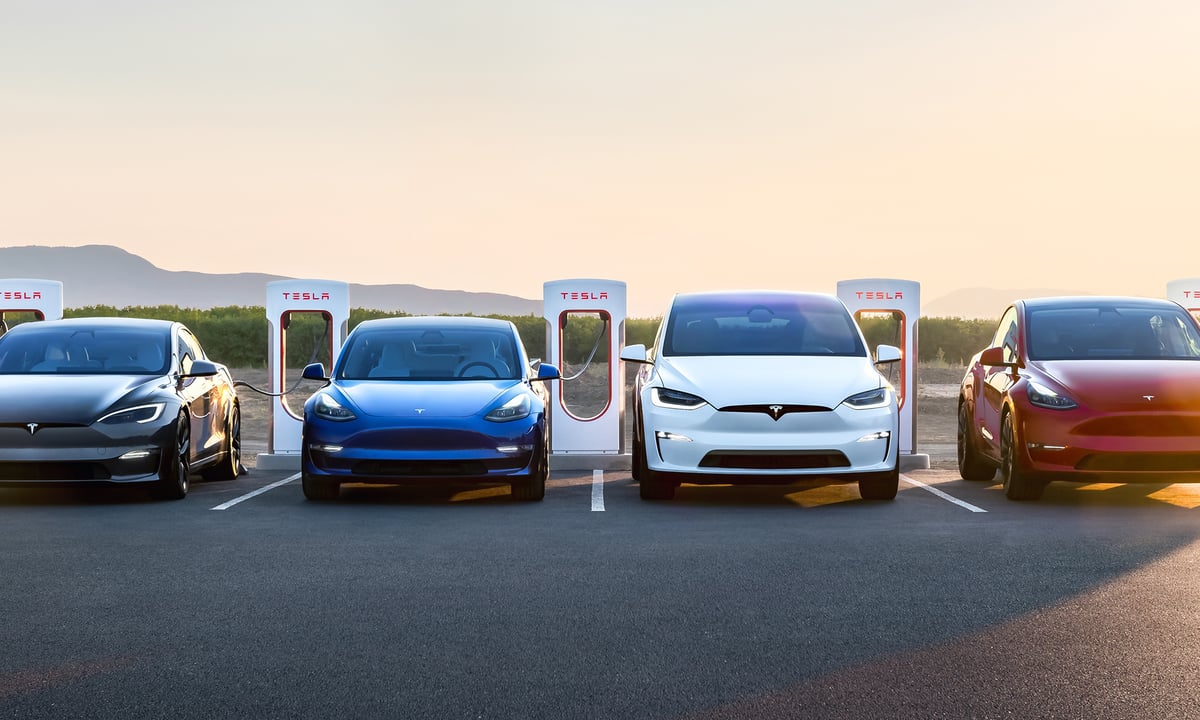
Tesla Increases Capital Spending Amid Lowered Robotaxi Expectations
- Increased Capital Spending: Tesla has raised its capital spending forecast for 2026 from $20 billion to over $25 billion, indicating a strong commitment to future technology investments, although this may lead to increased cash flow pressure in the short term.
- Robotaxi Deployment Delays: CEO Elon Musk stated that the goal is to roll out Robotaxi in 12 states by year-end, significantly lower than the previous expectation of covering 50% of the U.S. population, which may undermine investor confidence in future revenues.
- Hardware 3 Investment Challenges: Tesla's Hardware 3 models are currently unable to achieve unsupervised full self-driving, as acknowledged by Musk, indicating that the company faces technical hurdles in realizing fully autonomous driving, which could impact future profitability.
- Long-Term Growth Potential: Despite short-term challenges, signs of recovery in electric vehicle sales and investments in lithium refining and semiconductor production may support future revenue growth, making the stock attractive for enterprising investors.
See More
Tesla's Mixed Financial Results Raise Uncertainty for Future Growth

- Financial Performance Review: Tesla reported Q1 2026 revenue of $22.4 billion, falling short of expectations, although its adjusted earnings per share of $0.41 exceeded analyst forecasts, indicating resilience in profitability but raising concerns over overall revenue performance.
- Future Strategic Focus: Tesla is concentrating on driverless taxi and Optimus robot technology, planning to produce 1 million first-generation robots at its California plant and 10 million second-generation units in Texas, which could significantly boost future revenue and profits if successful.
- Competitive Market Pressure: Despite Tesla's ongoing efforts in autonomous driving, its service is currently limited to Austin, Dallas, and Houston, while Alphabet's Waymo completes 500,000 trips weekly, highlighting Tesla's competitive disadvantages in the market.
- Capital Expenditure and Cash Flow: Tesla's capital expenditures were $8.5 billion in 2025 and are expected to triple to $25 billion in 2026, with analysts predicting negative free cash flow, indicating substantial financial pressure as the company pursues its ambitious vision.
See More
Tesla Reports Mixed Financial Results

- Financial Performance Analysis: Tesla reported first-quarter 2026 revenue of $22.4 billion, falling short of expectations, although its adjusted earnings per share of $0.41 exceeded analyst forecasts, indicating resilience in profitability.
- Future Outlook: Tesla is focusing on driverless taxi and Optimus robot technology, planning to produce 1 million first-generation robots annually at its California plant and 10 million second-generation units in Texas, which could significantly boost future revenues if successful.
- Surging Capital Expenditures: Tesla expects its cash outlays to triple from $8.5 billion in 2025 to $25 billion in 2026, reflecting an aggressive investment strategy in autonomous driving and AI, despite analysts predicting negative free cash flow.
- Market Competition Pressure: While Tesla's robotaxi service operates only in Austin, Dallas, and Houston, Alphabet's Waymo completes 500,000 trips weekly, highlighting Tesla's competitive disadvantages and the uncertainty surrounding its future prospects.
See More
SAMSUNG ELECTRONICS: STOCKS CONTINUE TO DECLINE, DROPPING 1.8%
Stock Performance: Samsung Electronics shares have fallen by 1.8%, indicating a decline in market confidence.
Market Trends: The drop in shares reflects broader trends affecting the technology sector, potentially influenced by economic factors.
See More
Samsung Electronics Plans to Expand 2nm Chip Production

- Manufacturing Capacity Expansion: Samsung Electronics expects to secure more orders for logic chips using its advanced 2nm process in the near future, indicating a strengthening competitive position in the semiconductor market.
- Customer Negotiation Progress: The company is in talks with major tech customers regarding foundry contracts, reflecting a rising demand in the contract chip manufacturing sector.
- New Factory Construction Plans: Samsung is in preliminary review to build a second fab in Taylor, Texas, aimed at meeting customer demand for potential orders, thereby further expanding its production capabilities.
- Production Timeline: The company plans to start volume production at its first fab in Taylor in 2027, indicating an accelerated strategic positioning within the global semiconductor supply chain.
See More
Tesla's First Semi Truck Begins High-Volume Production
- Production Launch: Tesla announced that its first Semi truck has begun rolling off a high-volume production line, marking a significant advancement in the electric truck market and expected to enhance its market share in commercial electric vehicles.
- New Product Strategy: Tesla plans to achieve large-scale manufacturing of several new products by 2026, which not only showcases its strong R&D capabilities but also lays the groundwork for future revenue growth.
- Competitive Market Position: With the production of the Semi truck, Tesla will be better positioned to meet the increasing demand for electric commercial vehicles, thereby strengthening its competitive stance in the global EV market.
- Strategic Development Goals: The launch of Semi truck production aligns with Tesla's long-term strategic objectives, aiming to promote the adoption of sustainable transportation solutions through innovation and technological advancements.
See More
Tesla Increases Capital Spending Amid Lowered Robotaxi Expectations
- Increased Capital Spending: Tesla has raised its capital spending forecast for 2026 from $20 billion to over $25 billion, indicating a strong commitment to future technology investments, although this may lead to increased cash flow pressure in the short term.
- Robotaxi Deployment Delays: CEO Elon Musk stated that the goal is to roll out Robotaxi in 12 states by year-end, significantly lower than the previous expectation of covering 50% of the U.S. population, which may undermine investor confidence in future revenues.
- Hardware 3 Investment Challenges: Tesla's Hardware 3 models are currently unable to achieve unsupervised full self-driving, as acknowledged by Musk, indicating that the company faces technical hurdles in realizing fully autonomous driving, which could impact future profitability.
- Long-Term Growth Potential: Despite short-term challenges, signs of recovery in electric vehicle sales and investments in lithium refining and semiconductor production may support future revenue growth, making the stock attractive for enterprising investors.
See More
Tesla's Mixed Financial Results Raise Uncertainty for Future Growth
- Financial Performance Review: Tesla reported Q1 2026 revenue of $22.4 billion, falling short of expectations, although its adjusted earnings per share of $0.41 exceeded analyst forecasts, indicating resilience in profitability but raising concerns over overall revenue performance.
- Future Strategic Focus: Tesla is concentrating on driverless taxi and Optimus robot technology, planning to produce 1 million first-generation robots at its California plant and 10 million second-generation units in Texas, which could significantly boost future revenue and profits if successful.
- Competitive Market Pressure: Despite Tesla's ongoing efforts in autonomous driving, its service is currently limited to Austin, Dallas, and Houston, while Alphabet's Waymo completes 500,000 trips weekly, highlighting Tesla's competitive disadvantages in the market.
- Capital Expenditure and Cash Flow: Tesla's capital expenditures were $8.5 billion in 2025 and are expected to triple to $25 billion in 2026, with analysts predicting negative free cash flow, indicating substantial financial pressure as the company pursues its ambitious vision.
See More
Tesla Reports Mixed Financial Results
- Financial Performance Analysis: Tesla reported first-quarter 2026 revenue of $22.4 billion, falling short of expectations, although its adjusted earnings per share of $0.41 exceeded analyst forecasts, indicating resilience in profitability.
- Future Outlook: Tesla is focusing on driverless taxi and Optimus robot technology, planning to produce 1 million first-generation robots annually at its California plant and 10 million second-generation units in Texas, which could significantly boost future revenues if successful.
- Surging Capital Expenditures: Tesla expects its cash outlays to triple from $8.5 billion in 2025 to $25 billion in 2026, reflecting an aggressive investment strategy in autonomous driving and AI, despite analysts predicting negative free cash flow.
- Market Competition Pressure: While Tesla's robotaxi service operates only in Austin, Dallas, and Houston, Alphabet's Waymo completes 500,000 trips weekly, highlighting Tesla's competitive disadvantages and the uncertainty surrounding its future prospects.
See More
SAMSUNG ELECTRONICS: STOCKS CONTINUE TO DECLINE, DROPPING 1.8%
Stock Performance: Samsung Electronics shares have fallen by 1.8%, indicating a decline in market confidence.
Market Trends: The drop in shares reflects broader trends affecting the technology sector, potentially influenced by economic factors.
See More
Samsung Electronics Plans to Expand 2nm Chip Production
- Manufacturing Capacity Expansion: Samsung Electronics expects to secure more orders for logic chips using its advanced 2nm process in the near future, indicating a strengthening competitive position in the semiconductor market.
- Customer Negotiation Progress: The company is in talks with major tech customers regarding foundry contracts, reflecting a rising demand in the contract chip manufacturing sector.
- New Factory Construction Plans: Samsung is in preliminary review to build a second fab in Taylor, Texas, aimed at meeting customer demand for potential orders, thereby further expanding its production capabilities.
- Production Timeline: The company plans to start volume production at its first fab in Taylor in 2027, indicating an accelerated strategic positioning within the global semiconductor supply chain.
See More