STMicroelectronics Targets Over $3 Billion Revenue from Semiconductor Space Business by 2028
Written by Emily J. Thompson, Senior Investment Analyst
Updated: 1 hour ago
0mins
Should l Buy ASTS?
Source: Newsfilter
- Market Potential: STMicroelectronics anticipates over $3 billion in cumulative revenue from its semiconductor space business between 2026 and 2028, driven by surging demand for chips in low-Earth orbit satellite networks, indicating strong growth potential in a rapidly expanding market.
- Significant Revenue Growth: The company projects its low-Earth orbit (LEO) revenue to reach approximately $600 million in 2025, a substantial increase from $175 million in 2021, with expectations of nearing $1 billion in 2026, reflecting ongoing market share expansion.
- Strategic Partnership Advantage: STMicro's decade-long supply partnership with Starlink in satellites and user terminals positions it to maintain nearly 90% market share in a rapidly growing market, showcasing its first-mover advantage.
- Opportunities in China: While STMicro sees significant opportunities in user terminals in China, it cannot engage in satellite technology there due to export controls, limiting its further development in this crucial market.
Trade with 70% Backtested Accuracy
Stop guessing "Should I Buy ASTS?" and start using high-conviction signals backed by rigorous historical data.
Sign up today to access powerful investing tools and make smarter, data-driven decisions.
Analyst Views on ASTS
Wall Street analysts forecast ASTS stock price to rise
8 Analyst Rating
3 Buy
4 Hold
1 Sell
Hold
Current: 70.890

Low
43.00
Averages
91.68
High
137.00
Current: 70.890
Low
43.00
Averages
91.68
High
137.00
About ASTS
AST SpaceMobile, Inc. is engaged in building a global cellular broadband network in space to operate directly with standard, unmodified mobile devices based on its intellectual property (IP) and patent portfolio and designed for both commercial and government applications. The Company is engaged in designing and developing the constellation of BlueBird (BB) satellites and has planned space-based Cellular Broadband network distributed through a constellation of low Earth orbit (LEO) satellites. Its SpaceMobile Service is being designed to provide high-speed cellular broadband services to end-users who are out of terrestrial cellular coverage using existing mobile devices. The Company intends to continue testing capabilities of the BW3 test satellite, including further testing with cellular service providers and the government. The Company has operations in India, Scotland, Spain, and Israel.
About the author

Emily J. Thompson
Emily J. Thompson, a Chartered Financial Analyst (CFA) with 12 years in investment research, graduated with honors from the Wharton School. Specializing in industrial and technology stocks, she provides in-depth analysis for Intellectia’s earnings and market brief reports.

AST SpaceMobile's Satellite Launch Fails Amid Competition
- Launch Failure Impact: AST SpaceMobile's reliance on Blue Origin resulted in a satellite launch failure in April, forcing the company to scrap the expensive satellite and delaying its network deployment, which directly contributed to a 10.8% drop in stock price.
- Insider Selling Pressure: Founder Hiroshi Mikitani sold $271 million worth of stock in mid-April, indicating executive concerns about the company's outlook, which exacerbated bearish sentiment in the market and further depressed the stock price.
- Increased Competition: SpaceX is seeking regulatory approval for direct-to-device internet connectivity, intensifying competition for AST SpaceMobile and potentially undermining its market share and future revenue growth prospects.
- Worrisome Financials: Despite a market cap of $27.5 billion, AST SpaceMobile generated only $71 million in revenue last year, with a negative free cash flow of $1.1 billion over the past twelve months, highlighting significant challenges in achieving profitability.
See More
STMicroelectronics Targets Over $3 Billion Revenue from Semiconductor Space Business by 2028

- Market Potential: STMicroelectronics anticipates over $3 billion in cumulative revenue from its semiconductor space business between 2026 and 2028, driven by surging demand for chips in low-Earth orbit satellite networks, indicating strong growth potential in a rapidly expanding market.
- Significant Revenue Growth: The company projects its low-Earth orbit (LEO) revenue to reach approximately $600 million in 2025, a substantial increase from $175 million in 2021, with expectations of nearing $1 billion in 2026, reflecting ongoing market share expansion.
- Strategic Partnership Advantage: STMicro's decade-long supply partnership with Starlink in satellites and user terminals positions it to maintain nearly 90% market share in a rapidly growing market, showcasing its first-mover advantage.
- Opportunities in China: While STMicro sees significant opportunities in user terminals in China, it cannot engage in satellite technology there due to export controls, limiting its further development in this crucial market.
See More
AST SpaceMobile Shares Drop Due to Multiple Factors
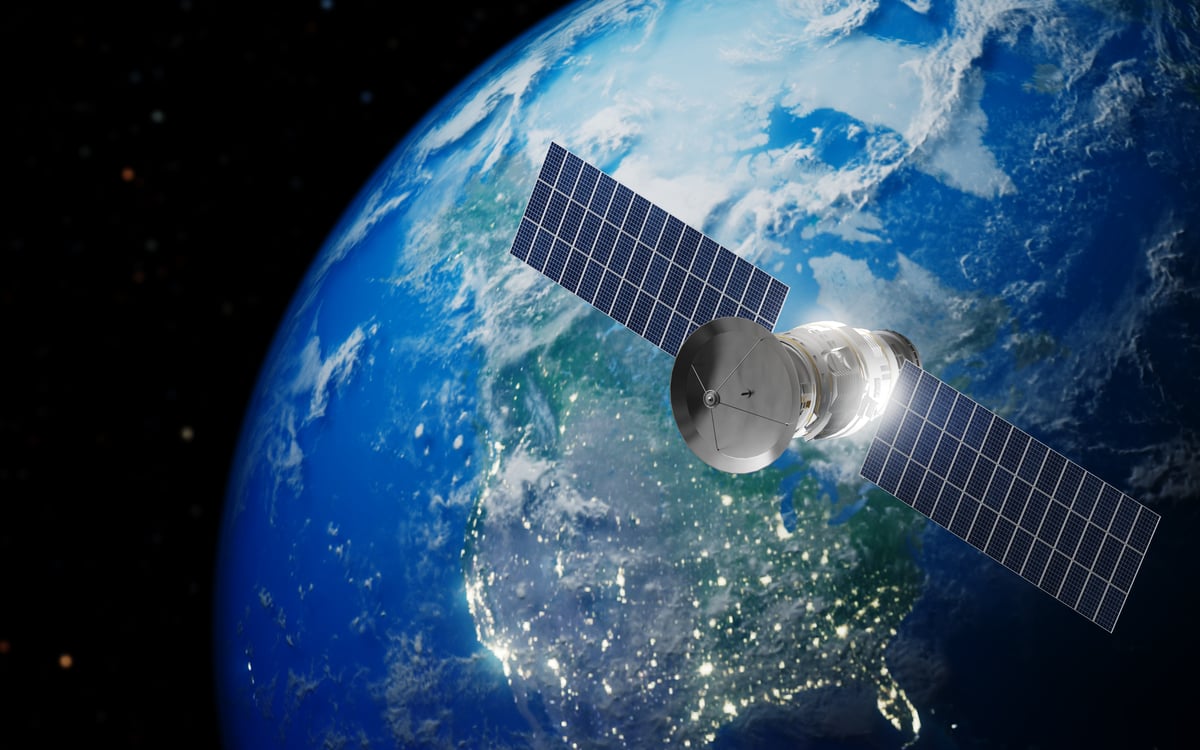
- Stock Price Decline: AST SpaceMobile's shares fell 10.8% in April, primarily due to a Blue Origin launch failure, significant insider selling, and increasing competition from SpaceX, which shifted market sentiment to bearish and impacted investor confidence.
- Market Capitalization vs. Revenue: Despite a market cap of $27.5 billion, AST SpaceMobile generated only $71 million in revenue last year, indicating a severe lack of profitability and suggesting that market expectations for future growth may be overly optimistic.
- Insider Selling: Founder Hiroshi Mikitani sold $271 million worth of stock in mid-April, raising concerns about the company's outlook and exacerbating the stock's decline as investors reacted to the insider selling.
- Increased Competitive Pressure: With SpaceX seeking regulatory approval for direct-to-device internet connectivity, AST SpaceMobile faces intensifying competition, and if it fails to win the satellite connectivity race, its stock could fall further.
See More
FCC Updates Rules to Enhance Space Broadband Capacity
- Capacity Enhancement: The FCC's revised spectrum-sharing rules are expected to enable up to seven times more capacity for space broadband networks, unlocking over $2 billion in economic benefits, thereby driving growth for companies involved in satellite internet and related infrastructure.
- Updated Technical Standards: The new regulations allow satellite operators to coordinate interference protection using modern technical standards, replacing outdated systems that limited transmission power for low-Earth orbit satellites, thus facilitating the rollout of faster, lower-latency satellite internet in rural areas.
- AST SpaceMobile Expansion Plans: AST SpaceMobile has received FCC approval to deploy 223 additional satellites to enhance its network, with plans to launch 45 satellites this year, further promoting mobile connectivity services from orbit.
- Positive Market Reaction: Following the regulatory update, space stocks such as Rocket Lab, AST SpaceMobile, Firefly Aerospace, and Intuitive Machines saw significant gains, reflecting market optimism about the future of space broadband, with RKLB rising 7% and ASTS increasing by 6%.
See More
Investor Sentiments on Oklo and AST SpaceMobile

- Oklo Stock Performance: Investors view Oklo as having excessive trading volatility, suggesting that while it can be held temporarily, further purchases are not recommended, which may lead to decreased confidence in its future performance.
- Gladstone Land Growth Outlook: Gladstone Land is perceived as lacking growth potential, with investors explicitly stating their unwillingness to invest, which could impact its market appeal and future financing capabilities.
- AST SpaceMobile's Investment Appeal: Jim Cramer expresses optimism about AST SpaceMobile, believing its potential in the space sector warrants investment, potentially attracting more speculative investors' attention.
- Market Sentiment Analysis: The overall market sentiment towards these companies varies, reflecting investors' differing risk appetites and growth expectations across sectors, which may influence future capital flows.
See More

Amazon Drives Growth in Satellite Phone Market
- Surge in Demand: Amazon CEO Andy Jassy highlighted during the earnings call that rising expectations for seamless global connectivity are driving demand for satellite phones, particularly in remote areas, indicating a significant market opportunity.
- Competitive Landscape: AT&T CEO John Stankey stated that the U.S. satellite phone market is likely to support multiple low-Earth orbit constellation providers rather than a single dominant operator, suggesting increased competition in the sector.
- FCC Authorization for ASTS: AST SpaceMobile has received authorization from the FCC to deploy 223 satellites to support its coverage network, further solidifying its position within the emerging hybrid terrestrial-satellite coverage model.
- Rising Investor Interest: As demand for direct-to-device connectivity increases, investor interest in space ecosystem companies, including ASTS, RKLB, FLY, and LUNR, is on the rise, reflecting optimistic market expectations for future growth.
See More
AST SpaceMobile's Satellite Launch Fails Amid Competition
- Launch Failure Impact: AST SpaceMobile's reliance on Blue Origin resulted in a satellite launch failure in April, forcing the company to scrap the expensive satellite and delaying its network deployment, which directly contributed to a 10.8% drop in stock price.
- Insider Selling Pressure: Founder Hiroshi Mikitani sold $271 million worth of stock in mid-April, indicating executive concerns about the company's outlook, which exacerbated bearish sentiment in the market and further depressed the stock price.
- Increased Competition: SpaceX is seeking regulatory approval for direct-to-device internet connectivity, intensifying competition for AST SpaceMobile and potentially undermining its market share and future revenue growth prospects.
- Worrisome Financials: Despite a market cap of $27.5 billion, AST SpaceMobile generated only $71 million in revenue last year, with a negative free cash flow of $1.1 billion over the past twelve months, highlighting significant challenges in achieving profitability.
See More
STMicroelectronics Targets Over $3 Billion Revenue from Semiconductor Space Business by 2028
- Market Potential: STMicroelectronics anticipates over $3 billion in cumulative revenue from its semiconductor space business between 2026 and 2028, driven by surging demand for chips in low-Earth orbit satellite networks, indicating strong growth potential in a rapidly expanding market.
- Significant Revenue Growth: The company projects its low-Earth orbit (LEO) revenue to reach approximately $600 million in 2025, a substantial increase from $175 million in 2021, with expectations of nearing $1 billion in 2026, reflecting ongoing market share expansion.
- Strategic Partnership Advantage: STMicro's decade-long supply partnership with Starlink in satellites and user terminals positions it to maintain nearly 90% market share in a rapidly growing market, showcasing its first-mover advantage.
- Opportunities in China: While STMicro sees significant opportunities in user terminals in China, it cannot engage in satellite technology there due to export controls, limiting its further development in this crucial market.
See More
AST SpaceMobile Shares Drop Due to Multiple Factors
- Stock Price Decline: AST SpaceMobile's shares fell 10.8% in April, primarily due to a Blue Origin launch failure, significant insider selling, and increasing competition from SpaceX, which shifted market sentiment to bearish and impacted investor confidence.
- Market Capitalization vs. Revenue: Despite a market cap of $27.5 billion, AST SpaceMobile generated only $71 million in revenue last year, indicating a severe lack of profitability and suggesting that market expectations for future growth may be overly optimistic.
- Insider Selling: Founder Hiroshi Mikitani sold $271 million worth of stock in mid-April, raising concerns about the company's outlook and exacerbating the stock's decline as investors reacted to the insider selling.
- Increased Competitive Pressure: With SpaceX seeking regulatory approval for direct-to-device internet connectivity, AST SpaceMobile faces intensifying competition, and if it fails to win the satellite connectivity race, its stock could fall further.
See More
FCC Updates Rules to Enhance Space Broadband Capacity
- Capacity Enhancement: The FCC's revised spectrum-sharing rules are expected to enable up to seven times more capacity for space broadband networks, unlocking over $2 billion in economic benefits, thereby driving growth for companies involved in satellite internet and related infrastructure.
- Updated Technical Standards: The new regulations allow satellite operators to coordinate interference protection using modern technical standards, replacing outdated systems that limited transmission power for low-Earth orbit satellites, thus facilitating the rollout of faster, lower-latency satellite internet in rural areas.
- AST SpaceMobile Expansion Plans: AST SpaceMobile has received FCC approval to deploy 223 additional satellites to enhance its network, with plans to launch 45 satellites this year, further promoting mobile connectivity services from orbit.
- Positive Market Reaction: Following the regulatory update, space stocks such as Rocket Lab, AST SpaceMobile, Firefly Aerospace, and Intuitive Machines saw significant gains, reflecting market optimism about the future of space broadband, with RKLB rising 7% and ASTS increasing by 6%.
See More
Investor Sentiments on Oklo and AST SpaceMobile
- Oklo Stock Performance: Investors view Oklo as having excessive trading volatility, suggesting that while it can be held temporarily, further purchases are not recommended, which may lead to decreased confidence in its future performance.
- Gladstone Land Growth Outlook: Gladstone Land is perceived as lacking growth potential, with investors explicitly stating their unwillingness to invest, which could impact its market appeal and future financing capabilities.
- AST SpaceMobile's Investment Appeal: Jim Cramer expresses optimism about AST SpaceMobile, believing its potential in the space sector warrants investment, potentially attracting more speculative investors' attention.
- Market Sentiment Analysis: The overall market sentiment towards these companies varies, reflecting investors' differing risk appetites and growth expectations across sectors, which may influence future capital flows.
See More
Amazon Drives Growth in Satellite Phone Market
- Surge in Demand: Amazon CEO Andy Jassy highlighted during the earnings call that rising expectations for seamless global connectivity are driving demand for satellite phones, particularly in remote areas, indicating a significant market opportunity.
- Competitive Landscape: AT&T CEO John Stankey stated that the U.S. satellite phone market is likely to support multiple low-Earth orbit constellation providers rather than a single dominant operator, suggesting increased competition in the sector.
- FCC Authorization for ASTS: AST SpaceMobile has received authorization from the FCC to deploy 223 satellites to support its coverage network, further solidifying its position within the emerging hybrid terrestrial-satellite coverage model.
- Rising Investor Interest: As demand for direct-to-device connectivity increases, investor interest in space ecosystem companies, including ASTS, RKLB, FLY, and LUNR, is on the rise, reflecting optimistic market expectations for future growth.
See More