Starbucks Advances Turnaround with New Initiatives
Written by Emily J. Thompson, Senior Investment Analyst
Updated: 13 hours ago
0mins
Should l Buy SBUX?
Source: Yahoo Finance
- Kiosk Testing: Starbucks is testing ordering kiosks and scheduled app orders in high-traffic licensed locations like airports, aiming to enhance service quality and throughput, thereby alleviating long lines and labor strain while improving overall operational efficiency.
- Restructured Licensing Model: By restructuring its licensed-store model to focus on segments such as travel and healthcare, alongside the GROW program, Starbucks aims to improve coffeehouse performance and address service bottlenecks, thereby enhancing its competitive position in the market.
- Revenue and Earnings Projections: Starbucks projects $45.5 billion in revenue and $4.6 billion in earnings by 2028, necessitating a 7.5% annual revenue growth and a $2 billion increase in earnings, reflecting the company's confidence in its future growth trajectory.
- Investment Risks and Opportunities: While the introduction of new technologies may yield short-term benefits, rising labor costs and ongoing labor disputes remain significant risks that could compress profitability, necessitating careful evaluation by investors regarding their long-term impact on the company's performance.
Trade with 70% Backtested Accuracy
Stop guessing "Should I Buy SBUX?" and start using high-conviction signals backed by rigorous historical data.
Sign up today to access powerful investing tools and make smarter, data-driven decisions.
Analyst Views on SBUX
Wall Street analysts forecast SBUX stock price to rise
21 Analyst Rating
12 Buy
7 Hold
2 Sell
Moderate Buy
Current: 91.220

Low
59.00
Averages
96.12
High
115.00
Current: 91.220
Low
59.00
Averages
96.12
High
115.00
About SBUX
Starbucks Corporations is a roaster, marketer, and retailer of specialty coffee globally. Its North America segment includes the United States and Canada. Its International segment includes China, Japan, Asia Pacific, Europe, Middle East and Africa, Latin America, and the Caribbean. Its North America and International segments include both Company-operated and licensed stores. The Channel Development segment includes roasted whole bean and ground coffees, Starbucks-branded single-serve products, a variety of ready-to-drink beverages, such as Frappuccino and Starbucks Doubleshot, foodservice products, and other branded products sold outside the Company-operated and licensed stores. A large portion of its Channel Development business operates under a licensed model of the Global Coffee Alliance with Nestle, while its global ready-to-drink businesses operate under collaborative relationships with PepsiCo, Inc., Tingyi-Ashi Beverages Holding Co., Ltd., Arla Foods amba, Nestle, and others.
About the author

Emily J. Thompson
Emily J. Thompson, a Chartered Financial Analyst (CFA) with 12 years in investment research, graduated with honors from the Wharton School. Specializing in industrial and technology stocks, she provides in-depth analysis for Intellectia’s earnings and market brief reports.

Starbucks Advances Turnaround with New Initiatives

- Kiosk Testing: Starbucks is testing ordering kiosks and scheduled app orders in high-traffic licensed locations like airports, aiming to enhance service quality and throughput, thereby alleviating long lines and labor strain while improving overall operational efficiency.
- Restructured Licensing Model: By restructuring its licensed-store model to focus on segments such as travel and healthcare, alongside the GROW program, Starbucks aims to improve coffeehouse performance and address service bottlenecks, thereby enhancing its competitive position in the market.
- Revenue and Earnings Projections: Starbucks projects $45.5 billion in revenue and $4.6 billion in earnings by 2028, necessitating a 7.5% annual revenue growth and a $2 billion increase in earnings, reflecting the company's confidence in its future growth trajectory.
- Investment Risks and Opportunities: While the introduction of new technologies may yield short-term benefits, rising labor costs and ongoing labor disputes remain significant risks that could compress profitability, necessitating careful evaluation by investors regarding their long-term impact on the company's performance.
See More
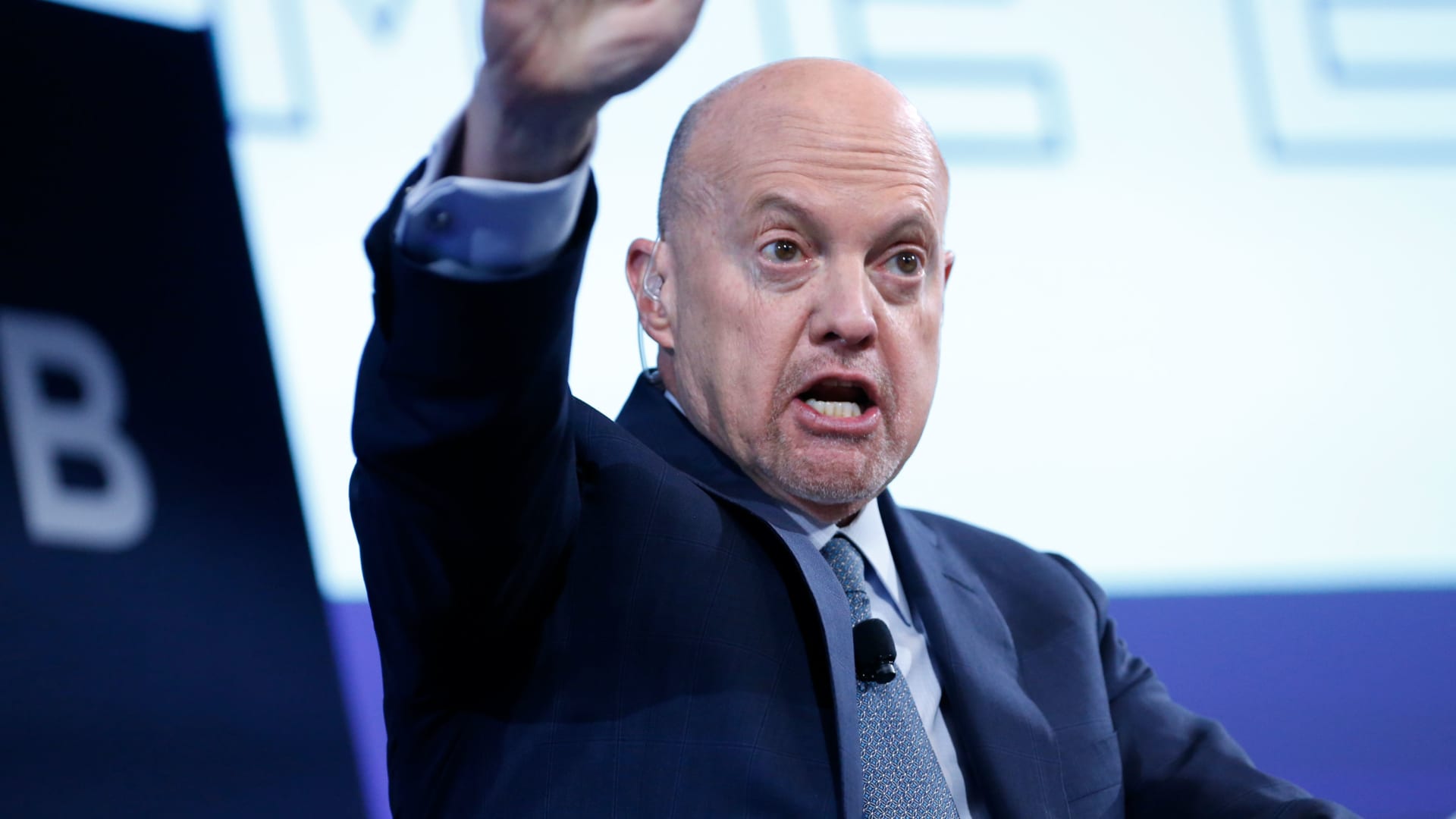
CNBC Investing Club March Meeting Overview


- Energy Stocks Surge: Following the outbreak of war in Iran, energy stocks, particularly fertilizer manufacturers, have shown strong performance, indicating robust market demand that could drive profitability for related companies.
- AWS Growth Acceleration: Amazon's cloud unit AWS is no longer lagging behind Microsoft Azure, thanks to its partnership with Anthropic, with expectations for next quarter's margins to exceed market forecasts, boosting investor confidence.
- Cybersecurity Challenges: CrowdStrike has been affected by turmoil in the software market, but the CEO highlighted the positive impact of AI on cyberattacks, indicating long-term growth potential in the security sector, despite high stock prices.
- Healthcare Sector Risks: Eli Lilly faces pricing pressure from competitor Novo Nordisk, but the company is prepared to counter this by increasing volume, with the upcoming launch of its GLP-1 obesity drug expected to drive growth.
See More

Analysis of XLY ETF's 52-Week Trading Range

- 52-Week Trading Range: The XLY ETF has a 52-week low of $86.55 and a high of $125.01, with the latest trade at $106.75, indicating volatility and investor sentiment in the current market.
- Technical Analysis Tool: Comparing the latest share price to the 200-day moving average provides investors with deeper insights into market trends and timing for investment decisions.
- ETF Unit Trading Mechanism: Exchange-traded funds (ETFs) trade like stocks, where investors buy and sell 'units' that can be created or destroyed based on demand, impacting liquidity and market performance.
- Inflows and Outflows Monitoring: Weekly monitoring of changes in shares outstanding helps identify ETFs experiencing significant inflows (new units created) or outflows (old units destroyed), allowing assessment of their impact on underlying assets.
See More

Starbucks Tests New Ordering Channels to Enhance Service Efficiency
- New Ordering Channel Testing: Starbucks is testing new ordering channels in licensed stores, including ordering kiosks and app-scheduled orders, aimed at enhancing service efficiency in high-traffic areas, thereby reducing customer wait times and improving overall experience.
- Consistency Experience Goal: The company aims for customers to enjoy a consistent Starbucks experience across various locations such as airports, hospitals, and hotels, by optimizing order processes and utilizing AI tools to enhance customer loyalty.
- Strategic Reset Measures: As part of its strategic reset, Starbucks is testing order-ahead scheduling and order sequencing, employing a 'test-and-scale' approach to implement new store formats that support long-term growth and restore in-store traffic.
- Investment and Upgrade Plans: Starbucks plans to trim some mobile-only locations while increasing investments in staffing and store upgrades, aiming to attract more customers and drive business recovery through improved service quality and store design.
See More

On Holding Shares Plunge 11% After CEO Resignation Announcement

- Leadership Change: On Holding announced that CEO Martin Hoffmann will step down on May 1, resulting in an 11% drop in stock price following the news, as the market reacted sharply to Hoffmann's departure, who was seen as the 'face' of the company for investors.
- Co-CEO Appointment: Co-founders David Allemann and Caspar Coppetti will assume Co-CEO roles; however, the market expresses concern over this leadership transition, particularly as it marks the second significant C-suite change within a year.
- Strategic Stability Concerns: Despite record sales projected for 2025, investors are wary of altering the 'Dream On' strategy during a critical phase of global scaling, reflecting apprehensions about the company's long-term stability and execution capabilities.
- Market Reaction: This leadership shuffle has sparked questions about the company's future direction, with heightened sensitivity among investors regarding executive changes, potentially impacting the company's performance in a highly competitive market.
See More

On Holding CEO Hoffmann's Departure Triggers Stock Plunge
- Executive Turnover Impact: The resignation of CEO Hoffmann led to an 11% drop in On Holding's stock price following the announcement, indicating a significant decline in investor confidence regarding the company's governance and leadership stability.
- Co-CEO Model: Co-founders Allemann and Coppetti will assume Co-CEO roles, which could yield long-term benefits; however, the immediate risks associated with this leadership change raise concerns among investors about execution and stability.
- Strategic Transition Risks: Investors are wary of shifting the 'Dream On' strategy during a pivotal global scaling phase, despite record sales projected for 2025, reflecting a broader apprehension about the company's future direction.
- Frequent Leadership Changes: This marks the second major executive change within a year, and the ongoing turnover in leadership may adversely affect the company's long-term stability and operational execution, leading to heightened investor anxiety.
See More
Starbucks Advances Turnaround with New Initiatives
- Kiosk Testing: Starbucks is testing ordering kiosks and scheduled app orders in high-traffic licensed locations like airports, aiming to enhance service quality and throughput, thereby alleviating long lines and labor strain while improving overall operational efficiency.
- Restructured Licensing Model: By restructuring its licensed-store model to focus on segments such as travel and healthcare, alongside the GROW program, Starbucks aims to improve coffeehouse performance and address service bottlenecks, thereby enhancing its competitive position in the market.
- Revenue and Earnings Projections: Starbucks projects $45.5 billion in revenue and $4.6 billion in earnings by 2028, necessitating a 7.5% annual revenue growth and a $2 billion increase in earnings, reflecting the company's confidence in its future growth trajectory.
- Investment Risks and Opportunities: While the introduction of new technologies may yield short-term benefits, rising labor costs and ongoing labor disputes remain significant risks that could compress profitability, necessitating careful evaluation by investors regarding their long-term impact on the company's performance.
See More
CNBC Investing Club March Meeting Overview
- Energy Stocks Surge: Following the outbreak of war in Iran, energy stocks, particularly fertilizer manufacturers, have shown strong performance, indicating robust market demand that could drive profitability for related companies.
- AWS Growth Acceleration: Amazon's cloud unit AWS is no longer lagging behind Microsoft Azure, thanks to its partnership with Anthropic, with expectations for next quarter's margins to exceed market forecasts, boosting investor confidence.
- Cybersecurity Challenges: CrowdStrike has been affected by turmoil in the software market, but the CEO highlighted the positive impact of AI on cyberattacks, indicating long-term growth potential in the security sector, despite high stock prices.
- Healthcare Sector Risks: Eli Lilly faces pricing pressure from competitor Novo Nordisk, but the company is prepared to counter this by increasing volume, with the upcoming launch of its GLP-1 obesity drug expected to drive growth.
See More
Analysis of XLY ETF's 52-Week Trading Range
- 52-Week Trading Range: The XLY ETF has a 52-week low of $86.55 and a high of $125.01, with the latest trade at $106.75, indicating volatility and investor sentiment in the current market.
- Technical Analysis Tool: Comparing the latest share price to the 200-day moving average provides investors with deeper insights into market trends and timing for investment decisions.
- ETF Unit Trading Mechanism: Exchange-traded funds (ETFs) trade like stocks, where investors buy and sell 'units' that can be created or destroyed based on demand, impacting liquidity and market performance.
- Inflows and Outflows Monitoring: Weekly monitoring of changes in shares outstanding helps identify ETFs experiencing significant inflows (new units created) or outflows (old units destroyed), allowing assessment of their impact on underlying assets.
See More
Starbucks Tests New Ordering Channels to Enhance Service Efficiency
- New Ordering Channel Testing: Starbucks is testing new ordering channels in licensed stores, including ordering kiosks and app-scheduled orders, aimed at enhancing service efficiency in high-traffic areas, thereby reducing customer wait times and improving overall experience.
- Consistency Experience Goal: The company aims for customers to enjoy a consistent Starbucks experience across various locations such as airports, hospitals, and hotels, by optimizing order processes and utilizing AI tools to enhance customer loyalty.
- Strategic Reset Measures: As part of its strategic reset, Starbucks is testing order-ahead scheduling and order sequencing, employing a 'test-and-scale' approach to implement new store formats that support long-term growth and restore in-store traffic.
- Investment and Upgrade Plans: Starbucks plans to trim some mobile-only locations while increasing investments in staffing and store upgrades, aiming to attract more customers and drive business recovery through improved service quality and store design.
See More
On Holding Shares Plunge 11% After CEO Resignation Announcement
- Leadership Change: On Holding announced that CEO Martin Hoffmann will step down on May 1, resulting in an 11% drop in stock price following the news, as the market reacted sharply to Hoffmann's departure, who was seen as the 'face' of the company for investors.
- Co-CEO Appointment: Co-founders David Allemann and Caspar Coppetti will assume Co-CEO roles; however, the market expresses concern over this leadership transition, particularly as it marks the second significant C-suite change within a year.
- Strategic Stability Concerns: Despite record sales projected for 2025, investors are wary of altering the 'Dream On' strategy during a critical phase of global scaling, reflecting apprehensions about the company's long-term stability and execution capabilities.
- Market Reaction: This leadership shuffle has sparked questions about the company's future direction, with heightened sensitivity among investors regarding executive changes, potentially impacting the company's performance in a highly competitive market.
See More
On Holding CEO Hoffmann's Departure Triggers Stock Plunge
- Executive Turnover Impact: The resignation of CEO Hoffmann led to an 11% drop in On Holding's stock price following the announcement, indicating a significant decline in investor confidence regarding the company's governance and leadership stability.
- Co-CEO Model: Co-founders Allemann and Coppetti will assume Co-CEO roles, which could yield long-term benefits; however, the immediate risks associated with this leadership change raise concerns among investors about execution and stability.
- Strategic Transition Risks: Investors are wary of shifting the 'Dream On' strategy during a pivotal global scaling phase, despite record sales projected for 2025, reflecting a broader apprehension about the company's future direction.
- Frequent Leadership Changes: This marks the second major executive change within a year, and the ongoing turnover in leadership may adversely affect the company's long-term stability and operational execution, leading to heightened investor anxiety.
See More