SpaceX IPO Expected to Generate Massive Capital
Written by Emily J. Thompson, Senior Investment Analyst
Updated: 1 hour ago
0mins
Should l Buy NVDA?
Source: Fool
- Massive Capital Generation: The upcoming SpaceX IPO is expected to raise between $50 billion and $75 billion, which will be directly deposited into the company's bank account, enabling significant investments in future space exploration and technological advancements.
- Positive Impact on Nvidia: SpaceX is a major customer of Nvidia, and it is expected to continue purchasing AI chips at scale, especially as SpaceX plans to invest billions in building in-house production capabilities over the next few years, further solidifying Nvidia's market dominance.
- Indirect Support for Tesla: The IPO proceeds may be used by SpaceX to purchase Tesla's robotics and battery storage solutions, thereby enhancing Tesla's development in autonomous driving and energy storage, particularly through the integration of technology with xAI.
- Growth Potential for xAI: Tesla's investment in xAI will benefit from the influx of capital from SpaceX, which is expected to accelerate the development of xAI's models, providing critical support for Tesla's autonomous driving initiatives and positioning it advantageously in the future robotaxi market.
Trade with 70% Backtested Accuracy
Stop guessing "Should I Buy NVDA?" and start using high-conviction signals backed by rigorous historical data.
Sign up today to access powerful investing tools and make smarter, data-driven decisions.
Analyst Views on NVDA
Wall Street analysts forecast NVDA stock price to rise
41 Analyst Rating
39 Buy
1 Hold
1 Sell
Strong Buy
Current: 199.570

Low
200.00
Averages
264.97
High
352.00
Current: 199.570
Low
200.00
Averages
264.97
High
352.00
About NVDA
NVIDIA Corporation is an artificial intelligence (AI) infrastructure company. The Company is engaged in accelerated computing to help solve the challenging computational problems. Its segments include Compute & Networking and Graphics. The Compute & Networking segment includes its Data Center accelerated computing and networking platforms and AI solutions and software, and automotive platforms and autonomous and electric vehicle solutions, including software. The Graphics segment includes GeForce GPUs for gaming and personal computers (PCs), and Quadro/NVIDIA RTX GPUs for enterprise workstation graphics. Its technology stack includes the foundational NVIDIA CUDA development platform that runs on all NVIDIA GPUs, as well as hundreds of domain-specific software libraries, frameworks, algorithms, software development kits (SDKs), and application programming interfaces (APIs). Its platforms address four markets, which include Data Center, Gaming, Professional Visualization, and Automotive.
About the author

Emily J. Thompson
Emily J. Thompson, a Chartered Financial Analyst (CFA) with 12 years in investment research, graduated with honors from the Wharton School. Specializing in industrial and technology stocks, she provides in-depth analysis for Intellectia’s earnings and market brief reports.

Nvidia's Earnings Growth Expected to Accelerate Over Next Three Years

- Market Share Expansion: Nvidia's upcoming Vera Rubin processors are expected to reduce inference costs by 90%, significantly enhancing its competitiveness in the AI inference market, with projected data center sales reaching $1 trillion in 2026 and 2027, a substantial increase from the previous $500 billion forecast.
- Strong Profitability: Nvidia anticipates a 75% increase in earnings per share for the current fiscal year, reaching $8.34, far exceeding the tech sector's estimated 44% year-over-year growth, showcasing its robust profitability and market leadership in the AI sector.
- Partnership Growth: Nvidia has established partnerships with leading AI companies such as Anthropic, Meta, xAI, and OpenAI, providing a stable demand source as these companies see strong adoption of their AI inference applications, further solidifying Nvidia's market position.
- Long-Term Growth Potential: Despite Nvidia's current P/E ratio of 42.5, significantly higher than the Nasdaq-100's 33.4, its strong earnings growth potential justifies this valuation, with expectations of surpassing a $10 trillion market cap within the next three years, attracting more investor interest.
See More
NVIDIA Has Not Sold H200 Chips to Chinese Firms Amid Trade Concerns
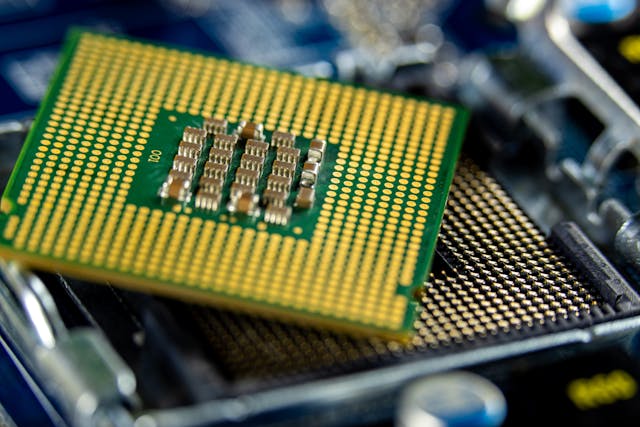
- Sales Delay: NVIDIA has not sold its H200 AI chips to Chinese enterprises, as reported by Secretary Howard Lutnick, who attributed the delay to China's government banning acquisitions to favor domestic market investment, highlighting the tension in US-China trade relations.
- Policy Impact: The Trump administration approved shipments of H200 chips to China in January with conditions, raising concerns among US lawmakers about potential military applications, which has further complicated sales terms and slowed supply chains.
- Export Restrictions: Lutnick mentioned that the affiliates rule blocking exports to thousands of Chinese businesses is still under consideration, linked to broader trade negotiations, indicating that policy uncertainty may affect NVIDIA's market strategy.
- Investment Potential: While NVIDIA is recognized as one of the best data center hardware stocks, analysts suggest that certain AI stocks may offer greater upside potential and lower downside risk, reflecting a diverse outlook on the AI sector.
See More

SpaceX IPO Expected to Generate Massive Capital

- Massive Capital Generation: The upcoming SpaceX IPO is expected to raise between $50 billion and $75 billion, which will be directly deposited into the company's bank account, enabling significant investments in future space exploration and technological advancements.
- Positive Impact on Nvidia: SpaceX is a major customer of Nvidia, and it is expected to continue purchasing AI chips at scale, especially as SpaceX plans to invest billions in building in-house production capabilities over the next few years, further solidifying Nvidia's market dominance.
- Indirect Support for Tesla: The IPO proceeds may be used by SpaceX to purchase Tesla's robotics and battery storage solutions, thereby enhancing Tesla's development in autonomous driving and energy storage, particularly through the integration of technology with xAI.
- Growth Potential for xAI: Tesla's investment in xAI will benefit from the influx of capital from SpaceX, which is expected to accelerate the development of xAI's models, providing critical support for Tesla's autonomous driving initiatives and positioning it advantageously in the future robotaxi market.
See More

Ethereum's Wealth-Building Potential Analysis

- Market Position: Ethereum, with a market cap of $280 billion, stands as the second-largest cryptocurrency, having made many early investors wealthy; however, its future as a widely used financial technology remains uncertain.
- Competitive Pressure: In payment processing and stablecoin settlement, Solana has captured 32.6% of the market share, surpassing Ethereum's 27.8%, primarily due to transaction fees under $0.01 compared to Ethereum's $3.90 for a simple token swap, leading to traffic shifting to cheaper platforms.
- Application Migration: In the decentralized physical infrastructure networks (DePIN) sector, several flagship projects have migrated from Ethereum to Solana due to throughput and fee issues, undermining Ethereum's potential to become a fintech solution for average consumers.
- Investment Outlook: While Ethereum leads in tokenized real-world assets with $16.6 billion on-chain distribution, its high fees and slow transaction speeds limit its potential as a wealth-building tool, prompting investors to maintain realistic expectations.
See More

SpaceX Aims to Raise $75 Billion Through IPO
- IPO Fundraising Scale: SpaceX plans to raise between $50 billion and $75 billion through its IPO, which will directly enhance its capital reserves to support future expansion and technological advancements.
- Impact on Nvidia: SpaceX is expected to continue purchasing Nvidia's AI chips at scale, with projected spending in the billions over the next few years to meet its high-performance computing needs, thereby reinforcing Nvidia's dominant position in the AI market.
- Potential Gains for Tesla: SpaceX may place multi-billion dollar orders with Tesla for robotics and energy storage solutions, accelerating synergies between the two companies and enhancing Tesla's competitive edge in the market.
- Strategic Value of xAI: Tesla's $2 billion investment in xAI will enable it to leverage SpaceX's new capital to advance AI technology, thereby strengthening its autonomous driving capabilities and tapping into a potential $10 trillion market opportunity.
See More

Marvell Technology's Quiet Role in AI Infrastructure

- Strategic Investment Boost: Nvidia's $2 billion investment in Marvell not only provides financial backing but also accelerates the development of next-generation Ethernet switches and data processing units, enhancing Marvell's competitiveness in AI infrastructure.
- Surging Market Demand: The big five hyperscalers are expected to invest $720 billion in AI capex this year, and Marvell's low-power inference engines and custom silicon architecture position it well to meet the urgent demand for efficient hardware, further solidifying its market position.
- Significant Technical Advantages: Marvell's high-speed Ethernet switches and network interface cards ensure efficient data flow within AI clusters, preventing costly downtime due to equipment failures, thereby enhancing overall operational efficiency for clients.
- Massive Valuation Potential: Although the market has yet to fully reflect the long-term growth potential from Marvell's partnership with Nvidia, the company's smaller market cap and multiple AI tailwinds suggest that its stock is poised for performance that could surpass its peers.
See More
Nvidia's Earnings Growth Expected to Accelerate Over Next Three Years
- Market Share Expansion: Nvidia's upcoming Vera Rubin processors are expected to reduce inference costs by 90%, significantly enhancing its competitiveness in the AI inference market, with projected data center sales reaching $1 trillion in 2026 and 2027, a substantial increase from the previous $500 billion forecast.
- Strong Profitability: Nvidia anticipates a 75% increase in earnings per share for the current fiscal year, reaching $8.34, far exceeding the tech sector's estimated 44% year-over-year growth, showcasing its robust profitability and market leadership in the AI sector.
- Partnership Growth: Nvidia has established partnerships with leading AI companies such as Anthropic, Meta, xAI, and OpenAI, providing a stable demand source as these companies see strong adoption of their AI inference applications, further solidifying Nvidia's market position.
- Long-Term Growth Potential: Despite Nvidia's current P/E ratio of 42.5, significantly higher than the Nasdaq-100's 33.4, its strong earnings growth potential justifies this valuation, with expectations of surpassing a $10 trillion market cap within the next three years, attracting more investor interest.
See More
NVIDIA Has Not Sold H200 Chips to Chinese Firms Amid Trade Concerns
- Sales Delay: NVIDIA has not sold its H200 AI chips to Chinese enterprises, as reported by Secretary Howard Lutnick, who attributed the delay to China's government banning acquisitions to favor domestic market investment, highlighting the tension in US-China trade relations.
- Policy Impact: The Trump administration approved shipments of H200 chips to China in January with conditions, raising concerns among US lawmakers about potential military applications, which has further complicated sales terms and slowed supply chains.
- Export Restrictions: Lutnick mentioned that the affiliates rule blocking exports to thousands of Chinese businesses is still under consideration, linked to broader trade negotiations, indicating that policy uncertainty may affect NVIDIA's market strategy.
- Investment Potential: While NVIDIA is recognized as one of the best data center hardware stocks, analysts suggest that certain AI stocks may offer greater upside potential and lower downside risk, reflecting a diverse outlook on the AI sector.
See More
SpaceX IPO Expected to Generate Massive Capital
- Massive Capital Generation: The upcoming SpaceX IPO is expected to raise between $50 billion and $75 billion, which will be directly deposited into the company's bank account, enabling significant investments in future space exploration and technological advancements.
- Positive Impact on Nvidia: SpaceX is a major customer of Nvidia, and it is expected to continue purchasing AI chips at scale, especially as SpaceX plans to invest billions in building in-house production capabilities over the next few years, further solidifying Nvidia's market dominance.
- Indirect Support for Tesla: The IPO proceeds may be used by SpaceX to purchase Tesla's robotics and battery storage solutions, thereby enhancing Tesla's development in autonomous driving and energy storage, particularly through the integration of technology with xAI.
- Growth Potential for xAI: Tesla's investment in xAI will benefit from the influx of capital from SpaceX, which is expected to accelerate the development of xAI's models, providing critical support for Tesla's autonomous driving initiatives and positioning it advantageously in the future robotaxi market.
See More
Ethereum's Wealth-Building Potential Analysis
- Market Position: Ethereum, with a market cap of $280 billion, stands as the second-largest cryptocurrency, having made many early investors wealthy; however, its future as a widely used financial technology remains uncertain.
- Competitive Pressure: In payment processing and stablecoin settlement, Solana has captured 32.6% of the market share, surpassing Ethereum's 27.8%, primarily due to transaction fees under $0.01 compared to Ethereum's $3.90 for a simple token swap, leading to traffic shifting to cheaper platforms.
- Application Migration: In the decentralized physical infrastructure networks (DePIN) sector, several flagship projects have migrated from Ethereum to Solana due to throughput and fee issues, undermining Ethereum's potential to become a fintech solution for average consumers.
- Investment Outlook: While Ethereum leads in tokenized real-world assets with $16.6 billion on-chain distribution, its high fees and slow transaction speeds limit its potential as a wealth-building tool, prompting investors to maintain realistic expectations.
See More
SpaceX Aims to Raise $75 Billion Through IPO
- IPO Fundraising Scale: SpaceX plans to raise between $50 billion and $75 billion through its IPO, which will directly enhance its capital reserves to support future expansion and technological advancements.
- Impact on Nvidia: SpaceX is expected to continue purchasing Nvidia's AI chips at scale, with projected spending in the billions over the next few years to meet its high-performance computing needs, thereby reinforcing Nvidia's dominant position in the AI market.
- Potential Gains for Tesla: SpaceX may place multi-billion dollar orders with Tesla for robotics and energy storage solutions, accelerating synergies between the two companies and enhancing Tesla's competitive edge in the market.
- Strategic Value of xAI: Tesla's $2 billion investment in xAI will enable it to leverage SpaceX's new capital to advance AI technology, thereby strengthening its autonomous driving capabilities and tapping into a potential $10 trillion market opportunity.
See More
Marvell Technology's Quiet Role in AI Infrastructure
- Strategic Investment Boost: Nvidia's $2 billion investment in Marvell not only provides financial backing but also accelerates the development of next-generation Ethernet switches and data processing units, enhancing Marvell's competitiveness in AI infrastructure.
- Surging Market Demand: The big five hyperscalers are expected to invest $720 billion in AI capex this year, and Marvell's low-power inference engines and custom silicon architecture position it well to meet the urgent demand for efficient hardware, further solidifying its market position.
- Significant Technical Advantages: Marvell's high-speed Ethernet switches and network interface cards ensure efficient data flow within AI clusters, preventing costly downtime due to equipment failures, thereby enhancing overall operational efficiency for clients.
- Massive Valuation Potential: Although the market has yet to fully reflect the long-term growth potential from Marvell's partnership with Nvidia, the company's smaller market cap and multiple AI tailwinds suggest that its stock is poised for performance that could surpass its peers.
See More