SoftBank Drives Drop in Japanese Tech Stocks Amid Concerns Over AI Investment Impacting Asia
Japanese Tech Stocks Decline: Japanese tech stocks, including Softbank Group Corp, experienced significant losses due to concerns over AI infrastructure spending, mirroring declines in the U.S. tech-heavy Nasdaq Composite.
Impact on Softbank and Other Companies: Softbank's stock fell as much as 7.25%, while other tech firms like Advantest and Lasertec also saw declines, reflecting market volatility linked to fears surrounding AI-related investments.
Export Growth Amidst Concerns: Despite the stock declines, Japan's trade data showed a rise in exports of electrical machinery and semiconductor-related products, indicating a potential benefit from U.S. tech spending.
Regional Comparisons: While Japanese tech stocks faced sharp declines, South Korean companies like Samsung Electronics and SK Hynix showed less pronounced losses, highlighting varying impacts across the region.
Trade with 70% Backtested Accuracy
Analyst Views on ORCL

About ORCL
About the author

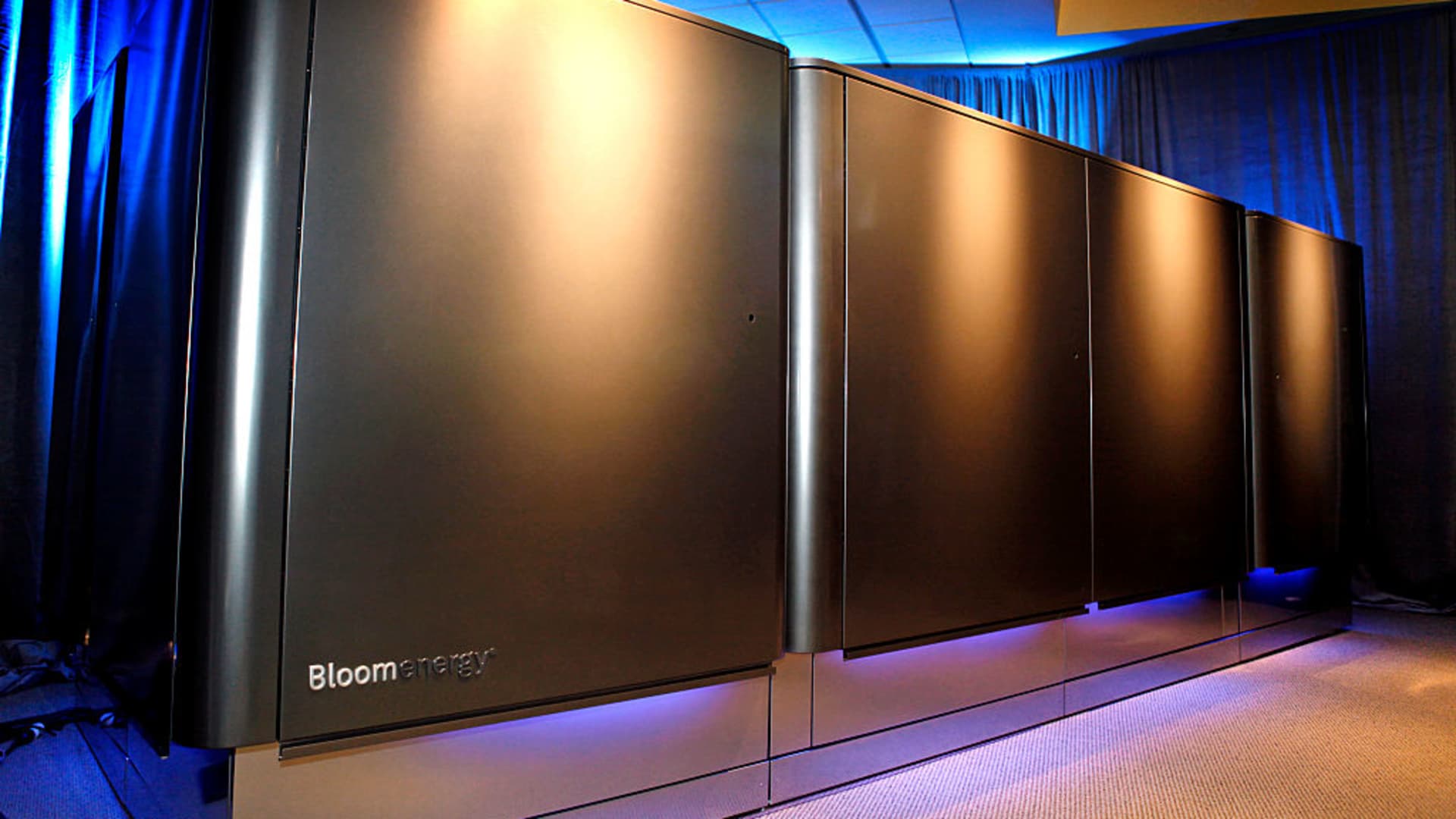
Bloom Energy Shares Surge to Record High Amid AI Demand


- Stock Surge: Bloom Energy's shares jumped approximately 15% on Thursday to a record high of $330, up from about $285 the previous day, reflecting strong market confidence in its role in addressing artificial intelligence's electricity demands.
- Rising Power Demand: The company's mid-year data center power report indicated that 61% of data center developers would generate their own power if the grid couldn't meet their needs, presenting a significant market opportunity for Bloom's fuel cells.
- Key Contracts Signed: Oracle named Bloom as the sole power provider for its AI campus, Project Jupiter, which will draw up to 2.45 gigawatts from fuel cells, while Nebius Group signed a master agreement worth up to $2.6 billion, showcasing robust demand for Bloom's solutions.
- Significant Revenue Growth: Bloom's first-quarter revenue surged by approximately 130% year-over-year to $751 million, achieving a profit of $0.25 per share for the first time, with management raising full-year revenue guidance to imply about 80% growth, highlighting the company's strong performance in a rapidly expanding market.
Bloom Energy's Mid-Year Report Highlights Surge in Data Center Power Demand
- Significant Revenue Growth: Bloom Energy's first-quarter revenue surged approximately 130% year-over-year to $751 million, reflecting strong demand for its fuel cells, which enabled the company to achieve a profit of $0.25 per share and its first positive operating cash flow.
- Positive Market Reaction: The company's stock jumped about 15% on Thursday to a record high of $330, indicating investor confidence in Bloom's solutions for AI power challenges, despite its current market value exceeding $90 billion and a high P/E ratio of 160 times.
- Self-Power Trend: The mid-year report revealed that 61% of data center developers would opt for self-generation if the grid falls short, a trend that could accelerate Bloom's market penetration, although it faces local community pushback and legislative hurdles.
- Major Contract Signings: Bloom Energy secured an exclusive power supply agreement with Oracle for up to 2.45 gigawatts for an AI campus in New Mexico, alongside a master agreement with Nebius Group worth up to $2.6 billion, showcasing the company's competitiveness in large-scale projects.

Is It Possible to Retire on $500,000?


- Investment Return Requirements: To achieve a median U.S. household income of $88,510 from an initial investment of $500,000, an annual return of 17.7% is necessary, which is challenging but feasible with strategic investments.
- Social Security Impact: Including the average annual Social Security benefit of $26,148 reduces the required annual return to 12.5%, and for married couples receiving benefits, it drops to 7.2%, highlighting the critical role of Social Security in retirement planning.
- Ares Capital Advantages: As the largest publicly traded business development company, Ares Capital boasts a diversified portfolio worth $21.5 billion and offers a high dividend yield of 10.6%, having maintained stable or increasing dividends for 67 consecutive quarters, demonstrating strong profitability and resilience.
- Energy Transition Potential: Energy Transfer LP operates over 140,000 miles of pipelines, providing an attractive distribution yield of approximately 7.2%, with management projecting annual distribution growth of 3% to 5%, positioning the company strongly for growth amid energy transition trends.
Ares Capital and Pfizer Offer High-Yield Stocks for Retirement
- Stable Dividends from Ares Capital: Ares Capital (NASDAQ: ARCC), the largest publicly traded business development company, offers a high dividend yield of 10.6% and has maintained stable or increasing dividends for 67 consecutive quarters, demonstrating resilience and profitability even during economic crises.
- Tailwinds from Energy Transition: Energy Transfer (NYSE: ET), a leading midstream energy company in North America with over 140,000 miles of pipelines, expects to increase its distribution by 3% to 5% annually and benefits from the rapid build-out of AI data centers, enhancing its market position.
- Pfizer's Long-Term Commitment: Pfizer (NYSE: PFE) boasts a forward dividend yield of 6.8% and has increased its dividend for 16 consecutive years; despite facing patent expirations, the company is investing in new product development and acquisitions to bolster revenue growth potential, expecting solid growth beyond 2028.
- Retirement Investment Advice: While Ares Capital, Energy Transfer, and Pfizer present good investment options for retirement, relying solely on these three stocks is unwise; investors are advised to create a diversified portfolio to mitigate risks and enhance return potential.

Wall Street's Lending Surge Fuels AI Growth

- Debt Financing Surge: Nvidia's recent $25 billion bond issuance exceeded its initial $20 billion target, reflecting strong market demand for AI infrastructure and is expected to drive future investments and growth for the company.
- Amazon's Debt Strategy: Having borrowed over $80 billion since early 2025 across various currencies, Amazon's actions indicate its intent to expand in the AI sector, while also showcasing the profitability of its robust cloud business.
- SpaceX's Financing Challenges: SpaceX is reportedly preparing a bond offering of at least $20 billion, despite posting a nearly $5 billion loss in 2025, highlighting the high risks associated with its AI investments, particularly due to significant operational losses in its AI division.
- Oracle's Financial Pressure: Although Oracle appears profitable on paper, its free cash flow was negative $24 billion in fiscal 2026, with debt exceeding $100 billion, indicating pressure from capital expenditures that may affect its future investment capabilities.
Nvidia's $25 Billion Bond Sale Oversubscribed

- Successful Bond Sale: Nvidia's $25 billion bond issuance this month attracted over $85 billion in orders, reflecting strong market confidence in its financial health, with demand exceeding supply by three times, prompting the company to increase the offering from an initial $20 billion target.
- Strong Profitability: Nvidia reported nearly $43 billion in net income for its fiscal fourth quarter ending January 25, 2026, significantly surpassing the total amount raised through the bond sale, indicating robust profitability and cash flow that can support future investments in the rapidly growing AI market.
- Market Financing Surge: As AI infrastructure spending surges, companies like Amazon and Oracle are also actively raising funds, with Amazon borrowing over $80 billion since early 2025, showcasing the intent and confidence of major tech firms in investing in AI opportunities.
- SpaceX Financing Risks: Although SpaceX plans to issue at least $20 billion in bonds, it reported a nearly $5 billion loss in 2025 and a $4.28 billion loss in Q1 2026, highlighting investment risks in AI, especially given its current lack of profitability and the need for careful financial management.
Bloom Energy Shares Surge to Record High Amid AI Demand
- Stock Surge: Bloom Energy's shares jumped approximately 15% on Thursday to a record high of $330, up from about $285 the previous day, reflecting strong market confidence in its role in addressing artificial intelligence's electricity demands.
- Rising Power Demand: The company's mid-year data center power report indicated that 61% of data center developers would generate their own power if the grid couldn't meet their needs, presenting a significant market opportunity for Bloom's fuel cells.
- Key Contracts Signed: Oracle named Bloom as the sole power provider for its AI campus, Project Jupiter, which will draw up to 2.45 gigawatts from fuel cells, while Nebius Group signed a master agreement worth up to $2.6 billion, showcasing robust demand for Bloom's solutions.
- Significant Revenue Growth: Bloom's first-quarter revenue surged by approximately 130% year-over-year to $751 million, achieving a profit of $0.25 per share for the first time, with management raising full-year revenue guidance to imply about 80% growth, highlighting the company's strong performance in a rapidly expanding market.
Bloom Energy's Mid-Year Report Highlights Surge in Data Center Power Demand
- Significant Revenue Growth: Bloom Energy's first-quarter revenue surged approximately 130% year-over-year to $751 million, reflecting strong demand for its fuel cells, which enabled the company to achieve a profit of $0.25 per share and its first positive operating cash flow.
- Positive Market Reaction: The company's stock jumped about 15% on Thursday to a record high of $330, indicating investor confidence in Bloom's solutions for AI power challenges, despite its current market value exceeding $90 billion and a high P/E ratio of 160 times.
- Self-Power Trend: The mid-year report revealed that 61% of data center developers would opt for self-generation if the grid falls short, a trend that could accelerate Bloom's market penetration, although it faces local community pushback and legislative hurdles.
- Major Contract Signings: Bloom Energy secured an exclusive power supply agreement with Oracle for up to 2.45 gigawatts for an AI campus in New Mexico, alongside a master agreement with Nebius Group worth up to $2.6 billion, showcasing the company's competitiveness in large-scale projects.
Is It Possible to Retire on $500,000?
- Investment Return Requirements: To achieve a median U.S. household income of $88,510 from an initial investment of $500,000, an annual return of 17.7% is necessary, which is challenging but feasible with strategic investments.
- Social Security Impact: Including the average annual Social Security benefit of $26,148 reduces the required annual return to 12.5%, and for married couples receiving benefits, it drops to 7.2%, highlighting the critical role of Social Security in retirement planning.
- Ares Capital Advantages: As the largest publicly traded business development company, Ares Capital boasts a diversified portfolio worth $21.5 billion and offers a high dividend yield of 10.6%, having maintained stable or increasing dividends for 67 consecutive quarters, demonstrating strong profitability and resilience.
- Energy Transition Potential: Energy Transfer LP operates over 140,000 miles of pipelines, providing an attractive distribution yield of approximately 7.2%, with management projecting annual distribution growth of 3% to 5%, positioning the company strongly for growth amid energy transition trends.
Ares Capital and Pfizer Offer High-Yield Stocks for Retirement
- Stable Dividends from Ares Capital: Ares Capital (NASDAQ: ARCC), the largest publicly traded business development company, offers a high dividend yield of 10.6% and has maintained stable or increasing dividends for 67 consecutive quarters, demonstrating resilience and profitability even during economic crises.
- Tailwinds from Energy Transition: Energy Transfer (NYSE: ET), a leading midstream energy company in North America with over 140,000 miles of pipelines, expects to increase its distribution by 3% to 5% annually and benefits from the rapid build-out of AI data centers, enhancing its market position.
- Pfizer's Long-Term Commitment: Pfizer (NYSE: PFE) boasts a forward dividend yield of 6.8% and has increased its dividend for 16 consecutive years; despite facing patent expirations, the company is investing in new product development and acquisitions to bolster revenue growth potential, expecting solid growth beyond 2028.
- Retirement Investment Advice: While Ares Capital, Energy Transfer, and Pfizer present good investment options for retirement, relying solely on these three stocks is unwise; investors are advised to create a diversified portfolio to mitigate risks and enhance return potential.
Wall Street's Lending Surge Fuels AI Growth
- Debt Financing Surge: Nvidia's recent $25 billion bond issuance exceeded its initial $20 billion target, reflecting strong market demand for AI infrastructure and is expected to drive future investments and growth for the company.
- Amazon's Debt Strategy: Having borrowed over $80 billion since early 2025 across various currencies, Amazon's actions indicate its intent to expand in the AI sector, while also showcasing the profitability of its robust cloud business.
- SpaceX's Financing Challenges: SpaceX is reportedly preparing a bond offering of at least $20 billion, despite posting a nearly $5 billion loss in 2025, highlighting the high risks associated with its AI investments, particularly due to significant operational losses in its AI division.
- Oracle's Financial Pressure: Although Oracle appears profitable on paper, its free cash flow was negative $24 billion in fiscal 2026, with debt exceeding $100 billion, indicating pressure from capital expenditures that may affect its future investment capabilities.
Nvidia's $25 Billion Bond Sale Oversubscribed
- Successful Bond Sale: Nvidia's $25 billion bond issuance this month attracted over $85 billion in orders, reflecting strong market confidence in its financial health, with demand exceeding supply by three times, prompting the company to increase the offering from an initial $20 billion target.
- Strong Profitability: Nvidia reported nearly $43 billion in net income for its fiscal fourth quarter ending January 25, 2026, significantly surpassing the total amount raised through the bond sale, indicating robust profitability and cash flow that can support future investments in the rapidly growing AI market.
- Market Financing Surge: As AI infrastructure spending surges, companies like Amazon and Oracle are also actively raising funds, with Amazon borrowing over $80 billion since early 2025, showcasing the intent and confidence of major tech firms in investing in AI opportunities.
- SpaceX Financing Risks: Although SpaceX plans to issue at least $20 billion in bonds, it reported a nearly $5 billion loss in 2025 and a $4.28 billion loss in Q1 2026, highlighting investment risks in AI, especially given its current lack of profitability and the need for careful financial management.