Shift in AI Investment Portfolios Reflects Market Repricing
Written by Emily J. Thompson, Senior Investment Analyst
Updated: Mar 29 2026
0mins

Should l Buy EQIX?
Source: Fool
- Market Repricing: Investors are questioning the profitability of AI companies, particularly those that are burning cash, leading to a repricing of AI-related stocks and reflecting concerns about future profitability.
- Portfolio Shift: Morgan Stanley highlights a market shift from AI infrastructure providers to AI adopters, emphasizing companies that can leverage AI to enhance productivity and margins, showcasing a focus on real-world applications.
- Semiconductor Resilience: While the software sector faced sell-offs, the semiconductor industry remained robust, with the Russell 1000 Semiconductor Index diverging sharply from the software sector, indicating strong demand for physical AI infrastructure.
- Growing Infrastructure Demand: Companies like Vertiv and Amphenol benefit from AI's cooling and connectivity needs, underscoring the increasing importance of infrastructure roles within the AI ecosystem, suggesting future investments will prioritize these durable demands.
Trade with 70% Backtested Accuracy
Stop guessing "Should I Buy EQIX?" and start using high-conviction signals backed by rigorous historical data.
Sign up today to access powerful investing tools and make smarter, data-driven decisions.
Analyst Views on EQIX
Wall Street analysts forecast EQIX stock price to fall
18 Analyst Rating
16 Buy
2 Hold
0 Sell
Strong Buy
Current: 1088.620

Low
785.00
Averages
959.25
High
1218
Current: 1088.620
Low
785.00
Averages
959.25
High
1218
About EQIX
Equinix, Inc. is a digital infrastructure company. The Company's platform, Equinix, combines a global footprint of International Business Exchange and xScale data centers in the Americas, Asia-Pacific, and Europe, the Middle East and Africa (EMEA) regions, interconnection offerings, and digital ecosystems required to serve a large and diverse set of customers. It offers a variety of enabling solutions that support a customer's need to implement, operate and maintain its colocated deployments. Its solutions include Equinix SmartView, Equinix Smart Hands, Equinix Smart Build, and Equinix Managed Solutions and Enablement Services. Equinix SmartView is fully integrated monitoring software that provides customers with visibility into the operating data relevant to their specific Equinix footprint. Its interconnection solutions connect businesses directly within and between its data centers across its platform. Its interconnection solutions are Equinix Fabric, Fiber Connect, among others.
About the author

Emily J. Thompson
Emily J. Thompson, a Chartered Financial Analyst (CFA) with 12 years in investment research, graduated with honors from the Wharton School. Specializing in industrial and technology stocks, she provides in-depth analysis for Intellectia’s earnings and market brief reports.
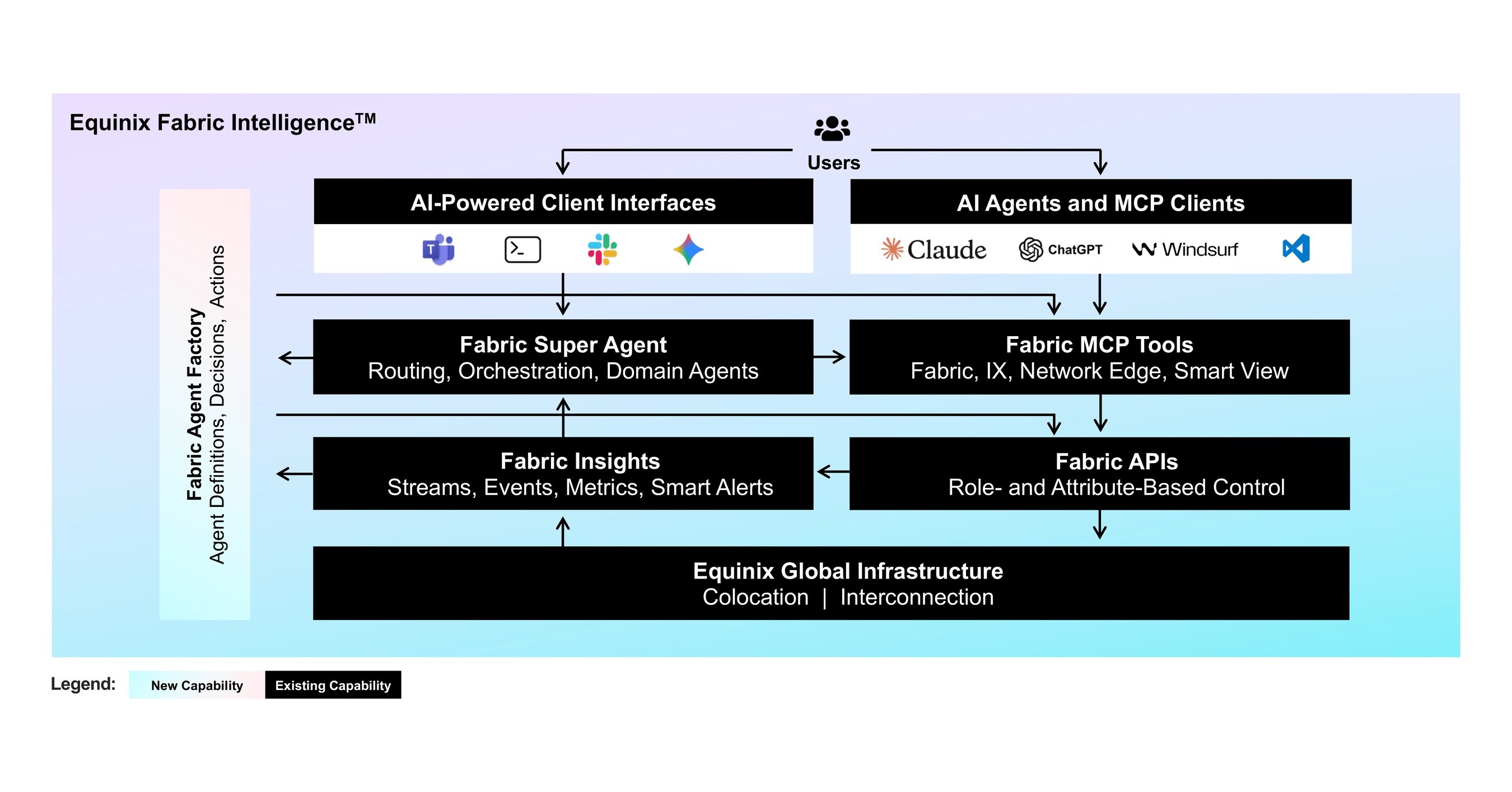
Equinix Launches AI-Driven Network Management Platform

- AI Network Management Innovation: Equinix has launched Fabric Intelligence™, an AI-native operational layer that enables enterprises to deploy AI-driven networking across their operations, simplifying the complexities of traditional software-defined networking and enhancing network management efficiency and flexibility.
- Market Demand Response: According to Omdia's research, 93% of organizations believe network automation is essential for future change, and 88% agree that AI is necessary for effective network automation, indicating strong market demand for Equinix's new product.
- Infrastructure Competitive Advantage: Fabric Intelligence optimizes global infrastructure through smart automation, helping enterprises achieve greater adaptability and efficiency under AI workloads, thereby transforming infrastructure from a constraint into a competitive advantage that drives business growth.
- Global Infrastructure Support: With 280 high-performance data centers in 77 metros worldwide, Equinix's launch of Fabric Intelligence further accelerates enterprise adoption of AI tools and promotes the development of next-generation infrastructure.
See More
Market Update: Cramer Sees Upside in Uber and Vistra


- Cramer Bullish on Uber: Despite Uber's stock being down 28.5% from its September high, it has risen 3.5% in the last two days, indicating market confidence in its future growth and potentially attracting more investor interest.
- Vistra Stock Undervalued: Cramer highlighted that Vistra is trading at around 19 times earnings, calling it a “steal,” and although the stock is down 25% from its September high, it has gained 6% in just two days, reflecting market recognition of its value.
- Booking Holdings Potential: Cramer believes that many negatives for Booking Holdings are already priced in, with a current P/E ratio of 17, and anticipates a significant price increase once the war ends; the stock has risen 4.4% in two days, presenting a potential return opportunity for investors.
- Southwest Airlines Turnaround Story: Cramer describes Southwest Airlines as a “terrific turnaround story,” noting that while the stock is down 25% from its February high, it has increased by 4.3% in two days and could be a potential takeover target, indicating future growth potential.
See More

Surge in Data Center Power Demand Drives Bloom Energy Partnerships


- Power Demand Surge: U.S. data centers saw a 22% increase in electricity demand last year, reaching 61.8 gigawatts, enough to power nearly 55 million homes for a year, highlighting the immense energy needs driven by AI technologies.
- Strategic Partnership Expansion: Bloom Energy's partnership with Oracle has expanded from an initial 1.2 GW to 2.8 GW, indicating Bloom's critical role in supporting the build-out of AI and cloud computing infrastructure, which is expected to further enhance its market share.
- Rapid Deployment Advantage: Bloom Energy delivered a fuel cell system to Oracle in just 55 days last year, significantly faster than the traditional 90-day deployment timeline, enabling Oracle to accelerate its AI infrastructure development.
- Long-Term Growth Potential: With over 100 GW of data center development expected in the U.S. by 2035, Bloom Energy's rapid deployment capabilities and strategic partnerships with firms like Brookfield position it for substantial growth opportunities.
See More

Bloom Energy Expands Partnership with Oracle, Stock Soars
- Stock Surge: Bloom Energy's shares soared 15% after hours on Monday, reaching nearly $203, with Oracle poised to gain over $300 million from its $400 million warrant investment, reflecting strong market confidence in Bloom's growth potential.
- Partnership Expansion: Oracle's expanded agreement with Bloom Energy includes a commitment to 1.2 gigawatts of capacity, with deployment expected to be completed by 2027, indicating Oracle's strategic positioning to meet energy demands for U.S. data centers.
- Surging Market Demand: Bloom Energy's fuel cells have become a favored choice among data center developers due to their rapid installation and independence from the electric grid, leading to a significant increase in demand amid the AI boom, pushing the company's market cap above $50 billion.
- AI Infrastructure Investment: Oracle has raised over $100 billion in debt to fund its massive AI data center buildout, planning to operate Bloom's fuel cells at its U.S. facilities, further solidifying its competitive stance in the rapidly growing AI market.
See More

Halper Sadeh LLC Investigates Equinix Executives' Fiduciary Duties
- Shareholder Rights Protection: Halper Sadeh LLC is investigating whether certain officers and directors of Equinix, Inc. breached their fiduciary duties to shareholders, potentially leading to financial losses for shareholders, prompting them to contact the law firm promptly to protect their rights.
- Legal Fee Arrangement: The firm promises to handle cases on a contingent fee basis, meaning shareholders will not incur out-of-pocket legal fees or expenses, which reduces the financial burden on shareholders and encourages more to seek legal remedies.
- Corporate Governance Reform: Long-term shareholders may seek corporate governance reforms, fund returns, or court-approved financial incentives through legal action, which not only helps improve the company's transparency and accountability but also has the potential to enhance shareholder value.
- Global Investor Support: Halper Sadeh LLC represents investors worldwide, focusing on combating securities fraud and corporate misconduct, and has successfully implemented corporate reforms that have recovered millions of dollars for defrauded investors, demonstrating its effectiveness in protecting investor rights.
See More

Three Top Dividend Stocks with Growth Potential for the Next Decade

- Brookfield Asset Management: Brookfield Asset Management (BAM) focuses on high-demand sectors, targeting revenue growth of 15% to 20% over the next decade while committing 90% of earnings to dividends, with a current yield of 4.13%, showcasing strong cash flow and stable dividend capacity.
- Equinix's Growth Potential: Although Equinix (EQIX) has a current dividend yield of only 2%, its average annual dividend growth rate of 11% over the past decade indicates strong market demand and profitability in the cloud computing and data center sectors, with projected revenue growth of about 10% this year.
- Constellation Energy's Nuclear Advantage: Constellation Energy (CEG) generates over 80% of its power from 21 nuclear reactors, positioning it to meet the increasing electricity demand as global nuclear power generation is expected to grow by 50% by 2050, despite a low current yield of 0.58%.
- Investor Confidence and Market Opportunities: The unique strengths and growth potential of these three companies attract investor interest, particularly against the backdrop of surging demand for artificial intelligence data centers, which is expected to drive both stock prices and dividends higher.
See More
Equinix Launches AI-Driven Network Management Platform
- AI Network Management Innovation: Equinix has launched Fabric Intelligence™, an AI-native operational layer that enables enterprises to deploy AI-driven networking across their operations, simplifying the complexities of traditional software-defined networking and enhancing network management efficiency and flexibility.
- Market Demand Response: According to Omdia's research, 93% of organizations believe network automation is essential for future change, and 88% agree that AI is necessary for effective network automation, indicating strong market demand for Equinix's new product.
- Infrastructure Competitive Advantage: Fabric Intelligence optimizes global infrastructure through smart automation, helping enterprises achieve greater adaptability and efficiency under AI workloads, thereby transforming infrastructure from a constraint into a competitive advantage that drives business growth.
- Global Infrastructure Support: With 280 high-performance data centers in 77 metros worldwide, Equinix's launch of Fabric Intelligence further accelerates enterprise adoption of AI tools and promotes the development of next-generation infrastructure.
See More
Market Update: Cramer Sees Upside in Uber and Vistra
- Cramer Bullish on Uber: Despite Uber's stock being down 28.5% from its September high, it has risen 3.5% in the last two days, indicating market confidence in its future growth and potentially attracting more investor interest.
- Vistra Stock Undervalued: Cramer highlighted that Vistra is trading at around 19 times earnings, calling it a “steal,” and although the stock is down 25% from its September high, it has gained 6% in just two days, reflecting market recognition of its value.
- Booking Holdings Potential: Cramer believes that many negatives for Booking Holdings are already priced in, with a current P/E ratio of 17, and anticipates a significant price increase once the war ends; the stock has risen 4.4% in two days, presenting a potential return opportunity for investors.
- Southwest Airlines Turnaround Story: Cramer describes Southwest Airlines as a “terrific turnaround story,” noting that while the stock is down 25% from its February high, it has increased by 4.3% in two days and could be a potential takeover target, indicating future growth potential.
See More
Surge in Data Center Power Demand Drives Bloom Energy Partnerships
- Power Demand Surge: U.S. data centers saw a 22% increase in electricity demand last year, reaching 61.8 gigawatts, enough to power nearly 55 million homes for a year, highlighting the immense energy needs driven by AI technologies.
- Strategic Partnership Expansion: Bloom Energy's partnership with Oracle has expanded from an initial 1.2 GW to 2.8 GW, indicating Bloom's critical role in supporting the build-out of AI and cloud computing infrastructure, which is expected to further enhance its market share.
- Rapid Deployment Advantage: Bloom Energy delivered a fuel cell system to Oracle in just 55 days last year, significantly faster than the traditional 90-day deployment timeline, enabling Oracle to accelerate its AI infrastructure development.
- Long-Term Growth Potential: With over 100 GW of data center development expected in the U.S. by 2035, Bloom Energy's rapid deployment capabilities and strategic partnerships with firms like Brookfield position it for substantial growth opportunities.
See More
Bloom Energy Expands Partnership with Oracle, Stock Soars
- Stock Surge: Bloom Energy's shares soared 15% after hours on Monday, reaching nearly $203, with Oracle poised to gain over $300 million from its $400 million warrant investment, reflecting strong market confidence in Bloom's growth potential.
- Partnership Expansion: Oracle's expanded agreement with Bloom Energy includes a commitment to 1.2 gigawatts of capacity, with deployment expected to be completed by 2027, indicating Oracle's strategic positioning to meet energy demands for U.S. data centers.
- Surging Market Demand: Bloom Energy's fuel cells have become a favored choice among data center developers due to their rapid installation and independence from the electric grid, leading to a significant increase in demand amid the AI boom, pushing the company's market cap above $50 billion.
- AI Infrastructure Investment: Oracle has raised over $100 billion in debt to fund its massive AI data center buildout, planning to operate Bloom's fuel cells at its U.S. facilities, further solidifying its competitive stance in the rapidly growing AI market.
See More
Halper Sadeh LLC Investigates Equinix Executives' Fiduciary Duties
- Shareholder Rights Protection: Halper Sadeh LLC is investigating whether certain officers and directors of Equinix, Inc. breached their fiduciary duties to shareholders, potentially leading to financial losses for shareholders, prompting them to contact the law firm promptly to protect their rights.
- Legal Fee Arrangement: The firm promises to handle cases on a contingent fee basis, meaning shareholders will not incur out-of-pocket legal fees or expenses, which reduces the financial burden on shareholders and encourages more to seek legal remedies.
- Corporate Governance Reform: Long-term shareholders may seek corporate governance reforms, fund returns, or court-approved financial incentives through legal action, which not only helps improve the company's transparency and accountability but also has the potential to enhance shareholder value.
- Global Investor Support: Halper Sadeh LLC represents investors worldwide, focusing on combating securities fraud and corporate misconduct, and has successfully implemented corporate reforms that have recovered millions of dollars for defrauded investors, demonstrating its effectiveness in protecting investor rights.
See More
Three Top Dividend Stocks with Growth Potential for the Next Decade
- Brookfield Asset Management: Brookfield Asset Management (BAM) focuses on high-demand sectors, targeting revenue growth of 15% to 20% over the next decade while committing 90% of earnings to dividends, with a current yield of 4.13%, showcasing strong cash flow and stable dividend capacity.
- Equinix's Growth Potential: Although Equinix (EQIX) has a current dividend yield of only 2%, its average annual dividend growth rate of 11% over the past decade indicates strong market demand and profitability in the cloud computing and data center sectors, with projected revenue growth of about 10% this year.
- Constellation Energy's Nuclear Advantage: Constellation Energy (CEG) generates over 80% of its power from 21 nuclear reactors, positioning it to meet the increasing electricity demand as global nuclear power generation is expected to grow by 50% by 2050, despite a low current yield of 0.58%.
- Investor Confidence and Market Opportunities: The unique strengths and growth potential of these three companies attract investor interest, particularly against the backdrop of surging demand for artificial intelligence data centers, which is expected to drive both stock prices and dividends higher.
See More