

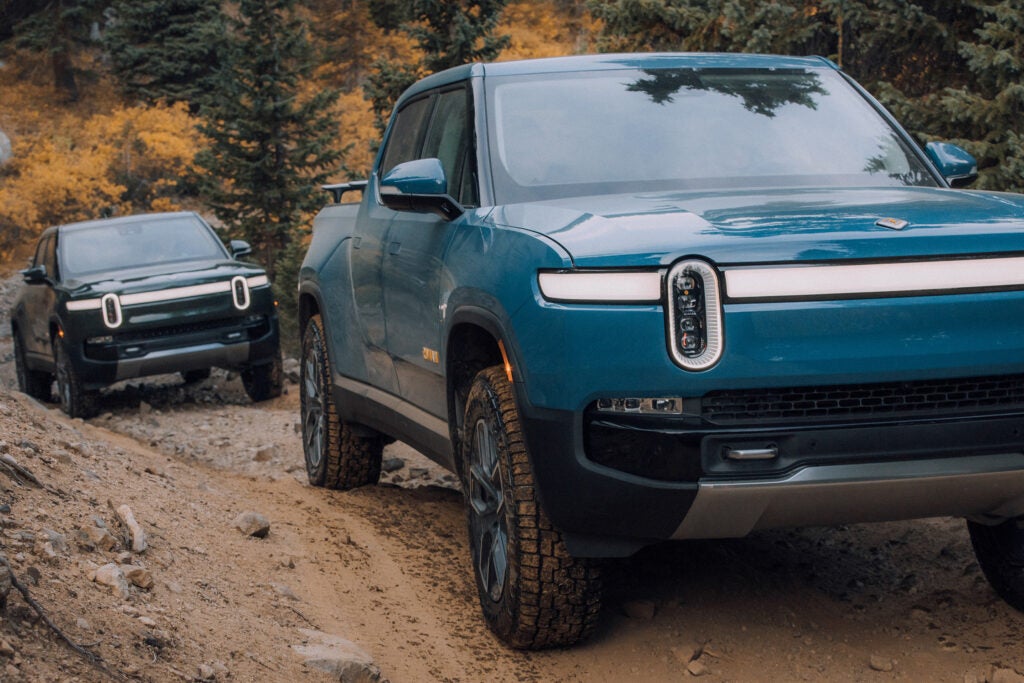
Rivian Launches R2 SUV, Potential Stock Recovery Ahead
Written by Emily J. Thompson, Senior Investment Analyst
Updated: 49 minutes ago
0mins
Source: Fool
- New Model Launch: Rivian officially launched its R2 SUV in the U.S. on June 9, starting at $57,990, with plans for a cheaper version around $45,000 by the end of 2027, aiming to attract a broader consumer base and increase market share.
- Lower Production Costs: The R2 is cheaper to manufacture than the R1T and R1S, which is expected to improve Rivian's gross margins, with rising sales anticipated to enhance the company's overall financial performance and boost investor confidence.
- Increased Delivery Expectations: Rivian expects the R2 to elevate its annual deliveries to between 62,000 and 67,000 vehicles in 2023, significantly up from 42,284 vehicles in 2025, laying a solid foundation for future revenue growth.
- Market Revaluation Potential: Analysts predict that if Rivian successfully increases sales, its revenue could triple from 2025 to 2028, potentially allowing its stock, currently trading at just three times this year's sales, to be revalued as a high-growth EV stock, enhancing market appeal.
Trade with 70% Backtested Accuracy
Stop guessing "Should I Buy RIVN?" and start using high-conviction signals backed by rigorous historical data.
Sign up today to access powerful investing tools and make smarter, data-driven decisions.
Analyst Views on RIVN
Wall Street analysts forecast RIVN stock price to rise
18 Analyst Rating
8 Buy
7 Hold
3 Sell
Moderate Buy
Current: 17.350

Low
10.00
Averages
17.78
High
25.00
Current: 17.350
Low
10.00
Averages
17.78
High
25.00
About RIVN
Rivian Automotive, Inc. is an automotive technology company, which is engaged in developing and manufacturing category-defining electric vehicles (EVs) as well as vertically integrated technologies and services. The Company's R1 platform consists of two vehicles: the R1T, a two-row five-passenger pickup truck, and the R1S, a three-row seven-passenger sport utility vehicle (SUV). In the commercial market, the Company offers a Rivian Commercial Vehicle (RCV) platform. The vehicle on this platform is the Electric Delivery Van (EDV), designed and engineered by Rivian in collaboration with Amazon. The Company also offers FleetOS, its proprietary, end-to-end centralized fleet management subscription platform. It also offers a variety of services, including vehicle repair and maintenance, financing, insurance, joint venture, software subscriptions, and vehicle accessories, among others. Its other services include vehicle electrical architecture and software development services, and more.
About the author

Emily J. Thompson
Emily J. Thompson, a Chartered Financial Analyst (CFA) with 12 years in investment research, graduated with honors from the Wharton School. Specializing in industrial and technology stocks, she provides in-depth analysis for Intellectia’s earnings and market brief reports.
Rivian Launches R2 SUV, Potential Stock Recovery Ahead


- New Model Launch: Rivian officially launched its R2 SUV in the U.S. on June 9, starting at $57,990, with plans for a cheaper version around $45,000 by the end of 2027, aiming to attract a broader consumer base and increase market share.
- Lower Production Costs: The R2 is cheaper to manufacture than the R1T and R1S, which is expected to improve Rivian's gross margins, with rising sales anticipated to enhance the company's overall financial performance and boost investor confidence.
- Increased Delivery Expectations: Rivian expects the R2 to elevate its annual deliveries to between 62,000 and 67,000 vehicles in 2023, significantly up from 42,284 vehicles in 2025, laying a solid foundation for future revenue growth.
- Market Revaluation Potential: Analysts predict that if Rivian successfully increases sales, its revenue could triple from 2025 to 2028, potentially allowing its stock, currently trading at just three times this year's sales, to be revalued as a high-growth EV stock, enhancing market appeal.
See More

Rivian's R2 SUV Faces Supply Chain Challenges

- Supply Chain Risks: Rivian CEO RJ Scaringe stated that the success of the R2 SUV is critical for the company's future, highlighting that while consumer demand is strong, concerns over the global semiconductor shortage pose the greatest risk.
- Chip Shortage Impact: With explosive AI demand tightening memory chip supplies, Scaringe emphasized that uncertainties in the global supply chain could challenge R2 production and affect the company's delivery capabilities.
- Market Reaction: Rivian's stock fell 0.5% at the time of the report, as investors await the upcoming second-quarter delivery numbers, with retail sentiment remaining in the 'bearish' territory, although some users expressed optimism about the delivery figures.
- Competitive Landscape: Other automakers like General Motors and Tesla are also actively addressing chip shortages, with GM securing a strategic customer agreement with Micron Technology for long-term supply, while Tesla advances its Terafab semiconductor project to meet soaring demand.
See More
Tesla Vehicle Registrations Surge in Europe

- Strong Performance in Europe: Tesla's vehicle registrations surged in June across several European markets, with a 39% increase in Denmark, 56% in Sweden, a 5.6% rise in Spain, and more than doubling in France, indicating robust market demand and sales potential.
- Rising Delivery Expectations: Tesla is expected to deliver approximately 410,000 vehicles in Q2, representing a 7% year-over-year increase and exceeding Wall Street's consensus estimate of 406,000 units, primarily driven by surging oil prices that have boosted demand and further propelled the stock's rally.
- Shift in Investor Sentiment: Following Tesla's stock rally, investor sentiment on Stocktwits shifted from 'neutral' to 'bullish', although some users expressed concerns about the stock being 'overbought' and needing a pullback to $424 or lower, reflecting mixed views on Tesla's future trajectory.
- Short Position Opened: Investor Michael Burry opened a short position on Tesla at $416.22 and expressed satisfaction with the stock's rebound to this level, highlighting differing opinions in the market regarding Tesla's future performance.
See More

Ford and Ferrari Stand Out with Gains Amid Auto Sector Decline


- Ford Energy Emergence: Ford's newly launched energy storage division, backed by a $2 billion investment, aims for annual deployments of at least 20 gigawatt-hours, targeting AI data centers and utilities, thereby enhancing the company's competitive edge in the battery market.
- Ferrari's EV Strategy: Despite backlash against its first EV, the €550,000 Luce, Morningstar maintains that Ferrari's EV strategy remains coherent, with expectations that internal combustion and hybrid vehicles will still make up 80% of its lineup by 2030.
- Market Performance Contrast: Amid declining EV demand, Ford and Ferrari saw gains of 8% and 3% respectively, while competitors like Tesla, Rivian, and General Motors faced declines, showcasing the resilience of both companies in a challenging market.
- Retail Sentiment Shift: Ford's retail sentiment flipped from 'bearish' to 'bullish' over the past six months, with message volume up 164%, while Ferrari's sentiment improved to 'neutral' despite a 78% drop in message volume, indicating sustained retail interest as its watcher base grew by 13%.
See More
Intensifying EV Market Competition: A Comparative Analysis of Rivian and Tesla
- Rivian Financial Performance: In FY 2025, Rivian reported revenue of $5.4 billion, an 8.4% increase year-over-year, despite a net loss of $3.6 billion and a negative net margin of 67.7%, highlighting the significant capital investment and operational cost pressures associated with its manufacturing expansion.
- Tesla Revenue Dynamics: Tesla's revenue for FY 2025 was $94.8 billion, a 2.9% decline from the previous year, with a net income of $3.8 billion translating to a net margin of 4%, reflecting the impact of increased competition and shifts in product mix on profitability.
- Risk Analysis: Rivian faces substantial risks related to production execution and high scaling costs, relying on commercial agreements with Amazon while also managing a class-action lawsuit regarding vehicle autonomy in 2026; Tesla, on the other hand, navigates regulatory scrutiny and litigation concerning its driver-assistance systems.
- Valuation Comparison: Rivian's forward P/E ratio stands at 38.0x, while Tesla's is significantly higher at 200.5x, indicating the market's high growth expectations for Tesla, although Rivian's potential in the EV market remains promising.
See More
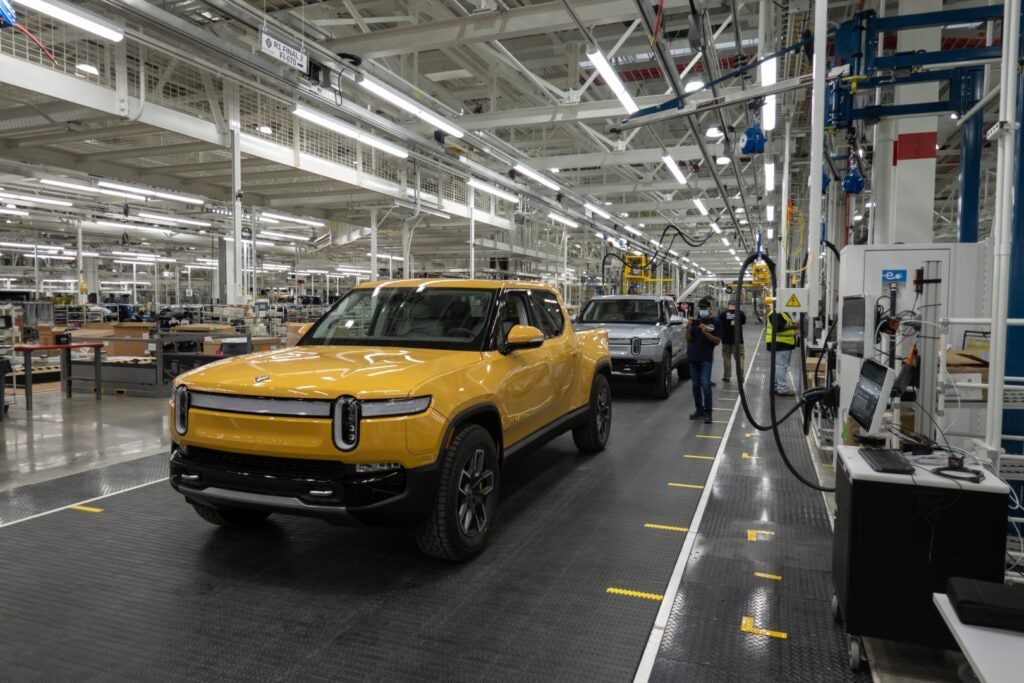
Rivian and Tesla Intensify Competition in Electric Vehicle Market
- Rivian Production Expansion: Rivian achieved $5.4 billion in revenue for FY 2025, an 8.4% increase, despite a net loss of $3.6 billion and a negative net margin of 67.7%, indicating significant capital pressure as it scales in the high-end EV market.
- Tesla Revenue Performance: Tesla reported $94.8 billion in revenue for FY 2025, a 2.9% decline, with a net income of $3.8 billion and a net margin dropping to 4%, reflecting the impact of increased competition and shifting product mix.
- Partnership Risk: Rivian's reliance on key commercial agreements with Volkswagen and Amazon adds a layer of risk due to customer concentration, particularly as Amazon remains a primary driver of sales.
- Tesla's Technological Shift: Tesla is actively expanding its autonomous ride-hailing service while integrating AI into its fleet, facing regulatory scrutiny and litigation risks, which could impact its future market position.
See More
Rivian Launches R2 SUV, Potential Stock Recovery Ahead
- New Model Launch: Rivian officially launched its R2 SUV in the U.S. on June 9, starting at $57,990, with plans for a cheaper version around $45,000 by the end of 2027, aiming to attract a broader consumer base and increase market share.
- Lower Production Costs: The R2 is cheaper to manufacture than the R1T and R1S, which is expected to improve Rivian's gross margins, with rising sales anticipated to enhance the company's overall financial performance and boost investor confidence.
- Increased Delivery Expectations: Rivian expects the R2 to elevate its annual deliveries to between 62,000 and 67,000 vehicles in 2023, significantly up from 42,284 vehicles in 2025, laying a solid foundation for future revenue growth.
- Market Revaluation Potential: Analysts predict that if Rivian successfully increases sales, its revenue could triple from 2025 to 2028, potentially allowing its stock, currently trading at just three times this year's sales, to be revalued as a high-growth EV stock, enhancing market appeal.
See More
Rivian's R2 SUV Faces Supply Chain Challenges
- Supply Chain Risks: Rivian CEO RJ Scaringe stated that the success of the R2 SUV is critical for the company's future, highlighting that while consumer demand is strong, concerns over the global semiconductor shortage pose the greatest risk.
- Chip Shortage Impact: With explosive AI demand tightening memory chip supplies, Scaringe emphasized that uncertainties in the global supply chain could challenge R2 production and affect the company's delivery capabilities.
- Market Reaction: Rivian's stock fell 0.5% at the time of the report, as investors await the upcoming second-quarter delivery numbers, with retail sentiment remaining in the 'bearish' territory, although some users expressed optimism about the delivery figures.
- Competitive Landscape: Other automakers like General Motors and Tesla are also actively addressing chip shortages, with GM securing a strategic customer agreement with Micron Technology for long-term supply, while Tesla advances its Terafab semiconductor project to meet soaring demand.
See More
Tesla Vehicle Registrations Surge in Europe
- Strong Performance in Europe: Tesla's vehicle registrations surged in June across several European markets, with a 39% increase in Denmark, 56% in Sweden, a 5.6% rise in Spain, and more than doubling in France, indicating robust market demand and sales potential.
- Rising Delivery Expectations: Tesla is expected to deliver approximately 410,000 vehicles in Q2, representing a 7% year-over-year increase and exceeding Wall Street's consensus estimate of 406,000 units, primarily driven by surging oil prices that have boosted demand and further propelled the stock's rally.
- Shift in Investor Sentiment: Following Tesla's stock rally, investor sentiment on Stocktwits shifted from 'neutral' to 'bullish', although some users expressed concerns about the stock being 'overbought' and needing a pullback to $424 or lower, reflecting mixed views on Tesla's future trajectory.
- Short Position Opened: Investor Michael Burry opened a short position on Tesla at $416.22 and expressed satisfaction with the stock's rebound to this level, highlighting differing opinions in the market regarding Tesla's future performance.
See More
Ford and Ferrari Stand Out with Gains Amid Auto Sector Decline
- Ford Energy Emergence: Ford's newly launched energy storage division, backed by a $2 billion investment, aims for annual deployments of at least 20 gigawatt-hours, targeting AI data centers and utilities, thereby enhancing the company's competitive edge in the battery market.
- Ferrari's EV Strategy: Despite backlash against its first EV, the €550,000 Luce, Morningstar maintains that Ferrari's EV strategy remains coherent, with expectations that internal combustion and hybrid vehicles will still make up 80% of its lineup by 2030.
- Market Performance Contrast: Amid declining EV demand, Ford and Ferrari saw gains of 8% and 3% respectively, while competitors like Tesla, Rivian, and General Motors faced declines, showcasing the resilience of both companies in a challenging market.
- Retail Sentiment Shift: Ford's retail sentiment flipped from 'bearish' to 'bullish' over the past six months, with message volume up 164%, while Ferrari's sentiment improved to 'neutral' despite a 78% drop in message volume, indicating sustained retail interest as its watcher base grew by 13%.
See More
Intensifying EV Market Competition: A Comparative Analysis of Rivian and Tesla
- Rivian Financial Performance: In FY 2025, Rivian reported revenue of $5.4 billion, an 8.4% increase year-over-year, despite a net loss of $3.6 billion and a negative net margin of 67.7%, highlighting the significant capital investment and operational cost pressures associated with its manufacturing expansion.
- Tesla Revenue Dynamics: Tesla's revenue for FY 2025 was $94.8 billion, a 2.9% decline from the previous year, with a net income of $3.8 billion translating to a net margin of 4%, reflecting the impact of increased competition and shifts in product mix on profitability.
- Risk Analysis: Rivian faces substantial risks related to production execution and high scaling costs, relying on commercial agreements with Amazon while also managing a class-action lawsuit regarding vehicle autonomy in 2026; Tesla, on the other hand, navigates regulatory scrutiny and litigation concerning its driver-assistance systems.
- Valuation Comparison: Rivian's forward P/E ratio stands at 38.0x, while Tesla's is significantly higher at 200.5x, indicating the market's high growth expectations for Tesla, although Rivian's potential in the EV market remains promising.
See More
Rivian and Tesla Intensify Competition in Electric Vehicle Market
- Rivian Production Expansion: Rivian achieved $5.4 billion in revenue for FY 2025, an 8.4% increase, despite a net loss of $3.6 billion and a negative net margin of 67.7%, indicating significant capital pressure as it scales in the high-end EV market.
- Tesla Revenue Performance: Tesla reported $94.8 billion in revenue for FY 2025, a 2.9% decline, with a net income of $3.8 billion and a net margin dropping to 4%, reflecting the impact of increased competition and shifting product mix.
- Partnership Risk: Rivian's reliance on key commercial agreements with Volkswagen and Amazon adds a layer of risk due to customer concentration, particularly as Amazon remains a primary driver of sales.
- Tesla's Technological Shift: Tesla is actively expanding its autonomous ride-hailing service while integrating AI into its fleet, facing regulatory scrutiny and litigation risks, which could impact its future market position.
See More




