Planet Labs Stock Surges Amid Strong Earnings and Backlog Growth
- Significant Earnings Growth: Planet Labs reported a 41% year-over-year revenue increase to $87 million in its Q4 earnings released in March, alongside a full-year free cash flow of $53 million, indicating the sustainability of its innovative orbital imaging service model.
- Backlog Surge: The company saw its backlog grow by 79% year-over-year to $900 million in the quarter, which will provide a stable revenue source for years to come, particularly with long-term contracts like the $100 million+ deal signed with the Swedish government.
- Promising Tech Partnerships: Planet Labs has formed new partnerships with Alphabet and Nvidia to enhance image processing and analysis capabilities, and while the specific benefits of these projects remain unclear, the market is currently optimistic about their potential.
- Valuation Risks Emerge: Despite strong performance, the company's market cap has reached $12.5 billion with a price-to-sales ratio of 42, indicating significant valuation risks, prompting investors to carefully consider whether to chase the stock.
Trade with 70% Backtested Accuracy
Analyst Views on PL

About PL
About the author


Space Economy Booms with New Opportunities


- Rocket Lab's Rise: Rocket Lab has established itself as the second-largest rocket launch company in the U.S., completing 85 launches and focusing on small rocket launches, with its new Neutron rocket expected to debut in Q4 this year, aiming to enhance profits and market share.
- Growth in Space Systems: Rocket Lab's space systems business generated $403 million in revenue last year, accounting for 75% of its $1.85 billion backlog, demonstrating strong performance in its vertically integrated operations and enhancing its competitiveness in the defense sector.
- AI Applications at Planet Labs: Planet Labs leverages artificial intelligence to enhance its Earth-imaging satellites' image processing capabilities, recently expanding its partnership with Nvidia to use AI chips directly on its Pelican-4 satellite, enabling real-time data analysis and significantly reducing the time for customers to gain insights.
- Lockheed Martin's Defense Edge: As a top defense contractor, Lockheed Martin boasts a $194 billion backlog and leads NASA's Orion spacecraft project, ensuring long-term stable returns in the space economy, making it an attractive option for investors.

Global Space Economy Booms to $613 Billion by 2025
- Market Growth: According to McKinsey estimates, the global space economy is projected to reach $1.8 trillion by 2035, with a compound annual growth rate exceeding 11%, indicating significant commercial potential in the space sector that is attracting substantial investor interest.
- Rocket Lab's Market Positioning: Rocket Lab has established itself as the second-largest rocket launch company in the U.S., having completed 85 launches to date, and plans to introduce its new medium-lift rocket Neutron to meet larger payload demands, thereby enhancing profit margins and competitive positioning.
- Planet Labs' AI Integration: Planet Labs is leveraging artificial intelligence to enhance its satellite imagery platform, and through its partnership with Nvidia, it can process and analyze data in real-time, providing rapid insights to customers and solidifying its position in the defense sector.
- Lockheed Martin's Industry Leadership: As a top defense contractor, Lockheed Martin plays a crucial role in the space economy, boasting a backlog of $194 billion and ensuring stable cash flow through long-term government contracts, making it an attractive option for investors.
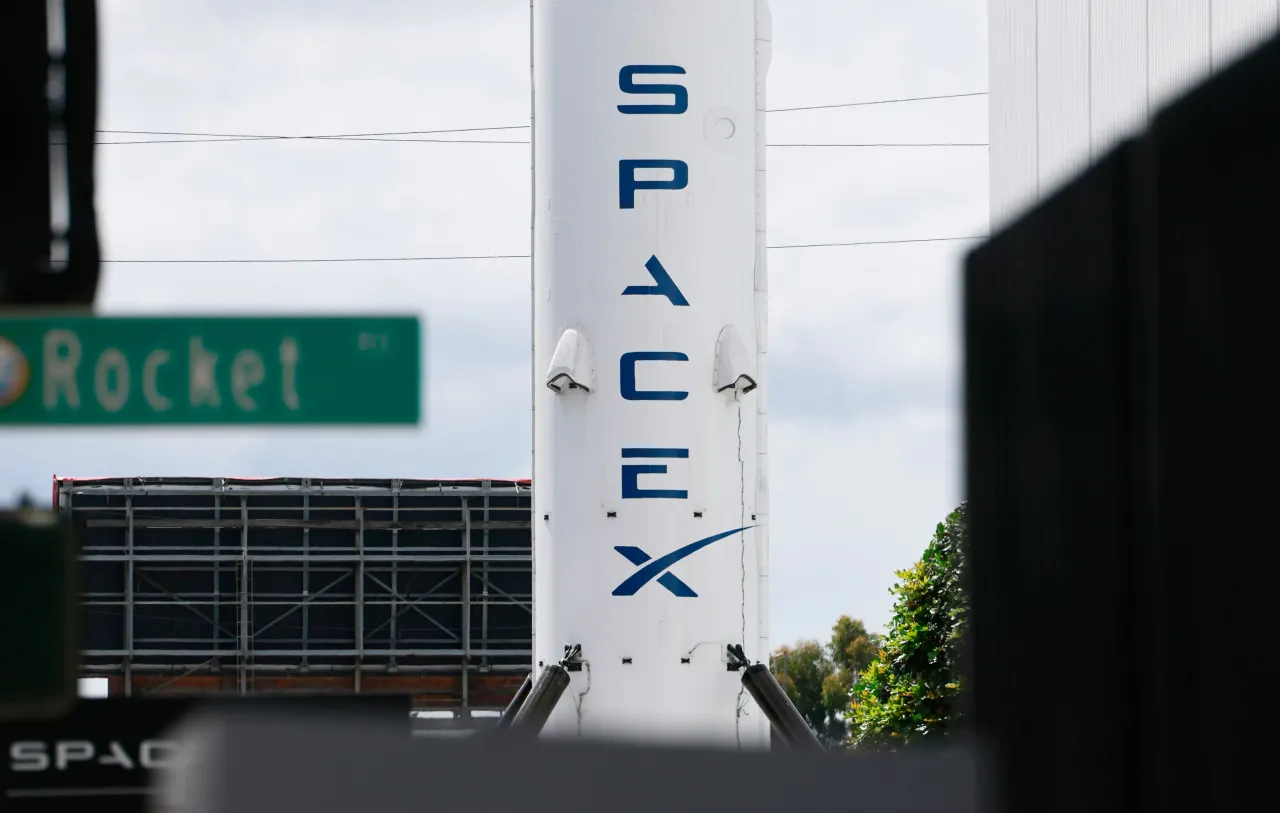
SpaceX IPO Expected to Catalyze Space Stocks Rally

- SpaceX IPO Outlook: NASA ETF portfolio manager Yuri Khodjamirian stated that the anticipated SpaceX IPO in June could serve as a significant catalyst for space stocks, drawing increased investor attention to the space economy, particularly with a projected valuation exceeding $1.75 trillion.
- Blue Origin's Market Impact: Khodjamirian highlighted that launch activities planned by Jeff Bezos-backed Blue Origin could alter supply dynamics in the launch market, thereby enhancing valuations for downstream satellite and infrastructure plays, further propelling growth in the space sector.
- Long-Term Drivers: He noted that long-term drivers such as satellite fleet upgrades, space station replacements, and potential orbital data infrastructure are poised to provide multi-year tailwinds for the space economy, especially as launch costs decrease.
- Market Sentiment Shift: Although the NASA ETF saw slight declines in afternoon trading, it has gained nearly 20% since its launch alongside the Artemis II mission on April 1, reflecting strong market interest and optimistic sentiment among investors regarding space stocks.
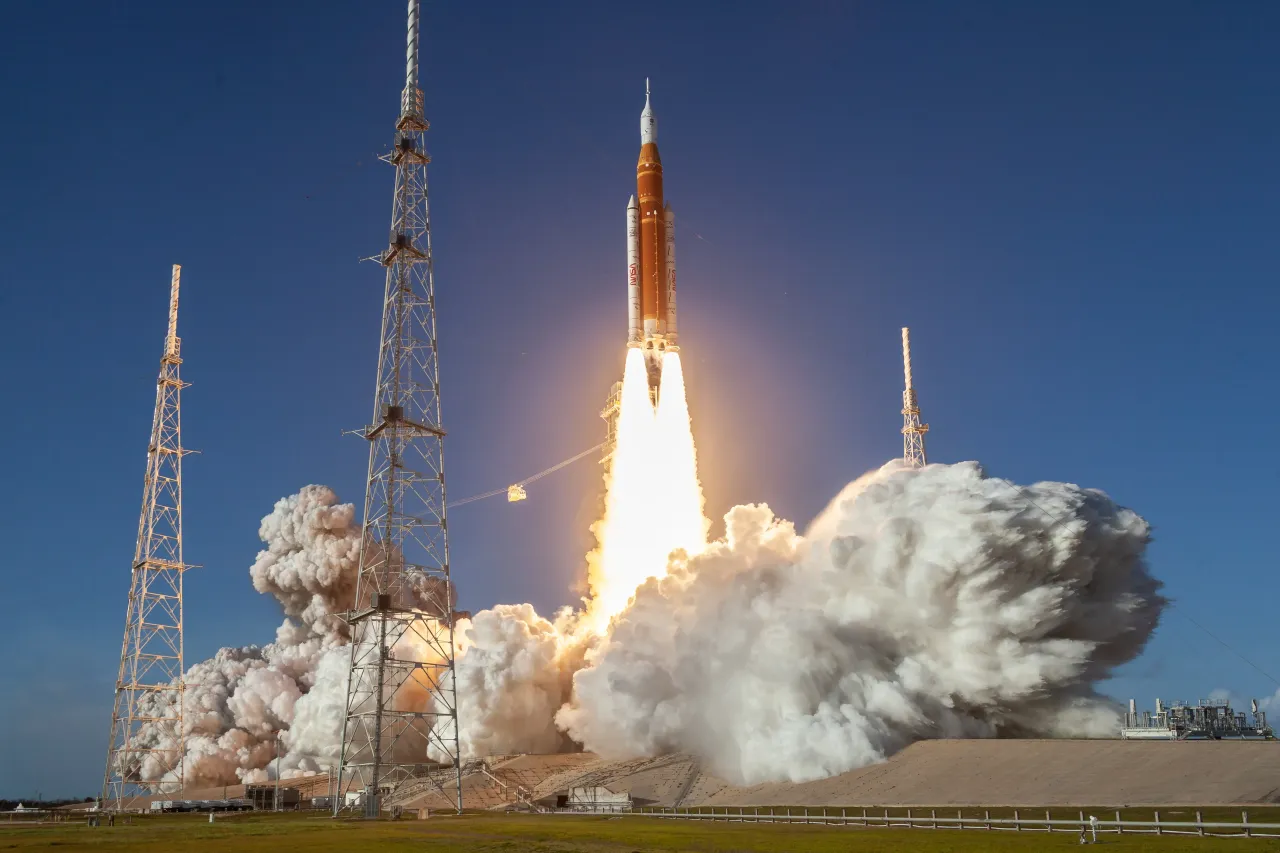
Tema Space Innovators ETF Gains 17.5% Since Launch Amid Artemis II Mission
- Strong Launch Performance: The Tema Space Innovators ETF has gained approximately 17.5% since its debut on April 1, coinciding with the launch of the Artemis II mission, indicating robust market interest and investor enthusiasm in the space economy.
- Unique Portfolio Allocation: With a 10% to 15% allocation to SpaceX through private market exposure, the ETF distinguishes itself from competitors by focusing on 'pure play' space companies across launch, satellite, and infrastructure sectors, enhancing its competitive edge.
- Market Sentiment Fluctuations: Despite the positive performance post-launch, NASA ETF's price dipped 0.9% in midday trading on Friday, reflecting broader market weakness, while retail sentiment trended 'bearish' over the past day, indicating cautious investor sentiment towards the space sector.
- Competitor Performance: In contrast to the Tema ETF, rival Procure Space ETF has surged about 28% year-to-date, driven by ASTS's nearly 290% stock increase, highlighting the coexistence of investment opportunities and risks within the space industry.

"Entering the Shadows: An Unusual Buy Signal from the Cosmos"

Planet Labs' Compliance with Government Request: Planet Labs PBC has complied with a U.S. government request to halt its data feed over a conflict zone in the Middle East, raising concerns among investors about potential impacts on revenue and growth.
Strategic Importance of Compliance: The compliance is viewed not as a vulnerability but as a demonstration of Planet Labs' fundamental strength and strategic importance, highlighting its role as a trusted partner in national security.
Market Performance and Growth: Both Planet Labs and its peer, Black Sky Technology, have shown impressive stock performance, with Planet Labs' stock soaring nearly 1,000% in the past year, indicating strong investor confidence in their business models.
Future Outlook and Investment Recommendations: Analysts are optimistic about the future of both companies, with recommendations for investors to consider their stocks as key infrastructure assets in the commercial space sector, emphasizing their stability and growth potential.

Investors Excited by Explosive Share Price Performance
- Explosive Share Price Surge: As of the afternoon of April 4, 2026, stock prices exhibited explosive growth, capturing significant investor attention and demonstrating strong market confidence in the business.
- Investor Sentiment Soars: The rapid increase in stock prices has led to heightened expectations among investors regarding the company's future, potentially resulting in increased capital inflows that could further drive stock prices upward.
- Positive Market Reaction: The robust performance of the business not only boosts investor confidence but may also attract institutional investors, enhancing the company's market position.
- Strategic Implications: The explosive growth in stock prices reflects market recognition of the company's potential, which may prompt management to increase investments in innovation and expansion to sustain growth momentum.
Space Economy Booms with New Opportunities
- Rocket Lab's Rise: Rocket Lab has established itself as the second-largest rocket launch company in the U.S., completing 85 launches and focusing on small rocket launches, with its new Neutron rocket expected to debut in Q4 this year, aiming to enhance profits and market share.
- Growth in Space Systems: Rocket Lab's space systems business generated $403 million in revenue last year, accounting for 75% of its $1.85 billion backlog, demonstrating strong performance in its vertically integrated operations and enhancing its competitiveness in the defense sector.
- AI Applications at Planet Labs: Planet Labs leverages artificial intelligence to enhance its Earth-imaging satellites' image processing capabilities, recently expanding its partnership with Nvidia to use AI chips directly on its Pelican-4 satellite, enabling real-time data analysis and significantly reducing the time for customers to gain insights.
- Lockheed Martin's Defense Edge: As a top defense contractor, Lockheed Martin boasts a $194 billion backlog and leads NASA's Orion spacecraft project, ensuring long-term stable returns in the space economy, making it an attractive option for investors.
Global Space Economy Booms to $613 Billion by 2025
- Market Growth: According to McKinsey estimates, the global space economy is projected to reach $1.8 trillion by 2035, with a compound annual growth rate exceeding 11%, indicating significant commercial potential in the space sector that is attracting substantial investor interest.
- Rocket Lab's Market Positioning: Rocket Lab has established itself as the second-largest rocket launch company in the U.S., having completed 85 launches to date, and plans to introduce its new medium-lift rocket Neutron to meet larger payload demands, thereby enhancing profit margins and competitive positioning.
- Planet Labs' AI Integration: Planet Labs is leveraging artificial intelligence to enhance its satellite imagery platform, and through its partnership with Nvidia, it can process and analyze data in real-time, providing rapid insights to customers and solidifying its position in the defense sector.
- Lockheed Martin's Industry Leadership: As a top defense contractor, Lockheed Martin plays a crucial role in the space economy, boasting a backlog of $194 billion and ensuring stable cash flow through long-term government contracts, making it an attractive option for investors.
SpaceX IPO Expected to Catalyze Space Stocks Rally
- SpaceX IPO Outlook: NASA ETF portfolio manager Yuri Khodjamirian stated that the anticipated SpaceX IPO in June could serve as a significant catalyst for space stocks, drawing increased investor attention to the space economy, particularly with a projected valuation exceeding $1.75 trillion.
- Blue Origin's Market Impact: Khodjamirian highlighted that launch activities planned by Jeff Bezos-backed Blue Origin could alter supply dynamics in the launch market, thereby enhancing valuations for downstream satellite and infrastructure plays, further propelling growth in the space sector.
- Long-Term Drivers: He noted that long-term drivers such as satellite fleet upgrades, space station replacements, and potential orbital data infrastructure are poised to provide multi-year tailwinds for the space economy, especially as launch costs decrease.
- Market Sentiment Shift: Although the NASA ETF saw slight declines in afternoon trading, it has gained nearly 20% since its launch alongside the Artemis II mission on April 1, reflecting strong market interest and optimistic sentiment among investors regarding space stocks.
Tema Space Innovators ETF Gains 17.5% Since Launch Amid Artemis II Mission
- Strong Launch Performance: The Tema Space Innovators ETF has gained approximately 17.5% since its debut on April 1, coinciding with the launch of the Artemis II mission, indicating robust market interest and investor enthusiasm in the space economy.
- Unique Portfolio Allocation: With a 10% to 15% allocation to SpaceX through private market exposure, the ETF distinguishes itself from competitors by focusing on 'pure play' space companies across launch, satellite, and infrastructure sectors, enhancing its competitive edge.
- Market Sentiment Fluctuations: Despite the positive performance post-launch, NASA ETF's price dipped 0.9% in midday trading on Friday, reflecting broader market weakness, while retail sentiment trended 'bearish' over the past day, indicating cautious investor sentiment towards the space sector.
- Competitor Performance: In contrast to the Tema ETF, rival Procure Space ETF has surged about 28% year-to-date, driven by ASTS's nearly 290% stock increase, highlighting the coexistence of investment opportunities and risks within the space industry.
"Entering the Shadows: An Unusual Buy Signal from the Cosmos"
Planet Labs' Compliance with Government Request: Planet Labs PBC has complied with a U.S. government request to halt its data feed over a conflict zone in the Middle East, raising concerns among investors about potential impacts on revenue and growth.
Strategic Importance of Compliance: The compliance is viewed not as a vulnerability but as a demonstration of Planet Labs' fundamental strength and strategic importance, highlighting its role as a trusted partner in national security.
Market Performance and Growth: Both Planet Labs and its peer, Black Sky Technology, have shown impressive stock performance, with Planet Labs' stock soaring nearly 1,000% in the past year, indicating strong investor confidence in their business models.
Future Outlook and Investment Recommendations: Analysts are optimistic about the future of both companies, with recommendations for investors to consider their stocks as key infrastructure assets in the commercial space sector, emphasizing their stability and growth potential.
Investors Excited by Explosive Share Price Performance
- Explosive Share Price Surge: As of the afternoon of April 4, 2026, stock prices exhibited explosive growth, capturing significant investor attention and demonstrating strong market confidence in the business.
- Investor Sentiment Soars: The rapid increase in stock prices has led to heightened expectations among investors regarding the company's future, potentially resulting in increased capital inflows that could further drive stock prices upward.
- Positive Market Reaction: The robust performance of the business not only boosts investor confidence but may also attract institutional investors, enhancing the company's market position.
- Strategic Implications: The explosive growth in stock prices reflects market recognition of the company's potential, which may prompt management to increase investments in innovation and expansion to sustain growth momentum.