Oracle Projects $2.1 Billion Restructuring Costs for Fiscal 2026
Written by Emily J. Thompson, Senior Investment Analyst
Updated: Mar 12 2026
0mins

Source: stocktwits
- Increased Restructuring Costs: Oracle's latest SEC filing indicates projected restructuring expenses of $2.1 billion for fiscal 2026, up from $1.6 billion last December, primarily for employee severance, reflecting the company's strategy to cut costs amid investor pressure.
- Layoff Plans: The company laid off over 3,000 workers between August and September 2025, with reports suggesting further cuts are imminent, highlighting the financial pressures Oracle faces while rapidly expanding its data centers.
- Strong Performance: Despite the looming layoffs and restructuring, Oracle reported a 22% revenue growth and a staggering 324% increase in remaining performance obligations in its latest earnings report, alleviating concerns about its rising debt, leading to a 9.2% stock price increase.
- Optimistic Market Sentiment: Although Oracle's stock is down 16.3% year-to-date, retail investor sentiment turned 'extremely bullish' following the earnings report, with several brokerages raising their price targets, indicating confidence in the company's future performance.
Trade with 70% Backtested Accuracy
Stop guessing "Should I Buy ORCL?" and start using high-conviction signals backed by rigorous historical data.
Sign up today to access powerful investing tools and make smarter, data-driven decisions.
Analyst Views on ORCL
Wall Street analysts forecast ORCL stock price to rise
34 Analyst Rating
25 Buy
9 Hold
0 Sell
Moderate Buy
Current: 225.780

Low
180.00
Averages
309.59
High
400.00
Current: 225.780
Low
180.00
Averages
309.59
High
400.00
About ORCL
Oracle Corporation offers integrated suites of applications plus secure, autonomous infrastructure in the Oracle Cloud. The Company operates through three businesses: cloud and license, hardware and service. Its cloud and license business is engaged in the sale, marketing and delivery of its enterprise applications and infrastructure technologies through cloud and on-premise deployment models including its cloud services and license support offerings, and its cloud license and on-premise license offerings. Its hardware business provides infrastructure technologies including Oracle Engineered Systems, servers, storage, industry-specific hardware, operating systems, virtualization, management and other hardware-related software to support diverse IT environments. Its services business provides services to customers and partners to help maximize the performance of their investments in Oracle applications and infrastructure technologies.
About the author

Emily J. Thompson
Emily J. Thompson, a Chartered Financial Analyst (CFA) with 12 years in investment research, graduated with honors from the Wharton School. Specializing in industrial and technology stocks, she provides in-depth analysis for Intellectia’s earnings and market brief reports.

ServiceNow Shares Surge 14% as AI Boosts Software Sector Confidence


- Significant Stock Surge: ServiceNow's shares jumped 14% by noon, reflecting increased investor confidence in the positive impact of artificial intelligence on the software industry, indicating a bullish outlook for the company's future growth.
- Sector-Wide Rally: This surge coincided with stronger earnings updates across the software sector, alleviating investor concerns about AI potentially pressuring traditional software vendors, thereby boosting overall market sentiment.
- Recognition of AI Integration Strategy: Investors showed encouragement towards ServiceNow's AI integration strategy and customer feedback on its hybrid pricing model, which not only enhances the company's competitive position but also has the potential to drive future revenue growth.
- Restoration of Market Confidence: This rally suggests that software investors are beginning to reassess the role of AI, viewing it not just as a threat but as a growth driver for the industry, which may attract more capital into related stocks.
See More

Wedbush Analyst Bullish on Tech Stocks


- AI Supercycle Emergence: Dan Ives from Wedbush highlights that the tech sector is in the early stages of an AI supercycle, which is expected to drive strong performance in related stocks, particularly in the chip sector.
- Chip Market Leaders: Ives emphasizes Nvidia as the 'Godfather' of AI, alongside AMD and Micron in the memory market, indicating that this supercycle will continue to evolve and boost overall tech stock prices.
- Cloud Giants' Performance: Microsoft (MSFT) and Oracle (ORCL) are identified by Ives as top picks in the cloud computing space, benefiting from the expanding AI technology and increasing market demand, which will enhance their market positions.
- Positive Market Reaction: In Monday's pre-market trading, shares of Nvidia, Microsoft, Micron, and Oracle rose between 2% and 5%, reflecting investor confidence in these tech stocks, despite AMD's share price declining by about 4%.
See More

Nvidia Launches N1X Processor to Enter PC Market

- Processor Launch: Nvidia unveiled the N1X processor at the Computex conference in Taipei, marking its entry into the PC market with plans to collaborate with Microsoft, Dell, HP, and others to launch over 30 laptops and 10 desktops, showcasing Nvidia's strong influence in the AI chip sector.
- Technological Innovation: The N1X processor combines Nvidia's Blackwell GPU with an Arm-based CPU designed by MediaTek, featuring 128GB of unified memory and manufactured using TSMC's 3-nanometer technology, which is expected to significantly enhance PC performance, particularly in AI applications.
- Market Potential: Nvidia anticipates the PC market will reach $200 billion, and the launch of the N1X could disrupt Intel and AMD's dominance in the traditional x86 processor market, promoting the widespread adoption of Arm architecture to meet the needs of creators and AI developers.
- Vera CPU Production: Nvidia's Vera CPU is now in full production and set to launch in the fall, with early customers including OpenAI and SpaceX, boasting performance 1.8 times that of current x86 processors, indicating Nvidia's strong growth potential in the data center market.
See More
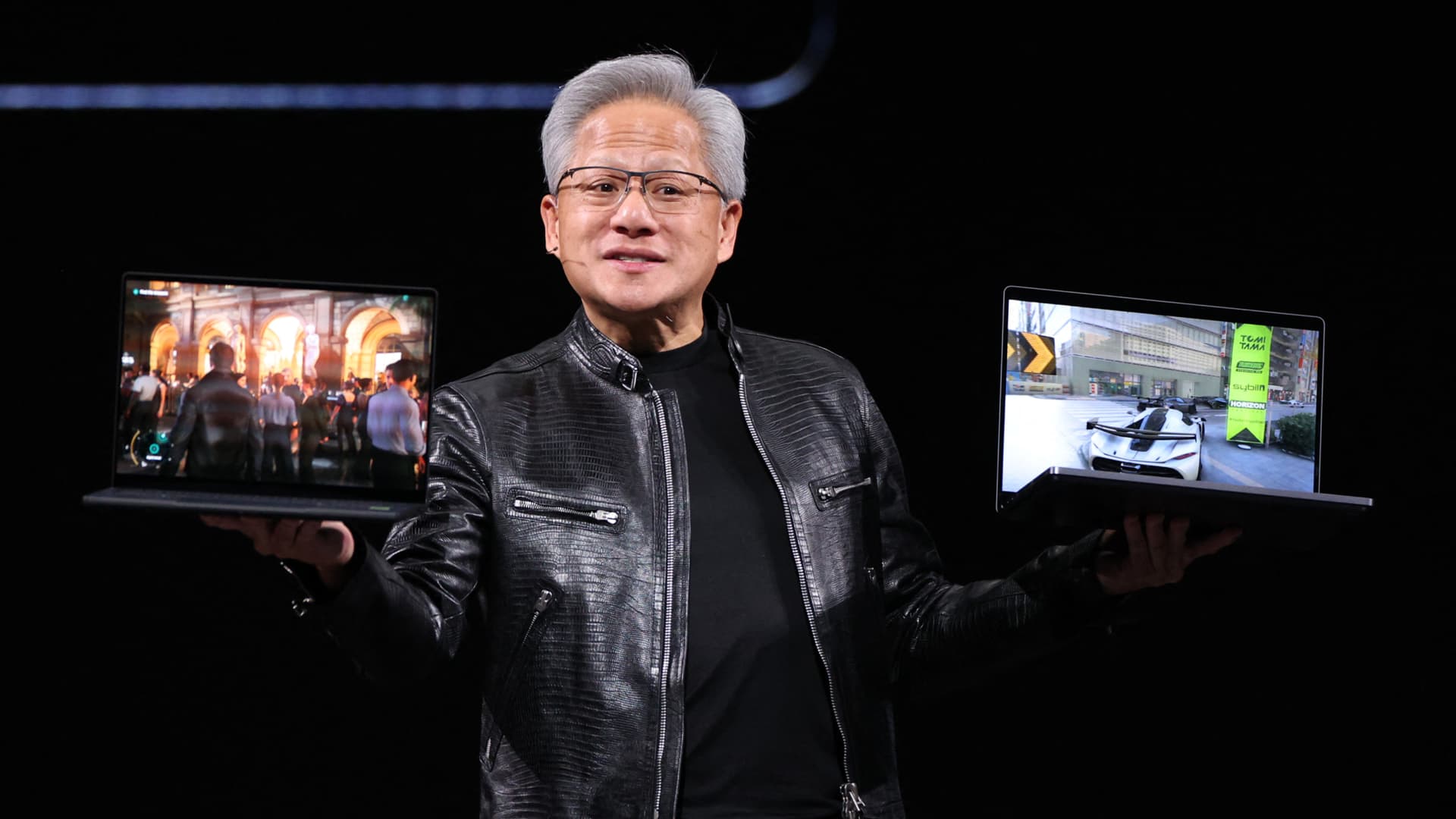
Nvidia Unveils N1X Processor, Set to Transform Personal Computing Market


- Processor Launch: Nvidia unveiled the N1X processor developed in collaboration with Microsoft at Computex in Taipei, marking its entry into the personal computer market with plans to release over 30 laptops and 10 desktops, significantly enhancing its competitive edge.
- Technological Innovation: The new processor integrates Nvidia's Blackwell GPU with an Arm-based N1X CPU designed by MediaTek, manufactured using TSMC's 3-nanometer technology, which is expected to drive a shift in the PC industry towards Arm architecture, challenging traditional x86 processors from Intel and AMD.
- Market Potential: Nvidia anticipates the PC processor market will reach $200 billion, and the introduction of the N1X processor not only addresses the high-performance computing needs of AI workloads but also reinforces the company's leadership position in the rapidly growing AI market.
- Energy Efficiency Improvement: Nvidia's Vera CPU is now in full production, capable of generating data center tokens 1.8 times faster than x86, showcasing exceptional energy efficiency and performance, positioning it as a key growth driver for future AI factories.
See More

US Stock Indices Reach All-Time Highs Amid Positive Economic Signals


- Strong Market Performance: The S&P 500 rose by 0.22%, the Dow Jones Industrial Average increased by 0.72%, and the Nasdaq 100 climbed by 0.36%, with all three indices reaching new all-time highs, reflecting market confidence in economic recovery.
- Tech Stocks Lead Gains: Dell Technologies surged 32% after reporting Q1 total revenue of $43.84 billion, significantly exceeding the consensus estimate of $35.52 billion, and raised its 2027 revenue forecast to between $165 billion and $169 billion, indicating strong market demand and growth potential.
- Positive Economic Data: The May Chicago PMI rose by 13.5 to 62.7, far surpassing expectations of 50.3, marking the fastest expansion pace in 4.25 years, which further bolstered market confidence in stocks.
- Oil Price Decline Benefits Stocks: Crude oil prices fell over 1% to a five-week low due to a preliminary agreement between the US and Iran, easing inflation concerns and supporting the upward trend in the stock market.
See More

Software Stocks Rally as Snowflake and Okta Report Strong Results

- Snowflake's Strong Performance: Snowflake saw a nearly 50% increase over four trading days following the holiday, announcing a $6 billion cloud and chip deal with Amazon, which reflects a surge in customer demand for AI tools and boosts the company's earnings guidance.
- Investor Confidence in Okta: Okta achieved a record 30% gain on Friday, with better-than-expected results indicating that businesses are ramping up investments in identity security tools to combat the rising threat of bot attacks as they transition to agentic AI.
- ETF Performance Surge: The iShares Expanded Tech-Software ETF rose 8% this week and is up 21% for May, marking its best monthly performance since October 2001, signaling a gradual recovery of market confidence in the software sector.
- Overall Industry Recovery: Companies like Atlassian and ServiceNow saw increases of 26% and over 20%, respectively, indicating a clear recovery trend in the software industry driven by partnerships with AI, despite Microsoft still being down nearly 7% year-to-date.
See More
ServiceNow Shares Surge 14% as AI Boosts Software Sector Confidence
- Significant Stock Surge: ServiceNow's shares jumped 14% by noon, reflecting increased investor confidence in the positive impact of artificial intelligence on the software industry, indicating a bullish outlook for the company's future growth.
- Sector-Wide Rally: This surge coincided with stronger earnings updates across the software sector, alleviating investor concerns about AI potentially pressuring traditional software vendors, thereby boosting overall market sentiment.
- Recognition of AI Integration Strategy: Investors showed encouragement towards ServiceNow's AI integration strategy and customer feedback on its hybrid pricing model, which not only enhances the company's competitive position but also has the potential to drive future revenue growth.
- Restoration of Market Confidence: This rally suggests that software investors are beginning to reassess the role of AI, viewing it not just as a threat but as a growth driver for the industry, which may attract more capital into related stocks.
See More
Wedbush Analyst Bullish on Tech Stocks
- AI Supercycle Emergence: Dan Ives from Wedbush highlights that the tech sector is in the early stages of an AI supercycle, which is expected to drive strong performance in related stocks, particularly in the chip sector.
- Chip Market Leaders: Ives emphasizes Nvidia as the 'Godfather' of AI, alongside AMD and Micron in the memory market, indicating that this supercycle will continue to evolve and boost overall tech stock prices.
- Cloud Giants' Performance: Microsoft (MSFT) and Oracle (ORCL) are identified by Ives as top picks in the cloud computing space, benefiting from the expanding AI technology and increasing market demand, which will enhance their market positions.
- Positive Market Reaction: In Monday's pre-market trading, shares of Nvidia, Microsoft, Micron, and Oracle rose between 2% and 5%, reflecting investor confidence in these tech stocks, despite AMD's share price declining by about 4%.
See More
Nvidia Launches N1X Processor to Enter PC Market
- Processor Launch: Nvidia unveiled the N1X processor at the Computex conference in Taipei, marking its entry into the PC market with plans to collaborate with Microsoft, Dell, HP, and others to launch over 30 laptops and 10 desktops, showcasing Nvidia's strong influence in the AI chip sector.
- Technological Innovation: The N1X processor combines Nvidia's Blackwell GPU with an Arm-based CPU designed by MediaTek, featuring 128GB of unified memory and manufactured using TSMC's 3-nanometer technology, which is expected to significantly enhance PC performance, particularly in AI applications.
- Market Potential: Nvidia anticipates the PC market will reach $200 billion, and the launch of the N1X could disrupt Intel and AMD's dominance in the traditional x86 processor market, promoting the widespread adoption of Arm architecture to meet the needs of creators and AI developers.
- Vera CPU Production: Nvidia's Vera CPU is now in full production and set to launch in the fall, with early customers including OpenAI and SpaceX, boasting performance 1.8 times that of current x86 processors, indicating Nvidia's strong growth potential in the data center market.
See More
Nvidia Unveils N1X Processor, Set to Transform Personal Computing Market
- Processor Launch: Nvidia unveiled the N1X processor developed in collaboration with Microsoft at Computex in Taipei, marking its entry into the personal computer market with plans to release over 30 laptops and 10 desktops, significantly enhancing its competitive edge.
- Technological Innovation: The new processor integrates Nvidia's Blackwell GPU with an Arm-based N1X CPU designed by MediaTek, manufactured using TSMC's 3-nanometer technology, which is expected to drive a shift in the PC industry towards Arm architecture, challenging traditional x86 processors from Intel and AMD.
- Market Potential: Nvidia anticipates the PC processor market will reach $200 billion, and the introduction of the N1X processor not only addresses the high-performance computing needs of AI workloads but also reinforces the company's leadership position in the rapidly growing AI market.
- Energy Efficiency Improvement: Nvidia's Vera CPU is now in full production, capable of generating data center tokens 1.8 times faster than x86, showcasing exceptional energy efficiency and performance, positioning it as a key growth driver for future AI factories.
See More
US Stock Indices Reach All-Time Highs Amid Positive Economic Signals
- Strong Market Performance: The S&P 500 rose by 0.22%, the Dow Jones Industrial Average increased by 0.72%, and the Nasdaq 100 climbed by 0.36%, with all three indices reaching new all-time highs, reflecting market confidence in economic recovery.
- Tech Stocks Lead Gains: Dell Technologies surged 32% after reporting Q1 total revenue of $43.84 billion, significantly exceeding the consensus estimate of $35.52 billion, and raised its 2027 revenue forecast to between $165 billion and $169 billion, indicating strong market demand and growth potential.
- Positive Economic Data: The May Chicago PMI rose by 13.5 to 62.7, far surpassing expectations of 50.3, marking the fastest expansion pace in 4.25 years, which further bolstered market confidence in stocks.
- Oil Price Decline Benefits Stocks: Crude oil prices fell over 1% to a five-week low due to a preliminary agreement between the US and Iran, easing inflation concerns and supporting the upward trend in the stock market.
See More
Software Stocks Rally as Snowflake and Okta Report Strong Results
- Snowflake's Strong Performance: Snowflake saw a nearly 50% increase over four trading days following the holiday, announcing a $6 billion cloud and chip deal with Amazon, which reflects a surge in customer demand for AI tools and boosts the company's earnings guidance.
- Investor Confidence in Okta: Okta achieved a record 30% gain on Friday, with better-than-expected results indicating that businesses are ramping up investments in identity security tools to combat the rising threat of bot attacks as they transition to agentic AI.
- ETF Performance Surge: The iShares Expanded Tech-Software ETF rose 8% this week and is up 21% for May, marking its best monthly performance since October 2001, signaling a gradual recovery of market confidence in the software sector.
- Overall Industry Recovery: Companies like Atlassian and ServiceNow saw increases of 26% and over 20%, respectively, indicating a clear recovery trend in the software industry driven by partnerships with AI, despite Microsoft still being down nearly 7% year-to-date.
See More