Occidental Petroleum Reduces Debt and Positions for Market Growth
Written by Emily J. Thompson, Senior Investment Analyst
Updated: 1 hour ago
0mins
Should l Buy OXY?
Source: Fool
- Debt Reduction Success: Occidental Petroleum has successfully paid down $13.9 billion in debt over the past 20 months, reducing its total debt from nearly $48 billion to approximately $34 billion, significantly improving its financial health and boosting market confidence.
- Strong Cash Flow Performance: Despite falling oil prices, the company generated $4.3 billion in free cash flow during the year, primarily driven by robust performance in its midstream and marketing segments, particularly in the Permian Basin.
- Growing Natural Gas Demand Potential: Last year, Occidental sold an average of 2,278 million cubic feet per day of natural gas globally and holds 7,745 billion cubic feet of proven natural gas reserves, with expectations for sustained demand growth over the next decade, providing a strong tailwind for the company.
- Risk of Reduced Business Diversity: The sale of its chemical business, OxyChem, to Berkshire Hathaway, while aiding debt reduction, has diminished the company's ability to hedge against volatility in energy commodity prices, potentially leading to increased earnings volatility in the future.
Trade with 70% Backtested Accuracy
Stop guessing "Should I Buy OXY?" and start using high-conviction signals backed by rigorous historical data.
Sign up today to access powerful investing tools and make smarter, data-driven decisions.
Analyst Views on OXY
Wall Street analysts forecast OXY stock price to fall
16 Analyst Rating
4 Buy
9 Hold
3 Sell
Hold
Current: 51.430

Low
38.00
Averages
47.27
High
64.00
Current: 51.430
Low
38.00
Averages
47.27
High
64.00
About OXY
Occidental Petroleum Corporation is an international energy company with assets primarily in the United States, the Middle East and North Africa. The Company is an oil and gas producer in the United States, including a producer in the Permian and DJ basins, and the offshore Gulf of Mexico. It operates through three segments: oil and gas, chemical and midstream and marketing. The oil and gas segment explores for, develops, and produces oil (which includes condensate), natural gas liquids (NGL) and natural gas. The chemical segment primarily manufactures and markets basic chemicals and vinyls. The midstream and marketing segment purchases, markets, gathers, processes, transports, and stores oil (which includes condensate), NGL, natural gas, carbon dioxide (CO2) and power. The midstream and marketing segment provides flow assurance and maximizes the value of its oil and gas. It also optimizes its transportation and storage capacity and invests in entities that conduct similar activities.
About the author

Emily J. Thompson
Emily J. Thompson, a Chartered Financial Analyst (CFA) with 12 years in investment research, graduated with honors from the Wharton School. Specializing in industrial and technology stocks, she provides in-depth analysis for Intellectia’s earnings and market brief reports.
Occidental Petroleum Significantly Reduces Debt Load
- Significant Debt Reduction: Occidental Petroleum has successfully paid down $13.9 billion in debt over the past 20 months, significantly improving its financial footing and positioning itself favorably for the anticipated growth in energy demand over the next decade.
- Strong Free Cash Flow: The company generated $4.3 billion in free cash flow over the past year, primarily driven by robust performance in its midstream and marketing segments, maintaining solid earnings despite declining oil prices.
- Growing Natural Gas Demand: Last year, Occidental sold an average of 2,278 million cubic feet per day of natural gas globally and holds 7,745 billion cubic feet of proven natural gas reserves, which is expected to benefit from rising demand from data centers and utility providers.
- Capital Structure Constraints: Although the company has reduced its principal debt, it still has approximately $8.3 billion in preferred stock outstanding, having paid $679 million in preferred dividends last year, which limits its ability to pay common dividends and increases earnings volatility risk.
See More
Investment Opportunities in Energy Stocks
- Market Sentiment: Energy stocks are currently unloved, particularly viewed as 'dirty' by ESG investors; however, they serve as a natural hedge in portfolios during oil price surges, which often coincide with global economic disruptions.
- Chevron's Expansion Strategy: Chevron (CVX) recently acquired Hess and plans to invest $18 billion to $19 billion in global exploration by 2026, producing 4 million barrels of oil daily, which constitutes about 4% of global output, significantly enhancing its profitability.
- Occidental's Market Position: Occidental Petroleum (OXY) is a major natural gas producer in the Permian Basin, with production below 1.5 million barrels per day; as electricity demand from data centers surges, natural gas prices are expected to rise, potentially boosting its earnings.
- Earnings Volatility: Occidental generated $2.5 billion in net income over the last year, a stark decline from over $10 billion at its peak; while short-term natural gas price drops may hurt profits, long-term demand growth could provide a solid foundation for recovery.
See More
Occidental Petroleum Reduces Debt and Positions for Market Growth
- Debt Reduction Success: Occidental Petroleum has successfully paid down $13.9 billion in debt over the past 20 months, reducing its total debt from nearly $48 billion to approximately $34 billion, significantly improving its financial health and boosting market confidence.
- Strong Cash Flow Performance: Despite falling oil prices, the company generated $4.3 billion in free cash flow during the year, primarily driven by robust performance in its midstream and marketing segments, particularly in the Permian Basin.
- Growing Natural Gas Demand Potential: Last year, Occidental sold an average of 2,278 million cubic feet per day of natural gas globally and holds 7,745 billion cubic feet of proven natural gas reserves, with expectations for sustained demand growth over the next decade, providing a strong tailwind for the company.
- Risk of Reduced Business Diversity: The sale of its chemical business, OxyChem, to Berkshire Hathaway, while aiding debt reduction, has diminished the company's ability to hedge against volatility in energy commodity prices, potentially leading to increased earnings volatility in the future.
See More
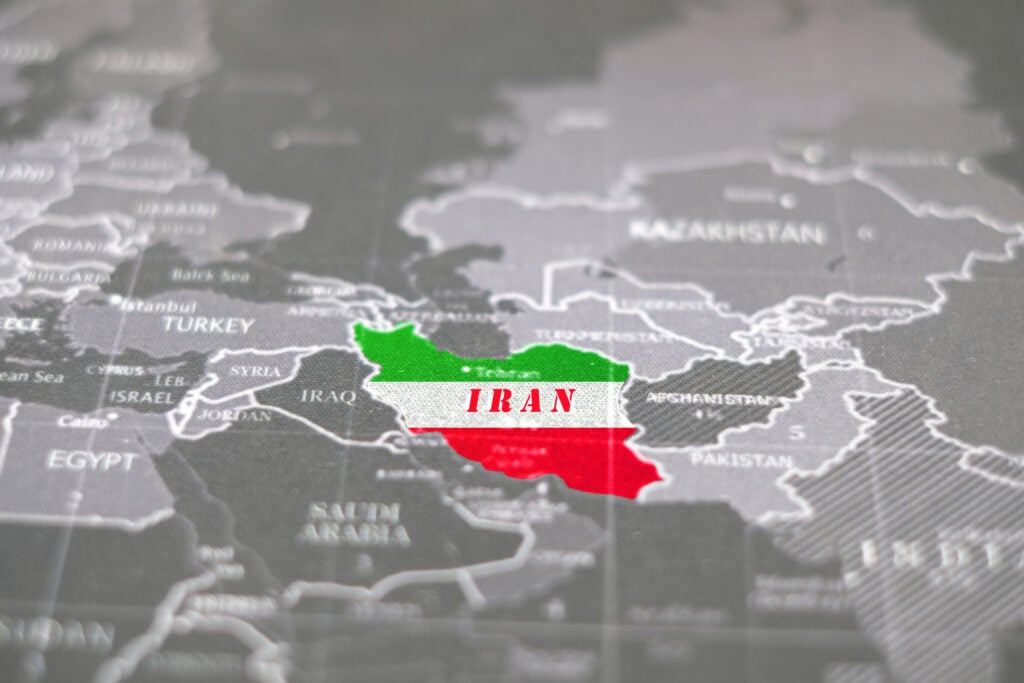
Oil Prices Expected to Surge Amid U.S.-Iran Conflict Fears


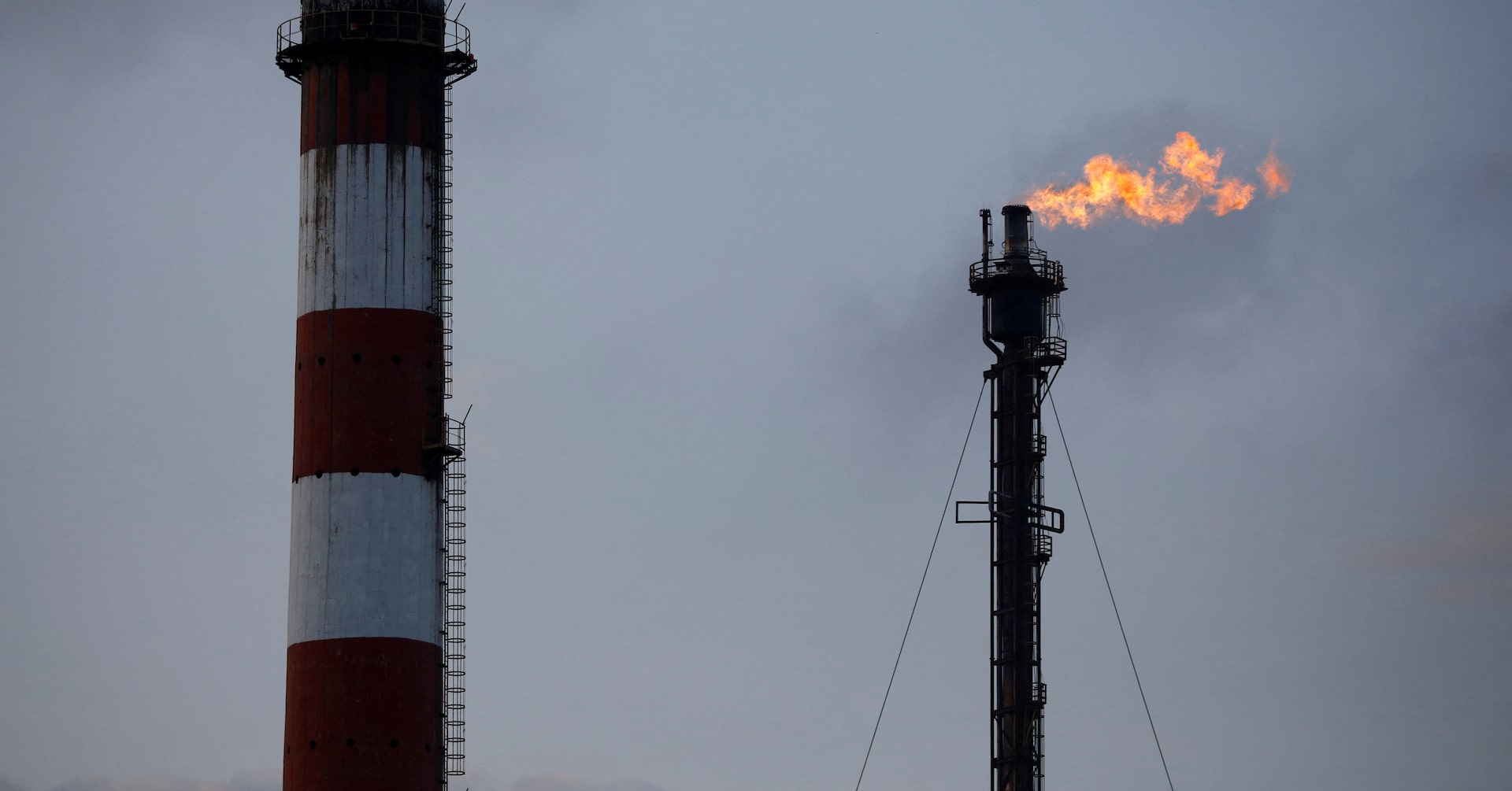
- Price Predictions: Market participants anticipate U.S. crude oil prices could rise to $73 per barrel from the current $67.02, reflecting a 17% increase year-to-date due to fears surrounding the Iran conflict.
- Brent Crude Outlook: Brent crude futures closed at $73.21 on Friday, up 20% this year, with expectations of a potential $20 surge at market open, indicating strong market reactions to supply disruption fears.
- Strait of Hormuz Impact: The Strait of Hormuz, a critical oil transport route, saw an average of 14 million barrels per day in 2025; any escalation in conflict could lead to a complete halt in tanker traffic, significantly affecting global oil supply.
- Analyst Insights: Barclays analysts predict Brent crude could hit $100 per barrel at market open, highlighting the market's acute sensitivity to potential supply disruptions and the significant uncertainty surrounding the situation's resolution.
See More

Abel Commits to Uphold Berkshire's Culture

- Cultural Continuity Commitment: New CEO Greg Abel emphasized in his letter to shareholders that Berkshire's culture and values will remain unchanged, committing to uphold the great legacy built by Buffett and Munger, thereby ensuring the company's long-term stability and excellence.
- Buyback and Dividend Policy: Abel reiterated that Berkshire will continue to repurchase shares when they trade below intrinsic value and will not pay dividends, ensuring that every dollar of retained earnings creates reasonable market value for shareholders, reflecting the company's cautious approach to capital allocation.
- Cash Flow and Investment Strategy: Despite a 2.2% decrease in Berkshire's cash reserves to $373.3 billion in Q4, Abel stated that the company will maintain a 'fortress-like' balance sheet, ensuring flexibility to respond to investment opportunities, demonstrating confidence in future growth.
- Leadership and Investment Management: Abel confirmed that he is ultimately responsible for Berkshire's equity investments and did not disclose a successor for insurance chief Ajit Jain, indicating stability and continuity in the company's leadership amid transitions.
See More
Berkshire's New CEO Reaffirms Conservative Investment Culture

- Leadership Transition: Greg Abel's inaugural annual letter reassures that Berkshire Hathaway will uphold the financial conservatism established by Warren Buffett, ensuring the company's financial strength and capital discipline for the future.
- Cash Reserve Strategy: With a cash pile of $373.3 billion at the end of 2025, Abel views this as strategic dry powder, enabling swift responses to opportunities while maintaining the company's resilience.
- Equity Investment Management: Abel will directly oversee the equity portfolio, emphasizing a concentrated investment approach in a few American companies, with plans to 'significantly adjust' positions if long-term economic prospects change.
- Long-Term Commitment: Abel commits to managing Berkshire for the long term, stating that while he won't serve as CEO for 60 years like Buffett, he aims for shareholders and their descendants to be proud of the company's strength in 20 years.
See More
Occidental Petroleum Significantly Reduces Debt Load
- Significant Debt Reduction: Occidental Petroleum has successfully paid down $13.9 billion in debt over the past 20 months, significantly improving its financial footing and positioning itself favorably for the anticipated growth in energy demand over the next decade.
- Strong Free Cash Flow: The company generated $4.3 billion in free cash flow over the past year, primarily driven by robust performance in its midstream and marketing segments, maintaining solid earnings despite declining oil prices.
- Growing Natural Gas Demand: Last year, Occidental sold an average of 2,278 million cubic feet per day of natural gas globally and holds 7,745 billion cubic feet of proven natural gas reserves, which is expected to benefit from rising demand from data centers and utility providers.
- Capital Structure Constraints: Although the company has reduced its principal debt, it still has approximately $8.3 billion in preferred stock outstanding, having paid $679 million in preferred dividends last year, which limits its ability to pay common dividends and increases earnings volatility risk.
See More
Investment Opportunities in Energy Stocks
- Market Sentiment: Energy stocks are currently unloved, particularly viewed as 'dirty' by ESG investors; however, they serve as a natural hedge in portfolios during oil price surges, which often coincide with global economic disruptions.
- Chevron's Expansion Strategy: Chevron (CVX) recently acquired Hess and plans to invest $18 billion to $19 billion in global exploration by 2026, producing 4 million barrels of oil daily, which constitutes about 4% of global output, significantly enhancing its profitability.
- Occidental's Market Position: Occidental Petroleum (OXY) is a major natural gas producer in the Permian Basin, with production below 1.5 million barrels per day; as electricity demand from data centers surges, natural gas prices are expected to rise, potentially boosting its earnings.
- Earnings Volatility: Occidental generated $2.5 billion in net income over the last year, a stark decline from over $10 billion at its peak; while short-term natural gas price drops may hurt profits, long-term demand growth could provide a solid foundation for recovery.
See More
Occidental Petroleum Reduces Debt and Positions for Market Growth
- Debt Reduction Success: Occidental Petroleum has successfully paid down $13.9 billion in debt over the past 20 months, reducing its total debt from nearly $48 billion to approximately $34 billion, significantly improving its financial health and boosting market confidence.
- Strong Cash Flow Performance: Despite falling oil prices, the company generated $4.3 billion in free cash flow during the year, primarily driven by robust performance in its midstream and marketing segments, particularly in the Permian Basin.
- Growing Natural Gas Demand Potential: Last year, Occidental sold an average of 2,278 million cubic feet per day of natural gas globally and holds 7,745 billion cubic feet of proven natural gas reserves, with expectations for sustained demand growth over the next decade, providing a strong tailwind for the company.
- Risk of Reduced Business Diversity: The sale of its chemical business, OxyChem, to Berkshire Hathaway, while aiding debt reduction, has diminished the company's ability to hedge against volatility in energy commodity prices, potentially leading to increased earnings volatility in the future.
See More
Oil Prices Expected to Surge Amid U.S.-Iran Conflict Fears
- Price Predictions: Market participants anticipate U.S. crude oil prices could rise to $73 per barrel from the current $67.02, reflecting a 17% increase year-to-date due to fears surrounding the Iran conflict.
- Brent Crude Outlook: Brent crude futures closed at $73.21 on Friday, up 20% this year, with expectations of a potential $20 surge at market open, indicating strong market reactions to supply disruption fears.
- Strait of Hormuz Impact: The Strait of Hormuz, a critical oil transport route, saw an average of 14 million barrels per day in 2025; any escalation in conflict could lead to a complete halt in tanker traffic, significantly affecting global oil supply.
- Analyst Insights: Barclays analysts predict Brent crude could hit $100 per barrel at market open, highlighting the market's acute sensitivity to potential supply disruptions and the significant uncertainty surrounding the situation's resolution.
See More
Abel Commits to Uphold Berkshire's Culture
- Cultural Continuity Commitment: New CEO Greg Abel emphasized in his letter to shareholders that Berkshire's culture and values will remain unchanged, committing to uphold the great legacy built by Buffett and Munger, thereby ensuring the company's long-term stability and excellence.
- Buyback and Dividend Policy: Abel reiterated that Berkshire will continue to repurchase shares when they trade below intrinsic value and will not pay dividends, ensuring that every dollar of retained earnings creates reasonable market value for shareholders, reflecting the company's cautious approach to capital allocation.
- Cash Flow and Investment Strategy: Despite a 2.2% decrease in Berkshire's cash reserves to $373.3 billion in Q4, Abel stated that the company will maintain a 'fortress-like' balance sheet, ensuring flexibility to respond to investment opportunities, demonstrating confidence in future growth.
- Leadership and Investment Management: Abel confirmed that he is ultimately responsible for Berkshire's equity investments and did not disclose a successor for insurance chief Ajit Jain, indicating stability and continuity in the company's leadership amid transitions.
See More
Berkshire's New CEO Reaffirms Conservative Investment Culture
- Leadership Transition: Greg Abel's inaugural annual letter reassures that Berkshire Hathaway will uphold the financial conservatism established by Warren Buffett, ensuring the company's financial strength and capital discipline for the future.
- Cash Reserve Strategy: With a cash pile of $373.3 billion at the end of 2025, Abel views this as strategic dry powder, enabling swift responses to opportunities while maintaining the company's resilience.
- Equity Investment Management: Abel will directly oversee the equity portfolio, emphasizing a concentrated investment approach in a few American companies, with plans to 'significantly adjust' positions if long-term economic prospects change.
- Long-Term Commitment: Abel commits to managing Berkshire for the long term, stating that while he won't serve as CEO for 60 years like Buffett, he aims for shareholders and their descendants to be proud of the company's strength in 20 years.
See More