

Nvidia's New Superchip Reinvents the PC Market
Written by Emily J. Thompson, Senior Investment Analyst
Updated: 2 days ago
0mins


Source: NASDAQ.COM
- Market Competition Shift: Nvidia's new RTX-Spark superchip, developed in collaboration with Microsoft and MediaTek to integrate AI agents, signifies a major transformation in the PC market, posing a direct threat to traditional competitors like Intel, AMD, and Qualcomm.
- Widespread Industry Adoption: RTX-Spark has garnered support from multiple PC manufacturers, including ASUS, Dell, and HP, with plans to launch new laptops and compact desktops this fall, indicating strong industry recognition and demand for the new technology.
- Financial Impact Analysis: While Nvidia's data center business accounts for 92% of its revenue, Huang forecasts a $200 billion CPU market, suggesting that while Nvidia's potential in the PC market is significant, its immediate impact on overall performance may be limited.
- Technological Innovation and Future Outlook: Huang asserts that this PC reinvention is as significant as the evolution of smartphones, and although RTX-Spark may not immediately drive stock prices up, its strategic importance provides investors with a new focal point that could influence future market dynamics.
Trade with 70% Backtested Accuracy
Stop guessing "Should I Buy NVDA?" and start using high-conviction signals backed by rigorous historical data.
Sign up today to access powerful investing tools and make smarter, data-driven decisions.
Analyst Views on NVDA
Wall Street analysts forecast NVDA stock price to rise
41 Analyst Rating
39 Buy
1 Hold
1 Sell
Strong Buy
Current: 200.420

Low
200.00
Averages
264.97
High
352.00
Current: 200.420
Low
200.00
Averages
264.97
High
352.00
About NVDA
NVIDIA Corporation is an artificial intelligence (AI) infrastructure company. The Company is engaged in accelerated computing to help solve the challenging computational problems. Its segments include Compute & Networking and Graphics. The Compute & Networking segment includes its Data Center accelerated computing and networking platforms and AI solutions and software, and automotive platforms and autonomous and electric vehicle solutions, including software. The Graphics segment includes GeForce GPUs for gaming and personal computers (PCs), and Quadro/NVIDIA RTX GPUs for enterprise workstation graphics. Its technology stack includes the foundational NVIDIA CUDA development platform that runs on all NVIDIA GPUs, as well as hundreds of domain-specific software libraries, frameworks, algorithms, software development kits (SDKs), and application programming interfaces (APIs). Its platforms address four markets, which include Data Center, Gaming, Professional Visualization, and Automotive.
About the author

Emily J. Thompson
Emily J. Thompson, a Chartered Financial Analyst (CFA) with 12 years in investment research, graduated with honors from the Wharton School. Specializing in industrial and technology stocks, she provides in-depth analysis for Intellectia’s earnings and market brief reports.
Nvidia's AI Boom Yields Massive Returns for Shareholders

- Significant Revenue Growth: Nvidia reported a record revenue of $81.6 billion for Q1 of fiscal 2027, marking an 85% year-over-year increase and a 20% quarter-over-quarter rise, indicating robust financial performance driven by its AI initiatives.
- Surge in Data Center Revenue: The company's data center revenue skyrocketed by 92% year-over-year to $75.2 billion, reflecting relentless demand for its Blackwell and Vera Rubin AI chips, thereby solidifying its dominant position in the data center GPU market.
- Cash Flow and Shareholder Returns: Nvidia generated $50.3 billion in operating cash flow and $48.5 billion in free cash flow in Q1, despite a 58% increase in R&D spending to $6.3 billion, and plans to return over 50% of free cash flow to shareholders, potentially distributing up to $110 billion over the next two years.
- Massive Dividend Increase: The company raised its quarterly dividend from $0.01 to $0.25 per share, a 25-fold increase, resulting in a dividend yield of approximately 0.5%, which not only showcases its strong cash generation capabilities but also underscores its commitment to shareholders and confidence in future growth.
See More
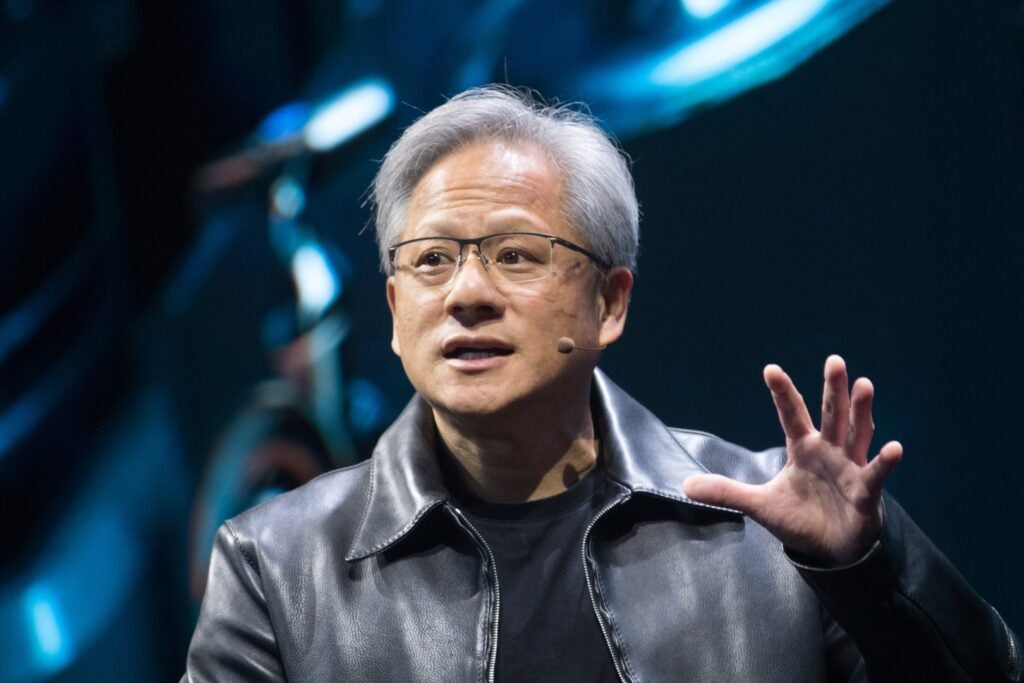
Nvidia's Shareholder Return Plan Significantly Enhanced
- Market Dominance: Nvidia's GPUs command a 95% share in the gaming market while expanding applications in AI and cloud computing, driving the company's market cap to $5 trillion, making it the world's most valuable company.
- Strong Financial Performance: In Q1 of fiscal 2027, Nvidia reported an 85% year-over-year revenue increase to $81.6 billion, with a gross margin of 74.9%, leading to a 140% surge in adjusted EPS to $1.87, showcasing robust AI-driven demand.
- Cash Flow Growth: Nvidia generated operating cash flow of $50.3 billion and free cash flow of $48.5 billion, despite a 58% increase in R&D spending to $6.3 billion, demonstrating strong cash generation capabilities while continuing to invest.
- Shareholder Return Plan: Nvidia plans to return over 50% of its free cash flow to shareholders, potentially distributing up to $110 billion over the next two years, significantly enhancing shareholder value through buybacks or increased dividends.
See More
Amazon's Investment in Anthropic Could Yield Massive Returns

- Massive Investment: Amazon has invested $13 billion in AI startup Anthropic, with an option for an additional $20 billion contingent on certain milestones, showcasing Amazon's ambition in the AI sector while potentially benefiting its AWS cloud business significantly.
- Cloud Service Collaboration: Anthropic has committed to spending at least $100 billion on AWS cloud services over the next decade, ensuring Amazon secures a vital position in the growing demand for AI infrastructure and further solidifying its partnership with Anthropic.
- Potential Gains: As of March 31, Amazon valued its investment in Anthropic at over $74 billion, and if Anthropic's valuation reaches $965 billion, Amazon's stake could be worth between $145 billion and $193 billion, highlighting the substantial upside of this investment.
- Market Impact: While Amazon's market cap stands at $2.7 trillion, its investment in Anthropic could yield up to $200 billion in returns, which may attract increased investor attention to Amazon's stock performance and further enhance its market value.
See More

SpaceX IPO Sets Record with $75 Billion Raised

- Historic IPO: SpaceX priced its IPO at $135 per share, raising approximately $75 billion by selling 555.6 million shares, making it the largest IPO in U.S. history and significantly boosting the company's valuation to $1.77 trillion.
- Market Rebound: U.S. stock indices surged as hopes for a resolution in the U.S.-Iran conflict led to a 1.8% rise in the S&P 500, a 3.3% increase in the Nasdaq 100, and a 1.9% gain in the Dow Jones, reflecting investor optimism about market prospects.
- Tech Stocks Lead Gains: Technology stocks saw significant gains, with Nvidia, Google, and Amazon all rising, and Micron Technology leading with an 11.6% increase, indicating strong confidence in the tech sector's performance.
- Oil Price Decline Impact: Following Trump's announcement to cancel military strikes against Iran, West Texas Intermediate crude futures fell 2.58%, alleviating inflation concerns and providing support for recovery in other sectors.
See More

SpaceX Plans Record IPO Valuation Over $1.7 Trillion

- Market Giants Performance: Over the past three years, tech and growth stocks like Nvidia and Tesla have surged by 400% and 70%, respectively, attracting investor interest and demonstrating strong market confidence in innovative companies.
- IPO Plans Attract Attention: SpaceX is set to launch its IPO on June 12, targeting a valuation exceeding $1.7 trillion, following the IPO of AI chip company Cerebras Systems, highlighting market enthusiasm for the space and AI sectors.
- Diversified Business Advantages: Through its reusable rockets and Starlink internet service, SpaceX generated $4.4 billion in operating income last year, which mitigates risks associated with any single business and enhances overall profitability.
- Investment Risk Warning: Despite SpaceX's strong growth potential, its capital expenditures of $12 billion and a market valuation of $780 billion, compared to a private market valuation of $1.5 trillion, indicate investment risks, suggesting that investors should proceed with caution.
See More

Oracle Reports Strong Earnings Amid Rising Expenditures

- Strong Earnings: Oracle's fiscal Q4 2026 revenue rose 21% year-over-year to $19.2 billion, with cloud revenue surging 47% to $9.9 billion, indicating robust performance in the cloud market.
- Expenditure Pressure: Despite solid results, Oracle's capital expenditures reached $55.7 billion in fiscal 2026, exceeding management's forecast of $50 billion, resulting in a negative free cash flow of $23.7 billion, which alarmed investors.
- AI Market Opportunities: Oracle's collaboration with Nvidia is driving the deployment of AI superclusters, with nearly 1GW of capacity expected to come online, and total contract value with customers has reached $75 billion, reflecting strong demand for AI hardware.
- Supplier Benefits: As Oracle's spending increases, suppliers like Nvidia, AMD, and Dell are set to benefit directly, with AI server revenue expectations raised from $50 billion to $60 billion, highlighting strong market demand for AI infrastructure.
See More
Nvidia's AI Boom Yields Massive Returns for Shareholders
- Significant Revenue Growth: Nvidia reported a record revenue of $81.6 billion for Q1 of fiscal 2027, marking an 85% year-over-year increase and a 20% quarter-over-quarter rise, indicating robust financial performance driven by its AI initiatives.
- Surge in Data Center Revenue: The company's data center revenue skyrocketed by 92% year-over-year to $75.2 billion, reflecting relentless demand for its Blackwell and Vera Rubin AI chips, thereby solidifying its dominant position in the data center GPU market.
- Cash Flow and Shareholder Returns: Nvidia generated $50.3 billion in operating cash flow and $48.5 billion in free cash flow in Q1, despite a 58% increase in R&D spending to $6.3 billion, and plans to return over 50% of free cash flow to shareholders, potentially distributing up to $110 billion over the next two years.
- Massive Dividend Increase: The company raised its quarterly dividend from $0.01 to $0.25 per share, a 25-fold increase, resulting in a dividend yield of approximately 0.5%, which not only showcases its strong cash generation capabilities but also underscores its commitment to shareholders and confidence in future growth.
See More
Nvidia's Shareholder Return Plan Significantly Enhanced
- Market Dominance: Nvidia's GPUs command a 95% share in the gaming market while expanding applications in AI and cloud computing, driving the company's market cap to $5 trillion, making it the world's most valuable company.
- Strong Financial Performance: In Q1 of fiscal 2027, Nvidia reported an 85% year-over-year revenue increase to $81.6 billion, with a gross margin of 74.9%, leading to a 140% surge in adjusted EPS to $1.87, showcasing robust AI-driven demand.
- Cash Flow Growth: Nvidia generated operating cash flow of $50.3 billion and free cash flow of $48.5 billion, despite a 58% increase in R&D spending to $6.3 billion, demonstrating strong cash generation capabilities while continuing to invest.
- Shareholder Return Plan: Nvidia plans to return over 50% of its free cash flow to shareholders, potentially distributing up to $110 billion over the next two years, significantly enhancing shareholder value through buybacks or increased dividends.
See More
Amazon's Investment in Anthropic Could Yield Massive Returns
- Massive Investment: Amazon has invested $13 billion in AI startup Anthropic, with an option for an additional $20 billion contingent on certain milestones, showcasing Amazon's ambition in the AI sector while potentially benefiting its AWS cloud business significantly.
- Cloud Service Collaboration: Anthropic has committed to spending at least $100 billion on AWS cloud services over the next decade, ensuring Amazon secures a vital position in the growing demand for AI infrastructure and further solidifying its partnership with Anthropic.
- Potential Gains: As of March 31, Amazon valued its investment in Anthropic at over $74 billion, and if Anthropic's valuation reaches $965 billion, Amazon's stake could be worth between $145 billion and $193 billion, highlighting the substantial upside of this investment.
- Market Impact: While Amazon's market cap stands at $2.7 trillion, its investment in Anthropic could yield up to $200 billion in returns, which may attract increased investor attention to Amazon's stock performance and further enhance its market value.
See More
SpaceX IPO Sets Record with $75 Billion Raised
- Historic IPO: SpaceX priced its IPO at $135 per share, raising approximately $75 billion by selling 555.6 million shares, making it the largest IPO in U.S. history and significantly boosting the company's valuation to $1.77 trillion.
- Market Rebound: U.S. stock indices surged as hopes for a resolution in the U.S.-Iran conflict led to a 1.8% rise in the S&P 500, a 3.3% increase in the Nasdaq 100, and a 1.9% gain in the Dow Jones, reflecting investor optimism about market prospects.
- Tech Stocks Lead Gains: Technology stocks saw significant gains, with Nvidia, Google, and Amazon all rising, and Micron Technology leading with an 11.6% increase, indicating strong confidence in the tech sector's performance.
- Oil Price Decline Impact: Following Trump's announcement to cancel military strikes against Iran, West Texas Intermediate crude futures fell 2.58%, alleviating inflation concerns and providing support for recovery in other sectors.
See More
SpaceX Plans Record IPO Valuation Over $1.7 Trillion
- Market Giants Performance: Over the past three years, tech and growth stocks like Nvidia and Tesla have surged by 400% and 70%, respectively, attracting investor interest and demonstrating strong market confidence in innovative companies.
- IPO Plans Attract Attention: SpaceX is set to launch its IPO on June 12, targeting a valuation exceeding $1.7 trillion, following the IPO of AI chip company Cerebras Systems, highlighting market enthusiasm for the space and AI sectors.
- Diversified Business Advantages: Through its reusable rockets and Starlink internet service, SpaceX generated $4.4 billion in operating income last year, which mitigates risks associated with any single business and enhances overall profitability.
- Investment Risk Warning: Despite SpaceX's strong growth potential, its capital expenditures of $12 billion and a market valuation of $780 billion, compared to a private market valuation of $1.5 trillion, indicate investment risks, suggesting that investors should proceed with caution.
See More
Oracle Reports Strong Earnings Amid Rising Expenditures
- Strong Earnings: Oracle's fiscal Q4 2026 revenue rose 21% year-over-year to $19.2 billion, with cloud revenue surging 47% to $9.9 billion, indicating robust performance in the cloud market.
- Expenditure Pressure: Despite solid results, Oracle's capital expenditures reached $55.7 billion in fiscal 2026, exceeding management's forecast of $50 billion, resulting in a negative free cash flow of $23.7 billion, which alarmed investors.
- AI Market Opportunities: Oracle's collaboration with Nvidia is driving the deployment of AI superclusters, with nearly 1GW of capacity expected to come online, and total contract value with customers has reached $75 billion, reflecting strong demand for AI hardware.
- Supplier Benefits: As Oracle's spending increases, suppliers like Nvidia, AMD, and Dell are set to benefit directly, with AI server revenue expectations raised from $50 billion to $60 billion, highlighting strong market demand for AI infrastructure.
See More




