Nvidia Set to Release Q1 FY2027 Earnings on May 20
Written by Emily J. Thompson, Senior Investment Analyst
Updated: 2 days ago
0mins


Should l Buy NVDA?
Source: Fool
- Hyperscaler Spending Surge: Major cloud service providers like Amazon, Microsoft, and Alphabet are ramping up capital expenditures for AI-related projects, with Microsoft expected to spend $190 billion in 2026 and Amazon planning around $200 billion, indicating sustained demand for Nvidia's AI chips that could lead to a beat-and-raise quarter.
- Strong Peer Performance: AMD and Intel recently reported earnings that exceeded analyst expectations, with AMD's revenue growing 38% year-over-year to $10.3 billion and its data center unit soaring 57% to $5.8 billion, highlighting robust demand in the AI market that supports Nvidia's upcoming performance.
- Attractive Valuation for Investors: Despite Nvidia's stock trading at a forward P/E of 26.5, which is above the tech sector average of 24.4, its dominant market share and competitive moat suggest that the current valuation remains attractive, potentially offering a good buying opportunity for investors.
- Market Reaction Expectations: While the market's reaction to Nvidia's upcoming earnings report may be muted, the company's leadership in the AI chip market and strong customer demand are expected to drive stock price increases, making it a wise decision for investors to consider purchasing shares before May 20.
Trade with 70% Backtested Accuracy
Stop guessing "Should I Buy NVDA?" and start using high-conviction signals backed by rigorous historical data.
Sign up today to access powerful investing tools and make smarter, data-driven decisions.
Analyst Views on NVDA
Wall Street analysts forecast NVDA stock price to rise
41 Analyst Rating
39 Buy
1 Hold
1 Sell
Strong Buy
Current: 235.740

Low
200.00
Averages
264.97
High
352.00
Current: 235.740
Low
200.00
Averages
264.97
High
352.00
About NVDA
NVIDIA Corporation is an artificial intelligence (AI) infrastructure company. The Company is engaged in accelerated computing to help solve the challenging computational problems. Its segments include Compute & Networking and Graphics. The Compute & Networking segment includes its Data Center accelerated computing and networking platforms and AI solutions and software, and automotive platforms and autonomous and electric vehicle solutions, including software. The Graphics segment includes GeForce GPUs for gaming and personal computers (PCs), and Quadro/NVIDIA RTX GPUs for enterprise workstation graphics. Its technology stack includes the foundational NVIDIA CUDA development platform that runs on all NVIDIA GPUs, as well as hundreds of domain-specific software libraries, frameworks, algorithms, software development kits (SDKs), and application programming interfaces (APIs). Its platforms address four markets, which include Data Center, Gaming, Professional Visualization, and Automotive.
About the author

Emily J. Thompson
Emily J. Thompson, a Chartered Financial Analyst (CFA) with 12 years in investment research, graduated with honors from the Wharton School. Specializing in industrial and technology stocks, she provides in-depth analysis for Intellectia’s earnings and market brief reports.
Nvidia Market Cap Surpasses $5.36 Trillion

- Market Recovery: Nvidia (NVDA) saw its market cap dip below $5 trillion earlier this year, but since March, its stock has surged 18%, currently valued at $5.36 trillion, outperforming the S&P 500 and indicating strong market recovery potential.
- AI Technology Leadership: With its deep expertise in GPUs, Nvidia has positioned itself as a key driver of artificial intelligence development, and its latest Vera Rubin architecture is expected to be widely adopted by every cloud model builder, further solidifying its market position.
- Optimistic Earnings Forecast: Nvidia is expected to report a 79% sales increase in its upcoming May 20 earnings report for Q1 2027, with projected earnings per share rising from $0.81 last year to $1.78, showcasing robust profitability and market confidence.
- Investor Confidence Restored: Following strong Q1 earnings reports from major AI developers like Amazon and Alphabet, market confidence in Nvidia's growth prospects has been restored, with CEO Jensen Huang's mention of a $1 trillion sales opportunity further fueling investor optimism.
See More
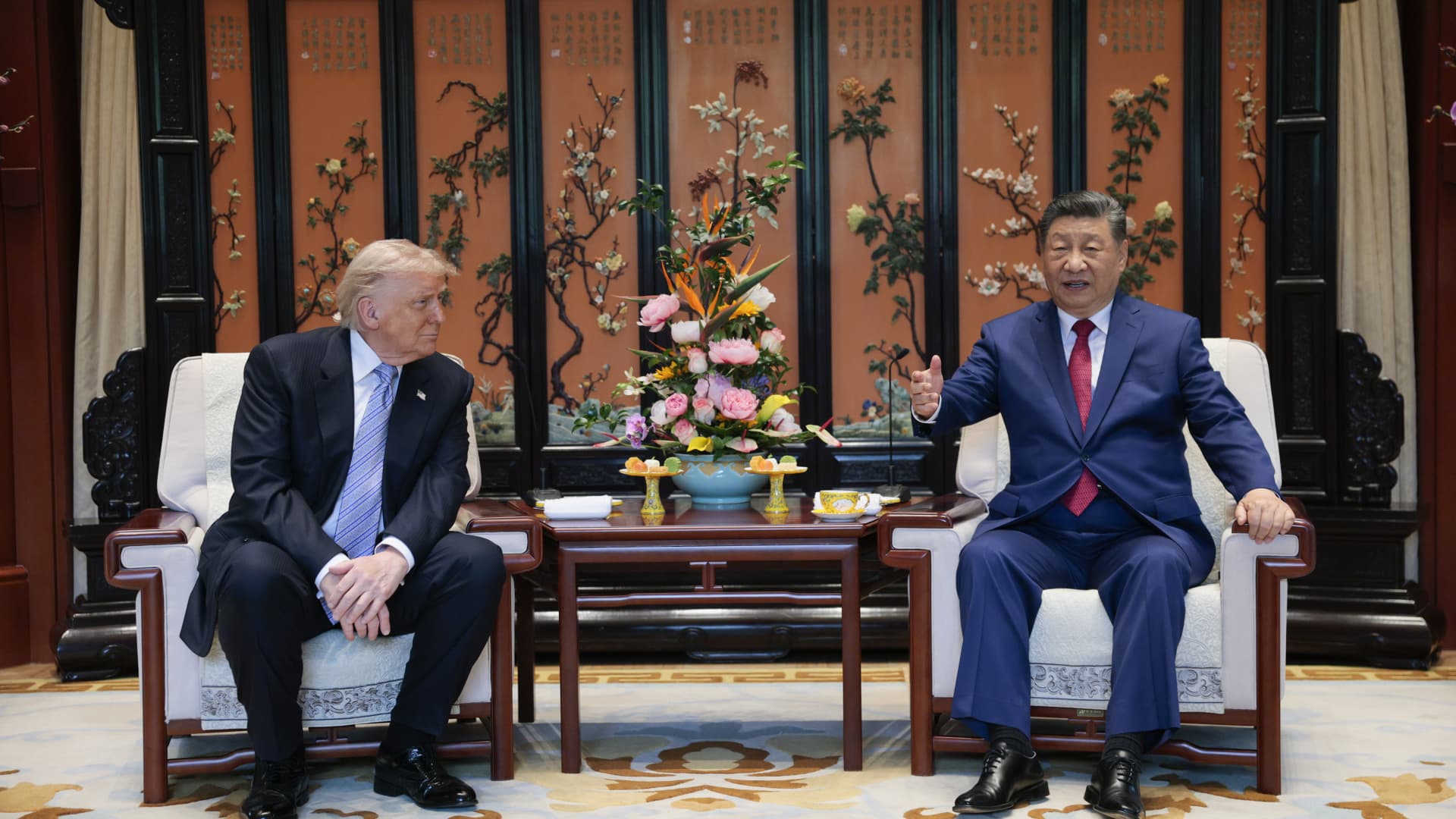
Trump Invites Xi to White House for Trade Talks
- Meeting Context: On May 15, 2026, U.S. President Trump met with Chinese President Xi Jinping at Zhongnanhai Garden in Beijing, discussing future trade negotiations, highlighting the complexity and significance of U.S.-China relations.
- White House Invitation: Trump announced at a state dinner his invitation for Xi to visit the White House on September 24, indicating that trade talks will extend beyond this week's two-day summit in Beijing, potentially influencing future economic policy directions.
- Strategic Stability Framework: Xi stated that both nations agreed to a framework of 'strategic stability' for the next three years, which could lay the groundwork for long-term development in bilateral relations, although specific agreements remain unconfirmed.
- Future Meeting Arrangements: The two leaders may meet again during the UN General Assembly in September, the APEC meeting in November, and the G20 meeting in December, providing opportunities for further economic cooperation in these significant international forums.
See More
Trump's Meeting with Xi Boosts Oil Prices Amid Trade Talks


- Trump's Visit Outcomes: Following his meetings with Xi, Trump announced that China agreed to purchase U.S. crude oil, although Beijing has not confirmed this plan, leading to a rise in oil prices and indicating potential improvement in U.S.-China trade relations.
- Cerebras IPO Performance: Cerebras surged 68% on its Nasdaq debut, reaching a market cap of approximately $95 billion, marking the largest IPO in the U.S. tech sector in years, which made its founders billionaires and reflects strong market demand for emerging technologies.
- Market Dynamics Recap: The Dow Jones Industrial Average surged back above 50,000, while the S&P 500 closed above 7,500 for the first time, showcasing a robust rebound driven by surging demand for AI infrastructure, particularly with Cisco's stock rising over 13%.
- Automotive Industry Layoffs: Legacy automakers have collectively cut over 20,000 U.S. salaried jobs, about 19% of their workforce, as they adapt to technological changes, raising concerns among lawmakers about the impact of Chinese car manufacturers entering the U.S. market.
See More

AI Semiconductor Rally Expands Beyond Nvidia to Multiple Companies

- Market Focus Expansion: The AI-driven semiconductor rally is broadening as investors increasingly turn to companies like Micron, AMD, and Intel, indicating a desire for diversified investment opportunities, particularly amid ongoing memory shortages.
- Micron's Market Advantage: Micron has emerged as a key beneficiary of persistent memory shortages, with analysts noting that the rally is not solely tied to AI demand, as non-AI memory products and rising DRAM prices have also boosted its margins, reflecting strong market demand for memory products.
- AMD and Intel's Resurgence: AMD and Intel have benefited from renewed enthusiasm around CPUs, with investors positioning for the rise of “agentic AI,” which is expected to require more processing power, although analysts caution that AMD's recent momentum is more closely linked to its server CPU business than its AI GPU segment.
- Arm and Credo's Outlook: Arm has attracted attention due to its deep ties with hyperscalers like Amazon and Google, with investors betting that its CPU designs could benefit from the rise in custom AI chip development, while Credo Technology has rallied on expectations of strong demand for high-speed networking products used in AI data centers.
See More
Wall Street's Latest Upgrade Calls Overview


- RXO Upgrade: Stifel upgraded RXO from hold to buy, citing a favorable market setup emerging into the latter half of 2026, particularly at the intersection of improving brokerage fundamentals and unique idiosyncratic levers, indicating potential growth opportunities.
- Cisco Rating Boost: HSBC upgraded Cisco to buy from hold following the company's recent earnings report, raising the price target from $77 to $137, reflecting strong momentum in AI infrastructure and improved earnings visibility.
- Arista Networks Upgrade: Raymond James upgraded Arista Networks from market perform to outperform, anticipating improved sales growth in 2027 and beyond, particularly as the company expands into AI backend and campus applications, enhancing its market share.
- Dell Reiteration: Morgan Stanley reiterated its overweight rating on Dell, raising the price target from $205 to $280, expecting the company to raise its FY27 earnings guidance again, although supply visibility still needs to catch up with the high demand outlook for AI servers.
See More

End of Fed Chair Era Sparks Market Volatility

- Fed Chair Transition: Jerome Powell's last day as Fed Chair coincides with falling stock futures, indicating investor uncertainty regarding future monetary policy, which may lead to increased market volatility in the short term.
- Cerebras IPO Success: Cerebras shares surged 68% on their Nasdaq debut, pushing the company's market cap to approximately $95 billion, marking the largest IPO in the U.S. tech sector in years and reflecting strong demand and renewed investor confidence in high-tech firms.
- Automotive Industry Layoffs: The Detroit Three automakers—GM, Ford, and Stellantis—have collectively cut over 20,000 U.S. salaried jobs, about 19% of their combined workforce, highlighting the industry's struggle to adapt to AI and technological changes, which could impact future production capabilities.
- Crypto Regulation Progress: The Senate Banking Committee approved the Clarity Act, providing a regulatory framework for the cryptocurrency industry despite opposition from banks and law enforcement, indicating lawmakers' recognition of the crypto market's significance and potential compliance challenges ahead.
See More
Nvidia Market Cap Surpasses $5.36 Trillion
- Market Recovery: Nvidia (NVDA) saw its market cap dip below $5 trillion earlier this year, but since March, its stock has surged 18%, currently valued at $5.36 trillion, outperforming the S&P 500 and indicating strong market recovery potential.
- AI Technology Leadership: With its deep expertise in GPUs, Nvidia has positioned itself as a key driver of artificial intelligence development, and its latest Vera Rubin architecture is expected to be widely adopted by every cloud model builder, further solidifying its market position.
- Optimistic Earnings Forecast: Nvidia is expected to report a 79% sales increase in its upcoming May 20 earnings report for Q1 2027, with projected earnings per share rising from $0.81 last year to $1.78, showcasing robust profitability and market confidence.
- Investor Confidence Restored: Following strong Q1 earnings reports from major AI developers like Amazon and Alphabet, market confidence in Nvidia's growth prospects has been restored, with CEO Jensen Huang's mention of a $1 trillion sales opportunity further fueling investor optimism.
See More
Trump Invites Xi to White House for Trade Talks
- Meeting Context: On May 15, 2026, U.S. President Trump met with Chinese President Xi Jinping at Zhongnanhai Garden in Beijing, discussing future trade negotiations, highlighting the complexity and significance of U.S.-China relations.
- White House Invitation: Trump announced at a state dinner his invitation for Xi to visit the White House on September 24, indicating that trade talks will extend beyond this week's two-day summit in Beijing, potentially influencing future economic policy directions.
- Strategic Stability Framework: Xi stated that both nations agreed to a framework of 'strategic stability' for the next three years, which could lay the groundwork for long-term development in bilateral relations, although specific agreements remain unconfirmed.
- Future Meeting Arrangements: The two leaders may meet again during the UN General Assembly in September, the APEC meeting in November, and the G20 meeting in December, providing opportunities for further economic cooperation in these significant international forums.
See More
Trump's Meeting with Xi Boosts Oil Prices Amid Trade Talks
- Trump's Visit Outcomes: Following his meetings with Xi, Trump announced that China agreed to purchase U.S. crude oil, although Beijing has not confirmed this plan, leading to a rise in oil prices and indicating potential improvement in U.S.-China trade relations.
- Cerebras IPO Performance: Cerebras surged 68% on its Nasdaq debut, reaching a market cap of approximately $95 billion, marking the largest IPO in the U.S. tech sector in years, which made its founders billionaires and reflects strong market demand for emerging technologies.
- Market Dynamics Recap: The Dow Jones Industrial Average surged back above 50,000, while the S&P 500 closed above 7,500 for the first time, showcasing a robust rebound driven by surging demand for AI infrastructure, particularly with Cisco's stock rising over 13%.
- Automotive Industry Layoffs: Legacy automakers have collectively cut over 20,000 U.S. salaried jobs, about 19% of their workforce, as they adapt to technological changes, raising concerns among lawmakers about the impact of Chinese car manufacturers entering the U.S. market.
See More
AI Semiconductor Rally Expands Beyond Nvidia to Multiple Companies
- Market Focus Expansion: The AI-driven semiconductor rally is broadening as investors increasingly turn to companies like Micron, AMD, and Intel, indicating a desire for diversified investment opportunities, particularly amid ongoing memory shortages.
- Micron's Market Advantage: Micron has emerged as a key beneficiary of persistent memory shortages, with analysts noting that the rally is not solely tied to AI demand, as non-AI memory products and rising DRAM prices have also boosted its margins, reflecting strong market demand for memory products.
- AMD and Intel's Resurgence: AMD and Intel have benefited from renewed enthusiasm around CPUs, with investors positioning for the rise of “agentic AI,” which is expected to require more processing power, although analysts caution that AMD's recent momentum is more closely linked to its server CPU business than its AI GPU segment.
- Arm and Credo's Outlook: Arm has attracted attention due to its deep ties with hyperscalers like Amazon and Google, with investors betting that its CPU designs could benefit from the rise in custom AI chip development, while Credo Technology has rallied on expectations of strong demand for high-speed networking products used in AI data centers.
See More
Wall Street's Latest Upgrade Calls Overview
- RXO Upgrade: Stifel upgraded RXO from hold to buy, citing a favorable market setup emerging into the latter half of 2026, particularly at the intersection of improving brokerage fundamentals and unique idiosyncratic levers, indicating potential growth opportunities.
- Cisco Rating Boost: HSBC upgraded Cisco to buy from hold following the company's recent earnings report, raising the price target from $77 to $137, reflecting strong momentum in AI infrastructure and improved earnings visibility.
- Arista Networks Upgrade: Raymond James upgraded Arista Networks from market perform to outperform, anticipating improved sales growth in 2027 and beyond, particularly as the company expands into AI backend and campus applications, enhancing its market share.
- Dell Reiteration: Morgan Stanley reiterated its overweight rating on Dell, raising the price target from $205 to $280, expecting the company to raise its FY27 earnings guidance again, although supply visibility still needs to catch up with the high demand outlook for AI servers.
See More
End of Fed Chair Era Sparks Market Volatility
- Fed Chair Transition: Jerome Powell's last day as Fed Chair coincides with falling stock futures, indicating investor uncertainty regarding future monetary policy, which may lead to increased market volatility in the short term.
- Cerebras IPO Success: Cerebras shares surged 68% on their Nasdaq debut, pushing the company's market cap to approximately $95 billion, marking the largest IPO in the U.S. tech sector in years and reflecting strong demand and renewed investor confidence in high-tech firms.
- Automotive Industry Layoffs: The Detroit Three automakers—GM, Ford, and Stellantis—have collectively cut over 20,000 U.S. salaried jobs, about 19% of their combined workforce, highlighting the industry's struggle to adapt to AI and technological changes, which could impact future production capabilities.
- Crypto Regulation Progress: The Senate Banking Committee approved the Clarity Act, providing a regulatory framework for the cryptocurrency industry despite opposition from banks and law enforcement, indicating lawmakers' recognition of the crypto market's significance and potential compliance challenges ahead.
See More