NVIDIA Plans $150B Annual Investment in Taiwan
Written by Emily J. Thompson, Senior Investment Analyst
Updated: May 31 2026
0mins
Source: Yahoo Finance
- Investment Plan: NVIDIA CEO Jensen Huang announced plans to invest approximately $150 billion annually in Taiwan, highlighting the country's significance as a global technology manufacturing hub, which is expected to further drive AI industry growth.
- Spending Growth: NVIDIA's annual spending in Taiwan has surged from $10-15 billion four to five years ago to $100 billion, with projections to reach $150 billion, significantly enhancing its competitive position in the AI sector.
- Financial Performance: In Q1 2026, NVIDIA reported an adjusted EPS of $1.87, surpassing the consensus estimate of $1.77, with revenue of $81.6 billion exceeding expectations of $79.12 billion, showcasing the company's robust performance in AI factory development.
- Analyst Rating: Tigress Financial raised NVIDIA's price target from $360 to $425 while maintaining a Strong Buy rating, indicating a potential total return of 98% over the next 12 months, further solidifying its core position in the AI investment cycle.
Trade with 70% Backtested Accuracy
Stop guessing "Should I Buy NVDA?" and start using high-conviction signals backed by rigorous historical data.
Sign up today to access powerful investing tools and make smarter, data-driven decisions.
Analyst Views on NVDA
Wall Street analysts forecast NVDA stock price to rise
41 Analyst Rating
39 Buy
1 Hold
1 Sell
Strong Buy
Current: 200.040

Low
200.00
Averages
264.97
High
352.00
Current: 200.040
Low
200.00
Averages
264.97
High
352.00
About NVDA
NVIDIA Corporation is an artificial intelligence (AI) infrastructure company. The Company is engaged in accelerated computing to help solve the challenging computational problems. Its segments include Compute & Networking and Graphics. The Compute & Networking segment includes its Data Center accelerated computing and networking platforms and AI solutions and software, and automotive platforms and autonomous and electric vehicle solutions, including software. The Graphics segment includes GeForce GPUs for gaming and personal computers (PCs), and Quadro/NVIDIA RTX GPUs for enterprise workstation graphics. Its technology stack includes the foundational NVIDIA CUDA development platform that runs on all NVIDIA GPUs, as well as hundreds of domain-specific software libraries, frameworks, algorithms, software development kits (SDKs), and application programming interfaces (APIs). Its platforms address four markets, which include Data Center, Gaming, Professional Visualization, and Automotive.
About the author

Emily J. Thompson
Emily J. Thompson, a Chartered Financial Analyst (CFA) with 12 years in investment research, graduated with honors from the Wharton School. Specializing in industrial and technology stocks, she provides in-depth analysis for Intellectia’s earnings and market brief reports.

Nvidia's AI Infrastructure Growth Accelerates

- Data Center Revenue Surge: Nvidia's data center revenue reached a record $75.2 billion in the first quarter of fiscal 2027, marking a 92% year-over-year increase, reflecting robust demand for its hardware and software and underscoring the company's central role in AI infrastructure development.
- Optimistic Capital Expenditure Outlook: Analysts project that hyperscaler capital spending could exceed $1 trillion by 2027, positioning Nvidia, as the dominant supplier of accelerated computing platforms, to capture a significant share of this spending, further driving company growth.
- New CPU Platform Launch: Nvidia's Vera CPU, designed for the emerging era of agentic AI, has been delivered to leading AI labs and cloud providers, optimizing integration with its GPUs and expected to accelerate growth in its data center business.
- Valuation Expansion Potential: Nvidia's current P/E ratio is well below historical levels during earlier phases of the AI revolution, and if it re-rates to between 24 and 27 times its expected fiscal 2028 EPS of $12.73, the stock price could exceed $300, implying over 50% upside from current trading levels.
See More
Nvidia Prioritizes U.S. National Security Over Commercial Opportunities
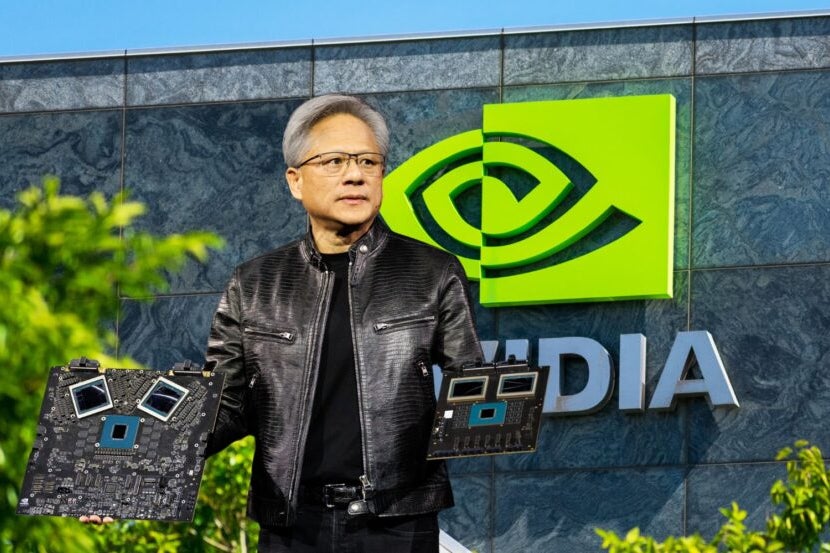
- National Security Priority: Nvidia CEO Jensen Huang stated at the shareholder meeting that the company would prioritize U.S. interests over commercial opportunities if they conflict with national security, emphasizing the importance of national security.
- Export Restriction Challenges: Huang noted that attempting to smuggle Nvidia chips into countries with export restrictions, such as China, would face difficulties as the company would not provide support or repairs, reinforcing its commitment to national security.
- Financial Return Commitment: Nvidia plans to return 50% of its free cash flow to investors through share repurchases and dividends over the next few years, with projected free cash flow exceeding $96 billion in fiscal 2026, showcasing strong financial execution.
- Shareholder Meeting Decisions: At the annual meeting, shareholders approved the executive compensation plan and re-elected all 10 board members, indicating strong support and trust in the company's governance.
See More

VGT Outperforms S&P 500 Driven by Tech Stocks


- Year-to-Date Performance: Despite the impacts of the war with Iran, the S&P 500 is up nearly 8% year-to-date, while the Vanguard Information Technology Index Fund (VGT) has achieved a remarkable 22% return, showcasing its strong performance in tech stock investments.
- Concentration of Holdings: VGT's top five holdings account for over 50% of the fund's assets, with Nvidia at 16.8% and Apple at 15.3%, resulting in a much higher concentration compared to the S&P 500's 27.5%, thereby enhancing its potential for returns.
- Long-Term Return Advantage: Over the past decade, VGT has outperformed the S&P 500 in every period, with returns of 60.4%, 33.2%, 21.9%, and 25.4% over 1, 3, 5, and 10 years respectively, demonstrating the sustained growth potential of tech stocks.
- AI Investment Trends: According to Goldman Sachs, AI-related capital spending is projected to reach $765 billion in 2023 and $1.6 trillion by 2031, creating significant growth opportunities for companies like Nvidia, Broadcom, and Micron, which will further drive VGT's performance.
See More

Three Healthcare Stocks Positioned to Thrive with AI

- Eli Lilly's AI Innovation: Eli Lilly's partnership with Nvidia to build the industry's most powerful supercomputer is expected to shorten the drug discovery phase by 1-2 years, potentially saving around $2.8 billion in R&D costs, enhancing profit margins, and lowering drug prices for patients.
- Novo Nordisk's AI Application: Novo Nordisk's collaboration with OpenAI aims to improve drug development efficiency, particularly in obesity and diabetes treatments; despite recent sales growth challenges, its robust pipeline and the promising UBT251 drug could facilitate a future recovery.
- Intuitive Surgical's Market Leadership: Intuitive Surgical leads the robotic-assisted surgery market and is leveraging AI to analyze extensive surgical data, enhancing the safety and effectiveness of its da Vinci system; despite increased competition, its data advantages and patent protections are expected to ensure long-term returns.
- AI-Driven Industry Transformation: All three companies are actively exploring AI applications, positioning Eli Lilly, Novo Nordisk, and Intuitive Surgical to capitalize on the rapidly evolving healthcare market, driving future growth and innovation.
See More

Costco's Investment Potential and Risks


- Membership Revenue Growth: As of Q3 FY2026, Costco boasts 148.5 million cardholders and 82.9 million paid memberships, reflecting a 4.1% increase from last year, with membership income rising 10.7% due to fee hikes, underscoring strong consumer value perception and enhancing competitive positioning in retail.
- New Store Layout Strategy: Costco is adopting nontraditional multi-floor store layouts, particularly in urban areas, which will enable the company to open more locations in space-constrained regions, thereby expanding its market reach and sustaining growth potential.
- Stable Dividend Returns: Although Costco's dividend yield stands at only 0.6%, it has increased its annual dividend for 22 consecutive years since 2004, with a 226% increase over the past decade and a special $15 dividend payout in January 2024, indicating strong long-term return potential.
- Valuation Risk: Currently trading at a price-to-earnings ratio of 46.1, Costco's stock is more expensive than many fast-growing tech stocks; while high valuation does not preclude investment, caution is advised to avoid potential pullback risks, especially given a 13% decline since its all-time high on May 19.
See More

Eli Lilly and Novo Nordisk Leverage AI to Revolutionize Drug Discovery
- Drug Discovery Efficiency: Eli Lilly's partnership with Nvidia to build the industry's most powerful supercomputer is expected to shorten the drug discovery phase by 1 to 2 years, potentially saving around $2.8 billion in R&D costs, which will enhance profit margins and allow for increased investment in R&D.
- Market Leadership: Eli Lilly holds a leading position in the weight management drug market, and with products like Zepbound and Foundayo, it is poised to significantly benefit from the rapidly growing market demand over the next few years, further enhancing its investment appeal.
- AI Technology Application: Novo Nordisk's collaboration with OpenAI aims to leverage AI to improve drug discovery and development efficiency, particularly in obesity and diabetes treatments; despite facing challenges with slowing sales growth, its robust pipeline still holds strong market potential.
- Robotic Surgery Market Advantage: Intuitive Surgical leads the robotic-assisted surgery market and is utilizing AI to analyze vast amounts of surgical data to enhance the safety and effectiveness of its da Vinci system; despite increasing competition, its market moat and ongoing revenue growth suggest a positive outlook.
See More
Nvidia's AI Infrastructure Growth Accelerates
- Data Center Revenue Surge: Nvidia's data center revenue reached a record $75.2 billion in the first quarter of fiscal 2027, marking a 92% year-over-year increase, reflecting robust demand for its hardware and software and underscoring the company's central role in AI infrastructure development.
- Optimistic Capital Expenditure Outlook: Analysts project that hyperscaler capital spending could exceed $1 trillion by 2027, positioning Nvidia, as the dominant supplier of accelerated computing platforms, to capture a significant share of this spending, further driving company growth.
- New CPU Platform Launch: Nvidia's Vera CPU, designed for the emerging era of agentic AI, has been delivered to leading AI labs and cloud providers, optimizing integration with its GPUs and expected to accelerate growth in its data center business.
- Valuation Expansion Potential: Nvidia's current P/E ratio is well below historical levels during earlier phases of the AI revolution, and if it re-rates to between 24 and 27 times its expected fiscal 2028 EPS of $12.73, the stock price could exceed $300, implying over 50% upside from current trading levels.
See More
Nvidia Prioritizes U.S. National Security Over Commercial Opportunities
- National Security Priority: Nvidia CEO Jensen Huang stated at the shareholder meeting that the company would prioritize U.S. interests over commercial opportunities if they conflict with national security, emphasizing the importance of national security.
- Export Restriction Challenges: Huang noted that attempting to smuggle Nvidia chips into countries with export restrictions, such as China, would face difficulties as the company would not provide support or repairs, reinforcing its commitment to national security.
- Financial Return Commitment: Nvidia plans to return 50% of its free cash flow to investors through share repurchases and dividends over the next few years, with projected free cash flow exceeding $96 billion in fiscal 2026, showcasing strong financial execution.
- Shareholder Meeting Decisions: At the annual meeting, shareholders approved the executive compensation plan and re-elected all 10 board members, indicating strong support and trust in the company's governance.
See More
VGT Outperforms S&P 500 Driven by Tech Stocks
- Year-to-Date Performance: Despite the impacts of the war with Iran, the S&P 500 is up nearly 8% year-to-date, while the Vanguard Information Technology Index Fund (VGT) has achieved a remarkable 22% return, showcasing its strong performance in tech stock investments.
- Concentration of Holdings: VGT's top five holdings account for over 50% of the fund's assets, with Nvidia at 16.8% and Apple at 15.3%, resulting in a much higher concentration compared to the S&P 500's 27.5%, thereby enhancing its potential for returns.
- Long-Term Return Advantage: Over the past decade, VGT has outperformed the S&P 500 in every period, with returns of 60.4%, 33.2%, 21.9%, and 25.4% over 1, 3, 5, and 10 years respectively, demonstrating the sustained growth potential of tech stocks.
- AI Investment Trends: According to Goldman Sachs, AI-related capital spending is projected to reach $765 billion in 2023 and $1.6 trillion by 2031, creating significant growth opportunities for companies like Nvidia, Broadcom, and Micron, which will further drive VGT's performance.
See More
Three Healthcare Stocks Positioned to Thrive with AI
- Eli Lilly's AI Innovation: Eli Lilly's partnership with Nvidia to build the industry's most powerful supercomputer is expected to shorten the drug discovery phase by 1-2 years, potentially saving around $2.8 billion in R&D costs, enhancing profit margins, and lowering drug prices for patients.
- Novo Nordisk's AI Application: Novo Nordisk's collaboration with OpenAI aims to improve drug development efficiency, particularly in obesity and diabetes treatments; despite recent sales growth challenges, its robust pipeline and the promising UBT251 drug could facilitate a future recovery.
- Intuitive Surgical's Market Leadership: Intuitive Surgical leads the robotic-assisted surgery market and is leveraging AI to analyze extensive surgical data, enhancing the safety and effectiveness of its da Vinci system; despite increased competition, its data advantages and patent protections are expected to ensure long-term returns.
- AI-Driven Industry Transformation: All three companies are actively exploring AI applications, positioning Eli Lilly, Novo Nordisk, and Intuitive Surgical to capitalize on the rapidly evolving healthcare market, driving future growth and innovation.
See More
Costco's Investment Potential and Risks
- Membership Revenue Growth: As of Q3 FY2026, Costco boasts 148.5 million cardholders and 82.9 million paid memberships, reflecting a 4.1% increase from last year, with membership income rising 10.7% due to fee hikes, underscoring strong consumer value perception and enhancing competitive positioning in retail.
- New Store Layout Strategy: Costco is adopting nontraditional multi-floor store layouts, particularly in urban areas, which will enable the company to open more locations in space-constrained regions, thereby expanding its market reach and sustaining growth potential.
- Stable Dividend Returns: Although Costco's dividend yield stands at only 0.6%, it has increased its annual dividend for 22 consecutive years since 2004, with a 226% increase over the past decade and a special $15 dividend payout in January 2024, indicating strong long-term return potential.
- Valuation Risk: Currently trading at a price-to-earnings ratio of 46.1, Costco's stock is more expensive than many fast-growing tech stocks; while high valuation does not preclude investment, caution is advised to avoid potential pullback risks, especially given a 13% decline since its all-time high on May 19.
See More
Eli Lilly and Novo Nordisk Leverage AI to Revolutionize Drug Discovery
- Drug Discovery Efficiency: Eli Lilly's partnership with Nvidia to build the industry's most powerful supercomputer is expected to shorten the drug discovery phase by 1 to 2 years, potentially saving around $2.8 billion in R&D costs, which will enhance profit margins and allow for increased investment in R&D.
- Market Leadership: Eli Lilly holds a leading position in the weight management drug market, and with products like Zepbound and Foundayo, it is poised to significantly benefit from the rapidly growing market demand over the next few years, further enhancing its investment appeal.
- AI Technology Application: Novo Nordisk's collaboration with OpenAI aims to leverage AI to improve drug discovery and development efficiency, particularly in obesity and diabetes treatments; despite facing challenges with slowing sales growth, its robust pipeline still holds strong market potential.
- Robotic Surgery Market Advantage: Intuitive Surgical leads the robotic-assisted surgery market and is utilizing AI to analyze vast amounts of surgical data to enhance the safety and effectiveness of its da Vinci system; despite increasing competition, its market moat and ongoing revenue growth suggest a positive outlook.
See More