Nvidia Launches Open Source Quantum AI Model Ising
Nvidia announced the world's first family of open source quantum AI models, Nvidia Ising, designed to help researchers and enterprises build quantum processors capable of running useful applications. Named after a landmark mathematical model that dramatically simplified the understanding of complex physical systems, the Nvidia Ising family provides high-performance, scalable AI tools for quantum error correction and calibration - two of the most critical challenges in building hybrid-quantum classical systems. Ising models run the world's best quantum processor calibration and enable researchers to tackle much larger, more complex problems with quantum computers by delivering up to 2.5 times faster performance and 3 times higher accuracy for the decoding process needed for quantum error correction, the company said. Nvidia added that Nvidia Ising complements the Nvidia CUDA-Q software platform for hybrid quantum-classical computing and integrates with the Nvidia NVQLink QPU-GPU hardware interconnect for real-time control and quantum error correction, providing researchers and developers with a full suite of tools needed to "turn today's qubits into tomorrow's accelerated quantum supercomputers."
Trade with 70% Backtested Accuracy
Analyst Views on NVDA

About NVDA
About the author

Nvidia Stock Soars 1100% Amid AI Boom with Strong Growth Projections

- AI Market Potential: 2023 marks the unofficial start of the AI boom, with Nvidia's stock soaring over 1,100% since then, and projections indicate continued AI spending growth, leaving ample room for further stock appreciation before a potential slowdown in 2030.
- Insatiable GPU Demand: Nvidia's graphics processing units (GPUs) are in high demand, having expanded from gaming to applications in engineering simulations, drug discovery, and cryptocurrency mining, with AI being the largest use case yet to reach peak demand.
- Strong Capital Expenditure Outlook: Nvidia anticipates global data center capital expenditures could rise to $3 trillion to $4 trillion by 2030, representing significant growth potential, positioning Nvidia as a primary beneficiary in this expanding market.
- Impressive Financial Performance: Nvidia achieved a remarkable 73% growth in the last quarter, with revenue projections of 79% and 85% growth for the next two quarters, and despite a seemingly high P/E ratio, the stock is viewed as a bargain considering its future growth potential.
Senator Warren Raises Concerns Over Nvidia's Acquisition of SchedMD
- Acquisition Risk Alert: Senator Warren expressed concerns in a letter to the Defense and Energy Secretaries that Nvidia's acquisition of SchedMD could pose national security risks, particularly due to the Department of Energy and Department of Defense's reliance on SchedMD's workload management software, Slurm.
- Software Dependency Issues: Slurm is recognized as the top software used globally in aerospace and defense, and Nvidia's acquisition transforms this once open-source software into a proprietary product, potentially reducing competition and impacting the operation of government supercomputers.
- Government Dependency Inquiry: Senator Warren requested information on which DOE and DOD systems rely on Nvidia's software or hardware, with a deadline for responses set for May 5, highlighting concerns over the extent of government dependency on Nvidia.
- Nvidia's Response: An Nvidia spokesperson stated that Slurm will continue to be developed and distributed as open-source software, emphasizing their commitment to openness and ongoing enhancements for customers, despite the acquisition raising competition concerns.

Nvidia Stock Price Recovery Outlook
- Stock Performance Issues: Despite Nvidia's accelerating revenue growth over the past six months, its stock price has only increased by about $5, reflecting market caution regarding its future performance, which may impact investor confidence.
- External Factors Impact: The market's focus on Nvidia centers around the return on investment from AI hyperscalers; if these companies fail to generate sufficient cash flows, it could lead to a lower valuation for Nvidia, affecting its stock price.
- Future Growth Potential: Nvidia is expected to launch its new Rubin chip architecture in 2026, which could further drive revenue growth; if cloud computing companies continue to show outsized growth, it will help bolster market confidence in Nvidia.
- Market Confidence Rebuilding: If Nvidia can report solid financial results in the coming months and there is substantial progress in Iran peace talks, it may prompt the market to reassess its stock price, making it a good entry point for investors.
Quantum Computing Stocks Surge Amid Nvidia's AI Models Launch

- Stock Surge: Since the beginning of the week, shares of IonQ and D-Wave Quantum have skyrocketed by 50%, while Rigetti Computing and Quantum Computing have each surged over 20%, reflecting strong market enthusiasm and investment in quantum computing.
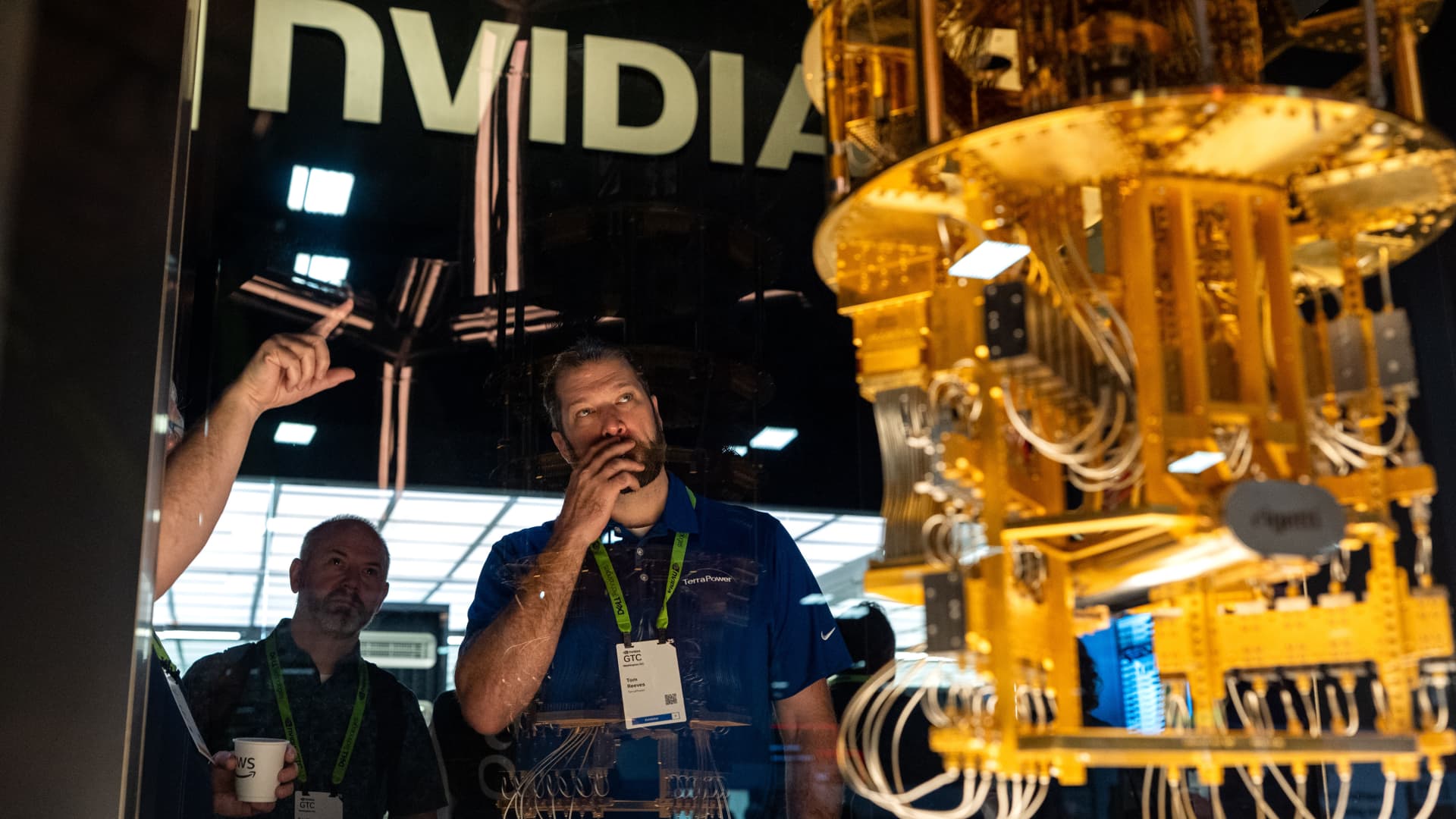
- Nvidia Model Launch: On 'World Quantum Day', Nvidia unveiled the Ising open-source model aimed at accelerating quantum computing adoption, with CEO Jensen Huang stating that AI will serve as the operating system for quantum machines, enhancing their feasibility and reliability.
- Accelerated Tech Investment: The U.S. government and tech giants like Microsoft, Alphabet, and Amazon are heavily investing in quantum computing, which is expected to drive rapid advancements in the coming years, despite the current market size being around $31 billion.
- IonQ Milestone: IonQ announced the successful linking of two remote quantum computers, calling it a 'foundational technical milestone', and secured a contract with the Defense Advanced Research Projects Agency, further solidifying its leadership position in the quantum computing space.

Quantum Computing Stocks Surge Following Nvidia's AI Announcement
- Stock Surge: This week, shares of IonQ and D-Wave Quantum skyrocketed by 50%, while Quantum Computing and Rigetti Computing saw gains of over 20%, reflecting strong market confidence in the future of quantum computing.
- Nvidia's Model Launch: On 'World Quantum Day', Nvidia unveiled the Ising open-source AI model aimed at accelerating quantum computing adoption, with CEO Jensen Huang stating that AI is crucial for making quantum computing practical, potentially transforming the operation of quantum machines.
- Investment Surge: The U.S. government and tech giants like Microsoft, Alphabet, and Amazon are heavily investing in quantum computing, and although the market remains small at around $31 billion, its transformative potential in areas like drug discovery has garnered significant attention.
- Technical Milestone: IonQ announced it successfully linked two remote quantum computers, marking an important technical milestone, and secured a contract with the Defense Advanced Research Projects Agency, further solidifying its position in the quantum computing sector.
TSMC and ASML Report Strong Earnings but Stocks Decline


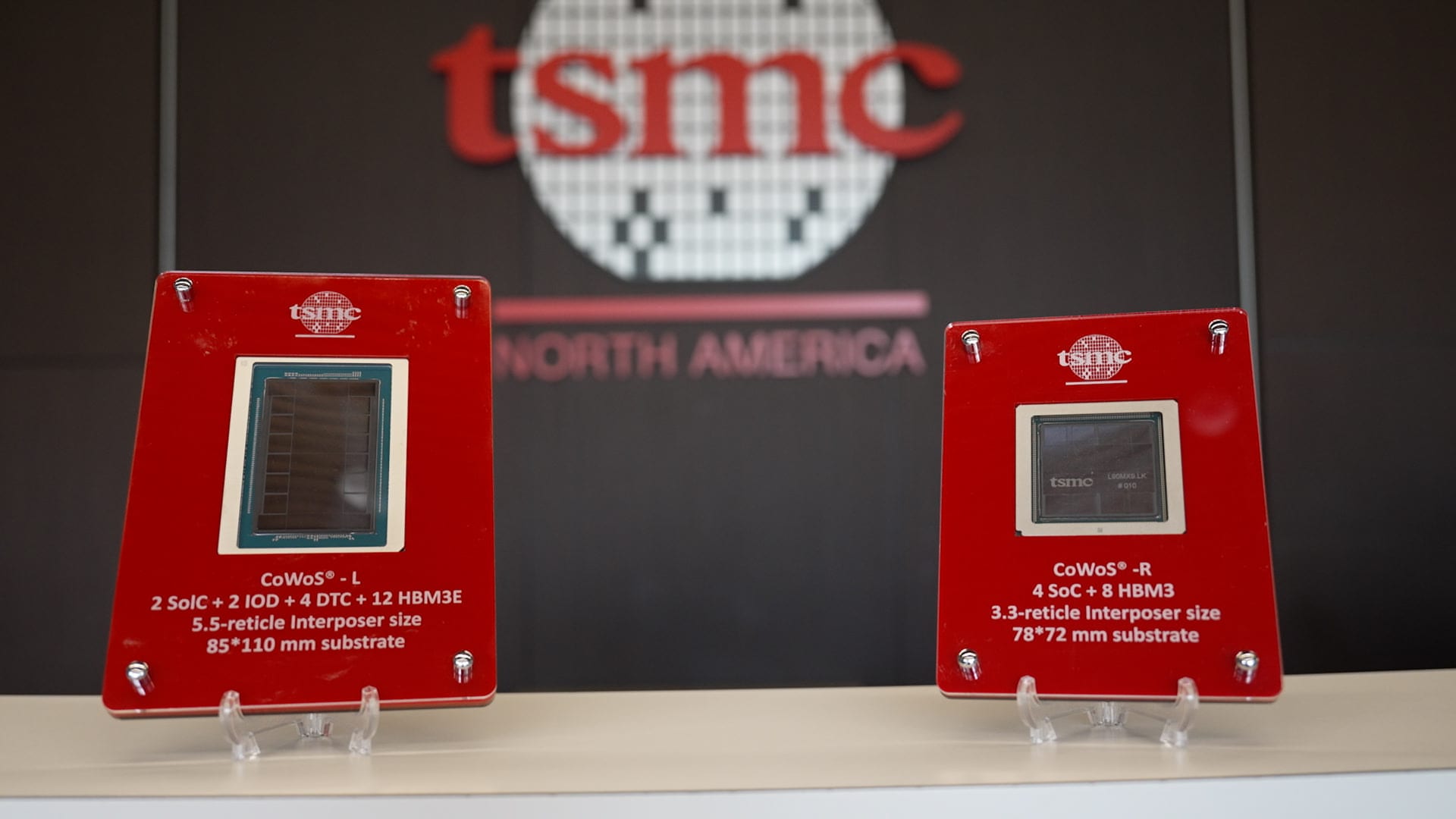
- Record Profits for TSMC: TSMC reported a 58% year-over-year profit increase in Q1, reaching a new high, indicating robust demand for AI chips; however, its stock fell about 2%, reflecting market caution regarding future expectations.
- Rising Revenue from High-Performance Computing: The high-performance computing segment accounted for 61% of TSMC's total revenue in Q1, up from 55% in the previous quarter, highlighting the company's strengthened position in the AI market, despite an 11% decline in smartphone revenue.
- ASML Delivery Expectations: ASML anticipates delivering 80 low numerical aperture EUV machines in 2027, a figure that fell short of market expectations for 90 units, leading to a 3% drop in stock price following the earnings report.
- Increased Capital Expenditure Plans: TSMC expects capital expenditures to reach $52-$56 billion in 2026, significantly up from $40.5 billion in 2025, demonstrating the company's commitment to expanding advanced chip manufacturing capacity, although the market remains cautious about achieving its targeted 30% annual growth.
Nvidia Stock Soars 1100% Amid AI Boom with Strong Growth Projections
- AI Market Potential: 2023 marks the unofficial start of the AI boom, with Nvidia's stock soaring over 1,100% since then, and projections indicate continued AI spending growth, leaving ample room for further stock appreciation before a potential slowdown in 2030.
- Insatiable GPU Demand: Nvidia's graphics processing units (GPUs) are in high demand, having expanded from gaming to applications in engineering simulations, drug discovery, and cryptocurrency mining, with AI being the largest use case yet to reach peak demand.
- Strong Capital Expenditure Outlook: Nvidia anticipates global data center capital expenditures could rise to $3 trillion to $4 trillion by 2030, representing significant growth potential, positioning Nvidia as a primary beneficiary in this expanding market.
- Impressive Financial Performance: Nvidia achieved a remarkable 73% growth in the last quarter, with revenue projections of 79% and 85% growth for the next two quarters, and despite a seemingly high P/E ratio, the stock is viewed as a bargain considering its future growth potential.
Senator Warren Raises Concerns Over Nvidia's Acquisition of SchedMD
- Acquisition Risk Alert: Senator Warren expressed concerns in a letter to the Defense and Energy Secretaries that Nvidia's acquisition of SchedMD could pose national security risks, particularly due to the Department of Energy and Department of Defense's reliance on SchedMD's workload management software, Slurm.
- Software Dependency Issues: Slurm is recognized as the top software used globally in aerospace and defense, and Nvidia's acquisition transforms this once open-source software into a proprietary product, potentially reducing competition and impacting the operation of government supercomputers.
- Government Dependency Inquiry: Senator Warren requested information on which DOE and DOD systems rely on Nvidia's software or hardware, with a deadline for responses set for May 5, highlighting concerns over the extent of government dependency on Nvidia.
- Nvidia's Response: An Nvidia spokesperson stated that Slurm will continue to be developed and distributed as open-source software, emphasizing their commitment to openness and ongoing enhancements for customers, despite the acquisition raising competition concerns.
Nvidia Stock Price Recovery Outlook
- Stock Performance Issues: Despite Nvidia's accelerating revenue growth over the past six months, its stock price has only increased by about $5, reflecting market caution regarding its future performance, which may impact investor confidence.
- External Factors Impact: The market's focus on Nvidia centers around the return on investment from AI hyperscalers; if these companies fail to generate sufficient cash flows, it could lead to a lower valuation for Nvidia, affecting its stock price.
- Future Growth Potential: Nvidia is expected to launch its new Rubin chip architecture in 2026, which could further drive revenue growth; if cloud computing companies continue to show outsized growth, it will help bolster market confidence in Nvidia.
- Market Confidence Rebuilding: If Nvidia can report solid financial results in the coming months and there is substantial progress in Iran peace talks, it may prompt the market to reassess its stock price, making it a good entry point for investors.
Quantum Computing Stocks Surge Amid Nvidia's AI Models Launch
- Stock Surge: Since the beginning of the week, shares of IonQ and D-Wave Quantum have skyrocketed by 50%, while Rigetti Computing and Quantum Computing have each surged over 20%, reflecting strong market enthusiasm and investment in quantum computing.
- Nvidia Model Launch: On 'World Quantum Day', Nvidia unveiled the Ising open-source model aimed at accelerating quantum computing adoption, with CEO Jensen Huang stating that AI will serve as the operating system for quantum machines, enhancing their feasibility and reliability.
- Accelerated Tech Investment: The U.S. government and tech giants like Microsoft, Alphabet, and Amazon are heavily investing in quantum computing, which is expected to drive rapid advancements in the coming years, despite the current market size being around $31 billion.
- IonQ Milestone: IonQ announced the successful linking of two remote quantum computers, calling it a 'foundational technical milestone', and secured a contract with the Defense Advanced Research Projects Agency, further solidifying its leadership position in the quantum computing space.
Quantum Computing Stocks Surge Following Nvidia's AI Announcement
- Stock Surge: This week, shares of IonQ and D-Wave Quantum skyrocketed by 50%, while Quantum Computing and Rigetti Computing saw gains of over 20%, reflecting strong market confidence in the future of quantum computing.
- Nvidia's Model Launch: On 'World Quantum Day', Nvidia unveiled the Ising open-source AI model aimed at accelerating quantum computing adoption, with CEO Jensen Huang stating that AI is crucial for making quantum computing practical, potentially transforming the operation of quantum machines.
- Investment Surge: The U.S. government and tech giants like Microsoft, Alphabet, and Amazon are heavily investing in quantum computing, and although the market remains small at around $31 billion, its transformative potential in areas like drug discovery has garnered significant attention.
- Technical Milestone: IonQ announced it successfully linked two remote quantum computers, marking an important technical milestone, and secured a contract with the Defense Advanced Research Projects Agency, further solidifying its position in the quantum computing sector.
TSMC and ASML Report Strong Earnings but Stocks Decline
- Record Profits for TSMC: TSMC reported a 58% year-over-year profit increase in Q1, reaching a new high, indicating robust demand for AI chips; however, its stock fell about 2%, reflecting market caution regarding future expectations.
- Rising Revenue from High-Performance Computing: The high-performance computing segment accounted for 61% of TSMC's total revenue in Q1, up from 55% in the previous quarter, highlighting the company's strengthened position in the AI market, despite an 11% decline in smartphone revenue.
- ASML Delivery Expectations: ASML anticipates delivering 80 low numerical aperture EUV machines in 2027, a figure that fell short of market expectations for 90 units, leading to a 3% drop in stock price following the earnings report.
- Increased Capital Expenditure Plans: TSMC expects capital expenditures to reach $52-$56 billion in 2026, significantly up from $40.5 billion in 2025, demonstrating the company's commitment to expanding advanced chip manufacturing capacity, although the market remains cautious about achieving its targeted 30% annual growth.