Nvidia: A Steady Growth Investment Choice
Written by Emily J. Thompson, Senior Investment Analyst
Updated: 22 hours ago
0mins
Should l Buy NVDA?
Source: Fool
- Significant Revenue Growth: Nvidia reported a 73% year-over-year revenue increase in Q4 FY2026, reaching $68 billion, with net income soaring to $43 billion, far exceeding last year's $22 billion, highlighting its leadership in the rapidly growing AI accelerator market.
- Future Growth Expectations: While analysts predict a slowdown to 25% annual growth in FY2028, a robust 70% growth forecast for FY2027 indicates Nvidia's strong growth potential, making it appealing to risk-averse investors.
- Strong Financial Position: Nvidia has built up liquidity to nearly $63 billion, with total assets of $207 billion exceeding total liabilities of $50 billion by four times, showcasing a solid financial condition that reassures investors.
- Valuation Rationalization: With a P/E ratio of 37, slightly above the S&P 500 average of 30, and a forward P/E of just 22, Nvidia's valuation appears attractive, especially considering its growth prospects, making it suitable for conservative investors.
Trade with 70% Backtested Accuracy
Stop guessing "Should I Buy NVDA?" and start using high-conviction signals backed by rigorous historical data.
Sign up today to access powerful investing tools and make smarter, data-driven decisions.
Analyst Views on NVDA
Wall Street analysts forecast NVDA stock price to rise
41 Analyst Rating
39 Buy
1 Hold
1 Sell
Strong Buy
Current: 177.820

Low
200.00
Averages
264.97
High
352.00
Current: 177.820
Low
200.00
Averages
264.97
High
352.00
About NVDA
NVIDIA Corporation is a full-stack computing infrastructure company. The Company is engaged in accelerated computing to help solve the challenging computational problems. The Company’s segments include Compute & Networking and Graphics. The Compute & Networking segment includes its Data Center accelerated computing platforms and artificial intelligence (AI) solutions and software; networking; automotive platforms and autonomous and electric vehicle solutions; Jetson for robotics and other embedded platforms, and DGX Cloud computing services. The Graphics segment includes GeForce GPUs for gaming and PCs, the GeForce NOW game streaming service and related infrastructure, and solutions for gaming platforms; Quadro/NVIDIA RTX GPUs for enterprise workstation graphics; virtual GPU software for cloud-based visual and virtual computing; automotive platforms for infotainment systems, and Omniverse Enterprise software for building and operating industrial AI and digital twin applications.
About the author

Emily J. Thompson
Emily J. Thompson, a Chartered Financial Analyst (CFA) with 12 years in investment research, graduated with honors from the Wharton School. Specializing in industrial and technology stocks, she provides in-depth analysis for Intellectia’s earnings and market brief reports.
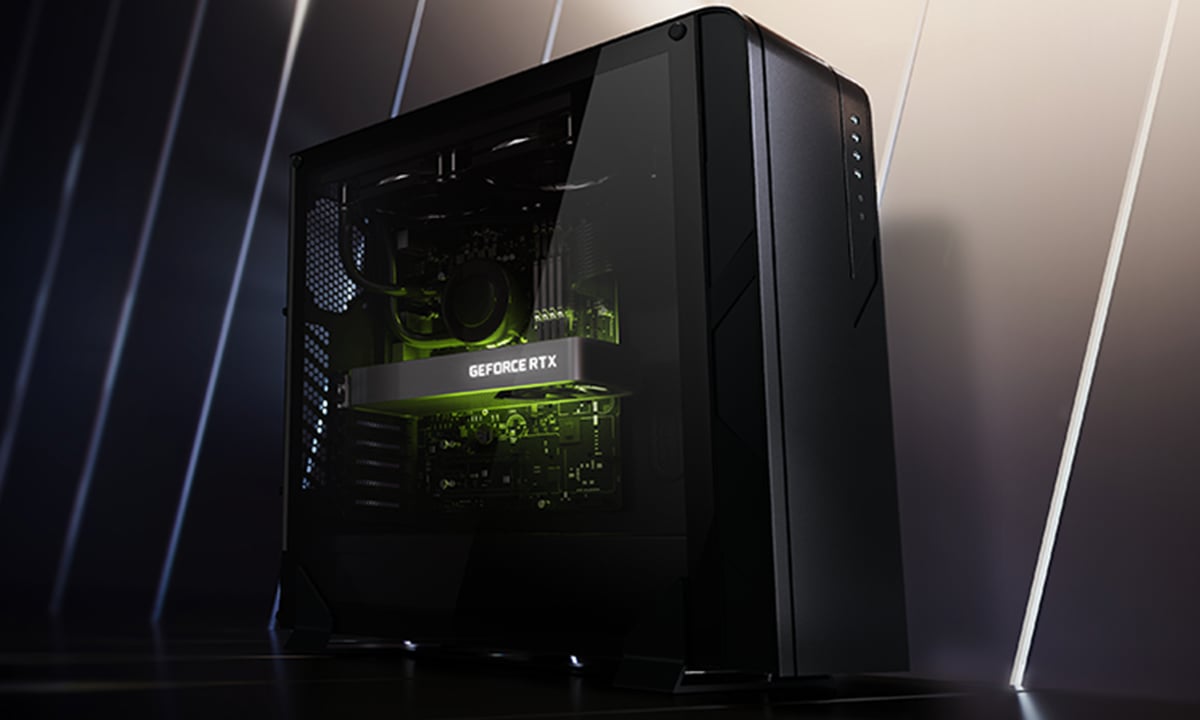
Nvidia: A Steady Growth Investment Choice

- Significant Revenue Growth: Nvidia reported a 73% year-over-year revenue increase in Q4 FY2026, reaching $68 billion, with net income soaring to $43 billion, far exceeding last year's $22 billion, highlighting its leadership in the rapidly growing AI accelerator market.
- Future Growth Expectations: While analysts predict a slowdown to 25% annual growth in FY2028, a robust 70% growth forecast for FY2027 indicates Nvidia's strong growth potential, making it appealing to risk-averse investors.
- Strong Financial Position: Nvidia has built up liquidity to nearly $63 billion, with total assets of $207 billion exceeding total liabilities of $50 billion by four times, showcasing a solid financial condition that reassures investors.
- Valuation Rationalization: With a P/E ratio of 37, slightly above the S&P 500 average of 30, and a forward P/E of just 22, Nvidia's valuation appears attractive, especially considering its growth prospects, making it suitable for conservative investors.
See More

Nvidia Reports Strong Earnings Yet Stock Declines
- Strong Earnings Report: Nvidia's fiscal Q4 revenue surged 73% year-over-year to a record $120 billion, exceeding Wall Street's consensus estimate of $154 billion, highlighting the company's robust growth potential in the AI sector.
- Optimistic Outlook: Management forecasts a 77% year-over-year revenue increase for Q1 FY2027, indicating sustained momentum driven by strong market demand and new product launches, despite facing chip supply constraints.
- Data Center Business Expansion: Nvidia's data center business is now 13 times larger than it was three years ago when ChatGPT launched, and while supply is constrained, the company is confident in its ability to meet demand through 2027.
- Market Sentiment Challenges: Despite Nvidia's P/E ratio of 36 and projected net income reaching $292 billion over the next four years, the stock's performance has been lackluster, reflecting investor caution and uncertainty about future prospects.
See More

Nvidia Stock Performance and Options Strategy Analysis
- Stock Price Volatility: Nvidia's stock has only risen 6% over the past six months, and despite beating Q4 earnings expectations and raising guidance, the stock fell over 5% the next trading day, indicating potential market rotation away from tech could impact future performance.
- Options Income Strategy: By writing call or put options on Nvidia shares, investors can collect premiums as income, which, while increasing risk during stock price fluctuations, can help offset potential losses through generated income.
- ETF Investment Option: The YieldMaxDA Option Income Strategy ETF combines long exposure to Nvidia with an actively managed options income strategy, allowing investors to simply hold the fund; currently, it offers a distribution rate of 41.77% with weekly payouts, providing steady cash flow.
- Market Risk Mitigation: In a downtrending market, the options income strategy could serve as a unique tool, offering a different approach to owning Nvidia, although there is no guarantee it will fully offset stock price losses amidst changing market dynamics.
See More

Oil Price Drop Eases Market Pressure Amid Volatility
- Market Volatility: U.S. stocks rebounded on Monday as oil prices fell below $100 per barrel, although the Dow Jones Industrial Average still dropped 300 points, or 0.7%, indicating ongoing market pressure.
- Energy Market Dynamics: West Texas Intermediate crude briefly surged to $119 per barrel before retreating to around $96, primarily due to output cuts from Middle Eastern producers and the continued closure of the Strait of Hormuz, leading to increased market volatility.
- Strong Tech Stock Performance: Despite broader market pressures, technology stocks like Broadcom rose over 3%, while Nvidia, AMD, and Micron Technology surged by 12.6%, reflecting investor confidence in the tech sector.
- Rising Inflation Risks: Analysts warned that prolonged oil supply disruptions could heighten inflation risks and constrain economic growth, potentially putting pressure on Federal Reserve policy decisions.
See More

Tesla Faces Demand Weakness Challenges


- Weakening Demand: Tesla is experiencing declining demand across several global markets in 2025, which poses a challenge to its lofty valuation, highlighting a gap between market expectations and actual sales performance.
- Overinflated Valuation: Market experts argue that Tesla's stock price, currently at $388.85, is inflated due to Elon Musk's loyal fan base, with shares down over 20% from their 52-week high, indicating excessive optimism among investors regarding future growth.
- Revised Delivery Expectations: Analysts have revised their delivery estimates for Tesla to only 2.8 million vehicles by 2030, significantly lower than the previous target of 20 million, reflecting a diminishing confidence in the company's growth trajectory.
- Increased Competition: With rising competition in the autonomous driving sector and a forward price-to-earnings ratio exceeding 200x, analysts express caution regarding Tesla's future performance, advising investors to remain wary of Musk's overly optimistic statements.
See More

The Fragile Supply Chain Risk of the AI Revolution
- Chip Manufacturing Dependency: Every AI processor designed by Nvidia is manufactured by TSMC, highlighting the global AI supply chain's heavy reliance on Taiwan, where geopolitical tensions could disrupt chip production and impact the entire AI industry's growth.
- Energy Vulnerability: Taiwan imports approximately 97-98% of its energy, much of which is shipped through global energy routes tied to the Middle East, meaning TSMC's production capacity is directly affected by energy supply, increasing supply chain uncertainty.
- Market Stress Test: Recent energy supply issues in South Korea led to rapid fluctuations in semiconductor stocks, reflecting investors' sensitivity to vulnerabilities in energy supply chains, which could raise similar concerns for Taiwan's semiconductor industry.
- Fundamental Dependency of AI Industry: While the AI sector is being financed at historic scales, its chip manufacturing relies on TSMC's continuous power supply, underscoring that the AI supply chain depends not only on algorithms but also on the stability of basic energy resources.
See More
Nvidia: A Steady Growth Investment Choice
- Significant Revenue Growth: Nvidia reported a 73% year-over-year revenue increase in Q4 FY2026, reaching $68 billion, with net income soaring to $43 billion, far exceeding last year's $22 billion, highlighting its leadership in the rapidly growing AI accelerator market.
- Future Growth Expectations: While analysts predict a slowdown to 25% annual growth in FY2028, a robust 70% growth forecast for FY2027 indicates Nvidia's strong growth potential, making it appealing to risk-averse investors.
- Strong Financial Position: Nvidia has built up liquidity to nearly $63 billion, with total assets of $207 billion exceeding total liabilities of $50 billion by four times, showcasing a solid financial condition that reassures investors.
- Valuation Rationalization: With a P/E ratio of 37, slightly above the S&P 500 average of 30, and a forward P/E of just 22, Nvidia's valuation appears attractive, especially considering its growth prospects, making it suitable for conservative investors.
See More
Nvidia Reports Strong Earnings Yet Stock Declines
- Strong Earnings Report: Nvidia's fiscal Q4 revenue surged 73% year-over-year to a record $120 billion, exceeding Wall Street's consensus estimate of $154 billion, highlighting the company's robust growth potential in the AI sector.
- Optimistic Outlook: Management forecasts a 77% year-over-year revenue increase for Q1 FY2027, indicating sustained momentum driven by strong market demand and new product launches, despite facing chip supply constraints.
- Data Center Business Expansion: Nvidia's data center business is now 13 times larger than it was three years ago when ChatGPT launched, and while supply is constrained, the company is confident in its ability to meet demand through 2027.
- Market Sentiment Challenges: Despite Nvidia's P/E ratio of 36 and projected net income reaching $292 billion over the next four years, the stock's performance has been lackluster, reflecting investor caution and uncertainty about future prospects.
See More
Nvidia Stock Performance and Options Strategy Analysis
- Stock Price Volatility: Nvidia's stock has only risen 6% over the past six months, and despite beating Q4 earnings expectations and raising guidance, the stock fell over 5% the next trading day, indicating potential market rotation away from tech could impact future performance.
- Options Income Strategy: By writing call or put options on Nvidia shares, investors can collect premiums as income, which, while increasing risk during stock price fluctuations, can help offset potential losses through generated income.
- ETF Investment Option: The YieldMaxDA Option Income Strategy ETF combines long exposure to Nvidia with an actively managed options income strategy, allowing investors to simply hold the fund; currently, it offers a distribution rate of 41.77% with weekly payouts, providing steady cash flow.
- Market Risk Mitigation: In a downtrending market, the options income strategy could serve as a unique tool, offering a different approach to owning Nvidia, although there is no guarantee it will fully offset stock price losses amidst changing market dynamics.
See More
Oil Price Drop Eases Market Pressure Amid Volatility
- Market Volatility: U.S. stocks rebounded on Monday as oil prices fell below $100 per barrel, although the Dow Jones Industrial Average still dropped 300 points, or 0.7%, indicating ongoing market pressure.
- Energy Market Dynamics: West Texas Intermediate crude briefly surged to $119 per barrel before retreating to around $96, primarily due to output cuts from Middle Eastern producers and the continued closure of the Strait of Hormuz, leading to increased market volatility.
- Strong Tech Stock Performance: Despite broader market pressures, technology stocks like Broadcom rose over 3%, while Nvidia, AMD, and Micron Technology surged by 12.6%, reflecting investor confidence in the tech sector.
- Rising Inflation Risks: Analysts warned that prolonged oil supply disruptions could heighten inflation risks and constrain economic growth, potentially putting pressure on Federal Reserve policy decisions.
See More
Tesla Faces Demand Weakness Challenges
- Weakening Demand: Tesla is experiencing declining demand across several global markets in 2025, which poses a challenge to its lofty valuation, highlighting a gap between market expectations and actual sales performance.
- Overinflated Valuation: Market experts argue that Tesla's stock price, currently at $388.85, is inflated due to Elon Musk's loyal fan base, with shares down over 20% from their 52-week high, indicating excessive optimism among investors regarding future growth.
- Revised Delivery Expectations: Analysts have revised their delivery estimates for Tesla to only 2.8 million vehicles by 2030, significantly lower than the previous target of 20 million, reflecting a diminishing confidence in the company's growth trajectory.
- Increased Competition: With rising competition in the autonomous driving sector and a forward price-to-earnings ratio exceeding 200x, analysts express caution regarding Tesla's future performance, advising investors to remain wary of Musk's overly optimistic statements.
See More
The Fragile Supply Chain Risk of the AI Revolution
- Chip Manufacturing Dependency: Every AI processor designed by Nvidia is manufactured by TSMC, highlighting the global AI supply chain's heavy reliance on Taiwan, where geopolitical tensions could disrupt chip production and impact the entire AI industry's growth.
- Energy Vulnerability: Taiwan imports approximately 97-98% of its energy, much of which is shipped through global energy routes tied to the Middle East, meaning TSMC's production capacity is directly affected by energy supply, increasing supply chain uncertainty.
- Market Stress Test: Recent energy supply issues in South Korea led to rapid fluctuations in semiconductor stocks, reflecting investors' sensitivity to vulnerabilities in energy supply chains, which could raise similar concerns for Taiwan's semiconductor industry.
- Fundamental Dependency of AI Industry: While the AI sector is being financed at historic scales, its chip manufacturing relies on TSMC's continuous power supply, underscoring that the AI supply chain depends not only on algorithms but also on the stability of basic energy resources.
See More