Baidu announces Q3 EPS of $1.56, down from $2.37 a year ago
Written by Emily J. Thompson, Senior Investment Analyst
Updated: Nov 18 2025
0mins
Should l Buy BIDU?
Q3 Revenue Performance: Baidu reported Q3 revenue of $4.38 billion, a decrease from $4.78 billion in the same period last year.
AI Cloud Growth: The company highlighted strong growth in its AI Cloud segment, driven by increased enterprise adoption of AI products and solutions.
Apollo Go Expansion: Baidu's Apollo Go service accelerated its fully driverless operations and expanded into Switzerland while maintaining high safety standards.
AI Monetization Success: The Mobile Ecosystem saw rapid revenue growth from AI-native monetization products, indicating strong long-term potential for these innovations.
Trade with 70% Backtested Accuracy
Stop guessing "Should I Buy BIDU?" and start using high-conviction signals backed by rigorous historical data.
Sign up today to access powerful investing tools and make smarter, data-driven decisions.
Analyst Views on BIDU
Wall Street analysts forecast BIDU stock price to rise
13 Analyst Rating
11 Buy
2 Hold
0 Sell
Strong Buy
Current: 143.290

Low
140.00
Averages
170.39
High
215.00
Current: 143.290
Low
140.00
Averages
170.39
High
215.00
About BIDU
Baidu Inc is a Chinese language Internet search provider. The Company operates its businesses through two segments, Baidu Core segment and iQIYI segment. Baidu Core segment mainly provides search-based, feed-based, and other online marketing services, as well as products and services from the Company’s new artificial intelligence (AI) initiatives, such as display advertisement and based on performance criteria other than cost-per-click, cloud services, smart devices and services, non-marketing consumer-facing services such as membership, and intelligent driving. iQIYI segment produces, aggregates and distributes a wide variety of professionally produced content, as well as a broad spectrum of other video content, in a variety of formats, including a variety of products and services encompassing online video, online games, online literature, comics and others.
About the author

Emily J. Thompson
Emily J. Thompson, a Chartered Financial Analyst (CFA) with 12 years in investment research, graduated with honors from the Wharton School. Specializing in industrial and technology stocks, she provides in-depth analysis for Intellectia’s earnings and market brief reports.
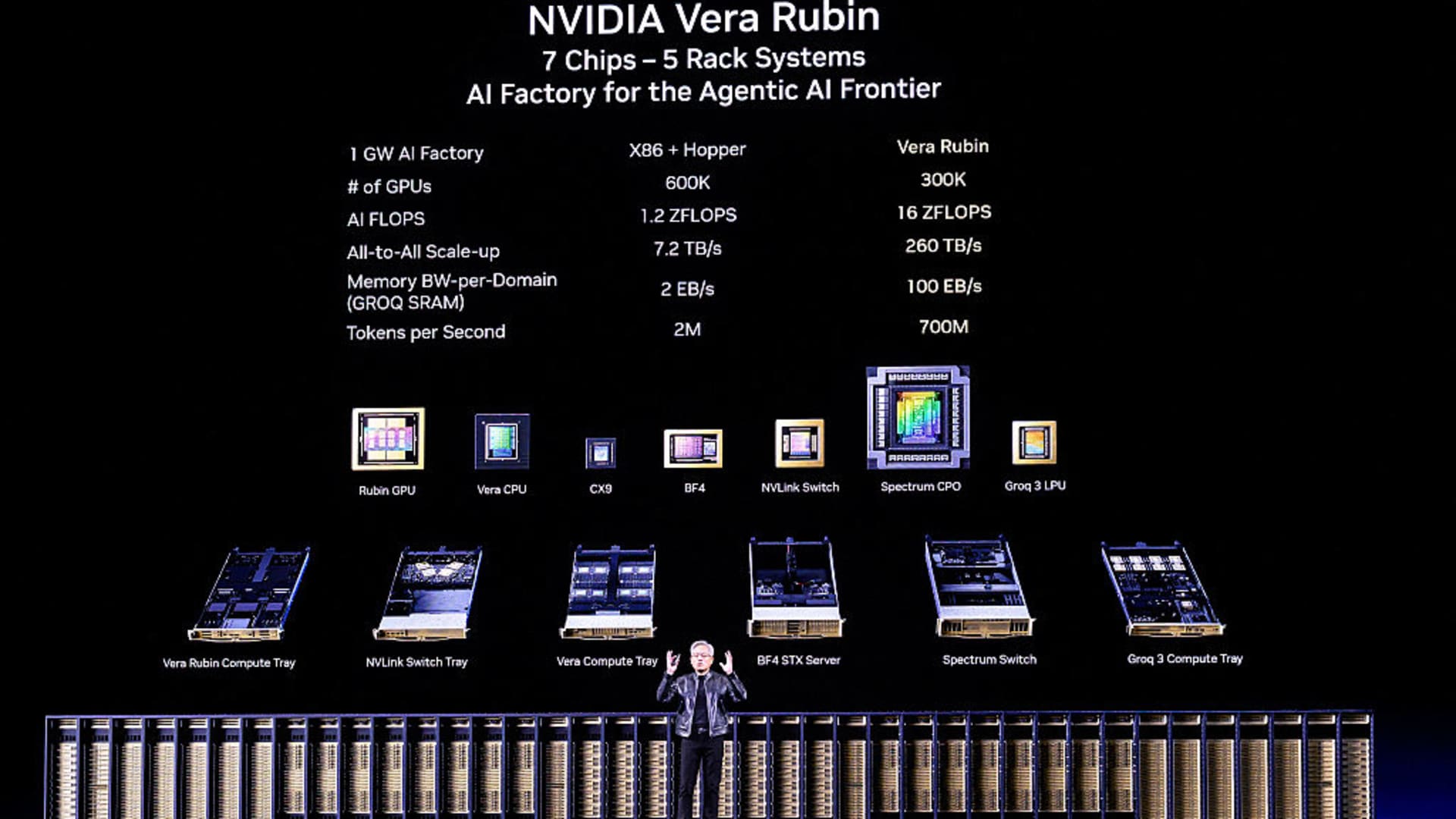
Nvidia Earnings Week Approaches, Market Anticipates Key Insights


- Nvidia Earnings Expectations: Nvidia is set to report its Q1 earnings on Wednesday, with revenue anticipated at $78.67 billion and EPS of $1.76, as analysts look for results that exceed expectations to boost stock prices and alleviate concerns about a slowing investment cycle.
- Home Depot Performance Outlook: Home Depot is expected to see only 0.8% same-store sales growth in Q1, as rising mortgage rates and a challenging economic backdrop lead analysts to predict its full-year guidance will remain flat to 2%, reflecting low market expectations for its performance.
- TJX Companies Performance: TJX anticipates a 4.1% same-store sales growth in Q1, benefiting from consumer demand for quality merchandise at affordable prices, although rising freight costs may impact margins; nonetheless, the company is viewed as a solid long-term investment.
- Google Developer Conference: Google will host its annual developer conference on Tuesday and Wednesday, with analysts warning that a lack of a
See More

Key Earnings Reports to Watch Next Week

- Baidu Earnings Preview: Baidu (BIDU) is set to report Q1 2026 results on May 18, with analysts closely watching if its AI-driven transformation can offset weaknesses in its online advertising business, having reported $4.68B in revenue last quarter, a 5% Y/Y increase, and an EPS of $1.52, beating estimates by 36%.
- Home Depot Performance Analysis: Home Depot (HD) will release its Q1 2026 results on May 19, with expected EPS declining in the mid-single digits, despite last quarter's revenue of $38.2B meeting expectations, as sales fell approximately 4% Y/Y due to high interest rates and cautious consumer spending.
- NVIDIA Earnings Focus: NVIDIA (NVDA) is scheduled to report Q1 2027 results on May 20, with consensus revenue estimates around $79B, focusing on Q2 guidance and data center demand, following a strong Q4 FY2026 with $68.1B in revenue, a 75% Y/Y increase, indicating robust market demand.
- NIO Delivery Data: NIO (NIO) will report Q1 2026 results on May 21, having delivered 83,465 vehicles in Q1, up approximately 98% Y/Y, indicating strong market demand and sustainable profitability, with management guiding for revenue between RMB 24.48B and 25.17B.
See More

Baidu Unveils Next-Gen AI Agent Products at Create 2026
- New DAA Standard: Baidu's co-founder Robin Li proposed Daily Active Agents (DAA) as a new metric for measuring success in the AI industry, predicting that global DAA could exceed 10 billion, marking the arrival of the agent era and driving the industry towards a more efficient ecosystem.
- Launch of DuMate: Baidu introduced the general-purpose agent DuMate, which features real-time synchronization, allowing users to initiate tasks anytime and anywhere, and has achieved outstanding performance in international agent benchmarks, enhancing user efficiency and task execution capabilities.
- Miaoda Coding Agent: The launch of Miaoda's app and enterprise edition enables users without coding knowledge to easily generate applications, compressing development costs to near zero, which is expected to reshape the software industry with a potential market growth of tenfold.
- Famou Agent 2.0 Upgrade: The self-evolving agent Famou has been upgraded to version 2.0, achieving a 10.21% efficiency improvement in areas like production scheduling and logistics planning, showcasing the immense potential of AI in complex operations and helping enterprises achieve leaps in productivity.
See More

Baidu Unveils Next-Gen AI Agent Products at Create 2026
- Daily Active Agents Metric: Baidu's CEO Robin Li introduced Daily Active Agents (DAA) as a new success metric for the AI industry, predicting global DAA could exceed 10 billion, emphasizing the critical role of agents in platform ecosystems and potentially enhancing Baidu's market leadership in AI.
- Launch of DuMate: The newly launched DuMate features real-time synchronization, allowing users to initiate tasks anytime and anywhere, and has achieved outstanding performance across multiple international agent benchmarks, marking a significant technological breakthrough for Baidu in the smart assistant space and enhancing user experience and market competitiveness.
- Miaoda Coding Agent: The introduction of Miaoda enables users without coding knowledge to generate applications, with development costs nearing zero; Li noted that the disposable software market could grow tenfold, showcasing Baidu's disruptive innovation potential in software development.
- Upgrade of Famou Agent 2.0: The Famou 2.0 version enhances self-verification and closed-loop execution, achieving a 10.21% performance improvement in production scheduling, process optimization, and logistics planning, demonstrating Baidu's strategic value in driving efficiency across industries.
See More

Prospects and Challenges of US-China AI Cooperation


- Accelerated AI Adoption: China's AI penetration rate is expected to exceed 70% in key industries by next year, enhancing domestic competitiveness and potentially reshaping the global tech landscape.
- Research Strengthening: Zhejiang University and Shanghai Jiao Tong University have surpassed Harvard in scientific performance rankings, indicating rapid advancements in China's research capabilities that will support further AI development.
- Public Attitude Discrepancy: With 50% of Americans wary of AI, compared to a lower acceptance rate in China, this difference may influence the willingness and strategies for cooperation in AI between the two countries.
- Risk of US-China AI Arms Race: Experts warn that if the two nations enter an AI arms race, it would be detrimental not only to them but also to the world, highlighting the importance of international collaboration.
See More

Uber's Q1 Results Show Strong Growth, Shares Rise 8%

- Significant Revenue Growth: Uber's Q1 revenue rose 14% year over year to over $13 billion, although an accounting change trimmed reported growth by about 9 percentage points, the overall business momentum remains strong, indicating a recovery in market demand.
- Improved Profitability: The company's adjusted operating income surged 42% year over year to $1.9 billion, with adjusted earnings per share jumping 44%, demonstrating a significant enhancement in profitability as Uber scales its operations, thereby solidifying its market position.
- Membership Program Expansion: Uber crossed 50 million Uber One members in April, with members now driving half of mobility and delivery gross bookings, which not only enhances customer loyalty but also provides robust support for future revenue growth.
- Progress in Autonomous Strategy: Uber's autonomous mobility trips grew more than tenfold year over year, with plans to launch in 15 cities by year-end; despite competitive pressures from Tesla, Uber's capital-light strategy may offer flexibility for long-term development.
See More
Nvidia Earnings Week Approaches, Market Anticipates Key Insights
- Nvidia Earnings Expectations: Nvidia is set to report its Q1 earnings on Wednesday, with revenue anticipated at $78.67 billion and EPS of $1.76, as analysts look for results that exceed expectations to boost stock prices and alleviate concerns about a slowing investment cycle.
- Home Depot Performance Outlook: Home Depot is expected to see only 0.8% same-store sales growth in Q1, as rising mortgage rates and a challenging economic backdrop lead analysts to predict its full-year guidance will remain flat to 2%, reflecting low market expectations for its performance.
- TJX Companies Performance: TJX anticipates a 4.1% same-store sales growth in Q1, benefiting from consumer demand for quality merchandise at affordable prices, although rising freight costs may impact margins; nonetheless, the company is viewed as a solid long-term investment.
- Google Developer Conference: Google will host its annual developer conference on Tuesday and Wednesday, with analysts warning that a lack of a
See More
Key Earnings Reports to Watch Next Week
- Baidu Earnings Preview: Baidu (BIDU) is set to report Q1 2026 results on May 18, with analysts closely watching if its AI-driven transformation can offset weaknesses in its online advertising business, having reported $4.68B in revenue last quarter, a 5% Y/Y increase, and an EPS of $1.52, beating estimates by 36%.
- Home Depot Performance Analysis: Home Depot (HD) will release its Q1 2026 results on May 19, with expected EPS declining in the mid-single digits, despite last quarter's revenue of $38.2B meeting expectations, as sales fell approximately 4% Y/Y due to high interest rates and cautious consumer spending.
- NVIDIA Earnings Focus: NVIDIA (NVDA) is scheduled to report Q1 2027 results on May 20, with consensus revenue estimates around $79B, focusing on Q2 guidance and data center demand, following a strong Q4 FY2026 with $68.1B in revenue, a 75% Y/Y increase, indicating robust market demand.
- NIO Delivery Data: NIO (NIO) will report Q1 2026 results on May 21, having delivered 83,465 vehicles in Q1, up approximately 98% Y/Y, indicating strong market demand and sustainable profitability, with management guiding for revenue between RMB 24.48B and 25.17B.
See More
Baidu Unveils Next-Gen AI Agent Products at Create 2026
- New DAA Standard: Baidu's co-founder Robin Li proposed Daily Active Agents (DAA) as a new metric for measuring success in the AI industry, predicting that global DAA could exceed 10 billion, marking the arrival of the agent era and driving the industry towards a more efficient ecosystem.
- Launch of DuMate: Baidu introduced the general-purpose agent DuMate, which features real-time synchronization, allowing users to initiate tasks anytime and anywhere, and has achieved outstanding performance in international agent benchmarks, enhancing user efficiency and task execution capabilities.
- Miaoda Coding Agent: The launch of Miaoda's app and enterprise edition enables users without coding knowledge to easily generate applications, compressing development costs to near zero, which is expected to reshape the software industry with a potential market growth of tenfold.
- Famou Agent 2.0 Upgrade: The self-evolving agent Famou has been upgraded to version 2.0, achieving a 10.21% efficiency improvement in areas like production scheduling and logistics planning, showcasing the immense potential of AI in complex operations and helping enterprises achieve leaps in productivity.
See More
Baidu Unveils Next-Gen AI Agent Products at Create 2026
- Daily Active Agents Metric: Baidu's CEO Robin Li introduced Daily Active Agents (DAA) as a new success metric for the AI industry, predicting global DAA could exceed 10 billion, emphasizing the critical role of agents in platform ecosystems and potentially enhancing Baidu's market leadership in AI.
- Launch of DuMate: The newly launched DuMate features real-time synchronization, allowing users to initiate tasks anytime and anywhere, and has achieved outstanding performance across multiple international agent benchmarks, marking a significant technological breakthrough for Baidu in the smart assistant space and enhancing user experience and market competitiveness.
- Miaoda Coding Agent: The introduction of Miaoda enables users without coding knowledge to generate applications, with development costs nearing zero; Li noted that the disposable software market could grow tenfold, showcasing Baidu's disruptive innovation potential in software development.
- Upgrade of Famou Agent 2.0: The Famou 2.0 version enhances self-verification and closed-loop execution, achieving a 10.21% performance improvement in production scheduling, process optimization, and logistics planning, demonstrating Baidu's strategic value in driving efficiency across industries.
See More
Prospects and Challenges of US-China AI Cooperation
- Accelerated AI Adoption: China's AI penetration rate is expected to exceed 70% in key industries by next year, enhancing domestic competitiveness and potentially reshaping the global tech landscape.
- Research Strengthening: Zhejiang University and Shanghai Jiao Tong University have surpassed Harvard in scientific performance rankings, indicating rapid advancements in China's research capabilities that will support further AI development.
- Public Attitude Discrepancy: With 50% of Americans wary of AI, compared to a lower acceptance rate in China, this difference may influence the willingness and strategies for cooperation in AI between the two countries.
- Risk of US-China AI Arms Race: Experts warn that if the two nations enter an AI arms race, it would be detrimental not only to them but also to the world, highlighting the importance of international collaboration.
See More
Uber's Q1 Results Show Strong Growth, Shares Rise 8%
- Significant Revenue Growth: Uber's Q1 revenue rose 14% year over year to over $13 billion, although an accounting change trimmed reported growth by about 9 percentage points, the overall business momentum remains strong, indicating a recovery in market demand.
- Improved Profitability: The company's adjusted operating income surged 42% year over year to $1.9 billion, with adjusted earnings per share jumping 44%, demonstrating a significant enhancement in profitability as Uber scales its operations, thereby solidifying its market position.
- Membership Program Expansion: Uber crossed 50 million Uber One members in April, with members now driving half of mobility and delivery gross bookings, which not only enhances customer loyalty but also provides robust support for future revenue growth.
- Progress in Autonomous Strategy: Uber's autonomous mobility trips grew more than tenfold year over year, with plans to launch in 15 cities by year-end; despite competitive pressures from Tesla, Uber's capital-light strategy may offer flexibility for long-term development.
See More