Millennials Show Strong Optimism for AI's Market Impact
Written by Emily J. Thompson, Senior Investment Analyst
Updated: 1 hour ago
0mins
Should l Buy NVDA?
Source: Fool
- Investor Confidence Survey: According to research by The Motley Fool, 55% of investors believe that artificial intelligence will positively impact the stock market over the next decade, indicating widespread confidence in AI, particularly among younger investors.
- Millennial Optimism: The survey reveals that 73% of millennials expect a positive impact from AI, significantly higher than the 46% of baby boomers, reflecting generational differences in perception and investment confidence regarding AI.
- AI Tool Usage: A Deloitte study found that 76% of Gen Z and 58% of millennials have used standalone generative AI tools, while only 36% of Gen X and 20% of baby boomers have done so, highlighting a greater familiarity with AI among younger investors.
- Impact of Investment Returns: Millennials, having engaged with AI investments earlier, particularly in companies like Nvidia, have seen returns of 1,220% over the past five years, which likely bolsters their confidence in AI's future performance.
Trade with 70% Backtested Accuracy
Stop guessing "Should I Buy NVDA?" and start using high-conviction signals backed by rigorous historical data.
Sign up today to access powerful investing tools and make smarter, data-driven decisions.
Analyst Views on NVDA
Wall Street analysts forecast NVDA stock price to rise
41 Analyst Rating
39 Buy
1 Hold
1 Sell
Strong Buy
Current: 175.750

Low
200.00
Averages
264.97
High
352.00
Current: 175.750
Low
200.00
Averages
264.97
High
352.00
About NVDA
NVIDIA Corporation is an artificial intelligence (AI) infrastructure company. The Company is engaged in accelerated computing to help solve the challenging computational problems. Its segments include Compute & Networking and Graphics. The Compute & Networking segment includes its Data Center accelerated computing and networking platforms and AI solutions and software, and automotive platforms and autonomous and electric vehicle solutions, including software. The Graphics segment includes GeForce GPUs for gaming and personal computers (PCs), and Quadro/NVIDIA RTX GPUs for enterprise workstation graphics. Its technology stack includes the foundational NVIDIA CUDA development platform that runs on all NVIDIA GPUs, as well as hundreds of domain-specific software libraries, frameworks, algorithms, software development kits (SDKs), and application programming interfaces (APIs). Its platforms address four markets, which include Data Center, Gaming, Professional Visualization, and Automotive.
About the author

Emily J. Thompson
Emily J. Thompson, a Chartered Financial Analyst (CFA) with 12 years in investment research, graduated with honors from the Wharton School. Specializing in industrial and technology stocks, she provides in-depth analysis for Intellectia’s earnings and market brief reports.
Nvidia's Earnings Report Shows Strong Growth

- Significant Revenue Growth: Nvidia's revenue in Q4 of fiscal 2026 surged 73% year-over-year to $68.1 billion, primarily driven by its data center segment, which generated $62.3 billion in revenue, up 75% year-over-year.
- Profitability Improvement: The company reported non-GAAP earnings per share of $1.62, an 82% increase year-over-year, while maintaining an impressive adjusted gross margin of 75.2%, showcasing its strong pricing power and production scale within its hardware ecosystem.
- Optimistic Future Outlook: Management anticipates first-quarter revenue for fiscal 2027 to be approximately $78 billion, indicating that the company's growth in the AI sector is still in its early stages, with the data center business expanding nearly 13 times since fiscal 2023.
- Valuation Outlook Analysis: Despite a current price-to-earnings ratio of about 36, the forward P/E ratio is expected to drop to 21 over the next four quarters, and if the company meets Wall Street's earnings expectations, the stock price could appreciate by 12% over the next year, reaching around $197.
See More
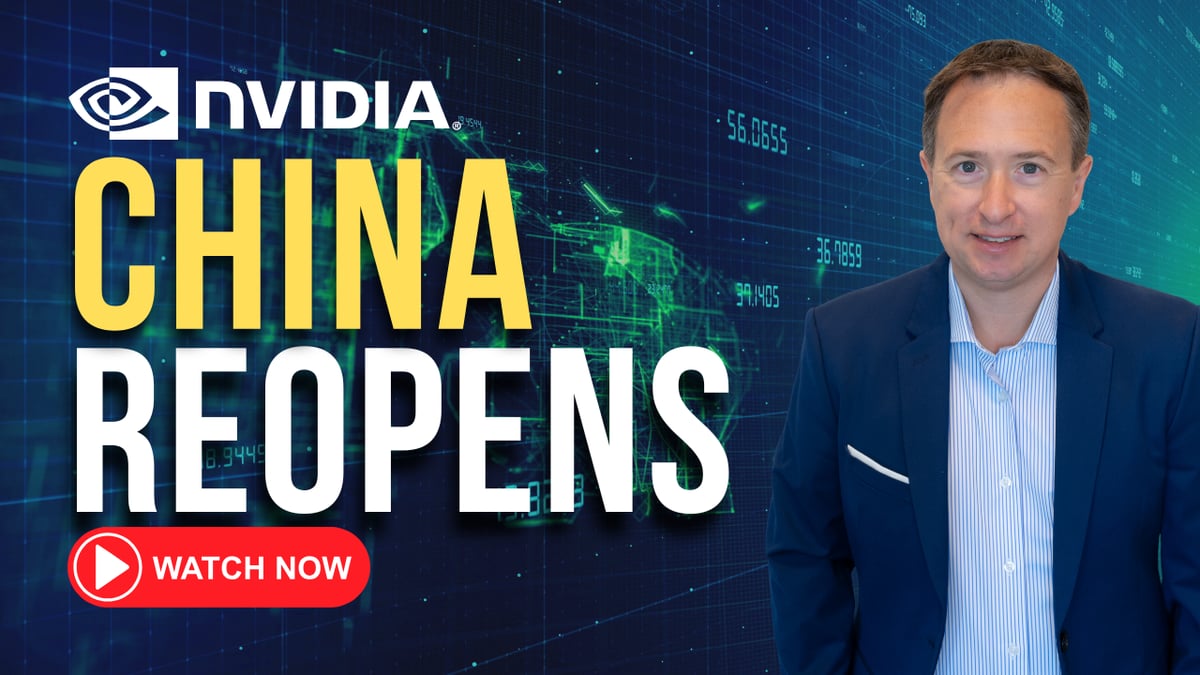
Nvidia Reopens Key AI Market in China Amid Risks
- Market Reopening: Nvidia has reopened its operations in China, one of the world's most crucial AI markets, presenting potential for revenue growth despite existing policy risks that complicate the narrative.
- Policy Risks: While the opportunities in the Chinese market are significant, uncertainties surrounding government regulations and market access could impact Nvidia's long-term strategic positioning in the region.
- Investment Opportunities: Analysts suggest that despite the high costs associated with re-entering the market, Nvidia could leverage technological innovation and adaptability to capture growth opportunities in China, enhancing its global competitiveness.
- Future Outlook: As demand for AI technology continues to rise in China, Nvidia's market strategy will need to be agile to navigate the complex policy landscape and maximize returns on its investments in the region.
See More

Analyzing Risks and Investment Insights for SpaceX IPO


- Valuation Risks: SpaceX's current valuation of $1.25 trillion is primarily based on unproven future promises like global internet coverage and Mars colonization, which may face severe scrutiny in public markets, especially as investors shift focus to actual revenue growth and profitability.
- Leadership Risks: Investing in SpaceX means investing in Elon Musk's leadership, whose attention is divided among Tesla, X (formerly Twitter), and other ventures; any controversial remarks or shifts in focus could lead to significant stock price volatility, increasing investment uncertainty.
- Regulatory and Execution Risks: Space exploration requires stringent regulatory approvals, and any changes in policy or international disruptions could delay launch schedules and escalate costs, with public investors typically lacking the patience for such major setbacks, potentially leading to sell-offs.
- Alternative Investment Opportunities: Given the potential risks associated with a SpaceX IPO, investors might consider alternatives like AST SpaceMobile, Rocket Lab, Alphabet, or Nvidia, which offer smoother and more predictable growth opportunities while still providing exposure to technologies driving the space economy.
See More

Millennials' Optimism on AI's Market Impact
- Millennials' Optimism: According to Motley Fool research, 73% of millennials expect AI to positively impact the stock market over the next decade, a higher percentage than any other generation, indicating their strong confidence in AI investments.
- Generational Differences: The survey reveals that 55% of investors believe AI will have a positive market impact in the next 10 years, with millennials (73%) significantly more optimistic than Gen Z (66%), Gen X (61%), and baby boomers (46%), reflecting varying acceptance of technology across generations.
- Investment Experience Matters: Millennials, having invested longer, are likely to have benefited from AI stocks, such as Nvidia, which has yielded a 1,220% return over the past five years, reinforcing their bullish outlook on AI's potential.
- Familiarity with AI Tools: With 76% of Gen Z and 58% of millennials having used standalone generative AI tools like ChatGPT, the familiarity among younger investors likely contributes to their optimistic expectations regarding AI's future impact on the market.
See More

Investment Opportunities Amidst Tech Stock Declines


- Market Correction Impact: The Nasdaq Composite has fallen nearly 13% from its peak, significantly impacting tech stocks and highlighting market instability, which requires cautious navigation by investors.
- ETF Investment Strategy: Despite the Vanguard Information Technology ETF's 16.4% drop from its 2025 peak, its share price has decreased from $800 to $665, presenting an opportunity for long-term investors to buy at a discount.
- Diversified Risk Management: This ETF holds 318 stocks, with the top three holdings accounting for 44%, while the remaining assets are spread across various tech sectors, reducing single-stock risk and enhancing resilience against downturns.
- Long-Term Return Potential: Since its launch in 2004, the ETF has achieved a total return of approximately 1,550%, meaning a $5,000 investment would now be worth about $82,000, demonstrating the value and potential of long-term holding.
See More

Analyzing Risks and Opportunities of SpaceX IPO
- Merger and Valuation: SpaceX's merger with xAI is valued at $1.25 trillion, attracting investor interest, yet this valuation is largely based on unproven future promises like global internet coverage and Mars colonization.
- IPO Prospects and Risks: With plans to raise $75 billion in a $1.75 trillion IPO, SpaceX faces scrutiny over its core business's profitability and cash flow, which could lead to significant stock price volatility post-IPO.
- Leadership Impact: Elon Musk's divided attention across multiple ventures may create investor unease regarding SpaceX's future, as any controversial remarks on social media could trigger sharp stock price swings, increasing risks for public investors.
- Alternative Investment Opportunities: Given the potential risks associated with the SpaceX IPO, investors might consider companies like AST SpaceMobile, Rocket Lab, Alphabet, and Nvidia, which offer more stable growth prospects while still providing exposure to technologies in the space economy.
See More
Nvidia's Earnings Report Shows Strong Growth
- Significant Revenue Growth: Nvidia's revenue in Q4 of fiscal 2026 surged 73% year-over-year to $68.1 billion, primarily driven by its data center segment, which generated $62.3 billion in revenue, up 75% year-over-year.
- Profitability Improvement: The company reported non-GAAP earnings per share of $1.62, an 82% increase year-over-year, while maintaining an impressive adjusted gross margin of 75.2%, showcasing its strong pricing power and production scale within its hardware ecosystem.
- Optimistic Future Outlook: Management anticipates first-quarter revenue for fiscal 2027 to be approximately $78 billion, indicating that the company's growth in the AI sector is still in its early stages, with the data center business expanding nearly 13 times since fiscal 2023.
- Valuation Outlook Analysis: Despite a current price-to-earnings ratio of about 36, the forward P/E ratio is expected to drop to 21 over the next four quarters, and if the company meets Wall Street's earnings expectations, the stock price could appreciate by 12% over the next year, reaching around $197.
See More
Nvidia Reopens Key AI Market in China Amid Risks
- Market Reopening: Nvidia has reopened its operations in China, one of the world's most crucial AI markets, presenting potential for revenue growth despite existing policy risks that complicate the narrative.
- Policy Risks: While the opportunities in the Chinese market are significant, uncertainties surrounding government regulations and market access could impact Nvidia's long-term strategic positioning in the region.
- Investment Opportunities: Analysts suggest that despite the high costs associated with re-entering the market, Nvidia could leverage technological innovation and adaptability to capture growth opportunities in China, enhancing its global competitiveness.
- Future Outlook: As demand for AI technology continues to rise in China, Nvidia's market strategy will need to be agile to navigate the complex policy landscape and maximize returns on its investments in the region.
See More
Analyzing Risks and Investment Insights for SpaceX IPO
- Valuation Risks: SpaceX's current valuation of $1.25 trillion is primarily based on unproven future promises like global internet coverage and Mars colonization, which may face severe scrutiny in public markets, especially as investors shift focus to actual revenue growth and profitability.
- Leadership Risks: Investing in SpaceX means investing in Elon Musk's leadership, whose attention is divided among Tesla, X (formerly Twitter), and other ventures; any controversial remarks or shifts in focus could lead to significant stock price volatility, increasing investment uncertainty.
- Regulatory and Execution Risks: Space exploration requires stringent regulatory approvals, and any changes in policy or international disruptions could delay launch schedules and escalate costs, with public investors typically lacking the patience for such major setbacks, potentially leading to sell-offs.
- Alternative Investment Opportunities: Given the potential risks associated with a SpaceX IPO, investors might consider alternatives like AST SpaceMobile, Rocket Lab, Alphabet, or Nvidia, which offer smoother and more predictable growth opportunities while still providing exposure to technologies driving the space economy.
See More
Millennials' Optimism on AI's Market Impact
- Millennials' Optimism: According to Motley Fool research, 73% of millennials expect AI to positively impact the stock market over the next decade, a higher percentage than any other generation, indicating their strong confidence in AI investments.
- Generational Differences: The survey reveals that 55% of investors believe AI will have a positive market impact in the next 10 years, with millennials (73%) significantly more optimistic than Gen Z (66%), Gen X (61%), and baby boomers (46%), reflecting varying acceptance of technology across generations.
- Investment Experience Matters: Millennials, having invested longer, are likely to have benefited from AI stocks, such as Nvidia, which has yielded a 1,220% return over the past five years, reinforcing their bullish outlook on AI's potential.
- Familiarity with AI Tools: With 76% of Gen Z and 58% of millennials having used standalone generative AI tools like ChatGPT, the familiarity among younger investors likely contributes to their optimistic expectations regarding AI's future impact on the market.
See More
Investment Opportunities Amidst Tech Stock Declines
- Market Correction Impact: The Nasdaq Composite has fallen nearly 13% from its peak, significantly impacting tech stocks and highlighting market instability, which requires cautious navigation by investors.
- ETF Investment Strategy: Despite the Vanguard Information Technology ETF's 16.4% drop from its 2025 peak, its share price has decreased from $800 to $665, presenting an opportunity for long-term investors to buy at a discount.
- Diversified Risk Management: This ETF holds 318 stocks, with the top three holdings accounting for 44%, while the remaining assets are spread across various tech sectors, reducing single-stock risk and enhancing resilience against downturns.
- Long-Term Return Potential: Since its launch in 2004, the ETF has achieved a total return of approximately 1,550%, meaning a $5,000 investment would now be worth about $82,000, demonstrating the value and potential of long-term holding.
See More
Analyzing Risks and Opportunities of SpaceX IPO
- Merger and Valuation: SpaceX's merger with xAI is valued at $1.25 trillion, attracting investor interest, yet this valuation is largely based on unproven future promises like global internet coverage and Mars colonization.
- IPO Prospects and Risks: With plans to raise $75 billion in a $1.75 trillion IPO, SpaceX faces scrutiny over its core business's profitability and cash flow, which could lead to significant stock price volatility post-IPO.
- Leadership Impact: Elon Musk's divided attention across multiple ventures may create investor unease regarding SpaceX's future, as any controversial remarks on social media could trigger sharp stock price swings, increasing risks for public investors.
- Alternative Investment Opportunities: Given the potential risks associated with the SpaceX IPO, investors might consider companies like AST SpaceMobile, Rocket Lab, Alphabet, and Nvidia, which offer more stable growth prospects while still providing exposure to technologies in the space economy.
See More