McDonald's Value Strategy Fails to Boost Sales
Written by Emily J. Thompson, Senior Investment Analyst
Updated: 2 days ago
0mins
Should l Buy MCD?
Source: stocktwits
- Weak Sales Growth: McDonald's reported a 9% year-on-year revenue increase in Q1, reaching $6.52 billion, surpassing the Fiscal AI estimate of $6.47 billion; however, analysts express growing concerns over fading same-store sales recovery, indicating weak market demand.
- Price Target Reduction: TD Cowen lowered its price target for McDonald's from $330 to $300 while maintaining a 'Hold' rating, reflecting a reevaluation of its value-focused strategy, which has not effectively increased customer traffic or sales growth.
- Increased Consumer Pressure: CEO Chris Kempczinski noted during the earnings call that the overall consumer environment is not improving, with lower-income customers facing greater financial pressure, which may impact future spending and company performance.
- Retail Sentiment Shift: Despite McDonald's stock declining over 7% year-to-date, retail sentiment on Stocktwits remains 'bullish', with message volume increasing by 146% in 24 hours, indicating cautious optimism among investors regarding future performance.
Trade with 70% Backtested Accuracy
Stop guessing "Should I Buy MCD?" and start using high-conviction signals backed by rigorous historical data.
Sign up today to access powerful investing tools and make smarter, data-driven decisions.
Analyst Views on MCD
Wall Street analysts forecast MCD stock price to rise
23 Analyst Rating
12 Buy
11 Hold
0 Sell
Moderate Buy
Current: 283.700

Low
300.00
Averages
337.63
High
375.00
Current: 283.700
Low
300.00
Averages
337.63
High
375.00
About MCD
McDonald's Corporation is a global foodservice retailer. Its segment includes U.S., International Operated Markets, and International Developmental Licensed Markets & Corporate. The U.S. segment is its largest market and is 95% franchised. The International Operated Markets segment comprises markets or countries in which it operates and franchises restaurants, including Australia, Canada, France, Germany, Italy, Poland, Spain, and the United Kingdom. This segment is 89% franchised. The International Developmental Licensed Markets & Corporate segment comprises development licensee and affiliate markets, including equity method investments in China and Japan. This segment is 99% franchised. Its menu features hamburgers and cheeseburgers, the Big Mac, the Quarter Pounder with Cheese, the Filet-O-Fish, and several chicken sandwiches, such as the McChicken and McCrispy as well as Chicken McNuggets, Fries, shakes, sundaes, cookies, soft drinks, coffee, and other beverages.
About the author

Emily J. Thompson
Emily J. Thompson, a Chartered Financial Analyst (CFA) with 12 years in investment research, graduated with honors from the Wharton School. Specializing in industrial and technology stocks, she provides in-depth analysis for Intellectia’s earnings and market brief reports.
McDonald's Q1 Earnings Beat Expectations

- Significant Revenue Growth: McDonald's reported Q1 revenue of $6.52 billion, a 9% increase year-over-year, surpassing the market expectation of $6.47 billion, highlighting strong performance in key markets, particularly the U.K., Germany, and Australia.
- Earnings Per Share Exceeds Expectations: The adjusted earnings per share reached $2.83, exceeding analyst estimates of $2.74, reflecting the company's competitive edge in value and affordability, which further boosts investor confidence.
- Global Sales Growth: Global comparable sales grew by 3.8%, with positive growth in both the U.S. and international markets, indicating McDonald's continued expansion of market share, especially in markets demonstrating strong execution.
- Restructuring Costs Impact: The company incurred a pre-tax restructuring charge of $47 million during the quarter as part of its internal effort to modernize workflows; nevertheless, the overall performance remained robust, demonstrating the company's commitment to operational optimization.
See More
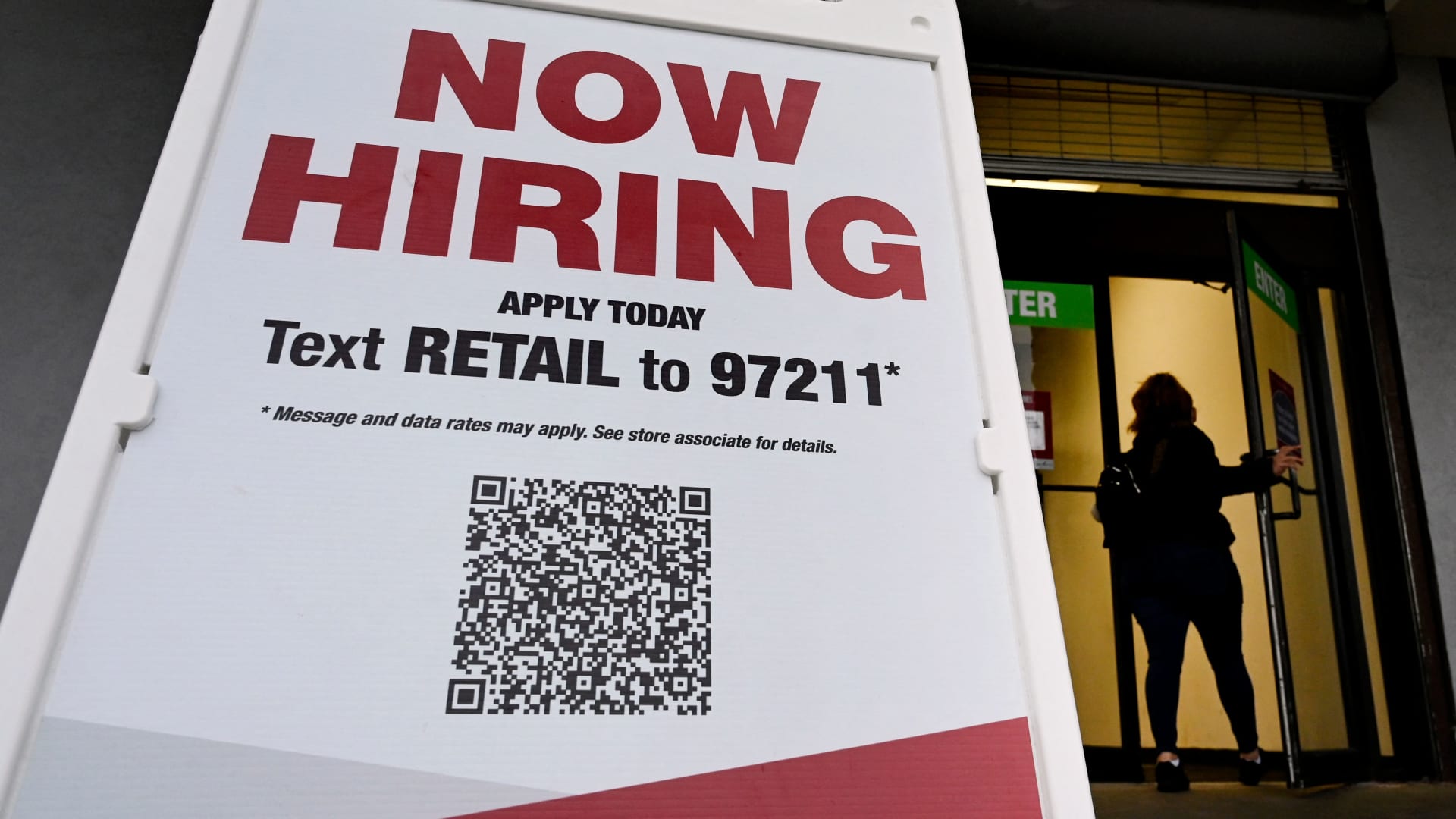
Retail Hiring Surges Amid Economic Optimism Despite Challenges


- Significant Hiring Growth: Preliminary federal data indicates that the retail sector added nearly 22,000 jobs in April, accounting for one-fifth of total job growth, showcasing consumer resilience amid economic uncertainties, which in turn boosts hiring confidence in the retail industry.
- Consumer Confidence Rebound: Despite challenges such as the Iran War, rising gas prices, and inflation, the surge in retail hiring reflects optimism among businesses regarding sustained consumer spending, particularly with warehouse clubs and supercenters leading the hiring in April.
- Surge in Job Openings: The retail sector recorded its highest volume of job openings since 2023 in March, with a 48% year-over-year increase, indicating enhanced confidence among retailers about future demand, even as overall job listings in the economy declined.
- Potential Risk Warnings: While consumer spending remains strong, companies like Whirlpool and McDonald's caution that the Iran War may dampen consumer confidence, and high gas prices could force consumers to cut discretionary spending, potentially impacting the retail sector's recent hiring expansion.
See More

Retail Sector Sees Significant Job Growth
- Job Growth Data: Preliminary federal data indicates that the retail sector added nearly 22,000 jobs in April, accounting for almost one-fifth of total job growth, with the total number of retail employees reaching 15.5 million, the highest since July 2024, signaling a recovery in the industry.
- Increased Hiring Confidence: Retailers are ramping up hiring despite economic uncertainties and high gas prices, particularly warehouse clubs and supercenters, reflecting a growing confidence in sustained consumer spending amidst challenging conditions.
- Surge in Job Openings: Retailers posted their highest volume of job openings since 2023 in March, with a 48% year-over-year increase, indicating optimism about future demand, even as overall economic job listings declined during the same period.
- Potential Risk Signals: While consumer spending remains robust, rising gas prices due to the Iran War and declining consumer sentiment pose risks that could impact retail growth and hiring plans in the coming months.
See More

Capital One's Earnings Report Highlights Increasing Consumer Strain

- Earnings Miss: Capital One reported Q1 revenue of $15.2 billion and an adjusted EPS of $4.42, down 2% year-over-year and missing analyst expectations of $15.4 billion and $4.55, indicating increasing financial strain on consumers.
- Rising Loan Loss Provisions: The company's loan-loss provision surged to $4.07 billion, exceeding estimates of $3.77 billion and significantly up from $2.37 billion a year ago, highlighting escalating bad debt risks that could impact future profitability.
- Increasing Delinquency Rates: TransUnion reported that the percentage of credit card holders 90 days late on payments rose to 2.53%, nearing a two-year high, reflecting consumer vulnerability amid record-high credit card balances and ongoing spending pressures.
- Widespread Industry Challenges: The struggles are not limited to Capital One, as both Papa John's and McDonald's reported revenue and earnings misses, underscoring the broader economic challenges affecting various sectors, which could lead to weakened overall market performance.
See More

Rising Consumer Loan Defaults Signal Economic Concerns
- Rising Loan Defaults: Capital One Financial's Q1 report reveals a loan-loss provision of $4.07 billion, exceeding the $3.77 billion estimate, indicating increasing financial strain on consumers that could impact the company's future profitability.
- Consumer Spending Risks: While consumer spending is up, the rise in bad debt is concerning, with Capital One's charge-offs increasing from $2.74 billion to $3.85 billion, reflecting negative economic impacts that may lead to a contraction in the overall consumer market.
- Restaurant Sector Challenges: Reports from Papa John's and McDonald's indicate that the former experienced a 6.4% decline in same-store sales, while the latter relied heavily on value meals to navigate economic pressures, suggesting even strong brands are not immune to economic slowdowns, potentially affecting their market share.
- Increasing Credit Card Delinquencies: TransUnion reports that the percentage of credit card holders 90 days late on payments has risen to a near two-year high of 2.53%, amidst record credit card balances of $1.12 trillion, raising concerns about consumer financial health that could trigger broader economic repercussions.
See More

HALO Stocks Significantly Impacted by AI Developments

- HALO Stock Concept: HALO stocks refer to companies with heavy assets and low obsolescence risk, theoretically immune to AI replacement; recent news of Anthropic's new AI tool caused IBM's stock to drop 13% in a single day, highlighting market concerns.
- Energy Company Performance: For instance, ExxonMobil's stock has risen 24% this year, largely driven by the Iran war and soaring oil prices, indicating that energy companies are poised to benefit from the growing demand for AI, despite overall consumer spending trends.
- Consumer Goods Challenges: McDonald's stock has declined about 7% year-to-date, impacted by low consumer sentiment and rising gasoline prices; despite its substantial assets, it faces challenges from weakening consumer demand, illustrating the vulnerabilities of HALO stocks.
- Strong Performance of Equipment Manufacturers: Caterpillar and Deere have shown exceptional performance in 2026, with stock increases of 59% and 26%, respectively, significantly outperforming the S&P 500's 7%, indicating their crucial role in the AI build-out.
See More
McDonald's Q1 Earnings Beat Expectations
- Significant Revenue Growth: McDonald's reported Q1 revenue of $6.52 billion, a 9% increase year-over-year, surpassing the market expectation of $6.47 billion, highlighting strong performance in key markets, particularly the U.K., Germany, and Australia.
- Earnings Per Share Exceeds Expectations: The adjusted earnings per share reached $2.83, exceeding analyst estimates of $2.74, reflecting the company's competitive edge in value and affordability, which further boosts investor confidence.
- Global Sales Growth: Global comparable sales grew by 3.8%, with positive growth in both the U.S. and international markets, indicating McDonald's continued expansion of market share, especially in markets demonstrating strong execution.
- Restructuring Costs Impact: The company incurred a pre-tax restructuring charge of $47 million during the quarter as part of its internal effort to modernize workflows; nevertheless, the overall performance remained robust, demonstrating the company's commitment to operational optimization.
See More
Retail Hiring Surges Amid Economic Optimism Despite Challenges
- Significant Hiring Growth: Preliminary federal data indicates that the retail sector added nearly 22,000 jobs in April, accounting for one-fifth of total job growth, showcasing consumer resilience amid economic uncertainties, which in turn boosts hiring confidence in the retail industry.
- Consumer Confidence Rebound: Despite challenges such as the Iran War, rising gas prices, and inflation, the surge in retail hiring reflects optimism among businesses regarding sustained consumer spending, particularly with warehouse clubs and supercenters leading the hiring in April.
- Surge in Job Openings: The retail sector recorded its highest volume of job openings since 2023 in March, with a 48% year-over-year increase, indicating enhanced confidence among retailers about future demand, even as overall job listings in the economy declined.
- Potential Risk Warnings: While consumer spending remains strong, companies like Whirlpool and McDonald's caution that the Iran War may dampen consumer confidence, and high gas prices could force consumers to cut discretionary spending, potentially impacting the retail sector's recent hiring expansion.
See More
Retail Sector Sees Significant Job Growth
- Job Growth Data: Preliminary federal data indicates that the retail sector added nearly 22,000 jobs in April, accounting for almost one-fifth of total job growth, with the total number of retail employees reaching 15.5 million, the highest since July 2024, signaling a recovery in the industry.
- Increased Hiring Confidence: Retailers are ramping up hiring despite economic uncertainties and high gas prices, particularly warehouse clubs and supercenters, reflecting a growing confidence in sustained consumer spending amidst challenging conditions.
- Surge in Job Openings: Retailers posted their highest volume of job openings since 2023 in March, with a 48% year-over-year increase, indicating optimism about future demand, even as overall economic job listings declined during the same period.
- Potential Risk Signals: While consumer spending remains robust, rising gas prices due to the Iran War and declining consumer sentiment pose risks that could impact retail growth and hiring plans in the coming months.
See More
Capital One's Earnings Report Highlights Increasing Consumer Strain
- Earnings Miss: Capital One reported Q1 revenue of $15.2 billion and an adjusted EPS of $4.42, down 2% year-over-year and missing analyst expectations of $15.4 billion and $4.55, indicating increasing financial strain on consumers.
- Rising Loan Loss Provisions: The company's loan-loss provision surged to $4.07 billion, exceeding estimates of $3.77 billion and significantly up from $2.37 billion a year ago, highlighting escalating bad debt risks that could impact future profitability.
- Increasing Delinquency Rates: TransUnion reported that the percentage of credit card holders 90 days late on payments rose to 2.53%, nearing a two-year high, reflecting consumer vulnerability amid record-high credit card balances and ongoing spending pressures.
- Widespread Industry Challenges: The struggles are not limited to Capital One, as both Papa John's and McDonald's reported revenue and earnings misses, underscoring the broader economic challenges affecting various sectors, which could lead to weakened overall market performance.
See More
Rising Consumer Loan Defaults Signal Economic Concerns
- Rising Loan Defaults: Capital One Financial's Q1 report reveals a loan-loss provision of $4.07 billion, exceeding the $3.77 billion estimate, indicating increasing financial strain on consumers that could impact the company's future profitability.
- Consumer Spending Risks: While consumer spending is up, the rise in bad debt is concerning, with Capital One's charge-offs increasing from $2.74 billion to $3.85 billion, reflecting negative economic impacts that may lead to a contraction in the overall consumer market.
- Restaurant Sector Challenges: Reports from Papa John's and McDonald's indicate that the former experienced a 6.4% decline in same-store sales, while the latter relied heavily on value meals to navigate economic pressures, suggesting even strong brands are not immune to economic slowdowns, potentially affecting their market share.
- Increasing Credit Card Delinquencies: TransUnion reports that the percentage of credit card holders 90 days late on payments has risen to a near two-year high of 2.53%, amidst record credit card balances of $1.12 trillion, raising concerns about consumer financial health that could trigger broader economic repercussions.
See More
HALO Stocks Significantly Impacted by AI Developments
- HALO Stock Concept: HALO stocks refer to companies with heavy assets and low obsolescence risk, theoretically immune to AI replacement; recent news of Anthropic's new AI tool caused IBM's stock to drop 13% in a single day, highlighting market concerns.
- Energy Company Performance: For instance, ExxonMobil's stock has risen 24% this year, largely driven by the Iran war and soaring oil prices, indicating that energy companies are poised to benefit from the growing demand for AI, despite overall consumer spending trends.
- Consumer Goods Challenges: McDonald's stock has declined about 7% year-to-date, impacted by low consumer sentiment and rising gasoline prices; despite its substantial assets, it faces challenges from weakening consumer demand, illustrating the vulnerabilities of HALO stocks.
- Strong Performance of Equipment Manufacturers: Caterpillar and Deere have shown exceptional performance in 2026, with stock increases of 59% and 26%, respectively, significantly outperforming the S&P 500's 7%, indicating their crucial role in the AI build-out.
See More