Jefferies: Yeti Benefits from US-Taiwan Trade Agreement, Price Target $70
Written by Emily J. Thompson, Senior Investment Analyst
Updated: Jan 16 2026
0mins

After the U.S. and Taiwan announced a trade and investment agreement that establishes a predictable tariff framework and lowers reciprocal tariff rates to no more than 15%, Jefferies analyst Randal Konik said the tariff development is "directionally positive" for the lifestyle and growth platforms group, but "not thesis-changing for any company." Yeti (YETI) "stands out as the largest beneficiary" and the only name where the benefit is meaningfully visible in the firm's framework, says the analyst, adding that Nike (NKE) and Topgolf Callaway (MODG) see "de minimis effects." The firm has a Buy rating and $70 price target on Yeti shares.
Trade with 70% Backtested Accuracy
Stop guessing "Should I Buy NKE?" and start using high-conviction signals backed by rigorous historical data.
Sign up today to access powerful investing tools and make smarter, data-driven decisions.
Analyst Views on NKE
Wall Street analysts forecast NKE stock price to rise
21 Analyst Rating
14 Buy
7 Hold
0 Sell
Moderate Buy
Current: 43.230

Low
62.00
Averages
76.11
High
110.00
Current: 43.230
Low
62.00
Averages
76.11
High
110.00
About NKE
NIKE, Inc. is engaged in the designing, marketing and distributing of athletic footwear, apparel, equipment and accessories and services for sports and fitness activities. The Company's operating segments include North America; Europe, Middle East & Africa (EMEA); Greater China; and Asia Pacific & Latin America (APLA). It sells a line of equipment and accessories under the NIKE Brand name, including bags, socks, sport balls, eyewear, timepieces, digital devices, bats, gloves, protective equipment and other equipment designed for sports activities. It also designs products specifically for the Jordan Brand and Converse. The Jordan Brand designs, distributes and licenses athletic and casual footwear, apparel and accessories predominantly focused on basketball performance and culture using the Jumpman trademark. The Company also designs, distributes and licenses casual sneakers, apparel and accessories under the Chuck Taylor, All Star, One Star, Star Chevron and Jack Purcell trademarks.
About the author

Emily J. Thompson
Emily J. Thompson, a Chartered Financial Analyst (CFA) with 12 years in investment research, graduated with honors from the Wharton School. Specializing in industrial and technology stocks, she provides in-depth analysis for Intellectia’s earnings and market brief reports.

Nike Stock Plummets 75% Yet Dividend Remains Attractive

- Significant Stock Decline: Nike's (NKE) stock has plummeted 75% from its all-time high, indicating the company's struggles in the market; however, it is actively seeking strategies for a turnaround, suggesting that a stock rebound may still be a distant prospect.
- Brand Strength Persists: Despite challenges, Nike remains the top brand in footwear and apparel according to Piper Sandler's annual survey, indicating ongoing market opportunities, especially when compared to competitors like Adidas and Lululemon.
- Sales Growth Highlights: In the third quarter of fiscal 2026, Nike's revenue was flat year-over-year, with wholesale revenue increasing by 5%, while the running category saw a 20% increase and the global football segment also achieved double-digit growth, showcasing recovery potential in specific areas.
- Attractive Dividend Yield: Nike's dividend yield has risen from around 1% historically to approximately 3.8%, and the company has raised its dividend for 24 consecutive years, making it a reliable choice for passive income investors, particularly for those with a long-term investment horizon who may benefit from a potential stock rebound.
See More
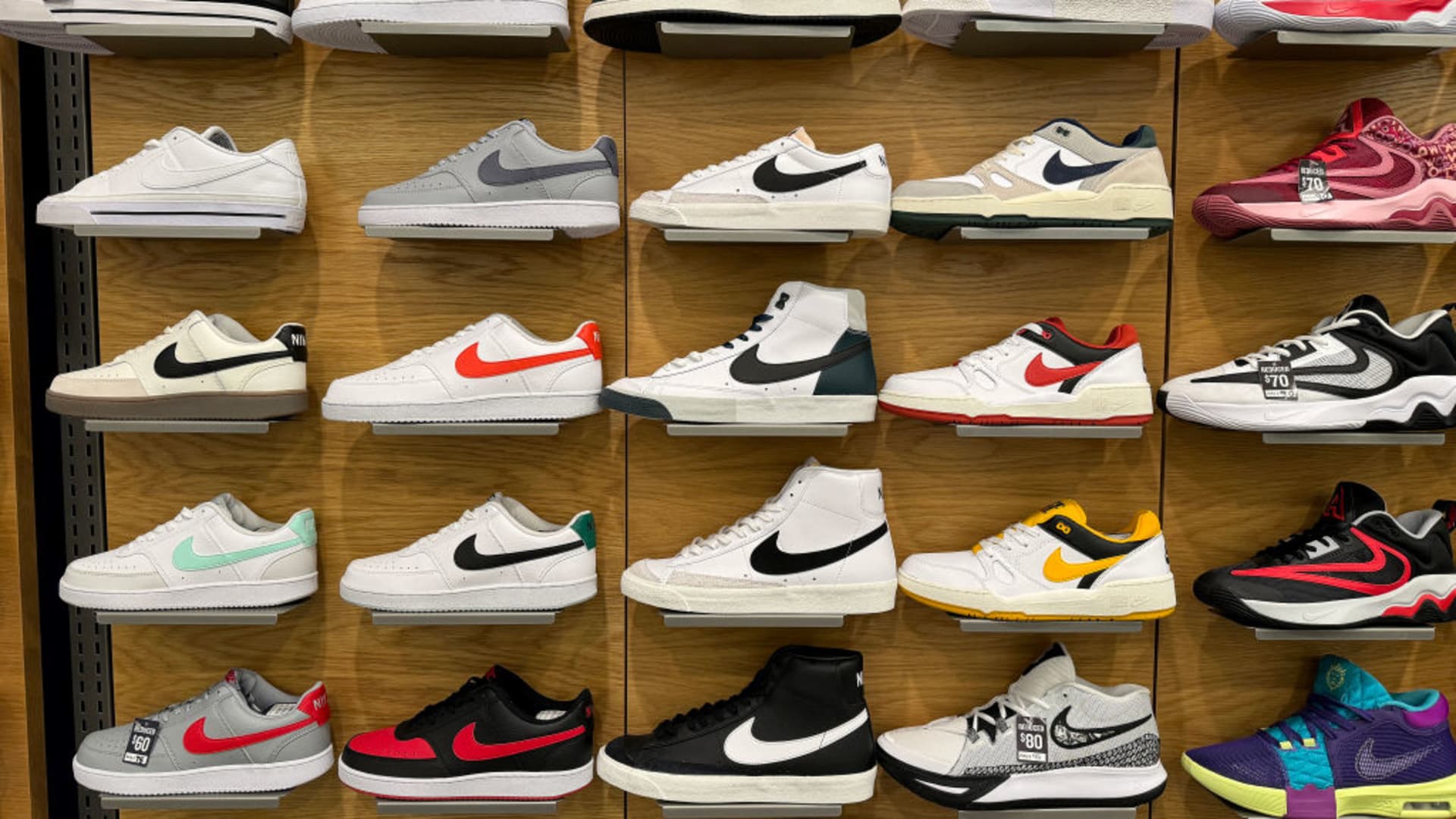
Nike Restarts Wholesale Partnerships and Innovation Efforts
- Wholesale Partnership Restart: Nike has restarted its wholesale partnerships after previously cutting ties, aiming to expand market coverage and restore sales channels, thereby enhancing its competitive position in the market.
- Dividend Yield Increase: The dividend yield for Nike has risen from around 1% historically to an attractive 3.8%, making it a more appealing investment option, especially in the context of declining stock prices, attracting passive income investors.
- Sales Growth Highlights: In the fiscal third quarter of 2026, Nike's overall revenue remained flat while wholesale revenue increased by 5%, and the running category saw a 20% increase, indicating positive progress in regaining market share.
- Strategic Transformation: New CEO Elliott Hill has crafted a strategy focused on sport and innovation, aiming to reverse Nike's market decline and enhance brand penetration by restoring partnerships with wholesalers.
See More
Salesforce Shares Drop 32.3% Year-to-Date

- Poor Stock Performance: Salesforce's shares are down 1.7% today and have fallen 32.3% year-to-date, indicating market concerns about its future growth, which could impact investor confidence and lead to capital outflows.
- Dow Component Dynamics: As the worst-performing component in the Dow Jones index, Salesforce's relative weakness may affect its allocation in investment portfolios, signaling potential risk aversion among investors.
- Other Component Movements: In contrast to Salesforce, Apple shares are down 1.0%, while Sherwin-Williams shares are up 2.2%, highlighting varying market reactions to different companies and potentially influencing investor selection strategies.
- Market Sentiment Impact: The ongoing decline of Salesforce may trigger broader concerns about tech stocks, especially amid increasing economic uncertainty, prompting more investors to reassess their holdings.
See More
Goldman Sachs Maintains Neutral Rating on Nike with $52 Price Target
- Product Innovation Strategy: Nike launched its new product and collaboration strategy for the 2026 World Cup season, introducing new federation kits and advanced-performance boots, aiming to enhance brand influence through innovation and strengthen its competitive position in the global football market.
- Marketing Campaigns: The brand's “Rip the Script” football campaign positions Nike at the center of global soccer culture, leveraging upcoming international tournaments to attract consumer attention and drive sales growth.
- Analyst Insights: After attending Nike's Global Football showcase, Goldman Sachs maintained a Neutral rating with a $52 price target, emphasizing the importance of product innovation and brand storytelling in reinforcing Nike's market position ahead of the World Cup.
- Investor Sentiment: Despite a 32% decline in Nike's stock year-to-date, retail sentiment on Stocktwits remains neutral, indicating cautious optimism about the company's future performance and reflecting confidence in the brand's long-term potential.
See More

Lululemon Lowers Full-Year Guidance Amid Weak Trends

- Performance Overview: Lululemon's Q1 revenue rose 4% year-over-year to $2.47 billion, exceeding the $2.43 billion consensus, while adjusted EPS fell 35% to $1.69, slightly above the $1.68 expectation, indicating some resilience amid slowing sales growth.
- Declining Sales Trends: The company noted weakening sales trends, with North American revenue down 3% and comparable-store sales decreasing by 5%, contrasting with a robust international performance where revenue surged 22% and same-store sales rose 13%, highlighting regional demand disparities.
- Future Outlook: Lululemon forecasts full-year sales between $11 billion and $11.15 billion, a downward revision from previous guidance, reflecting a cautious outlook on market conditions, while adjusted EPS is expected to range from $10.95 to $11.15, significantly lower than earlier projections of $12.10 to $12.30.
- Leadership Transition: The new CEO will not take office until September, following the former CEO's departure in December, leaving Lululemon without stable leadership for nine months, which may impact strategic execution and market confidence.
See More

Lululemon Lowers Full-Year Guidance Amid Struggles
- Earnings Decline: Lululemon's Q1 revenue rose 4% year-over-year to $2.47 billion, surpassing the $2.43 billion consensus, yet adjusted EPS fell 35% to $1.69, slightly above the $1.68 expectation, indicating ongoing challenges amid moderating sales trends.
- Mixed Market Performance: North American revenue dropped 3% with comparable-store sales down 5%, while international revenue surged 22%, driven by a 30% increase in China, highlighting significant disparities in global market performance that impact overall results.
- Margin Pressure: Gross margin declined by 410 basis points to 54.2%, primarily due to tariffs and fixed cost deleveraging, with expectations of an additional 90 basis point decrease this fiscal year, which will further compress profit margins and affect future financial performance.
- Uncertain Outlook: Lululemon forecasts sales between $11 billion and $11.15 billion, down from previous guidance, reflecting a cautious outlook, especially with the new CEO not starting until September, raising concerns about the company's recovery strategy.
See More
Nike Stock Plummets 75% Yet Dividend Remains Attractive
- Significant Stock Decline: Nike's (NKE) stock has plummeted 75% from its all-time high, indicating the company's struggles in the market; however, it is actively seeking strategies for a turnaround, suggesting that a stock rebound may still be a distant prospect.
- Brand Strength Persists: Despite challenges, Nike remains the top brand in footwear and apparel according to Piper Sandler's annual survey, indicating ongoing market opportunities, especially when compared to competitors like Adidas and Lululemon.
- Sales Growth Highlights: In the third quarter of fiscal 2026, Nike's revenue was flat year-over-year, with wholesale revenue increasing by 5%, while the running category saw a 20% increase and the global football segment also achieved double-digit growth, showcasing recovery potential in specific areas.
- Attractive Dividend Yield: Nike's dividend yield has risen from around 1% historically to approximately 3.8%, and the company has raised its dividend for 24 consecutive years, making it a reliable choice for passive income investors, particularly for those with a long-term investment horizon who may benefit from a potential stock rebound.
See More
Nike Restarts Wholesale Partnerships and Innovation Efforts
- Wholesale Partnership Restart: Nike has restarted its wholesale partnerships after previously cutting ties, aiming to expand market coverage and restore sales channels, thereby enhancing its competitive position in the market.
- Dividend Yield Increase: The dividend yield for Nike has risen from around 1% historically to an attractive 3.8%, making it a more appealing investment option, especially in the context of declining stock prices, attracting passive income investors.
- Sales Growth Highlights: In the fiscal third quarter of 2026, Nike's overall revenue remained flat while wholesale revenue increased by 5%, and the running category saw a 20% increase, indicating positive progress in regaining market share.
- Strategic Transformation: New CEO Elliott Hill has crafted a strategy focused on sport and innovation, aiming to reverse Nike's market decline and enhance brand penetration by restoring partnerships with wholesalers.
See More
Salesforce Shares Drop 32.3% Year-to-Date
- Poor Stock Performance: Salesforce's shares are down 1.7% today and have fallen 32.3% year-to-date, indicating market concerns about its future growth, which could impact investor confidence and lead to capital outflows.
- Dow Component Dynamics: As the worst-performing component in the Dow Jones index, Salesforce's relative weakness may affect its allocation in investment portfolios, signaling potential risk aversion among investors.
- Other Component Movements: In contrast to Salesforce, Apple shares are down 1.0%, while Sherwin-Williams shares are up 2.2%, highlighting varying market reactions to different companies and potentially influencing investor selection strategies.
- Market Sentiment Impact: The ongoing decline of Salesforce may trigger broader concerns about tech stocks, especially amid increasing economic uncertainty, prompting more investors to reassess their holdings.
See More
Goldman Sachs Maintains Neutral Rating on Nike with $52 Price Target
- Product Innovation Strategy: Nike launched its new product and collaboration strategy for the 2026 World Cup season, introducing new federation kits and advanced-performance boots, aiming to enhance brand influence through innovation and strengthen its competitive position in the global football market.
- Marketing Campaigns: The brand's “Rip the Script” football campaign positions Nike at the center of global soccer culture, leveraging upcoming international tournaments to attract consumer attention and drive sales growth.
- Analyst Insights: After attending Nike's Global Football showcase, Goldman Sachs maintained a Neutral rating with a $52 price target, emphasizing the importance of product innovation and brand storytelling in reinforcing Nike's market position ahead of the World Cup.
- Investor Sentiment: Despite a 32% decline in Nike's stock year-to-date, retail sentiment on Stocktwits remains neutral, indicating cautious optimism about the company's future performance and reflecting confidence in the brand's long-term potential.
See More
Lululemon Lowers Full-Year Guidance Amid Weak Trends
- Performance Overview: Lululemon's Q1 revenue rose 4% year-over-year to $2.47 billion, exceeding the $2.43 billion consensus, while adjusted EPS fell 35% to $1.69, slightly above the $1.68 expectation, indicating some resilience amid slowing sales growth.
- Declining Sales Trends: The company noted weakening sales trends, with North American revenue down 3% and comparable-store sales decreasing by 5%, contrasting with a robust international performance where revenue surged 22% and same-store sales rose 13%, highlighting regional demand disparities.
- Future Outlook: Lululemon forecasts full-year sales between $11 billion and $11.15 billion, a downward revision from previous guidance, reflecting a cautious outlook on market conditions, while adjusted EPS is expected to range from $10.95 to $11.15, significantly lower than earlier projections of $12.10 to $12.30.
- Leadership Transition: The new CEO will not take office until September, following the former CEO's departure in December, leaving Lululemon without stable leadership for nine months, which may impact strategic execution and market confidence.
See More
Lululemon Lowers Full-Year Guidance Amid Struggles
- Earnings Decline: Lululemon's Q1 revenue rose 4% year-over-year to $2.47 billion, surpassing the $2.43 billion consensus, yet adjusted EPS fell 35% to $1.69, slightly above the $1.68 expectation, indicating ongoing challenges amid moderating sales trends.
- Mixed Market Performance: North American revenue dropped 3% with comparable-store sales down 5%, while international revenue surged 22%, driven by a 30% increase in China, highlighting significant disparities in global market performance that impact overall results.
- Margin Pressure: Gross margin declined by 410 basis points to 54.2%, primarily due to tariffs and fixed cost deleveraging, with expectations of an additional 90 basis point decrease this fiscal year, which will further compress profit margins and affect future financial performance.
- Uncertain Outlook: Lululemon forecasts sales between $11 billion and $11.15 billion, down from previous guidance, reflecting a cautious outlook, especially with the new CEO not starting until September, raising concerns about the company's recovery strategy.
See More