Investment Dynamics of Nvidia and Micron
Written by Emily J. Thompson, Senior Investment Analyst
Updated: 1 hour ago
0mins

Should l Buy NVDA?
Source: Fool
- Stock Performance Comparison: Since the fourth quarter of last year, Micron's stock has surged by 50% while Nvidia's has declined by 3%, indicating a short-term preference for Micron, yet analysts generally view Nvidia as the more attractive investment.
- Analyst Price Targets: Nvidia has a median target price of $265 per share, implying a 47% upside from its current price of $180, while Micron's target price of $450 suggests only a 6% upside, reflecting differing market expectations for the two companies.
- Financial Performance Highlights: Nvidia reported a 73% revenue increase to $68 billion in Q4 of fiscal 2026, with non-GAAP earnings rising 82% to $1.62 per share, showcasing its strong performance and market leadership in AI infrastructure.
- Market Competition Landscape: Although Micron gained market share in DRAM and NAND flash memory, the intense price competition in the industry poses risks of future supply-demand imbalances, necessitating cautious evaluation of its long-term value by investors.
Trade with 70% Backtested Accuracy
Stop guessing "Should I Buy NVDA?" and start using high-conviction signals backed by rigorous historical data.
Sign up today to access powerful investing tools and make smarter, data-driven decisions.
Analyst Views on NVDA
Wall Street analysts forecast NVDA stock price to rise
41 Analyst Rating
39 Buy
1 Hold
1 Sell
Strong Buy
Current: 180.250

Low
200.00
Averages
264.97
High
352.00
Current: 180.250
Low
200.00
Averages
264.97
High
352.00
About NVDA
NVIDIA Corporation is a full-stack computing infrastructure company. The Company is engaged in accelerated computing to help solve the challenging computational problems. The Company’s segments include Compute & Networking and Graphics. The Compute & Networking segment includes its Data Center accelerated computing platforms and artificial intelligence (AI) solutions and software; networking; automotive platforms and autonomous and electric vehicle solutions; Jetson for robotics and other embedded platforms, and DGX Cloud computing services. The Graphics segment includes GeForce GPUs for gaming and PCs, the GeForce NOW game streaming service and related infrastructure, and solutions for gaming platforms; Quadro/NVIDIA RTX GPUs for enterprise workstation graphics; virtual GPU software for cloud-based visual and virtual computing; automotive platforms for infotainment systems, and Omniverse Enterprise software for building and operating industrial AI and digital twin applications.
About the author

Emily J. Thompson
Emily J. Thompson, a Chartered Financial Analyst (CFA) with 12 years in investment research, graduated with honors from the Wharton School. Specializing in industrial and technology stocks, she provides in-depth analysis for Intellectia’s earnings and market brief reports.

Nvidia Projects Over $1 Trillion Revenue by 2027

- Revenue Surge Expected: Nvidia anticipates generating at least $1 trillion in revenue by 2027, driven by accelerating demand for artificial intelligence computing infrastructure, indicating strong market confidence and growth in AI technology.
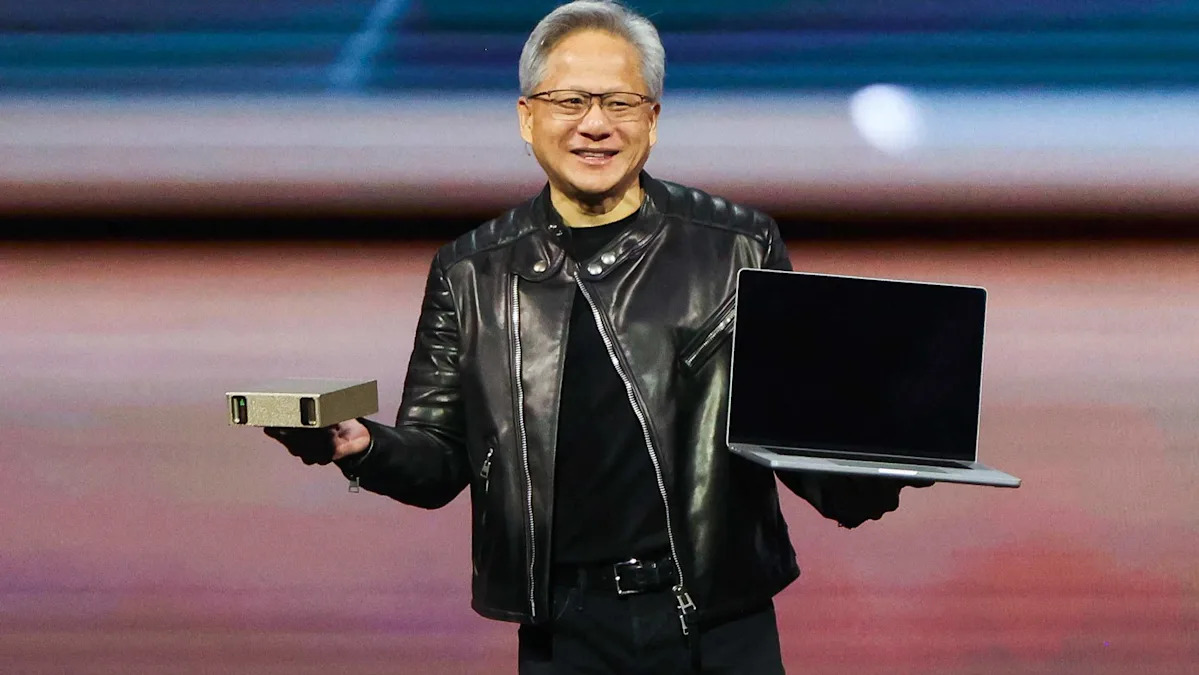
- CEO Keynote Highlights: Founder and CEO Jensen Huang emphasized at GTC 2026 that the shift of AI systems from training to large-scale inference has led to a significant increase in computing requirements, marking a pivotal moment for the industry.
- Demand Comparison Analysis: Huang noted that last year at this time, the company projected a demand of $500 billion, which has now doubled, showcasing robust purchase orders and confidence in the Blackwell and Ruben products.
- Stock Price Reaction: At the time of the announcement, Nvidia's shares rose approximately 1%, reflecting the market's positive outlook on the company's future growth potential and further solidifying its leadership position in the AI sector.
See More
Nvidia Unveils New Products and $1 Trillion Revenue Opportunity
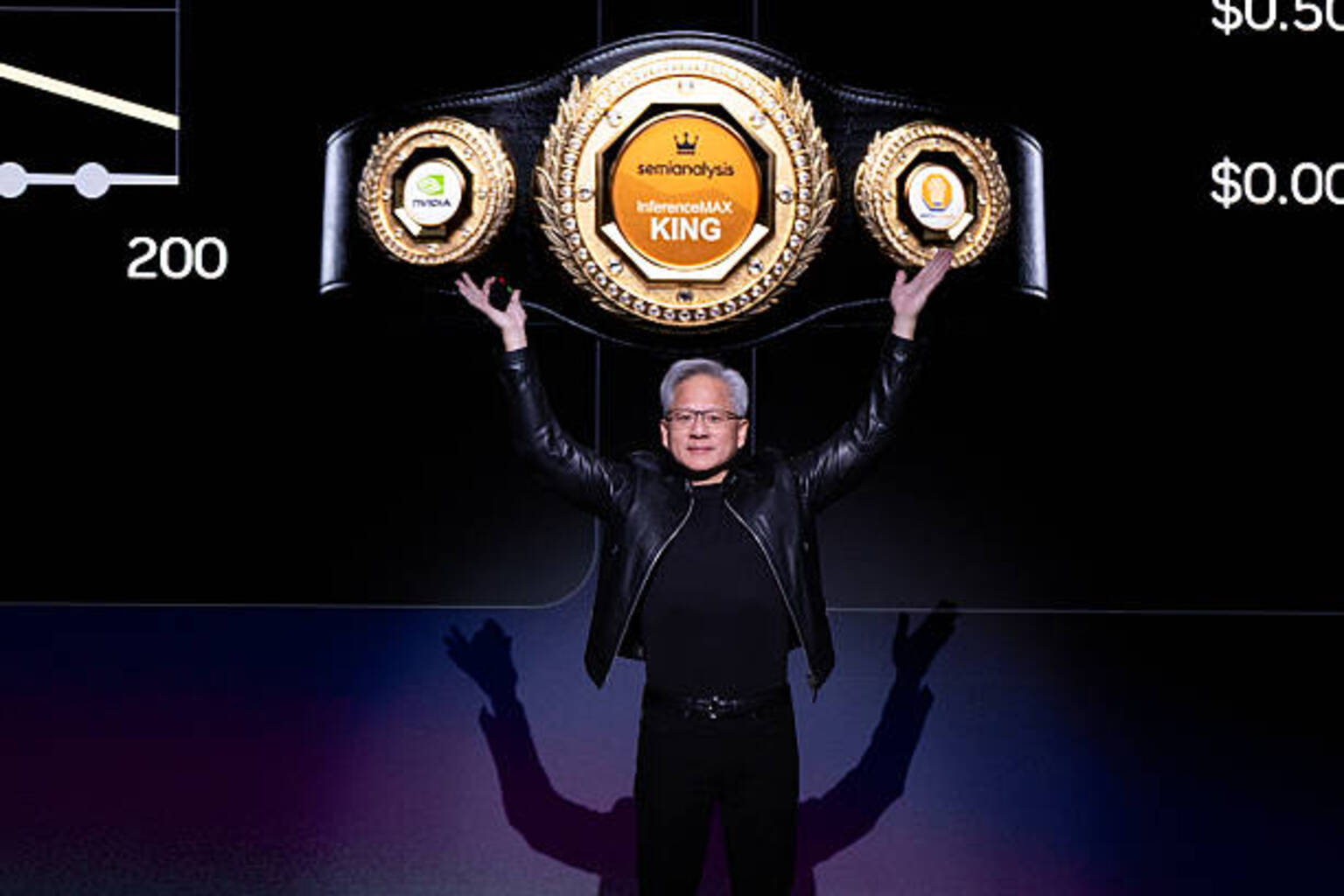
- Revenue Opportunity Outlook: At the annual GTC event, Nvidia's CEO Jensen Huang announced a projected revenue opportunity exceeding $1 trillion by 2027, which has excited analysts, particularly as Wedbush highlighted the staggering backlog.
- Innovation Driving Demand: Analysts noted that Nvidia's GB200 NVL72 chip delivers up to 50 times the performance per watt and 35 times lower cost per token, making it the clear architecture of choice for enterprises scaling agentic AI workloads, further solidifying its market leadership.
- Accelerating Market Demand: Nvidia also launched the NemoClaw open-source enterprise AI agent platform aimed at capturing a 100-fold growth in inference demand, indicating the company's ambitions in physical AI, with hundreds of billions in total addressable market expected over the next decade.
- Ecosystem Impact: Analysts estimate that for every $1 spent on Nvidia chips, an $8 to $10 multiplier effect will ripple across the ecosystem, covering hyperscalers, software, and data center buildouts, driving $3 to $4 trillion in AI capex over the next three years.
See More

Investors Focus on Fed Rate Decision Amid Geopolitical Tensions

- Fed Rate Decision Impact: Investors are closely watching the upcoming Federal Reserve rate decision, with Nasdaq futures down 0.4% as inflation concerns mount and hopes for a rate cut diminish, reflecting cautious market sentiment.
- Geopolitical Tensions: As tensions escalate between the U.S. and Iran, President Trump expressed a desire to 'take Cuba in some form,' which has contributed to market unease and affected investor confidence amid rising geopolitical risks.
- Retail Sentiment Shift: Retail sentiment towards the SPDR S&P 500 ETF (SPY) remains 'extremely bearish,' while the Invesco QQQ Trust (QQQ) has shifted from 'extremely bearish' to 'bearish,' indicating a cautious outlook on tech stocks amid high trading volumes.
- Nvidia's Bullish Outlook: Despite the overall market sentiment, Nvidia CEO Jensen Huang has doubled the visibility of orders for the company's main AI chips to $1 trillion by 2027, astonishing analysts and highlighting strong demand in the AI sector.
See More

Analysis of Continued Selling by Nvidia Shareholder
- Shareholder Selling Trend: Billionaire Philippe Laffont has sold Nvidia shares in 10 of the last 11 quarters, reducing his holdings from 49,802,020 shares in Q1 2023 to 8,545,835 shares in Q1 2025, indicating a cautious outlook on the company's future.
- Profit-Taking Behavior: After building a massive stake in Nvidia during Q3 2022, when shares surged over 1,200%, Laffont's selling may partly stem from a desire to lock in gains, reflecting his sensitivity to market volatility.
- Technology Bubble Risk: Despite significant corporate spending on AI infrastructure, history shows that emerging technologies often face bubble bursts; Laffont's selling could be a warning of a potential AI bubble, which would severely impact Nvidia if it bursts.
- Competition and Trade Concerns: While Nvidia leads in data center hardware, its major customers are developing internal chips that could undermine Nvidia's pricing power and gross margins, compounded by uncertainties in the US-China trade landscape that pose challenges for the company's future.
See More

Philippe Laffont's Reasons for Selling Nvidia Shares
- Laffont's Share Reduction: Since March 31, 2023, billionaire Philippe Laffont has sold over 40 million split-adjusted shares of Nvidia, with benign profit-taking likely being a factor, but larger headwinds may stem from market concerns about the future of AI technology.
- AI Market Potential: Artificial intelligence is viewed as a multitrillion-dollar global opportunity, with Nvidia as the industry leader, whose GPUs are central to AI data centers; however, concerns about a potential tech bubble could impact its stock performance.
- Increased Competition Risks: While Nvidia leads in data center hardware, its top customers are developing internal chips, which could undermine Nvidia's pricing power and gross margins, putting future market share at risk.
- Trade Environment Uncertainty: Laffont may be worried about the changing trade policies between the U.S. and China, particularly regarding China's low willingness to purchase Nvidia's revamped H200 GPUs, which could affect the company's sales outlook and market confidence.
See More
Investment Dynamics of Nvidia and Micron

- Stock Performance Comparison: Since the fourth quarter of last year, Micron's stock has surged by 50% while Nvidia's has declined by 3%, indicating a short-term preference for Micron, yet analysts generally view Nvidia as the more attractive investment.
- Analyst Price Targets: Nvidia has a median target price of $265 per share, implying a 47% upside from its current price of $180, while Micron's target price of $450 suggests only a 6% upside, reflecting differing market expectations for the two companies.
- Financial Performance Highlights: Nvidia reported a 73% revenue increase to $68 billion in Q4 of fiscal 2026, with non-GAAP earnings rising 82% to $1.62 per share, showcasing its strong performance and market leadership in AI infrastructure.
- Market Competition Landscape: Although Micron gained market share in DRAM and NAND flash memory, the intense price competition in the industry poses risks of future supply-demand imbalances, necessitating cautious evaluation of its long-term value by investors.
See More
Nvidia Projects Over $1 Trillion Revenue by 2027
- Revenue Surge Expected: Nvidia anticipates generating at least $1 trillion in revenue by 2027, driven by accelerating demand for artificial intelligence computing infrastructure, indicating strong market confidence and growth in AI technology.
- CEO Keynote Highlights: Founder and CEO Jensen Huang emphasized at GTC 2026 that the shift of AI systems from training to large-scale inference has led to a significant increase in computing requirements, marking a pivotal moment for the industry.
- Demand Comparison Analysis: Huang noted that last year at this time, the company projected a demand of $500 billion, which has now doubled, showcasing robust purchase orders and confidence in the Blackwell and Ruben products.
- Stock Price Reaction: At the time of the announcement, Nvidia's shares rose approximately 1%, reflecting the market's positive outlook on the company's future growth potential and further solidifying its leadership position in the AI sector.
See More
Nvidia Unveils New Products and $1 Trillion Revenue Opportunity
- Revenue Opportunity Outlook: At the annual GTC event, Nvidia's CEO Jensen Huang announced a projected revenue opportunity exceeding $1 trillion by 2027, which has excited analysts, particularly as Wedbush highlighted the staggering backlog.
- Innovation Driving Demand: Analysts noted that Nvidia's GB200 NVL72 chip delivers up to 50 times the performance per watt and 35 times lower cost per token, making it the clear architecture of choice for enterprises scaling agentic AI workloads, further solidifying its market leadership.
- Accelerating Market Demand: Nvidia also launched the NemoClaw open-source enterprise AI agent platform aimed at capturing a 100-fold growth in inference demand, indicating the company's ambitions in physical AI, with hundreds of billions in total addressable market expected over the next decade.
- Ecosystem Impact: Analysts estimate that for every $1 spent on Nvidia chips, an $8 to $10 multiplier effect will ripple across the ecosystem, covering hyperscalers, software, and data center buildouts, driving $3 to $4 trillion in AI capex over the next three years.
See More
Investors Focus on Fed Rate Decision Amid Geopolitical Tensions
- Fed Rate Decision Impact: Investors are closely watching the upcoming Federal Reserve rate decision, with Nasdaq futures down 0.4% as inflation concerns mount and hopes for a rate cut diminish, reflecting cautious market sentiment.
- Geopolitical Tensions: As tensions escalate between the U.S. and Iran, President Trump expressed a desire to 'take Cuba in some form,' which has contributed to market unease and affected investor confidence amid rising geopolitical risks.
- Retail Sentiment Shift: Retail sentiment towards the SPDR S&P 500 ETF (SPY) remains 'extremely bearish,' while the Invesco QQQ Trust (QQQ) has shifted from 'extremely bearish' to 'bearish,' indicating a cautious outlook on tech stocks amid high trading volumes.
- Nvidia's Bullish Outlook: Despite the overall market sentiment, Nvidia CEO Jensen Huang has doubled the visibility of orders for the company's main AI chips to $1 trillion by 2027, astonishing analysts and highlighting strong demand in the AI sector.
See More
Analysis of Continued Selling by Nvidia Shareholder
- Shareholder Selling Trend: Billionaire Philippe Laffont has sold Nvidia shares in 10 of the last 11 quarters, reducing his holdings from 49,802,020 shares in Q1 2023 to 8,545,835 shares in Q1 2025, indicating a cautious outlook on the company's future.
- Profit-Taking Behavior: After building a massive stake in Nvidia during Q3 2022, when shares surged over 1,200%, Laffont's selling may partly stem from a desire to lock in gains, reflecting his sensitivity to market volatility.
- Technology Bubble Risk: Despite significant corporate spending on AI infrastructure, history shows that emerging technologies often face bubble bursts; Laffont's selling could be a warning of a potential AI bubble, which would severely impact Nvidia if it bursts.
- Competition and Trade Concerns: While Nvidia leads in data center hardware, its major customers are developing internal chips that could undermine Nvidia's pricing power and gross margins, compounded by uncertainties in the US-China trade landscape that pose challenges for the company's future.
See More
Philippe Laffont's Reasons for Selling Nvidia Shares
- Laffont's Share Reduction: Since March 31, 2023, billionaire Philippe Laffont has sold over 40 million split-adjusted shares of Nvidia, with benign profit-taking likely being a factor, but larger headwinds may stem from market concerns about the future of AI technology.
- AI Market Potential: Artificial intelligence is viewed as a multitrillion-dollar global opportunity, with Nvidia as the industry leader, whose GPUs are central to AI data centers; however, concerns about a potential tech bubble could impact its stock performance.
- Increased Competition Risks: While Nvidia leads in data center hardware, its top customers are developing internal chips, which could undermine Nvidia's pricing power and gross margins, putting future market share at risk.
- Trade Environment Uncertainty: Laffont may be worried about the changing trade policies between the U.S. and China, particularly regarding China's low willingness to purchase Nvidia's revamped H200 GPUs, which could affect the company's sales outlook and market confidence.
See More
Investment Dynamics of Nvidia and Micron
- Stock Performance Comparison: Since the fourth quarter of last year, Micron's stock has surged by 50% while Nvidia's has declined by 3%, indicating a short-term preference for Micron, yet analysts generally view Nvidia as the more attractive investment.
- Analyst Price Targets: Nvidia has a median target price of $265 per share, implying a 47% upside from its current price of $180, while Micron's target price of $450 suggests only a 6% upside, reflecting differing market expectations for the two companies.
- Financial Performance Highlights: Nvidia reported a 73% revenue increase to $68 billion in Q4 of fiscal 2026, with non-GAAP earnings rising 82% to $1.62 per share, showcasing its strong performance and market leadership in AI infrastructure.
- Market Competition Landscape: Although Micron gained market share in DRAM and NAND flash memory, the intense price competition in the industry poses risks of future supply-demand imbalances, necessitating cautious evaluation of its long-term value by investors.
See More