Intel (INTC) Aims for 45% Client Market Share by 2026
Written by Emily J. Thompson, Senior Investment Analyst
Updated: Jan 23 2026
0mins
Should l Buy INTC?
Source: seekingalpha
- Market Share Target: Intel aims to achieve a 45% client market share by 2026, which would significantly enhance its position in the competitive semiconductor market, particularly against rivals like AMD and NVIDIA.
- Customer Decision Timeline: Intel expects to make decisions on 14 foundry customers by the end of 2026, laying the groundwork for future revenue growth and reflecting the company's strategic shift towards foundry services.
- Weak Financial Outlook: Intel's weak guidance for Q1 has led to a slump in its stock price, indicating challenges the company faces in the short term, which may undermine investor confidence and negatively impact future market performance.
- Bipolar Results: Intel's performance has shown extreme volatility, which could affect the execution of its long-term strategies, especially as it requires ongoing investments to maintain technological leadership.
Trade with 70% Backtested Accuracy
Stop guessing "Should I Buy INTC?" and start using high-conviction signals backed by rigorous historical data.
Sign up today to access powerful investing tools and make smarter, data-driven decisions.
Analyst Views on INTC
Wall Street analysts forecast INTC stock price to fall
29 Analyst Rating
5 Buy
19 Hold
5 Sell
Hold
Current: 94.480

Low
20.00
Averages
39.30
High
52.00
Current: 94.480
Low
20.00
Averages
39.30
High
52.00
About INTC
Intel Corporation is a global designer and manufacturer of semiconductor products. The Company's segments include Intel Products, Intel Foundry, and All Other. Its Intel Products comprise Client Computing Group (CCG) and Data Center and AI (DCAI). CCG delivers platforms and processors that power PCs and edge devices, enabling enhanced performance, connectivity and user experience for consumer and commercial markets with capabilities that also support retail, industrial robotics and AI ecosystems at the edge. DCAI delivers workload-optimized solutions based upon its x86 architecture for data centers, including CPUs, AI accelerators, NICs, IPUs and custom ASICs, enabling performance and scalability for cloud, enterprise, telecommunication and HPC environments. The Intel Foundry segment comprises technology development, manufacturing and foundry services, developing new semiconductor process technologies and advanced packaging technologies. All Other segments include Mobileye and Other.
About the author

Emily J. Thompson
Emily J. Thompson, a Chartered Financial Analyst (CFA) with 12 years in investment research, graduated with honors from the Wharton School. Specializing in industrial and technology stocks, she provides in-depth analysis for Intellectia’s earnings and market brief reports.
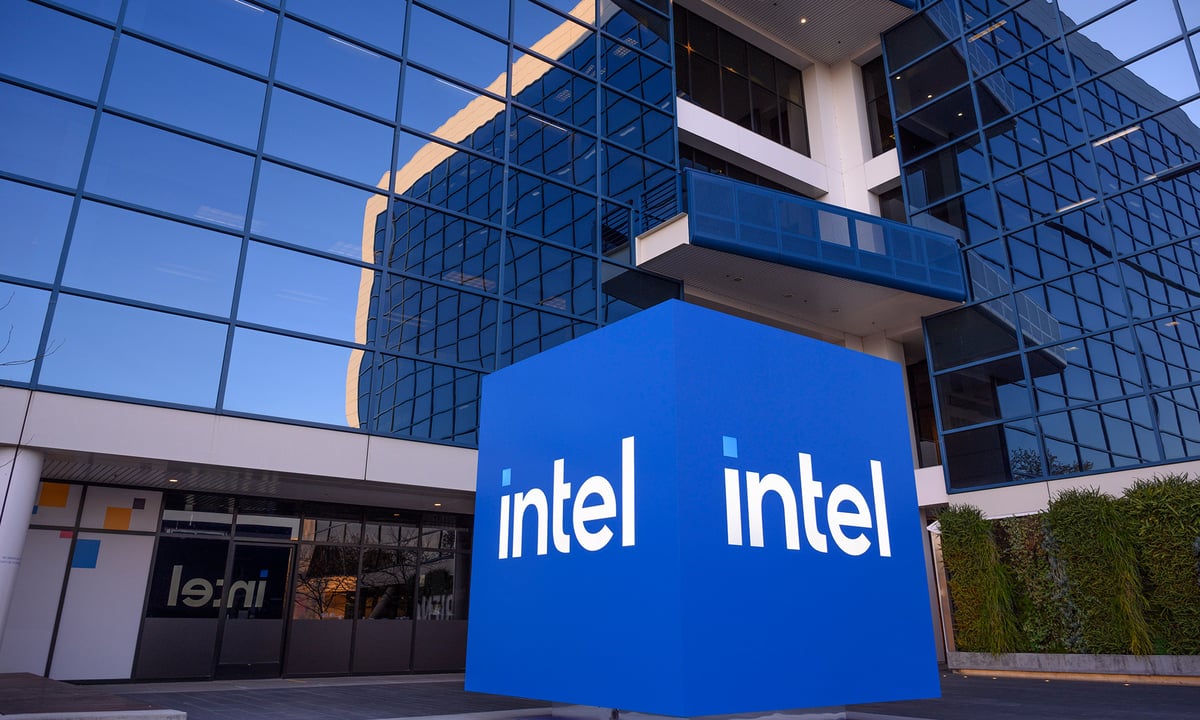
Intel's Stock Soars 122% Amid AI Demand Surge

- Strong Performance Growth: Intel's Data Center and AI (DCAI) segment grew 22% year-over-year, generating $5.1 billion in revenue, indicating a robust market position as AI demand shifts to practical applications, suggesting a multi-year growth trajectory ahead.
- Surge in Custom Chip Demand: Intel's application-specific integrated circuit (ASIC) division doubled year-over-year, highlighting the company's advantage in benefiting from rising demand for custom silicon across hyperscale workloads, further solidifying its competitive edge in the rapidly evolving AI market.
- Manufacturing Capability Enhancement: Intel's Foundry segment grew 16% year-over-year to $5.4 billion, with the 18A process node entering high-volume production, signaling a critical turning point in the company's manufacturing turnaround efforts to meet surging demand for AI-driven advanced packaging.
- Government Support Boosting Growth: The U.S. government's push for sovereign AI infrastructure has turned Intel's foundry into a national asset, securing billions in CHIPS Act funding, ensuring reliable future demand for AI fabs and mitigating the risks associated with capital-intensive design and construction.
See More

Infleqtion Goes Public via SPAC, Quantum Computing Prospects Under Review


- Public Listing: Infleqtion went public on February 17 through a SPAC merger, starting at $14.25 but currently trading below $12, indicating a lukewarm market reception for this quantum computing company.
- Business Model: Infleqtion focuses on cold-atom technology, creating qubits by cooling and manipulating neutral atoms with lasers, which avoids the high costs and inaccuracies of traditional electron systems, thus securing government contracts that drive revenue growth.
- Revenue Growth Expectations: The company anticipates a 23% revenue increase to $40 million in 2026, with further growth of 25% in 2027 and 39% in 2028, primarily from sales of quantum sensors and timing products, despite currently facing an operating loss of $35.3 million.
- Market Outlook: While Infleqtion's market cap stands at $2.57 billion with a 37x sales multiple for 2028, the quantum computing market is projected to grow at a 30.6% CAGR, suggesting that if the company meets expectations, its market cap could approach $10 billion in the next eight years.
See More

Amazon AWS Drives AI Growth and Profitability

- AWS Revenue Growth: Amazon's AWS achieved a 28% revenue growth in Q1, making it the fastest-growing segment of the company, contributing 59% of operating income despite accounting for only 21% of total sales, highlighting its critical role in overall profitability.
- Surge in Custom Chip Demand: Demand for AWS's custom AI chips is growing at a triple-digit year-over-year rate, with leading AI companies like OpenAI and Anthropic utilizing Amazon's Trainium chips, indicating AWS's strengthening competitiveness in the AI sector.
- Long-Term Investment Potential: Amazon plans to invest $200 billion in capital expenditures by 2026, which will provide the necessary computing capacity to further enhance high-margin business, underscoring the long-term strategic investment value in AI.
- Overall Business Recovery: Amazon's total revenue grew by 17% year-over-year, marking its best quarter since 2021, primarily driven by AWS's AI strategy, demonstrating a strong recovery momentum in the post-pandemic era.
See More

April Market Surge Driven by AI Investments
- Strong Market Performance: The S&P 500 index surged approximately 10.5% in April, marking its best monthly performance since 2020, despite economic uncertainties from conflicts in the Middle East, reflecting strong market confidence in AI investments.
- Surge in AI Investments: Hyperscalers in the U.S. are expected to invest around $670 billion in AI infrastructure in 2023, with analysts predicting this could rise to $770 billion by 2026, driving overall market earnings growth significantly.
- Semiconductor Sector Boom: The AI construction boom has led to a memory chip shortage expected to last until 2027, resulting in the SPDR S&P Semiconductor ETF rising nearly 60% over the past month, indicating a robust recovery in the sector.
- Rising Energy Demand: The surging power needs of AI data centers prompted Dominion Energy to launch its first commercial turbine project in its offshore wind initiative, planning to invest nearly $55 billion to support data center energy requirements, further propelling market growth.
See More
Two Growth Stocks Worth Investing $500 Right Now

- Nvidia's Market Performance: Nvidia's stock has surged 83% over the past year, with a 65% year-over-year revenue increase to $215.9 billion for fiscal year 2026, indicating strong financial results and sustained demand for AI chips, suggesting continued market leadership in the coming years.
- Future Potential of AI Chips: Nvidia plans to launch Vera Rubin in the second half of the year, expecting around $1 trillion in orders by 2027, which not only solidifies its leadership in the AI chip market but also reflects the company's confidence in future growth.
- Veeva Systems' Market Position: Despite competitive pressures, Veeva Systems maintains dominance in cloud solutions for the life sciences sector, with a 16% revenue growth to $3.2 billion in fiscal year 2026, demonstrating strong demand and customer loyalty in its niche market.
- AI Adaptation and Growth Potential: Veeva has launched an AI system to enhance productivity and has a massive $20 billion addressable market, indicating significant growth potential over the next five years, even as market sentiment remains cautious about its future prospects.
See More

Federal Reserve Chair Transition Sparks Market Uncertainty
- Fed Chair Tenure Ending: Jerome Powell's term as Fed chair concludes on May 15, with Kevin Warsh poised to take over, potentially increasing market uncertainty regarding future monetary policy directions.
- New Monetary Policy Direction: During his Senate testimony, Warsh indicated plans to redefine the inflation target from the long-standing 2% to a vague concept of 'price changes that no one discusses,' which could keep interest rates elevated and impact investor confidence.
- Balance Sheet Adjustments: Warsh proposed to shrink the Fed's $6.7 trillion balance sheet, which may lead to increased borrowing costs even if the FOMC does not raise rates through traditional means, negatively affecting the stock market.
- Market Reaction Expectations: Given Warsh's policies could lead to rising interest rates, market expectations have turned more pessimistic, particularly for tech companies heavily investing in AI infrastructure, potentially exacerbating market volatility.
See More
Intel's Stock Soars 122% Amid AI Demand Surge
- Strong Performance Growth: Intel's Data Center and AI (DCAI) segment grew 22% year-over-year, generating $5.1 billion in revenue, indicating a robust market position as AI demand shifts to practical applications, suggesting a multi-year growth trajectory ahead.
- Surge in Custom Chip Demand: Intel's application-specific integrated circuit (ASIC) division doubled year-over-year, highlighting the company's advantage in benefiting from rising demand for custom silicon across hyperscale workloads, further solidifying its competitive edge in the rapidly evolving AI market.
- Manufacturing Capability Enhancement: Intel's Foundry segment grew 16% year-over-year to $5.4 billion, with the 18A process node entering high-volume production, signaling a critical turning point in the company's manufacturing turnaround efforts to meet surging demand for AI-driven advanced packaging.
- Government Support Boosting Growth: The U.S. government's push for sovereign AI infrastructure has turned Intel's foundry into a national asset, securing billions in CHIPS Act funding, ensuring reliable future demand for AI fabs and mitigating the risks associated with capital-intensive design and construction.
See More
Infleqtion Goes Public via SPAC, Quantum Computing Prospects Under Review
- Public Listing: Infleqtion went public on February 17 through a SPAC merger, starting at $14.25 but currently trading below $12, indicating a lukewarm market reception for this quantum computing company.
- Business Model: Infleqtion focuses on cold-atom technology, creating qubits by cooling and manipulating neutral atoms with lasers, which avoids the high costs and inaccuracies of traditional electron systems, thus securing government contracts that drive revenue growth.
- Revenue Growth Expectations: The company anticipates a 23% revenue increase to $40 million in 2026, with further growth of 25% in 2027 and 39% in 2028, primarily from sales of quantum sensors and timing products, despite currently facing an operating loss of $35.3 million.
- Market Outlook: While Infleqtion's market cap stands at $2.57 billion with a 37x sales multiple for 2028, the quantum computing market is projected to grow at a 30.6% CAGR, suggesting that if the company meets expectations, its market cap could approach $10 billion in the next eight years.
See More
Amazon AWS Drives AI Growth and Profitability
- AWS Revenue Growth: Amazon's AWS achieved a 28% revenue growth in Q1, making it the fastest-growing segment of the company, contributing 59% of operating income despite accounting for only 21% of total sales, highlighting its critical role in overall profitability.
- Surge in Custom Chip Demand: Demand for AWS's custom AI chips is growing at a triple-digit year-over-year rate, with leading AI companies like OpenAI and Anthropic utilizing Amazon's Trainium chips, indicating AWS's strengthening competitiveness in the AI sector.
- Long-Term Investment Potential: Amazon plans to invest $200 billion in capital expenditures by 2026, which will provide the necessary computing capacity to further enhance high-margin business, underscoring the long-term strategic investment value in AI.
- Overall Business Recovery: Amazon's total revenue grew by 17% year-over-year, marking its best quarter since 2021, primarily driven by AWS's AI strategy, demonstrating a strong recovery momentum in the post-pandemic era.
See More
April Market Surge Driven by AI Investments
- Strong Market Performance: The S&P 500 index surged approximately 10.5% in April, marking its best monthly performance since 2020, despite economic uncertainties from conflicts in the Middle East, reflecting strong market confidence in AI investments.
- Surge in AI Investments: Hyperscalers in the U.S. are expected to invest around $670 billion in AI infrastructure in 2023, with analysts predicting this could rise to $770 billion by 2026, driving overall market earnings growth significantly.
- Semiconductor Sector Boom: The AI construction boom has led to a memory chip shortage expected to last until 2027, resulting in the SPDR S&P Semiconductor ETF rising nearly 60% over the past month, indicating a robust recovery in the sector.
- Rising Energy Demand: The surging power needs of AI data centers prompted Dominion Energy to launch its first commercial turbine project in its offshore wind initiative, planning to invest nearly $55 billion to support data center energy requirements, further propelling market growth.
See More
Two Growth Stocks Worth Investing $500 Right Now
- Nvidia's Market Performance: Nvidia's stock has surged 83% over the past year, with a 65% year-over-year revenue increase to $215.9 billion for fiscal year 2026, indicating strong financial results and sustained demand for AI chips, suggesting continued market leadership in the coming years.
- Future Potential of AI Chips: Nvidia plans to launch Vera Rubin in the second half of the year, expecting around $1 trillion in orders by 2027, which not only solidifies its leadership in the AI chip market but also reflects the company's confidence in future growth.
- Veeva Systems' Market Position: Despite competitive pressures, Veeva Systems maintains dominance in cloud solutions for the life sciences sector, with a 16% revenue growth to $3.2 billion in fiscal year 2026, demonstrating strong demand and customer loyalty in its niche market.
- AI Adaptation and Growth Potential: Veeva has launched an AI system to enhance productivity and has a massive $20 billion addressable market, indicating significant growth potential over the next five years, even as market sentiment remains cautious about its future prospects.
See More
Federal Reserve Chair Transition Sparks Market Uncertainty
- Fed Chair Tenure Ending: Jerome Powell's term as Fed chair concludes on May 15, with Kevin Warsh poised to take over, potentially increasing market uncertainty regarding future monetary policy directions.
- New Monetary Policy Direction: During his Senate testimony, Warsh indicated plans to redefine the inflation target from the long-standing 2% to a vague concept of 'price changes that no one discusses,' which could keep interest rates elevated and impact investor confidence.
- Balance Sheet Adjustments: Warsh proposed to shrink the Fed's $6.7 trillion balance sheet, which may lead to increased borrowing costs even if the FOMC does not raise rates through traditional means, negatively affecting the stock market.
- Market Reaction Expectations: Given Warsh's policies could lead to rising interest rates, market expectations have turned more pessimistic, particularly for tech companies heavily investing in AI infrastructure, potentially exacerbating market volatility.
See More