HPE Launches Next-Gen SRX400 Firewalls for AI Security
Written by Emily J. Thompson, Senior Investment Analyst
Updated: 1 hour ago
0mins
Should l Buy HPE?
Source: Newsfilter
- Security Innovation Launch: HPE introduces the Juniper Networking SRX400 series firewalls designed to provide consistent protection from core to edge, addressing the rapid expansion of AI in distributed environments and ensuring security and productivity for enterprises adopting AI.
- Hybrid Mesh Firewall Upgrade: The new firewall enhances governance capabilities for AI usage by improving visibility and policy control, enabling organizations to manage AI applications securely without blocking the use of emerging tools, thereby strengthening overall security strategies.
- Built-in Security Enhancements: The SRX400 series features hardware-rooted protections that support enterprise-grade security in space-constrained environments, ensuring remote sites do not become weak links in security strategies, thus enhancing the network's self-protection capabilities.
- Quantum Computing Readiness: HPE adds post-quantum cryptography support in Junos OS Evolved to address future challenges posed by quantum computing to existing encryption technologies, ensuring enterprises maintain compliance and data security in an evolving threat landscape.
Trade with 70% Backtested Accuracy
Stop guessing "Should I Buy HPE?" and start using high-conviction signals backed by rigorous historical data.
Sign up today to access powerful investing tools and make smarter, data-driven decisions.
Analyst Views on HPE
Wall Street analysts forecast HPE stock price to rise
16 Analyst Rating
8 Buy
8 Hold
0 Sell
Moderate Buy
Current: 22.320

Low
21.00
Averages
27.13
High
31.00
Current: 22.320
Low
21.00
Averages
27.13
High
31.00
About HPE
Hewlett Packard Enterprise Company is a global technology company focused on developing intelligent solutions that allow customers to capture, analyze and act upon data seamlessly from edge to cloud. Its customers range from small-and-medium-sized businesses to large global enterprises and governmental entities. Its segments include Server, Hybrid Cloud, Networking, Financial Services, and Corporate Investments and Other. Its Server segment offerings consist of general-purpose servers for multi-workload computing, workload-optimized servers, and integrated systems. Its Hybrid Cloud segment offers a range of cloud-native and hybrid solutions across storage, private cloud and the infrastructure software-as-a-service space. The Networking segment develops and sells high-performance networking and security products and services. Its Financial Services segment provides flexible investment solutions, such as leasing, financing, IT consumption, utility programs, and asset management services.
About the author

Emily J. Thompson
Emily J. Thompson, a Chartered Financial Analyst (CFA) with 12 years in investment research, graduated with honors from the Wharton School. Specializing in industrial and technology stocks, she provides in-depth analysis for Intellectia’s earnings and market brief reports.

Market Watch: Oil Prices Rise Amid Tech Developments


- Oil Price Surge: Global crude benchmark Brent has surged back above $100 a barrel, reflecting market sensitivity and uncertainty as optimism over resolving the Iran conflict is undermined by new attacks, impacting energy prices significantly.
- Market Momentum Indicator: The S&P Oscillator has dropped to -5.2, indicating that while the market remains oversold, this shift suggests potential consolidation ahead, prompting investors to monitor future developments in the war for market direction.
- Arm Event and AI Collaboration: Chip designer Arm Holdings is set to announce a new partnership with Nvidia at its “Arm Everywhere” event, which is expected to solidify its crucial role in AI computing, potentially influencing stock performance in the tech sector.
- Investment Rating Changes: Bank of America upgraded CoreWeave to a buy rating, despite market skepticism about its durability; analysts believe its strategic alliances with Nvidia and OpenAI will provide competitive advantages, reflecting ongoing confidence in AI infrastructure.
See More
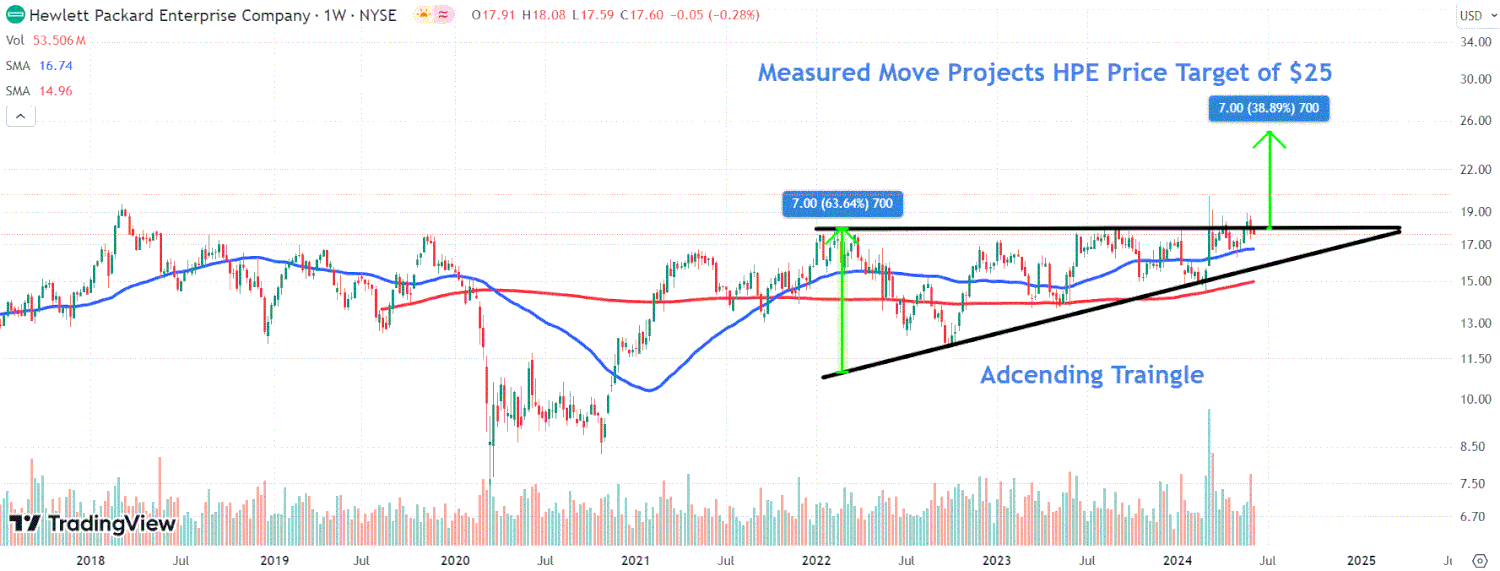
HPE Launches Next-Gen SRX400 Firewalls for AI Security

- Security Innovation Launch: HPE introduces the Juniper Networking SRX400 series firewalls designed to provide consistent protection from core to edge, addressing the rapid expansion of AI in distributed environments and ensuring security and productivity for enterprises adopting AI.
- Hybrid Mesh Firewall Upgrade: The new firewall enhances governance capabilities for AI usage by improving visibility and policy control, enabling organizations to manage AI applications securely without blocking the use of emerging tools, thereby strengthening overall security strategies.
- Built-in Security Enhancements: The SRX400 series features hardware-rooted protections that support enterprise-grade security in space-constrained environments, ensuring remote sites do not become weak links in security strategies, thus enhancing the network's self-protection capabilities.
- Quantum Computing Readiness: HPE adds post-quantum cryptography support in Junos OS Evolved to address future challenges posed by quantum computing to existing encryption technologies, ensuring enterprises maintain compliance and data security in an evolving threat landscape.
See More

Super Micro Computer Stock Rises 5.31% Amid Legal Concerns
- Stock Bounce: Super Micro Computer (SMCI) closed at $21.58, up 5.11%, as investors focused on short-term bargain hunting during a broader market rally, indicating a potential recovery despite underlying risks.
- Surge in Trading Volume: Trading volume reached 114 million shares, approximately 240% above the three-month average of 33 million shares, highlighting increased investor interest and differing opinions on the company's future prospects.
- Escalating Legal Risks: Despite the stock's rebound, the company faces significant legal challenges due to a federal indictment alleging a $2.5 billion AI-server export-control scheme, which heightens uncertainty regarding its legal standing and reputation among shareholders.
- Analyst Sentiment: Analysts generally maintain a “hold” rating on Super Micro Computer with modest price targets, reflecting a cautious outlook on the risk-reward profile of the stock, especially in light of potential changes to its S&P 500 index membership.
See More

Super Micro Computer Stock Rises 5.11% Amid Legal Concerns
- Stock Bounce: Super Micro Computer closed at $21.58 on Monday, up 5.11%, despite facing legal risks related to an AI server export control scheme, indicating short-term investor bargain hunting.
- Surge in Trading Volume: Trading volume reached 114 million shares, approximately 240% above the three-month average of 33 million shares, reflecting a significant increase in market interest in the stock.
- Escalating Legal Risks: The company faces a federal indictment for an alleged $2.5 billion AI server export control scheme, leading to a more than 32% drop in shares last week, which heightens legal and reputational uncertainty for shareholders.
- Analyst Sentiment: Despite the stock's rebound, analysts generally maintain “hold” ratings and express caution regarding Super Micro Computer's risk-reward profile, with concerns about its status in the S&P 500 index adding further complexity.
See More
Super Micro Computer Shares Plunge Amid Smuggling Investigation
- Stock Price Plunge: Super Micro Computer's shares fell over 25% amid a smuggling investigation involving a board member accused of illegally exporting Nvidia chips to China, marking its worst single-day drop since 2024 and raising concerns about its operational future.
- Competitor Gains: Analysts indicate that Super Micro's troubles present a market share opportunity for Dell Technologies, whose shares rose 4.5% on the same day, suggesting that Dell is likely to become the preferred supplier for customers previously aligned with Super Micro in the AI server market.
- Market Dynamics Shift: With Super Micro's operations disrupted, Dell is seen as the immediate beneficiary, particularly among large non-hyperscale AI customers, reinforcing its position as a significant supplier of AI servers and equipment in a competitive landscape.
- Industry Impact: The smuggling case not only pressures Super Micro but may also benefit other equipment manufacturers like Cisco and Hewlett Packard Enterprise, highlighting the dynamic shifts within the industry as companies vie for growth in the expanding AI market.
See More

Nvidia GTC 2026: A Turning Point for AI's Future


- Chip Innovation: At GTC 2026, Nvidia unveiled the new Language Processing Unit (LPU), marking its first chip release since acquiring Groq, which signifies a technological leap in AI data centers and is expected to enhance GPU performance to meet growing AI demands.
- Computing Architecture Shift: Nvidia showcased a new rack of Vera central processing units (CPUs), highlighting the CPU's critical role in future AI applications, particularly in handling extensive data transfers and general-purpose computing, indicating a significant strategic pivot for the company.
- Market Reaction: Despite Huang's forecast of $1 trillion in orders by 2027, Nvidia's stock has slightly declined, reflecting Wall Street's high expectations for the company's future performance, which may have led to a tepid market response to the new product announcements.
- Future Strategy: Nvidia is shifting its strategy from a GPU-centric approach to a more comprehensive computing solution, with plans to launch the Kyber rack architecture, integrating 144 GPUs to enhance computing density and reduce latency by 2027, demonstrating its deep insights into the future AI market.
See More
Market Watch: Oil Prices Rise Amid Tech Developments
- Oil Price Surge: Global crude benchmark Brent has surged back above $100 a barrel, reflecting market sensitivity and uncertainty as optimism over resolving the Iran conflict is undermined by new attacks, impacting energy prices significantly.
- Market Momentum Indicator: The S&P Oscillator has dropped to -5.2, indicating that while the market remains oversold, this shift suggests potential consolidation ahead, prompting investors to monitor future developments in the war for market direction.
- Arm Event and AI Collaboration: Chip designer Arm Holdings is set to announce a new partnership with Nvidia at its “Arm Everywhere” event, which is expected to solidify its crucial role in AI computing, potentially influencing stock performance in the tech sector.
- Investment Rating Changes: Bank of America upgraded CoreWeave to a buy rating, despite market skepticism about its durability; analysts believe its strategic alliances with Nvidia and OpenAI will provide competitive advantages, reflecting ongoing confidence in AI infrastructure.
See More
HPE Launches Next-Gen SRX400 Firewalls for AI Security
- Security Innovation Launch: HPE introduces the Juniper Networking SRX400 series firewalls designed to provide consistent protection from core to edge, addressing the rapid expansion of AI in distributed environments and ensuring security and productivity for enterprises adopting AI.
- Hybrid Mesh Firewall Upgrade: The new firewall enhances governance capabilities for AI usage by improving visibility and policy control, enabling organizations to manage AI applications securely without blocking the use of emerging tools, thereby strengthening overall security strategies.
- Built-in Security Enhancements: The SRX400 series features hardware-rooted protections that support enterprise-grade security in space-constrained environments, ensuring remote sites do not become weak links in security strategies, thus enhancing the network's self-protection capabilities.
- Quantum Computing Readiness: HPE adds post-quantum cryptography support in Junos OS Evolved to address future challenges posed by quantum computing to existing encryption technologies, ensuring enterprises maintain compliance and data security in an evolving threat landscape.
See More
Super Micro Computer Stock Rises 5.31% Amid Legal Concerns
- Stock Bounce: Super Micro Computer (SMCI) closed at $21.58, up 5.11%, as investors focused on short-term bargain hunting during a broader market rally, indicating a potential recovery despite underlying risks.
- Surge in Trading Volume: Trading volume reached 114 million shares, approximately 240% above the three-month average of 33 million shares, highlighting increased investor interest and differing opinions on the company's future prospects.
- Escalating Legal Risks: Despite the stock's rebound, the company faces significant legal challenges due to a federal indictment alleging a $2.5 billion AI-server export-control scheme, which heightens uncertainty regarding its legal standing and reputation among shareholders.
- Analyst Sentiment: Analysts generally maintain a “hold” rating on Super Micro Computer with modest price targets, reflecting a cautious outlook on the risk-reward profile of the stock, especially in light of potential changes to its S&P 500 index membership.
See More
Super Micro Computer Stock Rises 5.11% Amid Legal Concerns
- Stock Bounce: Super Micro Computer closed at $21.58 on Monday, up 5.11%, despite facing legal risks related to an AI server export control scheme, indicating short-term investor bargain hunting.
- Surge in Trading Volume: Trading volume reached 114 million shares, approximately 240% above the three-month average of 33 million shares, reflecting a significant increase in market interest in the stock.
- Escalating Legal Risks: The company faces a federal indictment for an alleged $2.5 billion AI server export control scheme, leading to a more than 32% drop in shares last week, which heightens legal and reputational uncertainty for shareholders.
- Analyst Sentiment: Despite the stock's rebound, analysts generally maintain “hold” ratings and express caution regarding Super Micro Computer's risk-reward profile, with concerns about its status in the S&P 500 index adding further complexity.
See More
Super Micro Computer Shares Plunge Amid Smuggling Investigation
- Stock Price Plunge: Super Micro Computer's shares fell over 25% amid a smuggling investigation involving a board member accused of illegally exporting Nvidia chips to China, marking its worst single-day drop since 2024 and raising concerns about its operational future.
- Competitor Gains: Analysts indicate that Super Micro's troubles present a market share opportunity for Dell Technologies, whose shares rose 4.5% on the same day, suggesting that Dell is likely to become the preferred supplier for customers previously aligned with Super Micro in the AI server market.
- Market Dynamics Shift: With Super Micro's operations disrupted, Dell is seen as the immediate beneficiary, particularly among large non-hyperscale AI customers, reinforcing its position as a significant supplier of AI servers and equipment in a competitive landscape.
- Industry Impact: The smuggling case not only pressures Super Micro but may also benefit other equipment manufacturers like Cisco and Hewlett Packard Enterprise, highlighting the dynamic shifts within the industry as companies vie for growth in the expanding AI market.
See More
Nvidia GTC 2026: A Turning Point for AI's Future
- Chip Innovation: At GTC 2026, Nvidia unveiled the new Language Processing Unit (LPU), marking its first chip release since acquiring Groq, which signifies a technological leap in AI data centers and is expected to enhance GPU performance to meet growing AI demands.
- Computing Architecture Shift: Nvidia showcased a new rack of Vera central processing units (CPUs), highlighting the CPU's critical role in future AI applications, particularly in handling extensive data transfers and general-purpose computing, indicating a significant strategic pivot for the company.
- Market Reaction: Despite Huang's forecast of $1 trillion in orders by 2027, Nvidia's stock has slightly declined, reflecting Wall Street's high expectations for the company's future performance, which may have led to a tepid market response to the new product announcements.
- Future Strategy: Nvidia is shifting its strategy from a GPU-centric approach to a more comprehensive computing solution, with plans to launch the Kyber rack architecture, integrating 144 GPUs to enhance computing density and reduce latency by 2027, demonstrating its deep insights into the future AI market.
See More