Alibaba's Hong Kong Shares Expected to Decline by 2.7% at Opening
Written by Emily J. Thompson, Senior Investment Analyst
Updated: Apr 09 2026
0mins
Should l Buy BABA?
Source: moomoo
- Market Performance: Hong Kong shares of Alibaba have opened down by 2.7%.
- Investor Sentiment: The decline reflects ongoing concerns among investors regarding Alibaba's market position and broader economic factors.
Trade with 70% Backtested Accuracy
Stop guessing "Should I Buy BABA?" and start using high-conviction signals backed by rigorous historical data.
Sign up today to access powerful investing tools and make smarter, data-driven decisions.
Analyst Views on BABA
Wall Street analysts forecast BABA stock price to rise
15 Analyst Rating
15 Buy
0 Hold
0 Sell
Strong Buy
Current: 130.430

Low
180.00
Averages
203.09
High
230.00
Current: 130.430
Low
180.00
Averages
203.09
High
230.00
About BABA
Alibaba Group Holding Ltd is an investment holding company mainly engaged in the provision of technology infrastructure and marketing platforms. The Company operates its business through four segments. The Alibaba China E-commerce Group segment is mainly engaged in E-commerce business, including operating Tmall Supermarket and Tmall Global, providing customer management services, product sales, as well as logistics services. It also operates quick commerce business such as Taobao Instant Commerce and Ele.me, as well as the China commerce wholesale business through 1688.com. The Alibaba International Digital Commerce Group segment is mainly engaged in international commerce retail and wholesale business, operating platforms such as AliExpress, Trendyol, Lazada and Alibaba.com. The Cloud Intelligence Group segment mainly provides public and non-public cloud services. The Other segments primarily include the operations of Freshippo, Cainiao, Alibaba Health and other business.
About the author

Emily J. Thompson
Emily J. Thompson, a Chartered Financial Analyst (CFA) with 12 years in investment research, graduated with honors from the Wharton School. Specializing in industrial and technology stocks, she provides in-depth analysis for Intellectia’s earnings and market brief reports.
Intensifying AI Feature Competition in China's EV Market


- AI Feature Adoption: Over 50 car brands have integrated ByteDance's Doubao AI model, which is now present in 145 car models and over 7 million vehicles, indicating widespread adoption of AI technology in China's EV market, although companies must rapidly adapt to consumer demand for smart features amid fierce competition.
- Ongoing Price War: Despite the rapid rollout of new features, automakers face persistent sales pressure, with industry experts noting that the price war is unlikely to cease in the near term, compelling companies to continuously compete on technology updates and user experience to maintain market share.
- Speed of Tech Updates: Automakers can quickly deploy tech updates via over-the-air methods, as noted by the CEO of the Audi and SAIC Cooperation Project, highlighting the flexibility to respond to market changes, even as technology becomes increasingly homogeneous, necessitating differentiated competitive strategies.
- Nio's Market Performance: Nio claims its ES8 model has delivered 100,000 units in just 215 days within the 400,000 yuan and above segment, showcasing its ability to attract consumers despite cost pressures and slower market growth, while offering unique customer experiences and premium interior materials.
See More
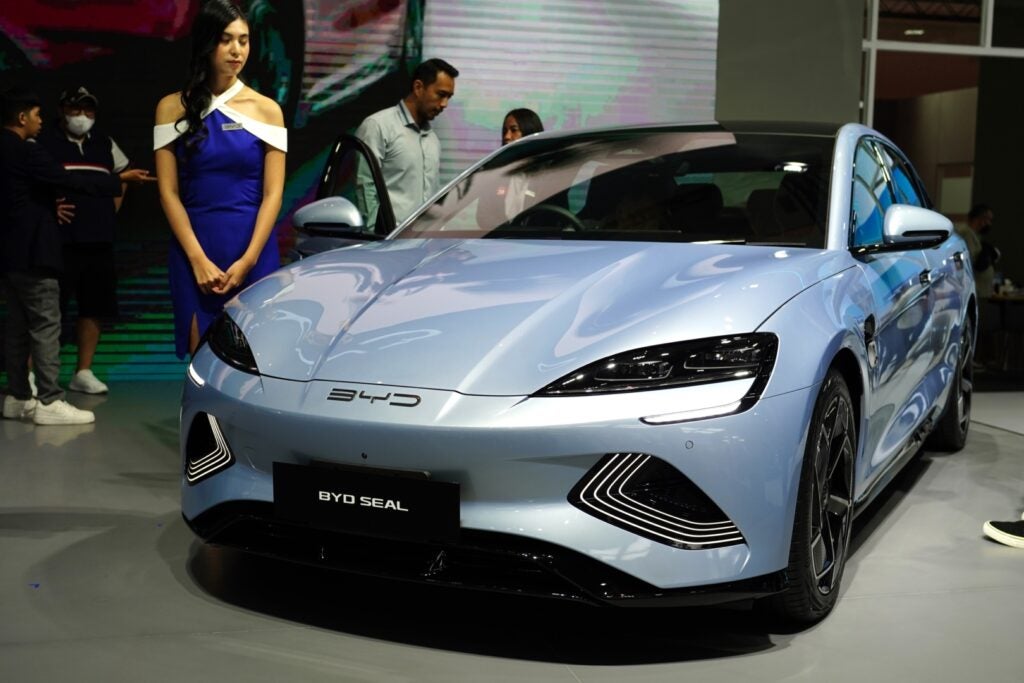
China's EV Price War Evolves into Feature War
- AI Feature Adoption: ByteDance's Doubao AI is now integrated into 145 car models and over 7 million vehicles, indicating its widespread acceptance in the Chinese EV market, which is expected to further drive consumer demand for smart driving features.
- Rapid Tech Updates: Automakers are leveraging over-the-air updates to quickly deploy new features, and despite ongoing sales pressures, this flexibility allows them to maintain a competitive edge, particularly as the price war continues.
- Intensified Market Competition: As AI technology becomes more prevalent, consumer demand for smart features is rising, forcing EV manufacturers to innovate continuously to maintain market share, especially among models priced above 100,000 yuan, where feature similarities are evident.
- Competing on Experience: Chinese automakers like Nio are starting to differentiate themselves by offering unique customer experiences, and despite cost pressures, their ES8 model achieved a milestone of 100,000 units delivered in just 215 days, showcasing its market potential.
See More

SpaceX IPO Expected to Set Record for Largest Offering


- IPO Potential: SpaceX aims to raise $75 billion with a valuation projected between $1.75 trillion and $2 trillion, which, if successful, would surpass Saudi Aramco's $29.4 billion IPO record set in 2019, indicating strong market interest in the space economy.
- Historical Lessons: Despite the excitement surrounding SpaceX's IPO, historical data shows that since 1999, only Visa has seen its stock price rise six months post-IPO, while five other large IPOs experienced declines of 8% to 38%, suggesting that investor sentiment may cloud judgment.
- Valuation Challenges: SpaceX's valuation may fall within a high double-digit or low triple-digit price-to-sales (P/S) ratio, yet historically, companies at the forefront of technology struggle to maintain P/S ratios above 30, posing risks for investors.
- Tech Bubble Risks: History indicates that every emerging technology over the past 30 years has faced bubble-bursting events; although demand for AI and space infrastructure is surging, SpaceX's sales and profits still require time to optimize, presenting significant risks for early investors.
See More

SpaceX Confidentially Files for Historic IPO
- IPO Potential: SpaceX confidentially filed for its IPO on April 1, aiming to raise $75 billion with a valuation of up to $2 trillion, which, if successful, would set a record for the largest IPO in Wall Street history, reflecting strong market confidence in its growth prospects.
- Historical Challenges: Despite investor enthusiasm, many high-profile IPOs over the past 27 years have struggled post-debut, with only Visa seeing a price increase six months after going public, while others like Facebook and Alibaba faced declines of 8% to 38%, adding uncertainty to SpaceX's IPO outlook.
- Significant Valuation Risks: SpaceX's sales are reported between $15 billion and $16 billion, but its high price-to-sales ratio, potentially exceeding 30, may be unsustainable, especially as historically, companies at the forefront of technology trends often fail to maintain such valuations, which could impact investor confidence.
- Bubble Risk Warning: History shows that many emerging technologies experience bubble bursts in their early stages; although demand for AI and space infrastructure is surging, SpaceX's sales and profits still require time to optimize, necessitating caution from early investors regarding potential risks.
See More

Alibaba's Hong Kong Shares Decline Over 2%
- Market Performance: Hong Kong shares of Alibaba have decreased by more than 2%.
- Investor Sentiment: The decline reflects ongoing concerns among investors regarding Alibaba's market position and broader economic factors.
See More

O'Keefe Stevens Advisory Q1 2026 Investment Moves
- Portfolio Adjustment: In Q1 2026, O'Keefe Stevens Advisory sold its positions in Alibaba (BABA), Fannie Mae common, BMW (BMWKY), and Mercedes-Benz (MBGAF), reflecting a cautious outlook on market conditions that may impact these companies' stock performance.
- Position Closure: The fund also closed its position in Tri Pointe Homes (TPH) due to the announced sale of the business, which could lead to decreased liquidity for the company and affect its future financing capabilities.
- New Investment Initiatives: Conversely, O'Keefe Stevens Advisory initiated new positions in Baxter International (BAX) and Weyerhaeuser (WY), indicating confidence in the growth potential of these companies, which may provide new revenue streams for its portfolio.
- Increased Holdings: The fund further strengthened its position in Perrigo (PRGO), suggesting optimism regarding the company's competitive edge and future performance, potentially enhancing its market position within the relevant industry.
See More
Intensifying AI Feature Competition in China's EV Market
- AI Feature Adoption: Over 50 car brands have integrated ByteDance's Doubao AI model, which is now present in 145 car models and over 7 million vehicles, indicating widespread adoption of AI technology in China's EV market, although companies must rapidly adapt to consumer demand for smart features amid fierce competition.
- Ongoing Price War: Despite the rapid rollout of new features, automakers face persistent sales pressure, with industry experts noting that the price war is unlikely to cease in the near term, compelling companies to continuously compete on technology updates and user experience to maintain market share.
- Speed of Tech Updates: Automakers can quickly deploy tech updates via over-the-air methods, as noted by the CEO of the Audi and SAIC Cooperation Project, highlighting the flexibility to respond to market changes, even as technology becomes increasingly homogeneous, necessitating differentiated competitive strategies.
- Nio's Market Performance: Nio claims its ES8 model has delivered 100,000 units in just 215 days within the 400,000 yuan and above segment, showcasing its ability to attract consumers despite cost pressures and slower market growth, while offering unique customer experiences and premium interior materials.
See More
China's EV Price War Evolves into Feature War
- AI Feature Adoption: ByteDance's Doubao AI is now integrated into 145 car models and over 7 million vehicles, indicating its widespread acceptance in the Chinese EV market, which is expected to further drive consumer demand for smart driving features.
- Rapid Tech Updates: Automakers are leveraging over-the-air updates to quickly deploy new features, and despite ongoing sales pressures, this flexibility allows them to maintain a competitive edge, particularly as the price war continues.
- Intensified Market Competition: As AI technology becomes more prevalent, consumer demand for smart features is rising, forcing EV manufacturers to innovate continuously to maintain market share, especially among models priced above 100,000 yuan, where feature similarities are evident.
- Competing on Experience: Chinese automakers like Nio are starting to differentiate themselves by offering unique customer experiences, and despite cost pressures, their ES8 model achieved a milestone of 100,000 units delivered in just 215 days, showcasing its market potential.
See More
SpaceX IPO Expected to Set Record for Largest Offering
- IPO Potential: SpaceX aims to raise $75 billion with a valuation projected between $1.75 trillion and $2 trillion, which, if successful, would surpass Saudi Aramco's $29.4 billion IPO record set in 2019, indicating strong market interest in the space economy.
- Historical Lessons: Despite the excitement surrounding SpaceX's IPO, historical data shows that since 1999, only Visa has seen its stock price rise six months post-IPO, while five other large IPOs experienced declines of 8% to 38%, suggesting that investor sentiment may cloud judgment.
- Valuation Challenges: SpaceX's valuation may fall within a high double-digit or low triple-digit price-to-sales (P/S) ratio, yet historically, companies at the forefront of technology struggle to maintain P/S ratios above 30, posing risks for investors.
- Tech Bubble Risks: History indicates that every emerging technology over the past 30 years has faced bubble-bursting events; although demand for AI and space infrastructure is surging, SpaceX's sales and profits still require time to optimize, presenting significant risks for early investors.
See More
SpaceX Confidentially Files for Historic IPO
- IPO Potential: SpaceX confidentially filed for its IPO on April 1, aiming to raise $75 billion with a valuation of up to $2 trillion, which, if successful, would set a record for the largest IPO in Wall Street history, reflecting strong market confidence in its growth prospects.
- Historical Challenges: Despite investor enthusiasm, many high-profile IPOs over the past 27 years have struggled post-debut, with only Visa seeing a price increase six months after going public, while others like Facebook and Alibaba faced declines of 8% to 38%, adding uncertainty to SpaceX's IPO outlook.
- Significant Valuation Risks: SpaceX's sales are reported between $15 billion and $16 billion, but its high price-to-sales ratio, potentially exceeding 30, may be unsustainable, especially as historically, companies at the forefront of technology trends often fail to maintain such valuations, which could impact investor confidence.
- Bubble Risk Warning: History shows that many emerging technologies experience bubble bursts in their early stages; although demand for AI and space infrastructure is surging, SpaceX's sales and profits still require time to optimize, necessitating caution from early investors regarding potential risks.
See More
Alibaba's Hong Kong Shares Decline Over 2%
- Market Performance: Hong Kong shares of Alibaba have decreased by more than 2%.
- Investor Sentiment: The decline reflects ongoing concerns among investors regarding Alibaba's market position and broader economic factors.
See More
O'Keefe Stevens Advisory Q1 2026 Investment Moves
- Portfolio Adjustment: In Q1 2026, O'Keefe Stevens Advisory sold its positions in Alibaba (BABA), Fannie Mae common, BMW (BMWKY), and Mercedes-Benz (MBGAF), reflecting a cautious outlook on market conditions that may impact these companies' stock performance.
- Position Closure: The fund also closed its position in Tri Pointe Homes (TPH) due to the announced sale of the business, which could lead to decreased liquidity for the company and affect its future financing capabilities.
- New Investment Initiatives: Conversely, O'Keefe Stevens Advisory initiated new positions in Baxter International (BAX) and Weyerhaeuser (WY), indicating confidence in the growth potential of these companies, which may provide new revenue streams for its portfolio.
- Increased Holdings: The fund further strengthened its position in Perrigo (PRGO), suggesting optimism regarding the company's competitive edge and future performance, potentially enhancing its market position within the relevant industry.
See More