Harvard University Again Tops Dream College Rankings
Written by Emily J. Thompson, Senior Investment Analyst
Updated: Mar 20 2026
0mins

Should l Buy JPM?
Source: CNBC
- Dream School Ranking: According to a recent survey by The Princeton Review, Harvard University has once again been named the most desirable college, attracting a large number of applicants despite facing lawsuits from the Trump administration and federal funding cuts, with acceptance rates dropping below 4%, indicating its strong brand influence.
- Tuition Pressure: The 2026 College Hopes and Worries survey revealed that over 9,400 students and parents consider tuition costs their biggest stressor, with some schools' annual costs nearing six figures, reflecting a staggering 914% increase in education costs since 1983, outpacing other household expenses.
- Surge in Student Loans: From 2005 to 2025, education debt surged by 343%, with 97% of graduates indicating that their debt has delayed major life goals, highlighting the increasing financial burden of higher education that forces students to borrow to cover tuition costs.
- Importance of Financial Aid: The Princeton Review noted that while many elite schools offer generous financial aid, Harvard does not provide merit-based scholarships, instead offering free tuition for undergraduates from families earning less than $200,000, underscoring the critical role of financial aid in school selection decisions.
Trade with 70% Backtested Accuracy
Stop guessing "Should I Buy JPM?" and start using high-conviction signals backed by rigorous historical data.
Sign up today to access powerful investing tools and make smarter, data-driven decisions.
Analyst Views on JPM
Wall Street analysts forecast JPM stock price to rise
19 Analyst Rating
11 Buy
7 Hold
1 Sell
Moderate Buy
Current: 313.230

Low
260.00
Averages
341.38
High
400.00
Current: 313.230
Low
260.00
Averages
341.38
High
400.00
About JPM
JPMorgan Chase & Co. is a financial holding company. The Company is engaged in investment banking, financial services for consumers and small businesses, commercial banking, financial transaction processing and asset management. The Company operates through three segments: Consumer & Community Banking (CCB), Commercial & Investment Bank (CIB), and Asset & Wealth Management (AWM). Its CCB segment offers products and services to consumers and small businesses through bank branches, ATMs, digital and telephone banking. Its CIB segment consists of banking and payments and markets and securities services, and offers a suite of investment banking, lending, payments, market-making, financing, custody and securities products and services to a global base of corporate and institutional clients. AWM segment offers investment and wealth management solutions. It offers multi-asset investment management solutions, retirement products and services, brokerage, custody, estate planning, and others.
About the author

Emily J. Thompson
Emily J. Thompson, a Chartered Financial Analyst (CFA) with 12 years in investment research, graduated with honors from the Wharton School. Specializing in industrial and technology stocks, she provides in-depth analysis for Intellectia’s earnings and market brief reports.
JPMorgan Chase Releases Q1 2026 Financial Report

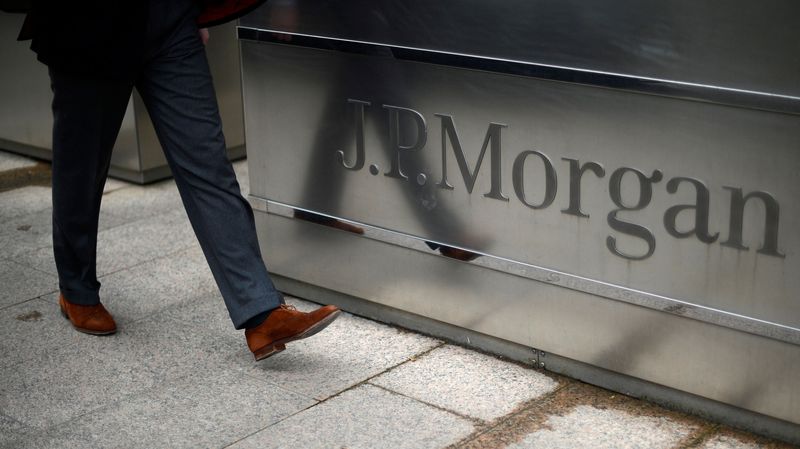
- Report Filing: JPMorgan Chase has filed its Quarterly Report on Form 10-Q for the quarter ended March 31, 2026, with the SEC, ensuring compliance and transparency as the report is accessible on both the SEC and the firm's Investor Relations website.
- Asset Scale: As of March 31, 2026, JPMorgan Chase reported total assets of $4.9 trillion and stockholders' equity of $364 billion, reflecting its robust financial foundation and significant presence in the global financial services sector.
- Business Scope: As a leading financial services firm in the U.S., JPMorgan Chase excels in investment banking, consumer and small business financial services, commercial banking, financial transaction processing, and asset management, serving a diverse range of prominent clients worldwide.
- Global Influence: JPMorgan Chase serves millions of customers across the U.S. and globally, including major corporate, institutional, and government clients, further solidifying its leadership position in the international financial market.
See More

Treasury Secretary Emphasizes AI Security Measures

- AI Threat Response: Treasury Secretary Scott Bessent stated that U.S. financial institutions and tech companies are enhancing defenses against emerging AI threats, particularly the potential for AI tools to infiltrate bank accounts and critical systems, highlighting the importance of financial security.
- High-Level Meeting Discussion: Bessent's unscheduled meeting with Federal Reserve Chair Jerome Powell and major Wall Street executives in Washington focused on rising cyber risks associated with rapid AI advancements, indicating the government's serious commitment to financial safety.
- Balancing Innovation and Regulation: Bessent emphasized that policymakers must strike a balance between encouraging private-sector innovation and ensuring government oversight to maintain national security and prevent threats from malicious actors.
- Consumer Warning: When asked if consumers should worry about AI being used to hack their bank accounts, Bessent replied, “You should,” underscoring the seriousness of the current financial security landscape.
See More

BANKS AIM TO TRANSFER RISK TO PREVENT 'OVERWHELMING' DATA CENTRE DEBT -FT

Banks' Strategy: Banks are seeking to offload risk to prevent being overwhelmed by data-centered debt.
Choking on Debt: The focus is on avoiding a situation where financial institutions become "choked" by excessive debt related to data management.
See More
S&P 500 Recovery Amid Economic Uncertainty

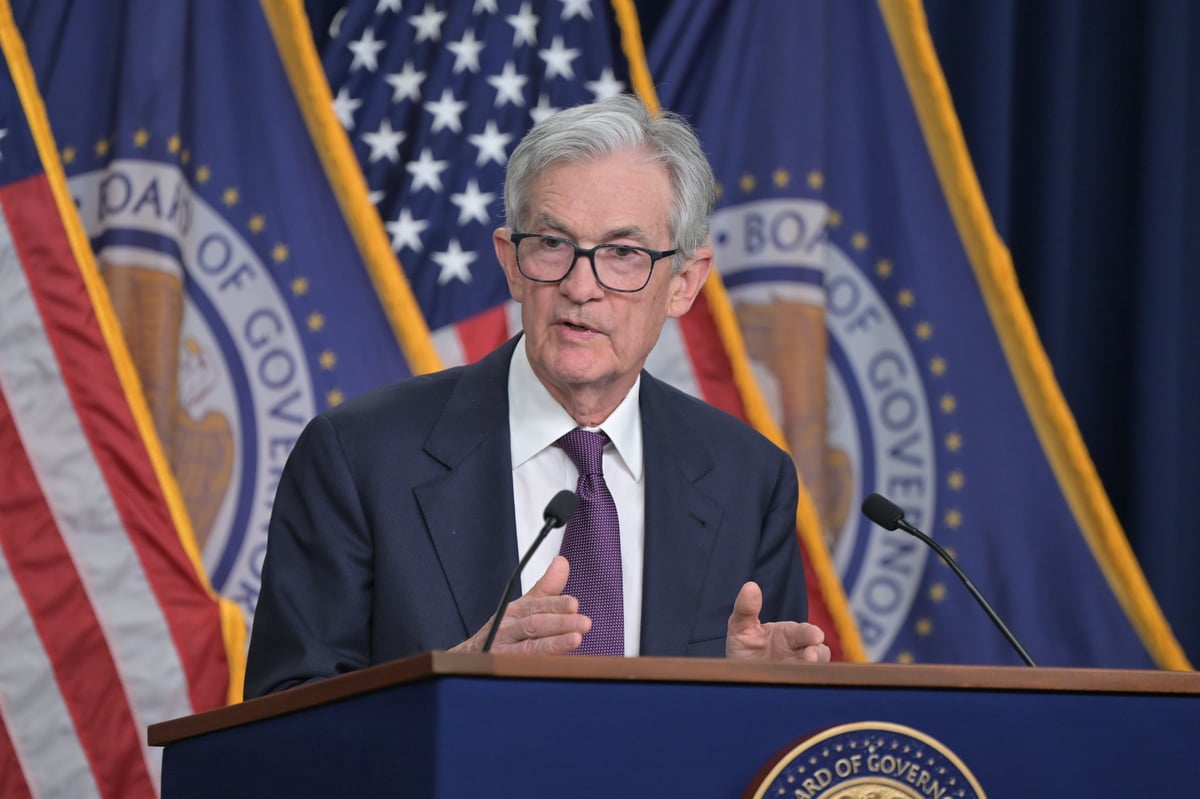
- Economic Outlook Uncertainty: Fed Chair Jerome Powell stated during his final press conference that the economic outlook is 'highly uncertain,' with the Middle East conflict exacerbating this uncertainty, potentially leading to increased inflation in the U.S. and affecting market confidence.
- Rising Inflation Pressure: The Consumer Price Index (CPI) surged by 90 basis points to 3.3% in March, primarily driven by soaring gasoline prices, which are expected to push up transportation and manufacturing costs, thereby impacting prices across other sectors.
- Shifting Rate Expectations: Despite initial investor expectations for at least two rate cuts in 2026, the Federal Reserve has held its benchmark rate steady for three consecutive meetings, with economists predicting rates will remain unchanged through the rest of 2026, potentially pivoting to rate hikes in Q3 2027.
- Increased Market Risks: The S&P 500 currently trades at a forward P/E ratio of 20.9, above the five-year average of 19.9; if the Fed concludes its rate-cutting cycle, investors may shift towards safe-haven assets like Treasury bonds and gold, putting downward pressure on the stock market.
See More

Federal Reserve Outlook Faces Increased Uncertainty Amid Geopolitical Tensions
- Economic Outlook Warning: Federal Reserve Chair Jerome Powell highlighted significant uncertainty in the economic outlook during his final press conference, particularly due to escalating Middle Eastern conflicts, which could lead to rising inflation and impact consumer confidence and market stability.
- Rate Policy Shift: JPMorgan Chase strategists predict that the Federal Reserve will pivot to rate hikes in the third quarter of 2027, ending the current rate-cutting cycle, a shift that could negatively affect the stock market, especially with the S&P 500 currently trading at a price-to-earnings ratio of 20.9 times.
- Inflationary Pressures Intensify: The Consumer Price Index (CPI) surged by 90 basis points to 3.3% in March, marking the worst reading since April 2024, with rising oil prices expected to further increase transportation and manufacturing costs, potentially leading to an economic slowdown.
- Cautious Market Reaction: Although the S&P 500 has recently rebounded to record highs, investor tolerance for high valuations may decrease, particularly with expectations of Fed rate hikes, prompting many investors to shift towards safe-haven assets like Treasury bonds and gold to mitigate risks.
See More

Optimistic Thesis on Digital Assets' Return

- Market Recovery Expectations: An optimistic narrative is circulating among investors that capital will soon rotate back into digital assets, particularly for beaten-down prices of Bitcoin and Ethereum, although analysts indicate that this 'Great Rotation' is not yet evident.
- Capital Inflow Data: JPMorgan estimates that digital asset inflows will total around $11 billion in Q1 2026, with demand primarily driven by corporate treasury purchases and venture deals rather than broad buying, suggesting a lack of trend formation in the market.
- Strong ETF Performance: U.S. spot Bitcoin ETFs absorbed $1.5 billion from April 14 to April 27, boosting total net inflows to $58.6 billion, although a short string of strong inflows does not indicate a long-term trend.
- Portfolio Strategy: Investors are advised to carefully craft their crypto portfolios ahead of time to benefit from any potential capital rotations while also gaining exposure to gradual asset value increases, particularly emphasizing the importance of Bitcoin and Ethereum among institutional buyers.
See More
JPMorgan Chase Releases Q1 2026 Financial Report
- Report Filing: JPMorgan Chase has filed its Quarterly Report on Form 10-Q for the quarter ended March 31, 2026, with the SEC, ensuring compliance and transparency as the report is accessible on both the SEC and the firm's Investor Relations website.
- Asset Scale: As of March 31, 2026, JPMorgan Chase reported total assets of $4.9 trillion and stockholders' equity of $364 billion, reflecting its robust financial foundation and significant presence in the global financial services sector.
- Business Scope: As a leading financial services firm in the U.S., JPMorgan Chase excels in investment banking, consumer and small business financial services, commercial banking, financial transaction processing, and asset management, serving a diverse range of prominent clients worldwide.
- Global Influence: JPMorgan Chase serves millions of customers across the U.S. and globally, including major corporate, institutional, and government clients, further solidifying its leadership position in the international financial market.
See More
Treasury Secretary Emphasizes AI Security Measures
- AI Threat Response: Treasury Secretary Scott Bessent stated that U.S. financial institutions and tech companies are enhancing defenses against emerging AI threats, particularly the potential for AI tools to infiltrate bank accounts and critical systems, highlighting the importance of financial security.
- High-Level Meeting Discussion: Bessent's unscheduled meeting with Federal Reserve Chair Jerome Powell and major Wall Street executives in Washington focused on rising cyber risks associated with rapid AI advancements, indicating the government's serious commitment to financial safety.
- Balancing Innovation and Regulation: Bessent emphasized that policymakers must strike a balance between encouraging private-sector innovation and ensuring government oversight to maintain national security and prevent threats from malicious actors.
- Consumer Warning: When asked if consumers should worry about AI being used to hack their bank accounts, Bessent replied, “You should,” underscoring the seriousness of the current financial security landscape.
See More
BANKS AIM TO TRANSFER RISK TO PREVENT 'OVERWHELMING' DATA CENTRE DEBT -FT
Banks' Strategy: Banks are seeking to offload risk to prevent being overwhelmed by data-centered debt.
Choking on Debt: The focus is on avoiding a situation where financial institutions become "choked" by excessive debt related to data management.
See More
S&P 500 Recovery Amid Economic Uncertainty
- Economic Outlook Uncertainty: Fed Chair Jerome Powell stated during his final press conference that the economic outlook is 'highly uncertain,' with the Middle East conflict exacerbating this uncertainty, potentially leading to increased inflation in the U.S. and affecting market confidence.
- Rising Inflation Pressure: The Consumer Price Index (CPI) surged by 90 basis points to 3.3% in March, primarily driven by soaring gasoline prices, which are expected to push up transportation and manufacturing costs, thereby impacting prices across other sectors.
- Shifting Rate Expectations: Despite initial investor expectations for at least two rate cuts in 2026, the Federal Reserve has held its benchmark rate steady for three consecutive meetings, with economists predicting rates will remain unchanged through the rest of 2026, potentially pivoting to rate hikes in Q3 2027.
- Increased Market Risks: The S&P 500 currently trades at a forward P/E ratio of 20.9, above the five-year average of 19.9; if the Fed concludes its rate-cutting cycle, investors may shift towards safe-haven assets like Treasury bonds and gold, putting downward pressure on the stock market.
See More
Federal Reserve Outlook Faces Increased Uncertainty Amid Geopolitical Tensions
- Economic Outlook Warning: Federal Reserve Chair Jerome Powell highlighted significant uncertainty in the economic outlook during his final press conference, particularly due to escalating Middle Eastern conflicts, which could lead to rising inflation and impact consumer confidence and market stability.
- Rate Policy Shift: JPMorgan Chase strategists predict that the Federal Reserve will pivot to rate hikes in the third quarter of 2027, ending the current rate-cutting cycle, a shift that could negatively affect the stock market, especially with the S&P 500 currently trading at a price-to-earnings ratio of 20.9 times.
- Inflationary Pressures Intensify: The Consumer Price Index (CPI) surged by 90 basis points to 3.3% in March, marking the worst reading since April 2024, with rising oil prices expected to further increase transportation and manufacturing costs, potentially leading to an economic slowdown.
- Cautious Market Reaction: Although the S&P 500 has recently rebounded to record highs, investor tolerance for high valuations may decrease, particularly with expectations of Fed rate hikes, prompting many investors to shift towards safe-haven assets like Treasury bonds and gold to mitigate risks.
See More
Optimistic Thesis on Digital Assets' Return
- Market Recovery Expectations: An optimistic narrative is circulating among investors that capital will soon rotate back into digital assets, particularly for beaten-down prices of Bitcoin and Ethereum, although analysts indicate that this 'Great Rotation' is not yet evident.
- Capital Inflow Data: JPMorgan estimates that digital asset inflows will total around $11 billion in Q1 2026, with demand primarily driven by corporate treasury purchases and venture deals rather than broad buying, suggesting a lack of trend formation in the market.
- Strong ETF Performance: U.S. spot Bitcoin ETFs absorbed $1.5 billion from April 14 to April 27, boosting total net inflows to $58.6 billion, although a short string of strong inflows does not indicate a long-term trend.
- Portfolio Strategy: Investors are advised to carefully craft their crypto portfolios ahead of time to benefit from any potential capital rotations while also gaining exposure to gradual asset value increases, particularly emphasizing the importance of Bitcoin and Ethereum among institutional buyers.
See More